
Cognitive Development mind maps
434 mind maps by 322 users · Page 1 of 11
This GoConqr page gathers mind maps on Cognitive Development, from Piaget and Vygotsky to infant perception and theory of mind. University students and professional candidates, school students and teachers can use them to review theories and studies. There are over 400 mind maps by more than 300 users, with resources at school and university level. Choose a map to begin.
Select topic
- Brain Development and Cognitive Stimulation12
- Piaget's Theory of Cognitive Development134
- Piaget's Stages of Cognitive Development157
- Conservation and the Samuel and Bryant Study10
- Vygotsky's Sociocultural Theory42
- Information Processing Theory8
- Infant Cognition and Object Permanence23
- Theory of Mind31
- Language Development10
- Concepts, Symbols and Reasoning19
- Memory, Attention and Executive Function12
- Cognition Across Childhood, Adolescence and Adulthood16
Mind maps
-
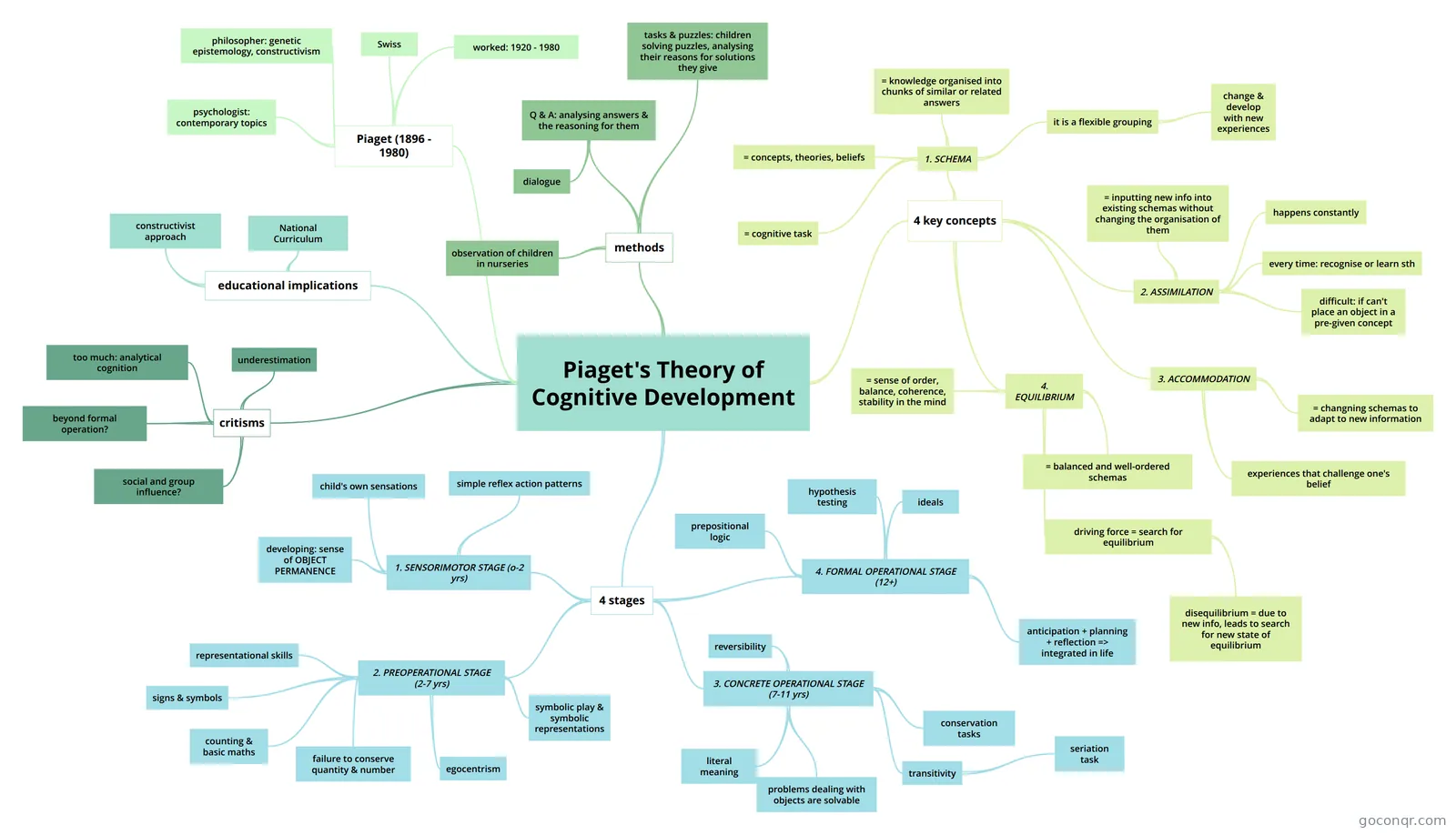 Piaget's Theory of Cognitive Development
-
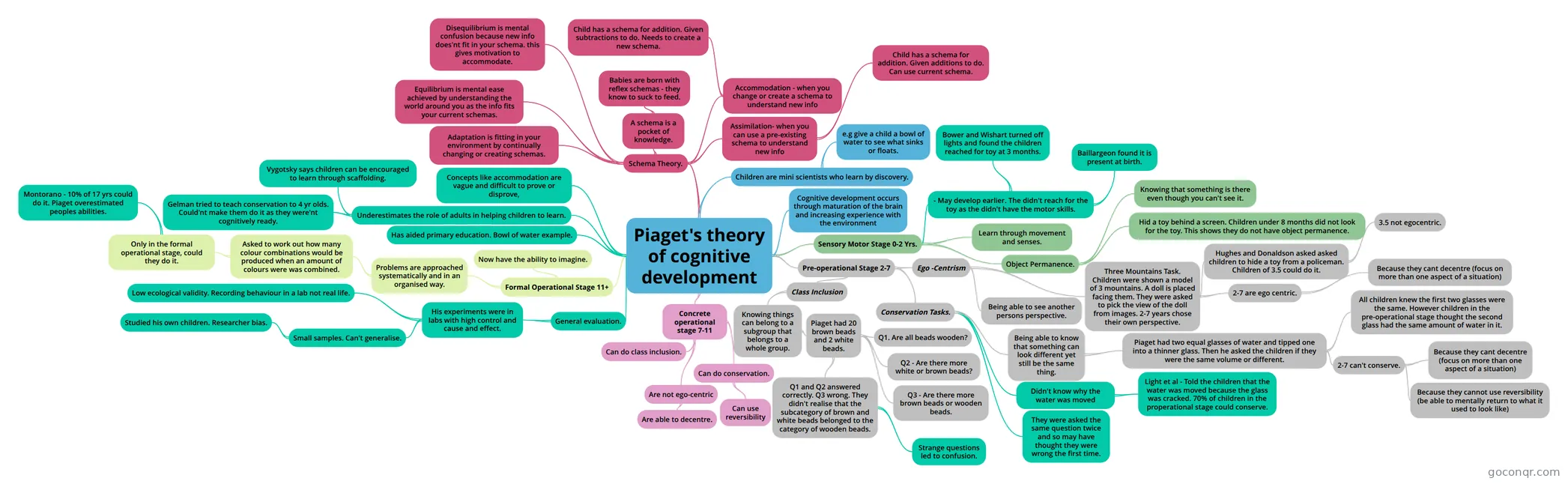 Piaget's theory of cognitive development Mind map including sensory - motor, pre-op, conc-op and formal - op. used for PSYB3
-
Samuel and Bryant 1984 Samuel, J. and Bryant, P. (1984) Asking only one question in the conservation experiment
-
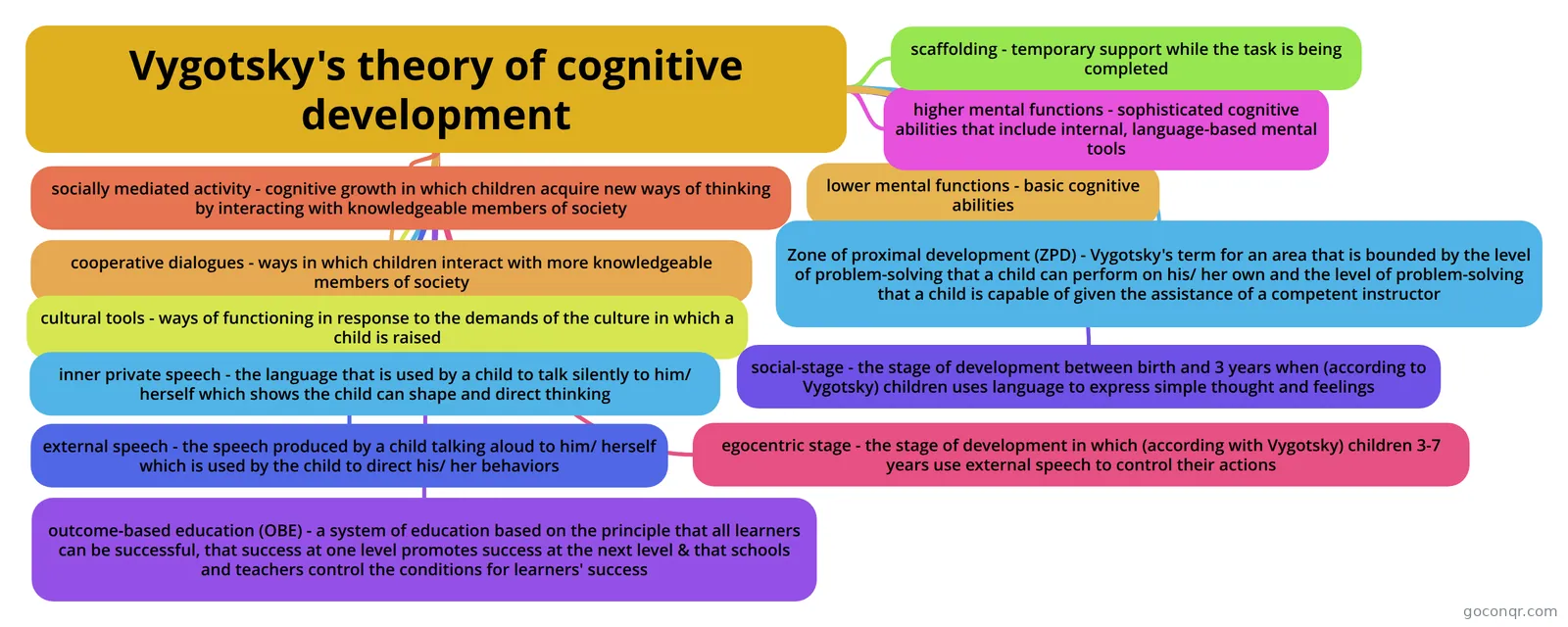 Vygotsky's theory of cognitive development
-
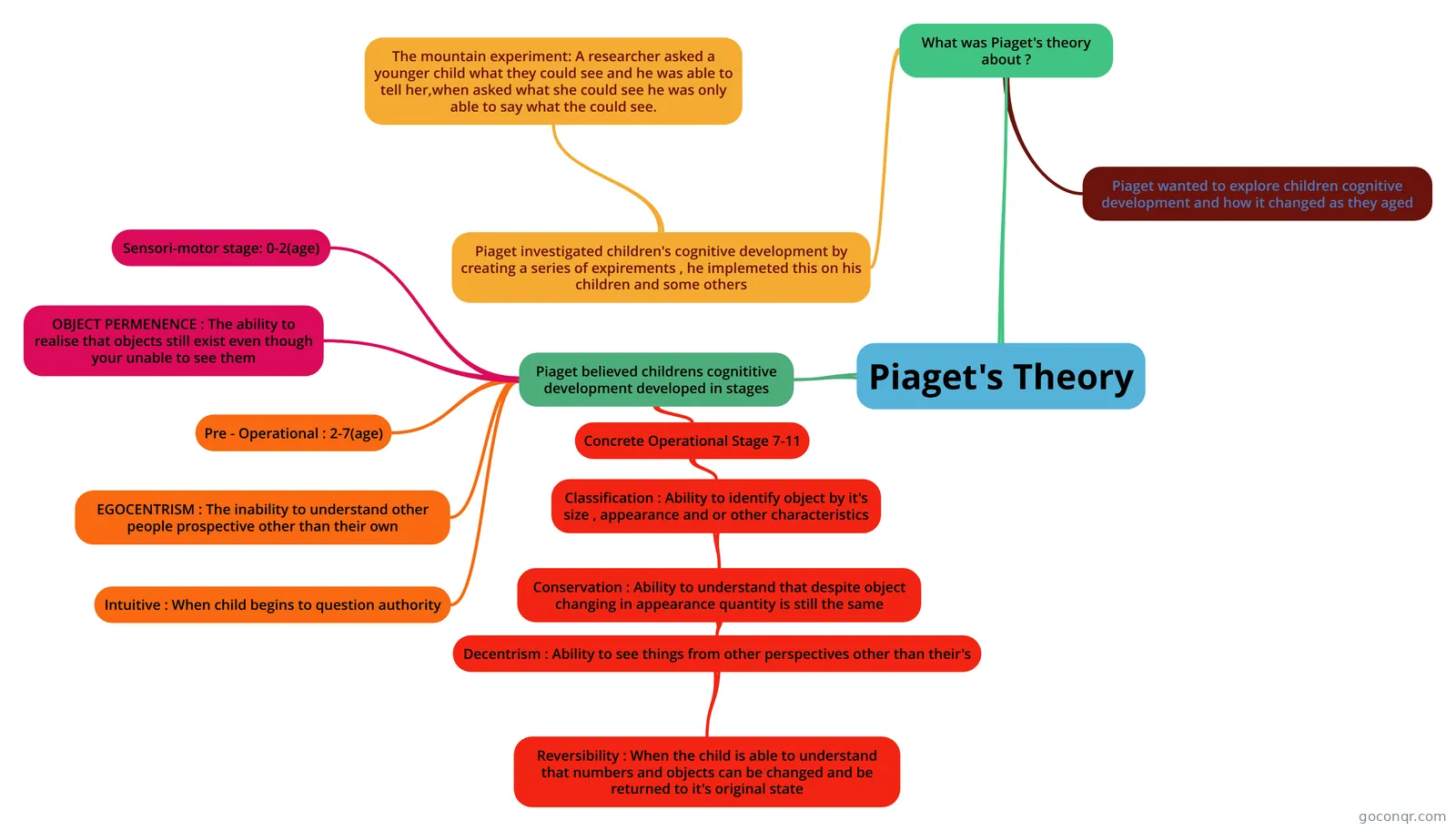 Piaget's Theory
-
Lev Vygotsky
-
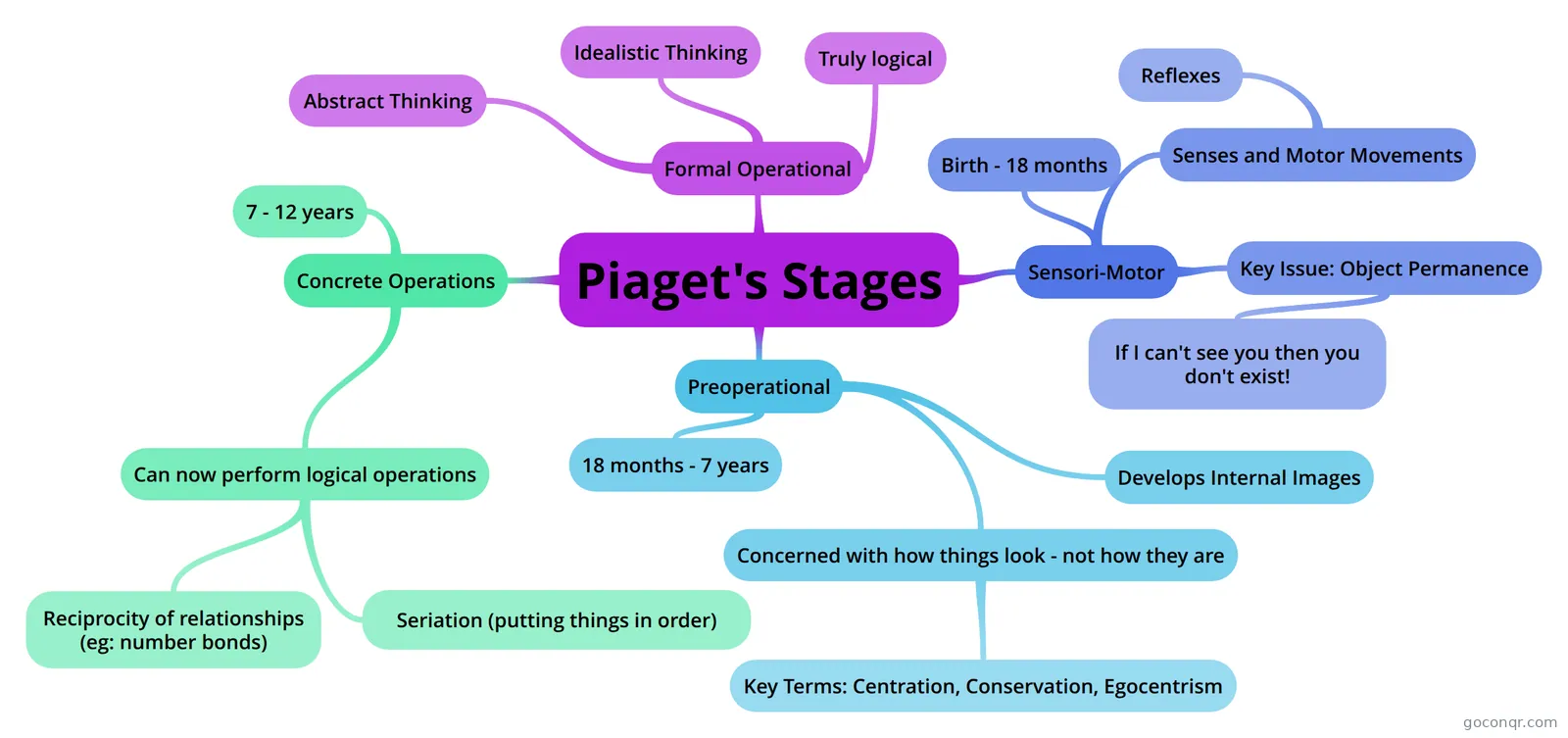 Piaget's Stages Piaget's stages in a mind map
-
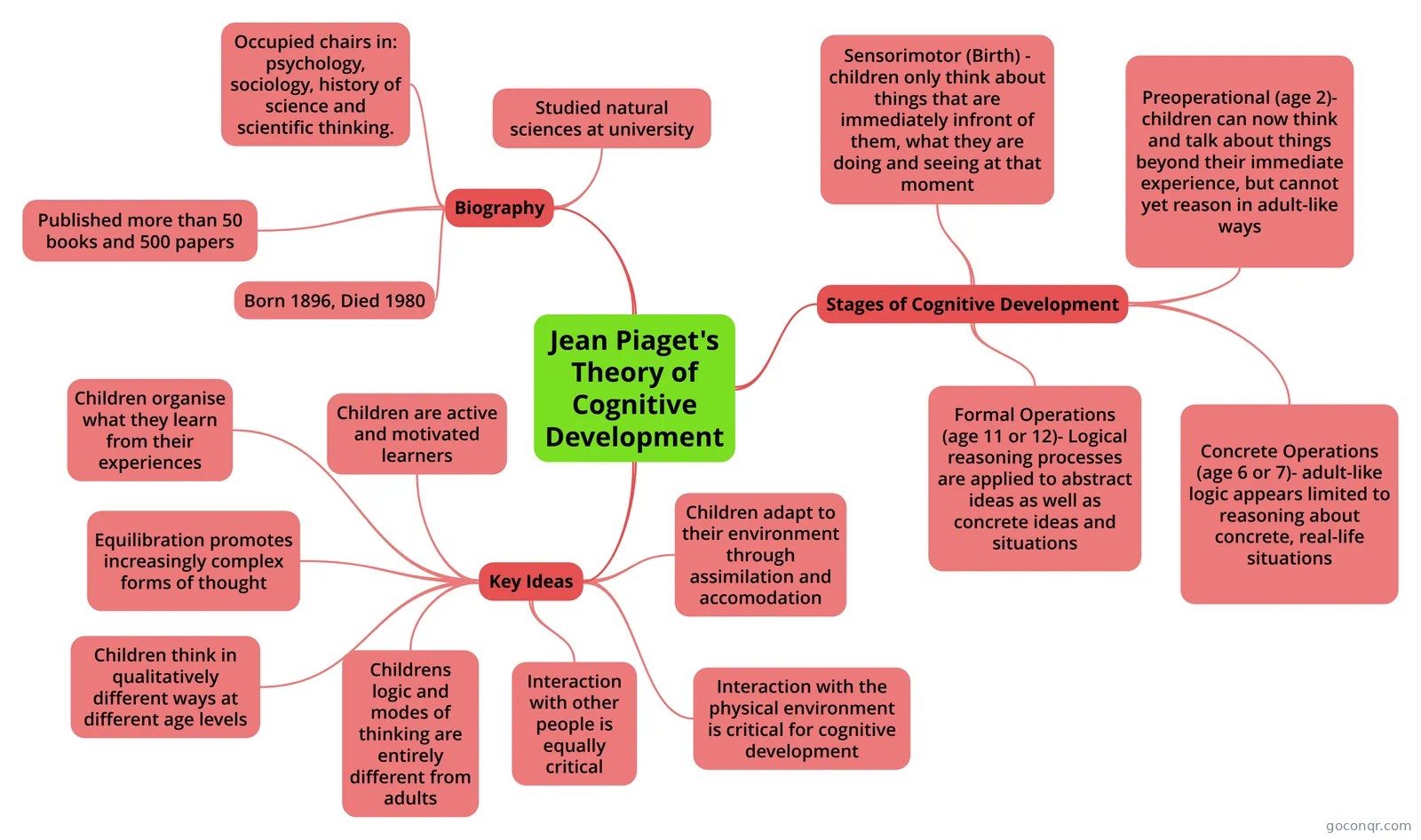 Jean Piaget's Theory of Cognitive Development
-
Piaget's Stages of Cognitive Development Layout of psychologist Piaget's Stages of Cognitive Development.
-
 Lecture 6 - Theory of Mind
-
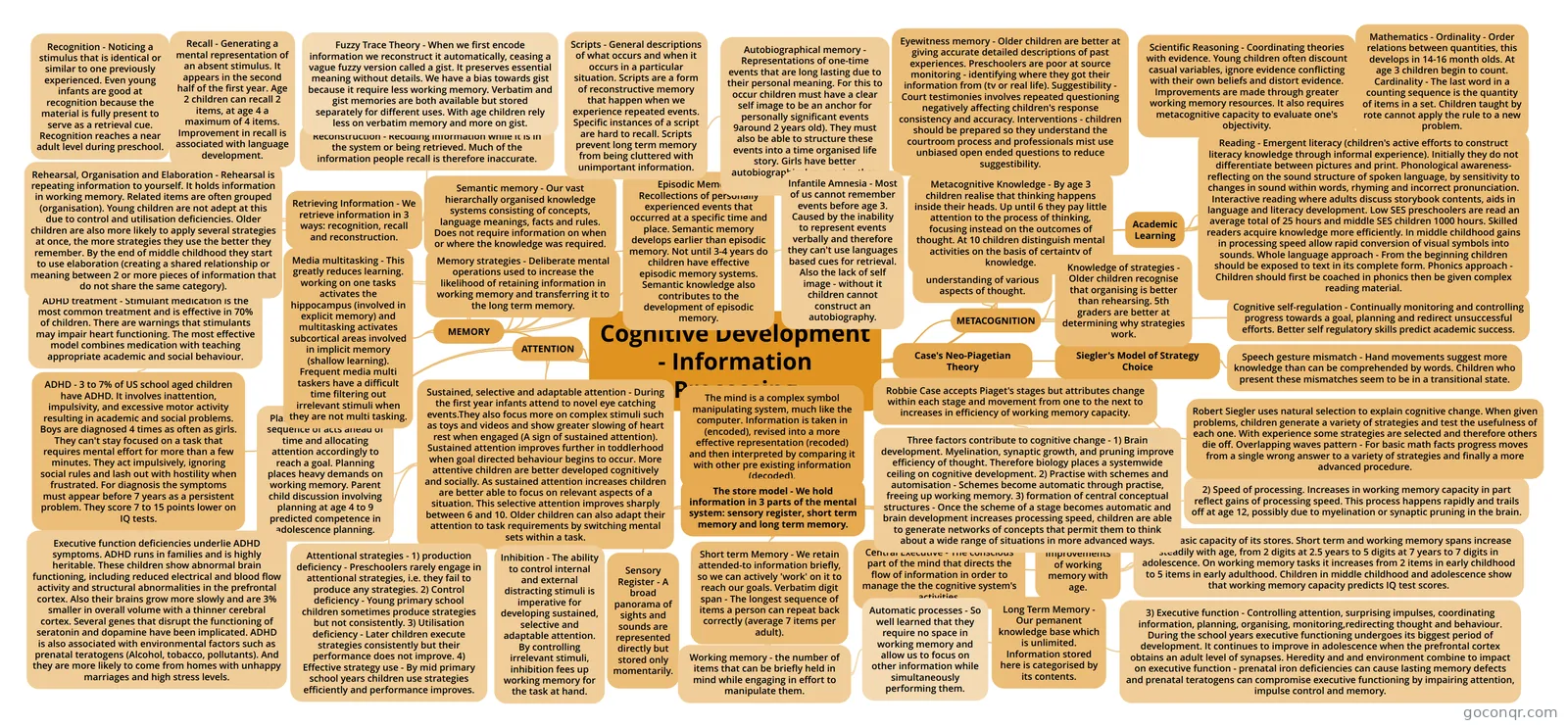 Cognitive Development - Information Processing
-
Lecture 3 - Development of Memory, Attention and Exec Function
-
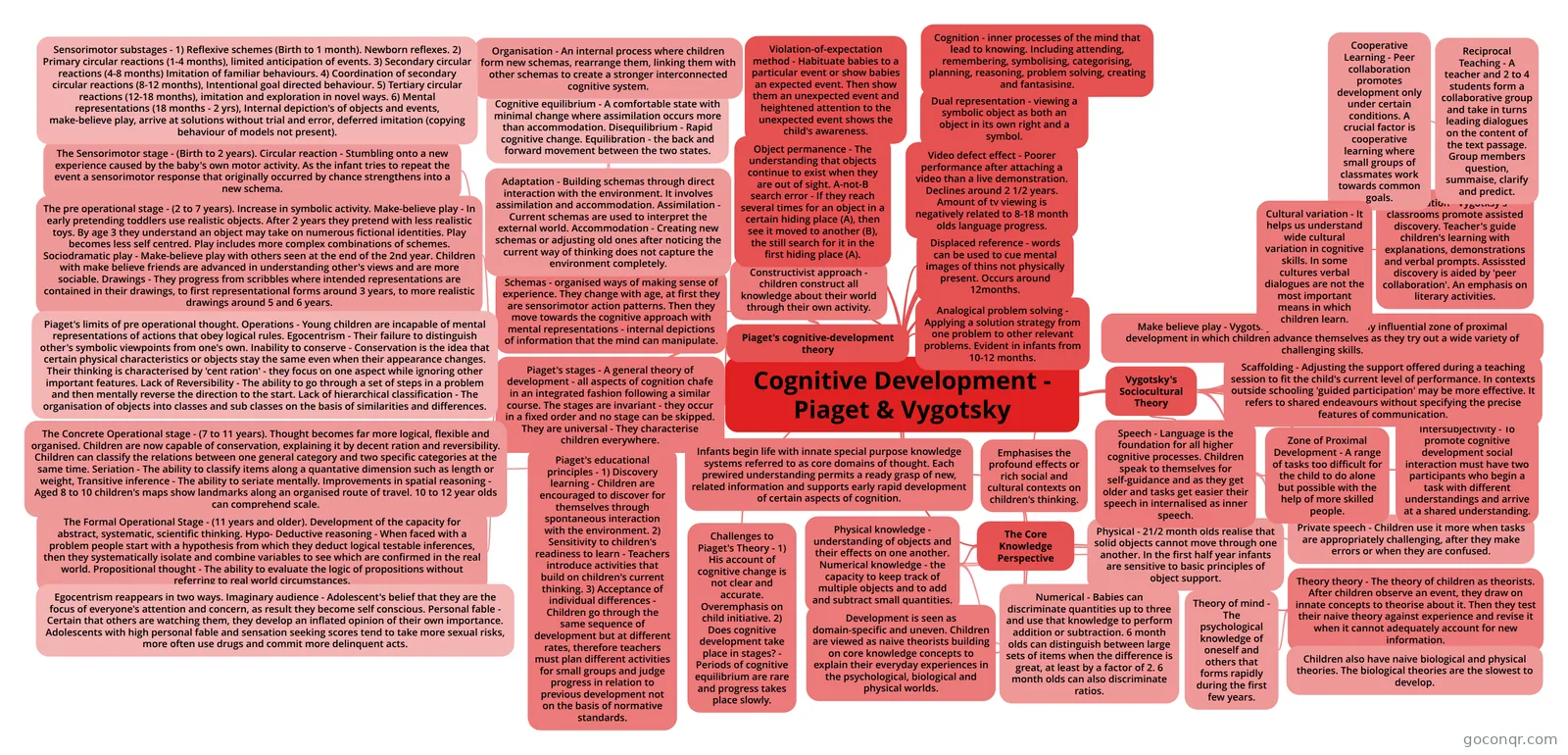 Cognitive Development - Piaget & Vygotsky
-
Cognitive Development
-
Conceptual Development
-
Exam 1: ch.1 & 2 - Piaget
-
NUMERACY
-
Process of Adaptation involving Assimilation, Accommodation, Equilibrium and Disequilibrium.
-
Perceptual Development: Infant Studies
-
Piaget's Theory of Cognitive Development
-
The Development of Social Cognition
-
Early Work on TOM Lecture 1 (2)
-
Formal Operational Stage.
-
Vygotsky's Theory of Cognitive Development
-
Understanding theory of mind and explain why children fail theory of mind tasks
-
Child Development
-
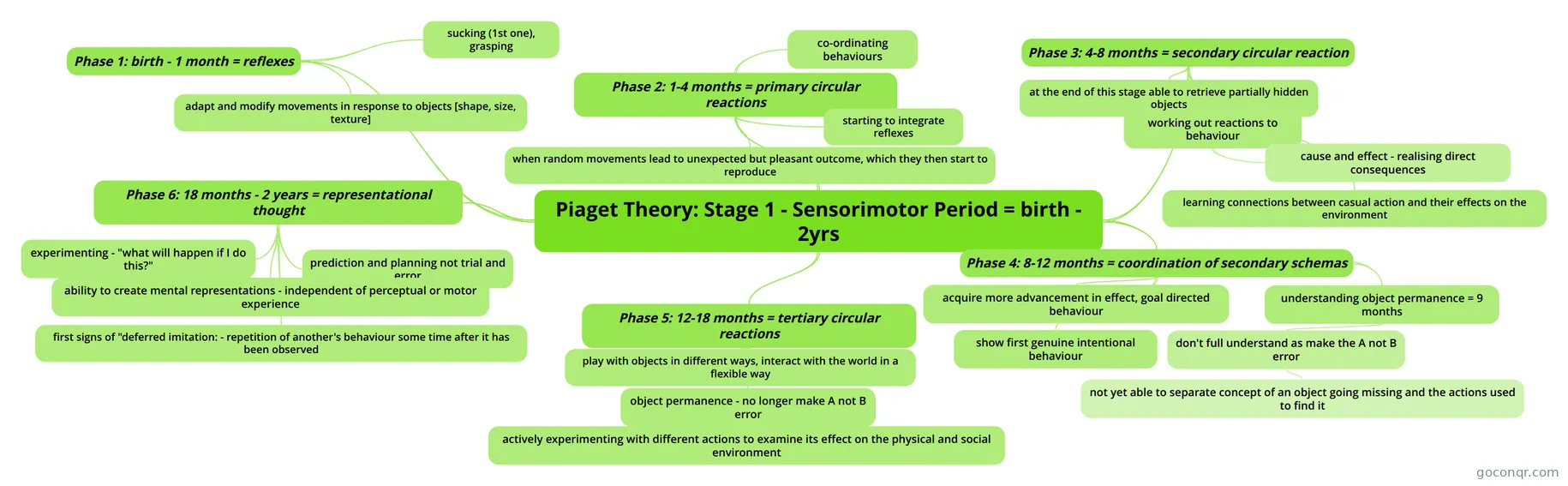 Piaget Theory: Stage 1 - Sensorimotor Period = birth - 2yrs
-
Vygotsky: social aspects of cognitive development
-
Development of thinking
-
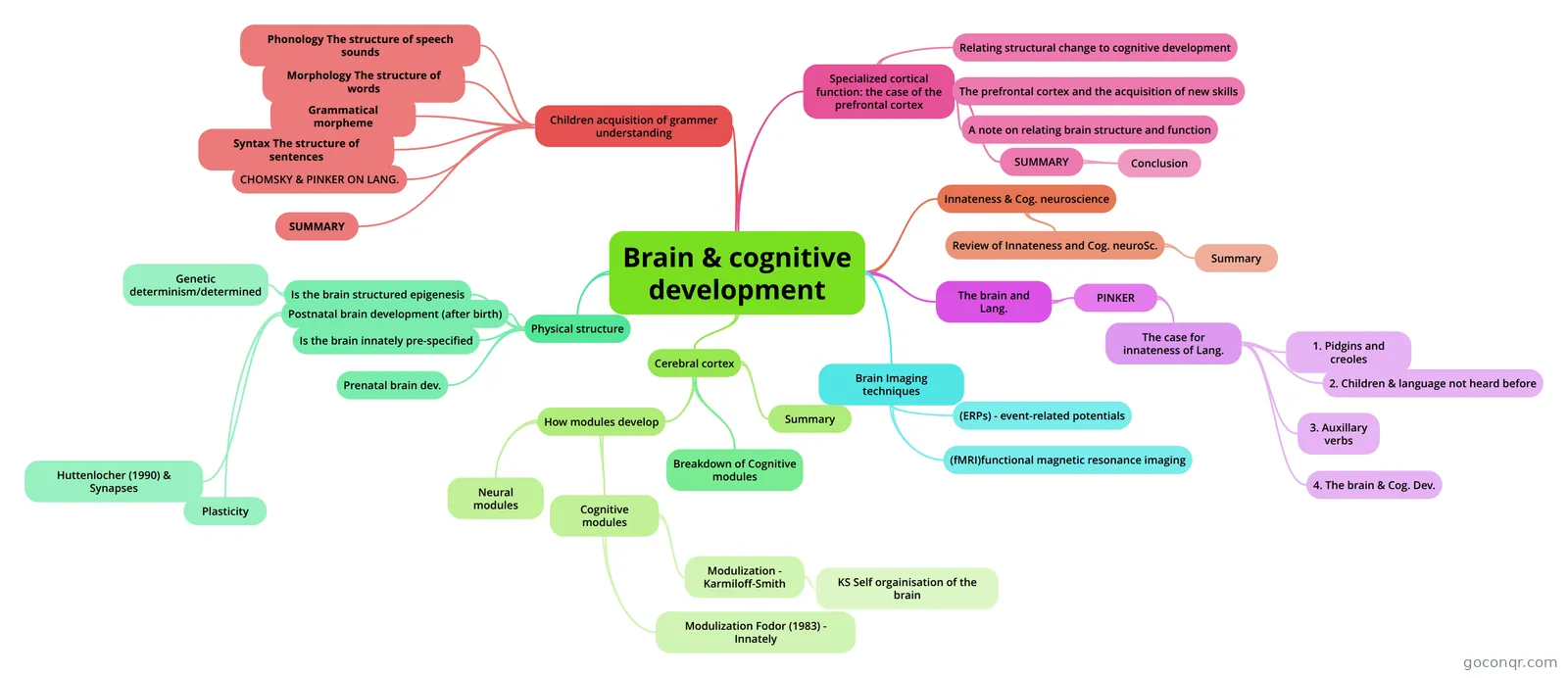 Brain & cognitive development
-
Brain & cognitive development
-
Spatial cognition
-
Lecture 4 - Space and Number
-
Piaget's Stages of Cognitive Development
-
Question 11
-
Development of relational cognition
-
Cognitive Development
-
Language development
-
Cognition Development: Childhood and Beyond
-
Cognitive Development
More Cognitive Development resources
About cognitive development mind maps
GoConqr OriginalUsing cognitive development mind maps
These maps offer different routes through the unit. Start with Piaget's Theory of Cognitive Development for an overview of his approach. For a different perspective, Lev Vygotsky highlights social interaction and cognition. You can compare the branches of the two maps as you revise.
For studies rather than a broad theory, Perceptual Development: Infant Studies brings together topics including depth perception and visual constancy. The map on theory of mind offers another route, focusing on how children understand that other people have minds different from their own.
Turn a map into revision
Read through a map, then cover its branches and try to recall the main ideas. Return to the map to check what you missed. When you want to test your recall in a different way, switch to a quiz on the unit page. Flashcards can help you revisit terms between longer study sessions.
Try a map on the topic you are revising now.
Frequently asked questions
Which mind map is a useful place to start?
Piaget's Theory is a useful starting point if you want to review how Piaget explored changes in children's cognitive development as they aged. For a broader view of his approach, there is also Piaget's Theory of Cognitive Development. Both are listed on this page.
Do the maps cover topics beyond Piaget?
Yes. The page also lists maps on Vygotsky, theory of mind, infant perception and information processing. Perceptual Development: Infant Studies includes depth perception and visual constancy, while Lev Vygotsky focuses on social interaction and cognition. These give you several ways into the unit.
Are the mind maps free to use?
Yes. Every resource listed here is free to open and study without an account. The maps were made by GoConqr users rather than by GoConqr. A free account also lets you make your own mind maps, quizzes, flashcards and notes, and saves your quiz scores.
Which levels do these maps suit?
The page includes resources at university and secondary level. Some resources mention A-level Psychology, GCSE Psychology or AP Psychology. University students and professional candidates, school students and teachers can check individual maps for the topics and level they need before using them.