
Foundations of Government and the Founding Era
19 resources created by 19 users
This Foundations of Government and the Founding Era page on GoConqr gathers community-made flashcards, mind maps, quizzes and notes on the roots of American democracy, from influences on self-government to the Declaration of Independence and the Bill of Rights. It's built for school students revising a topic and teachers after ready-made material. There are over 140 resources here, including more than 80 mind maps and more than 40 flashcards. Pick a deck or a map, try a quiz to find your gaps, then make your own.
Top Foundations of Government and the Founding Era resources
-
39 cardsChapter 2 Vocabulary: Civics Chapter 2 Vocab words
-
22 cardsQUIZ CH 1 pg 32 }} key terms & recalling facts
-
34 cardsChapter 2 roots of democracy Chapter 2 vocab
-
40 cardsCivics chapter 3 Civics chp 3 voc
-
34 cardsCivics and Economics Civics Flashcard
-
42 cardsChapter 2 Civics and Economics Vocabulary Chapter 2 Civics and Economics Vocabulary
-
44 cardsCivics gfcfggff
-
38 cardschap 2 vocabulary chap. 2
Mind maps
Flashcards
See all 18 flashcards-
39 cardsChapter 2 Vocabulary: Civics Chapter 2 Vocab words
-
22 cardsQUIZ CH 1 pg 32 }} key terms & recalling facts
-
34 cardsChapter 2 roots of democracy Chapter 2 vocab
-
40 cardsCivics chapter 3 Civics chp 3 voc
-
34 cardsCivics and Economics Civics Flashcard
-
42 cardsChapter 2 Civics and Economics Vocabulary Chapter 2 Civics and Economics Vocabulary
-
44 cardsCivics gfcfggff
-
38 cardschap 2 vocabulary chap. 2
More Ethics, citizenship and civics topics
About Foundations of Government and the Founding Era
GoConqr OriginalWhat this unit covers
This unit sits in the Democracy and Government strand of Ethics, citizenship and civics. The listed resources follow the story of how ideas about government shaped the founding of the United States. Most are flashcard decks and mind maps made by GoConqr users, with a few quizzes, notes and a flowchart.
Where to start
Begin with the vocabulary. The deck QUIZ CH 1 covers terms such as constitution, sovereignty, democracy, republic and socialism. Next, open Chapter 2 roots of democracy, which lists the Enlightenment, natural rights, the social contract, bicameral legislatures and early colonial bodies. Chapter 2 Vocabulary: Civics adds terms like parliament, precedent, common law, mercantilism and boycott.
Using the mind maps
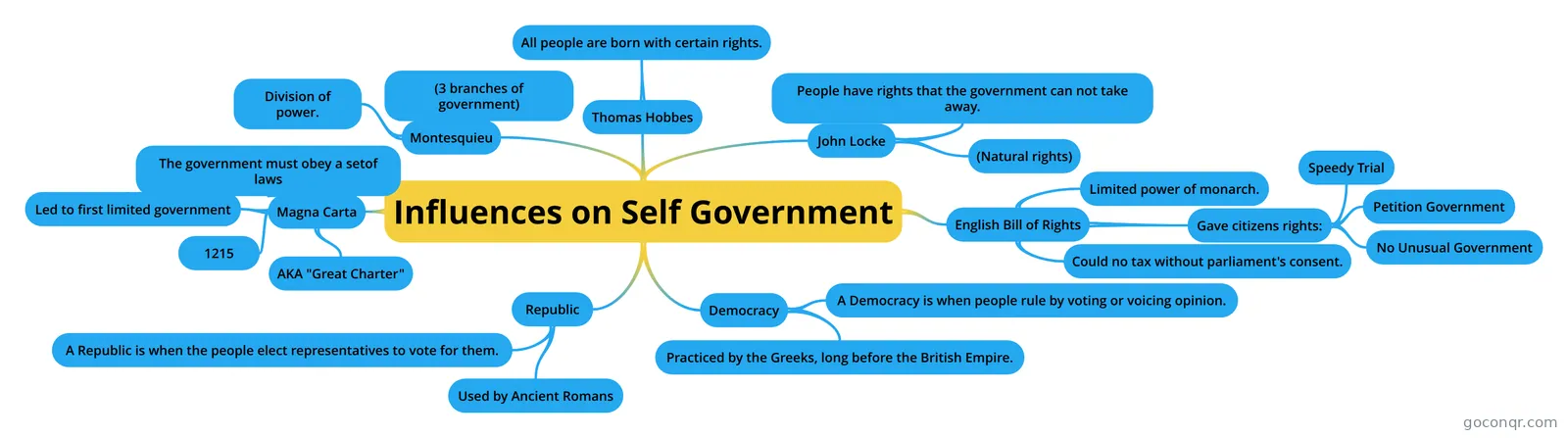
Many maps share one theme: influences on self-government and limited government. Several users have mapped it in their own way, so you can compare them. They link the Renaissance, Parliament and the Enlightenment to thinkers such as Hobbes, Locke and Montesquieu. Principles of American Democracy widens the view to other thinkers and the Declaration of Independence.
A second group of maps compares the Declaration of Independence, the Bill of Rights and the Declaration of Sentiments. Read one, then see how another user organised the same links.
Checking what you know
Use the quizzes after the maps. Try Government EOC Practice Test and Social Studies WTP Unit 2 to see which terms you can recall without help. Then go back to the decks for anything you missed. Teachers may find the notes, such as The Purposes and Origins of Government, Part 2, handy for a lesson starter.
Make it your own
Choose one map, read it through, then build your own version from memory and compare. A map or deck of your own is a good way to see what has stuck.
Frequently asked questions
Which resource should I open first?
Start with the flashcard deck QUIZ CH 1. It covers core terms like constitution, sovereignty, democracy and republic. After that, move to Chapter 2 roots of democracy, which links the Enlightenment and natural rights to the colonial period, then try a quiz.
What do the mind maps cover?
Most of them cover influences on self-government and limited government, including Parliament, the Enlightenment and key thinkers. Others compare the Declaration of Independence with the Bill of Rights and the Declaration of Sentiments. There are more than 80 mind maps in all.
Are the resources free to use?
Yes. Every resource on this page is free to open, study and take, with no account needed. They were made by GoConqr users, not by GoConqr itself, so styles and detail vary from one resource to the next.
Who are these resources for?
They suit school students revising American government and civics, and teachers who want ready-made material. Nearly all are at secondary level. One listed resource mentions the USCIS naturalization test, so a few may also help with that.
How many quizzes are there?
There are more than 4 quizzes here, alongside many flashcard decks and mind maps. Government EOC Practice Test is a good one to try once you have read a few maps and worked through a vocabulary deck.
What if I can't find what I need?
Try another title in the same theme, as many users made their own version of the same map or deck. A free account also lets you save quiz scores and make your own quizzes, mind maps, flashcards and notes to fill any gap.