
Genre
346 resources created by 279 users
This Genre page on GoConqr gathers community-made mind maps, flashcards, quizzes, slides and notes on genre in Media Studies, from horror and thriller conventions to crime, sci-fi, superheroes and the Western. It's built for school students revising genre theory and film examples, and for teachers after ready-made material. There are over 300 resources here, including more than 270 mind maps, 30 flashcard decks and 5 quizzes, with GCSE and A-level Media Studies and A-level Film Studies mentioned. Pick a topic, try a quiz, then build your own.
Select topic
- Genre theory16
- Genre codes and conventions19
- Film genres64
- Genre hybrids10
- Action and adventure films6
- Crime and gangster films19
- Film noir19
- Horror film conventions64
- Representation in horror films9
- Thriller film conventions25
- Science fiction films9
- Coming-of-age films6
- Drama and teen drama6
- Romance and comedy films6
- Western films6
Top Genre resources
-
Mind map Codes and Conventions of Horror-Thriller films
-
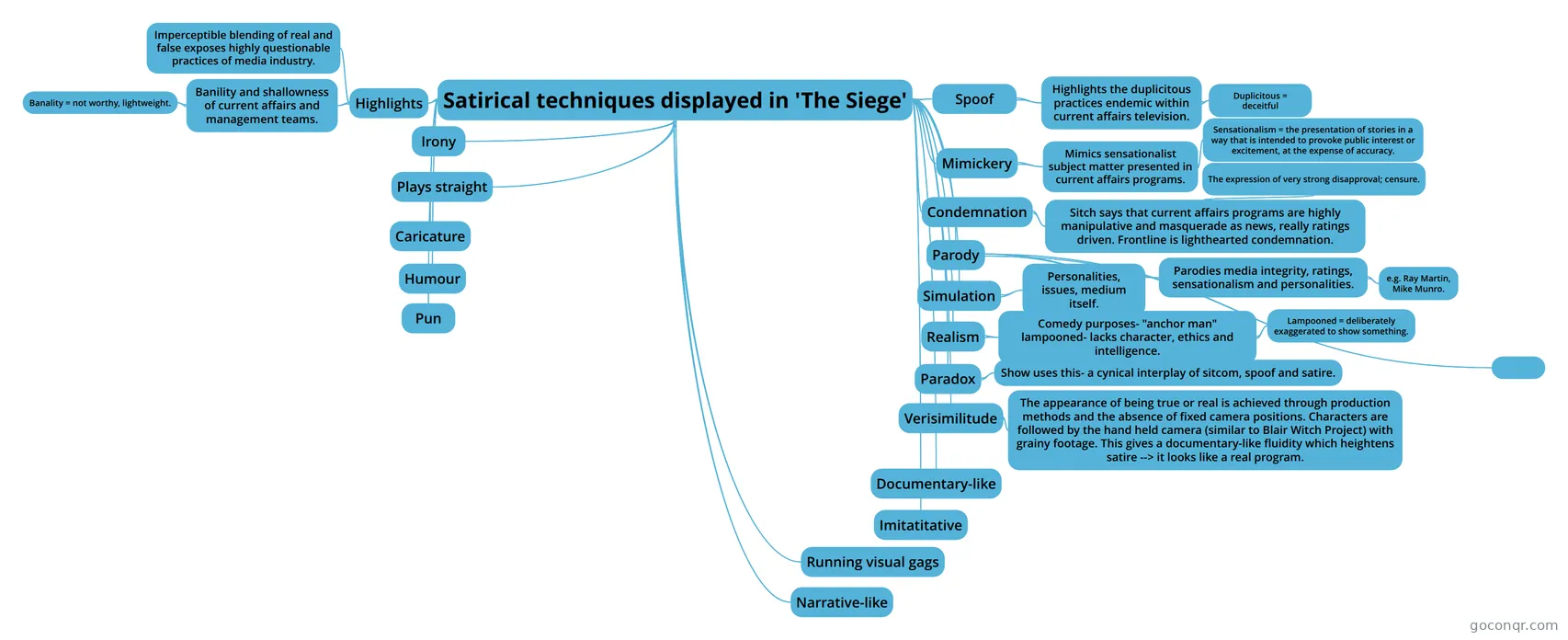 Mind map Satirical techniques displayed in 'The Siege' Satirical techniques displayed throughout ABC Frontline's episode, 'The Siege.'
-
Mind map Industry Research Industry Research for Horror films
-
5 cardsCrime Genre Crime Genre There is one off crimes that tend to create the most anxiety by the audience E.g Serial killer ...
-
Mind map Horror Character Research A mind map to explain the mise-en-scene and other features to Horror Characters
-
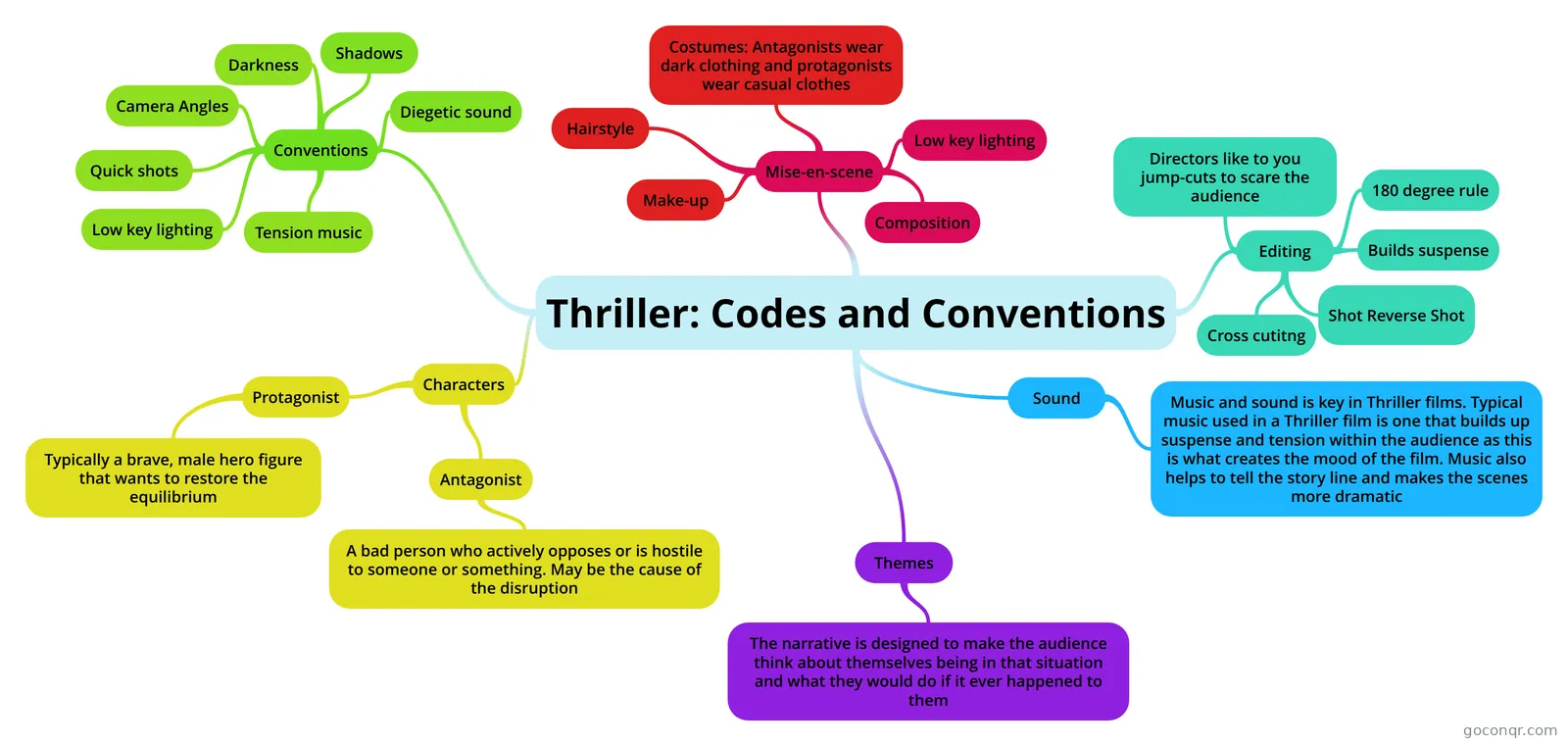 Mind map Thriller: Codes and Conventions Thriller codes
-
Mind map film genres
-
Mind map Thriller
Quizzes
-
38 questionsThriller - Genre and Narrative Quiz A thriller is not a genre where the audience feels a high amount of excitement and suspense.
-
5 questionsA2 Media: Genre Theory
-
17 questionsPopular Film (Horror)
-
7 questionsExternal Quiz What Kind Of Monster Is Frankenstein Considered?
-
4 questionsMovie Genres- Test "Yeah I called her up, she gave me a bunch of crap about me not listenin' to her enough, or somethin'. I do...
-
3 questionsUntitled Horror genre includes
Mind maps
See all 290 mind maps-
Codes and Conventions of Horror-Thriller films
-
Satirical techniques displayed in 'The Siege' Satirical techniques displayed throughout ABC Frontline's episode, 'The Siege.'
-
Industry Research Industry Research for Horror films
-
Horror Character Research A mind map to explain the mise-en-scene and other features to Horror Characters
-
Thriller: Codes and Conventions Thriller codes
-
film genres
-
Thriller
-
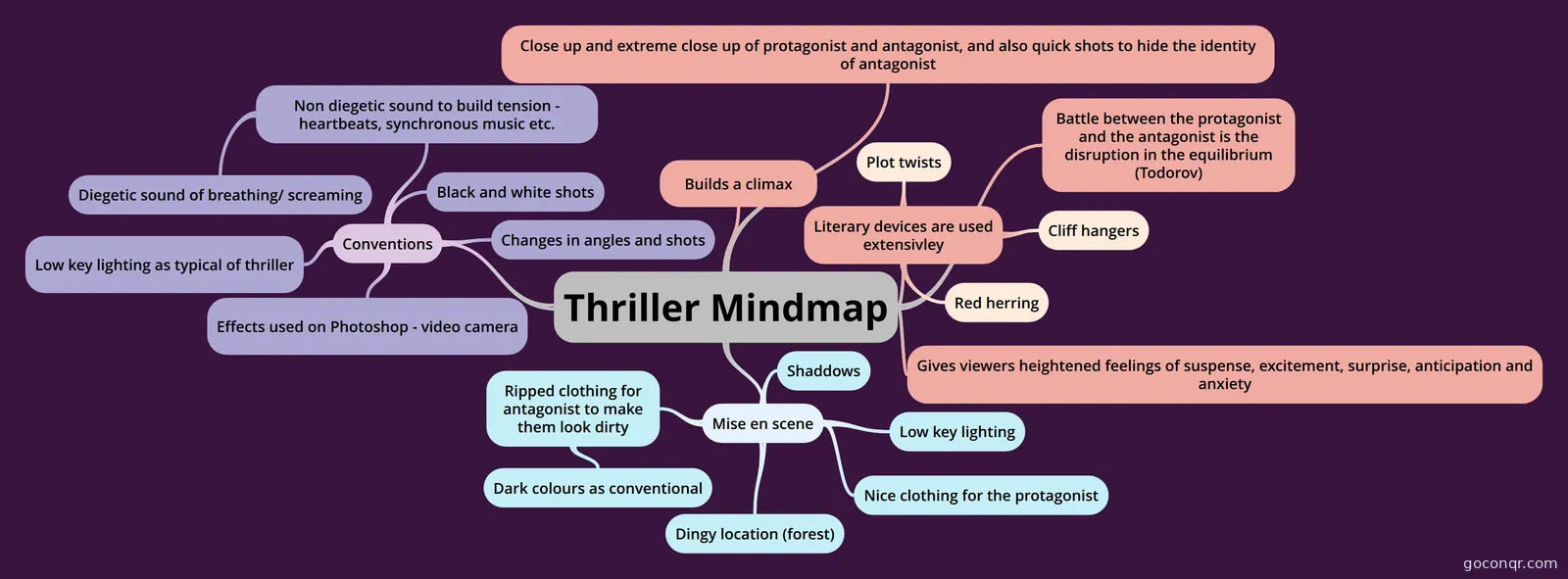 Thriller Mindmap mind map for thriller genre
Flashcards
See all 35 flashcards-
5 cardsCrime Genre Crime Genre There is one off crimes that tend to create the most anxiety by the audience E.g Serial killer ...
-
18 cardsFilm Genre
-
12 cardsZombie Genre essay
-
24 cardsGenre conentions
-
6 cardsUntitled What Is A 'Thriller'?
-
8 cardsGenre
-
16 cardsA115 Chapter 3 Quiz The founding purpose of the persuasive documentary was to
-
13 cardsGenre Theorists
Flowcharts
Notes
-
Comedy murder mystery Comedy murder mystery Author: Shaudi Bianca Vahdat In the mood for a comedy mystery that’ll make you laugh while it keeps you guessing? If you’re craving a thrilling whodunit without the heavy dose of grim real...
-
Features of Film in the Horror Genre - created from Mind Map Camera Techniques Sound Mise-en-scene
-
External Notes External Essay Notes: General Notes:- Every movie was made due to the impact of society.- They all contain a monster of some sort.- Use specific examples from the movies to provide evidence of the monster. (Depends on...
-
Untitled Warren Buckland's Theory of Genre "The word "genre" means "type" or "category". To study a film as a genre involves treating it not as a unique entity, but as a member of general catagory as a certain type of film. Th...
-
What makes Sci-Fi films successful? District 9Binary opposites-Man Vs AliensEnigma codes- where did the come from?Conventions-Narrative-Characters-Edge of tomorrowFuturistic technology- robotic and computer basedScientific narrative- fighting a disease ...
Slides
Topics in Genre
More Media studies topics
About Genre
GoConqr OriginalWhat this unit covers
Genre sits in the strand Media Language, Representation and Audiences, within Media studies. Most of the resources here are mind maps, and many focus on horror and thriller. The mind map Codes and Conventions of Horror-Thriller films covers technical conventions such as tilted angles that disorient the viewer and extreme close-ups that stress feeling. Thriller: Codes and Conventions looks at sound and how music builds suspense and tension.
Genres and examples
If you want breadth, start with film genres, which lists action, comedy, crime, horror, science fiction, musicals, war films, westerns and more. HORROR MOVIES breaks horror into sub-genres such as slasher, psychological, monsters and paranormal, with film examples. There are also maps on Zombies Genre, The Western, Science Fiction Conventions, Key Conventions of Teen Drama and Double Indemnity. The flashcard deck Crime Genre asks why audiences watch crime stories.
Theory and representation
For theory, try Genre Theorists and the flowchart STEVE NEALE GENRE THEORY 1. The maps Repertoire of elements and Genre Concepts help you link theory to films. For representation, open Horror Character Research, which looks at who plays the victim in horror, and the map on how female or male characters are represented in studied horror films.
A sensible order
- Read a broad map such as Genre or film genres.
- Choose one genre, such as horror or thriller, and work through its conventions map.
- Test yourself with the quiz Thriller - Genre and Narrative Quiz or A2 Media: Genre Theory.
- Go back to the maps for any answer you missed, then use flashcards to fix the key terms.
Teachers can set a single map as a starter, then use a quiz to check what the class remembers.
Make it your own
Every resource was made by GoConqr users, so compare a few maps on the same genre and notice where they differ. Then pick one film you know and make a short set of flashcards on its conventions.
Frequently asked questions
Which resource should I open first?
Start with a broad mind map such as Genre or film genres to see the main categories. Then move to a single genre, for example Codes and Conventions of Horror-Thriller films, and finish with a quiz to check what you remember.
What do the mind maps cover?
Most of the page is mind maps. They cover horror and thriller conventions, sub-genres, crime, sci-fi, superheroes, the Western, teen drama and zombies. Some also cover genre theory, character representation and stereotypes in the films studied.
Which quizzes are there?
There are 5 quizzes on the page. They include Thriller - Genre and Narrative Quiz, A2 Media: Genre Theory, Movie Genres- Test and Popular Film (Horror). Try one after reading a map to see which conventions or theorists you still need to revise.
Are the resources free, and who made them?
Yes. Every resource listed here is free to open, study and take, with no account needed. They were made by GoConqr users rather than by GoConqr. A free account saves your quiz scores and lets you make your own maps, flashcards and notes.
Which exams do these resources relate to?
The listed resources mention GCSE Media Studies, A-level Media Studies and A-level Film Studies. They are mostly made for school students, so they suit revision of genre conventions, theory and film examples at that stage.
What if I can't find the genre I need?
Try the broader maps such as film genres or Genre Concepts, which list many genres and ideas. You can also build your own mind map or flashcards on the missing genre, using the conventions maps here as a model.