
Interpersonal Communication mind maps
74 mind maps by 56 users · Page 1 of 2
This GoConqr page gathers community-made Interpersonal Communication mind maps on listening, verbal communication, relationships and emotions. With over 70 maps made by more than 50 users, it is mainly university-level material for university students practising these topics and teachers looking for ready-made resources. Pick a map and explore its branches.
Mind maps
-
Verbal Communication Theory in Communication
-
IPC (outline & ch 1 FULL)
-
Intrapersonal/Interpersonal
-
4: How can we understand the complexity of communication?
-
UNDERSTANDING INTERPERSONAL RELATIONSHIPS
-
IMPROVING INTERPERSONAL RELATIONSHIPS
-
THE SELF, PERCEPTION, AND COMM
-
Deception
-
Why study interpersonal comm?
-
LISTENING
-
1_COMMUNICATION
-
COMMUNICATION
-
1:What do we talk about?
-
Non-Violent Comunications (NVC)
-
Listening in Interpersonal Communication
-
Chapter Two: Gender
-
Conflict and Climate
-
Language
-
Effective Communication Skills
-
Interpersonal Relationships
-
Perception of the self and others in Interpersonal Communication
-
Language
-
Relationships with Friends
-
Social Support
-
Active Listening
-
Interpersonal Skills Mindmap Week 3
-
Interpersonal Skills Week 2 Mindmap
-
Emotional Messages
-
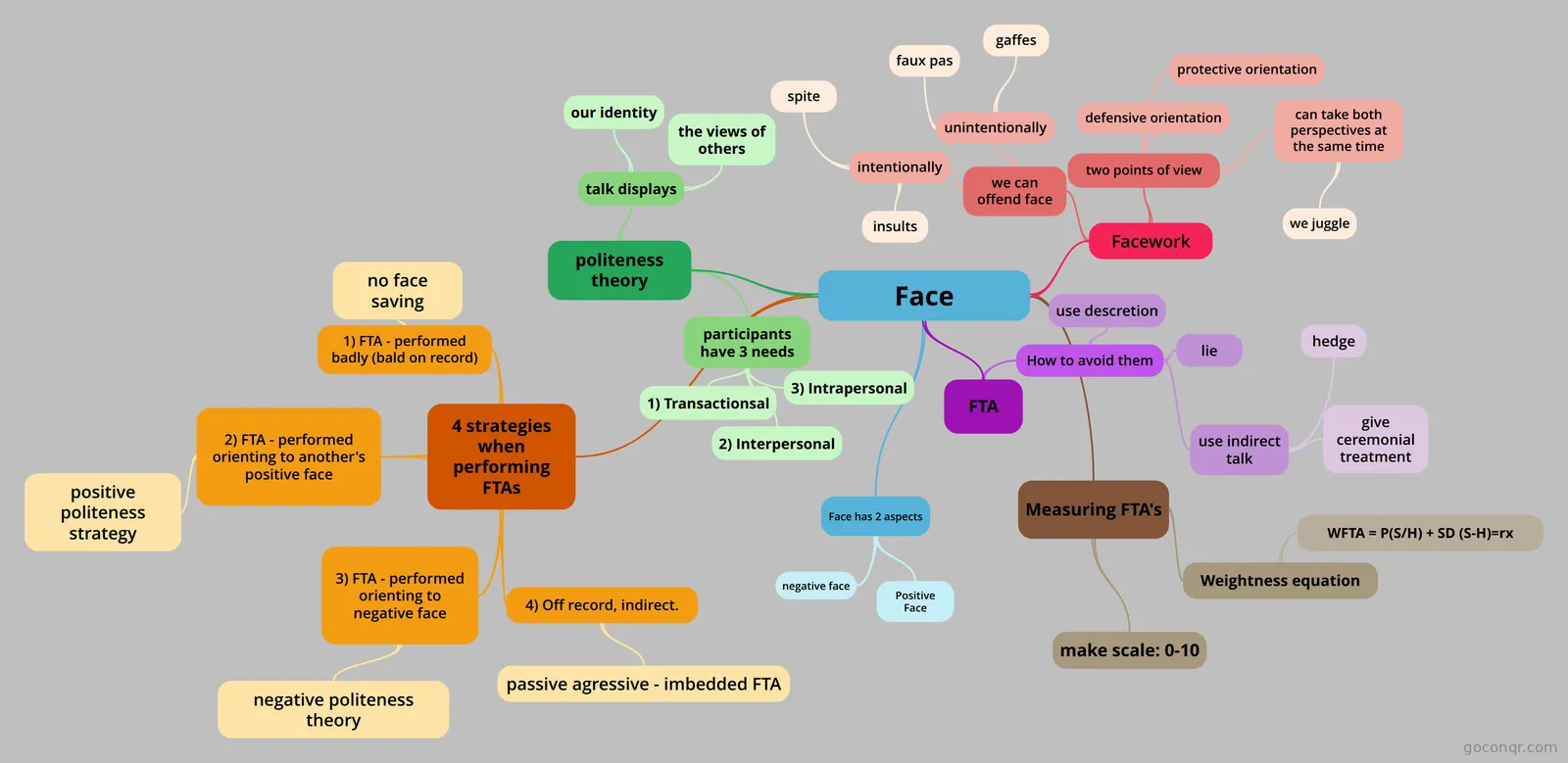 Face
-
small group communication
-
Dealing with conflict
-
LISTENING IN INTERPERSONAL COMMUNICATION
-
Interpersonal Communication
-
Understanding Interpersonal Relationships
-
SYSTEMIC MODEL OF INTERPERSONAL HUMAN COMMUNICATION
-
Personality Trait Approaches
-
Interpersonal Communication
-
CHAPTER 4: LISTENING IN INTERPERSONAL COMMUNICATION
-
UNIT 1
-
Interpersonal Communication 2
More Interpersonal Communication resources
About interpersonal communication mind maps
GoConqr OriginalInterpersonal Communication mind maps to explore
The maps on this page give you visual routes through different parts of the unit. Listening in Interpersonal Communication covers the listening process, barriers and effective styles. Relationships with Friends looks at friendship and shared interests, while Emotional Messages includes principles of emotions and obstacles to communicating them.
If listening is your focus, start with the listening map: its branches let you move from the process to the barriers. For relationship topics, try Interpersonal Communication 2, which maps factors involved in forming relationships.
Revise with the branches
Choose a branch, cover its details and try to recall the connections in your own words. Return to the map to check what you missed. When you want to practise terms or test your understanding, switch to flashcards or a quiz on the unit page. You could also build your own mind map around a topic you are studying.
Frequently asked questions
Which mind map is useful for studying listening?
Listening in Interpersonal Communication is a useful starting point. It brings together the listening process, barriers and styles of effective listening in one map. You can follow a branch at a time, then revisit the others to see how the ideas connect.
What do the mind maps cover about relationships?
Relationships with Friends looks at friendship, including its voluntary nature and shared interests. Interpersonal Communication 2 covers factors involved in forming relationships, such as similarity, proximity and reciprocity. The page also lists maps on social support, deception and dealing with conflict.
Are these mind maps free to use?
Yes. Every mind map listed here is free to open and study without an account. The resources were made by GoConqr users. A free account also lets you create your own mind maps, quizzes, flashcards and notes, and save your quiz scores.