
Introduction to Archaeology and Archaeological Theory
140 resources created by 100 users
This Introduction to Archaeology and Archaeological Theory page on GoConqr gathers community-made mind maps, flashcards, quizzes and notes, from the goals of modern archaeology and excavation roles to burial practices, social organisation and material culture. It's built for university students, school students and teachers after ready-made material, with practice on key terms, sites and theory. There are over 130 resources here, including more than 70 mind maps, over 40 flashcard decks and 10 quizzes. Pick a map, then test yourself with a quiz.
Select topic
Top Introduction to Archaeology and Archaeological Theory resources
-
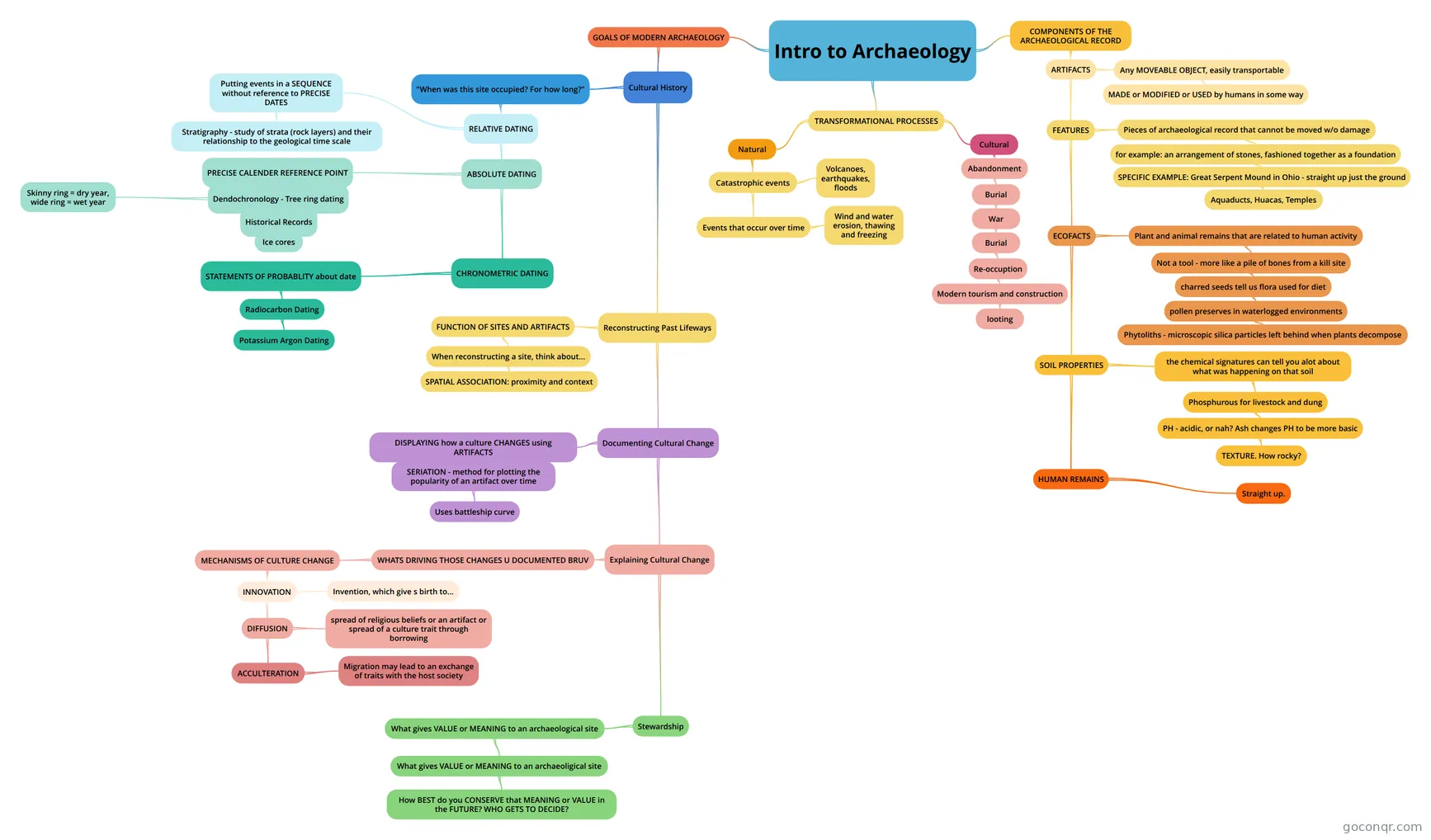 Mind map Intro to Archaeology Principles of Archaeology - Intro Content
-
64 cardsarch exam 1 ch 1-4
-
36 cardsANT200Y1Y How was the Kebara Period characterized?
-
Mind map Archaeological Theory
-
 Mind map Chapter 7 Archaeology Theory and Material Culture By Silvana Rodarte
-
 Mind map SMA 9 Burial, Decay And Preservation Of Archaeological Remains
-
37 cards[#2] Science and Archaeology Second topic covered.
-
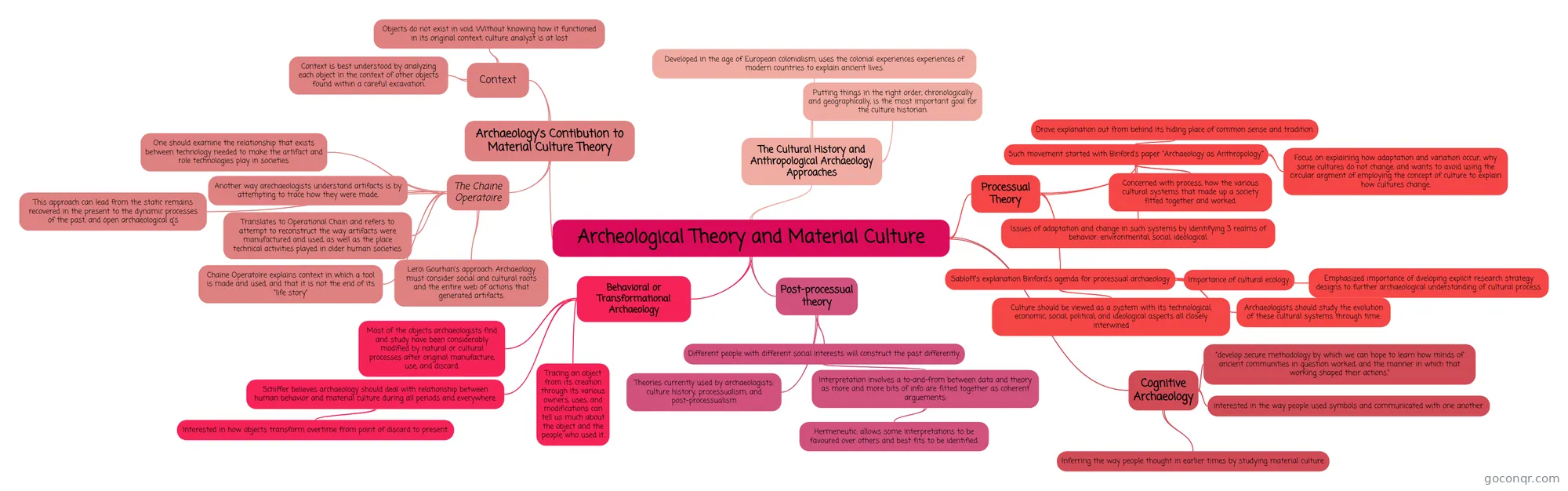 Mind map Archeological Theory and Material Culture Chapter 7
Quizzes
See all 12 quizzesMind maps
See all 77 mind maps-
Intro to Archaeology Principles of Archaeology - Intro Content
-
Archaeological Theory
-
Chapter 7 Archaeology Theory and Material Culture By Silvana Rodarte
-
SMA 9 Burial, Decay And Preservation Of Archaeological Remains
-
Archeological Theory and Material Culture Chapter 7
-
Relative Dating Ancient History - different types of dating methods
-
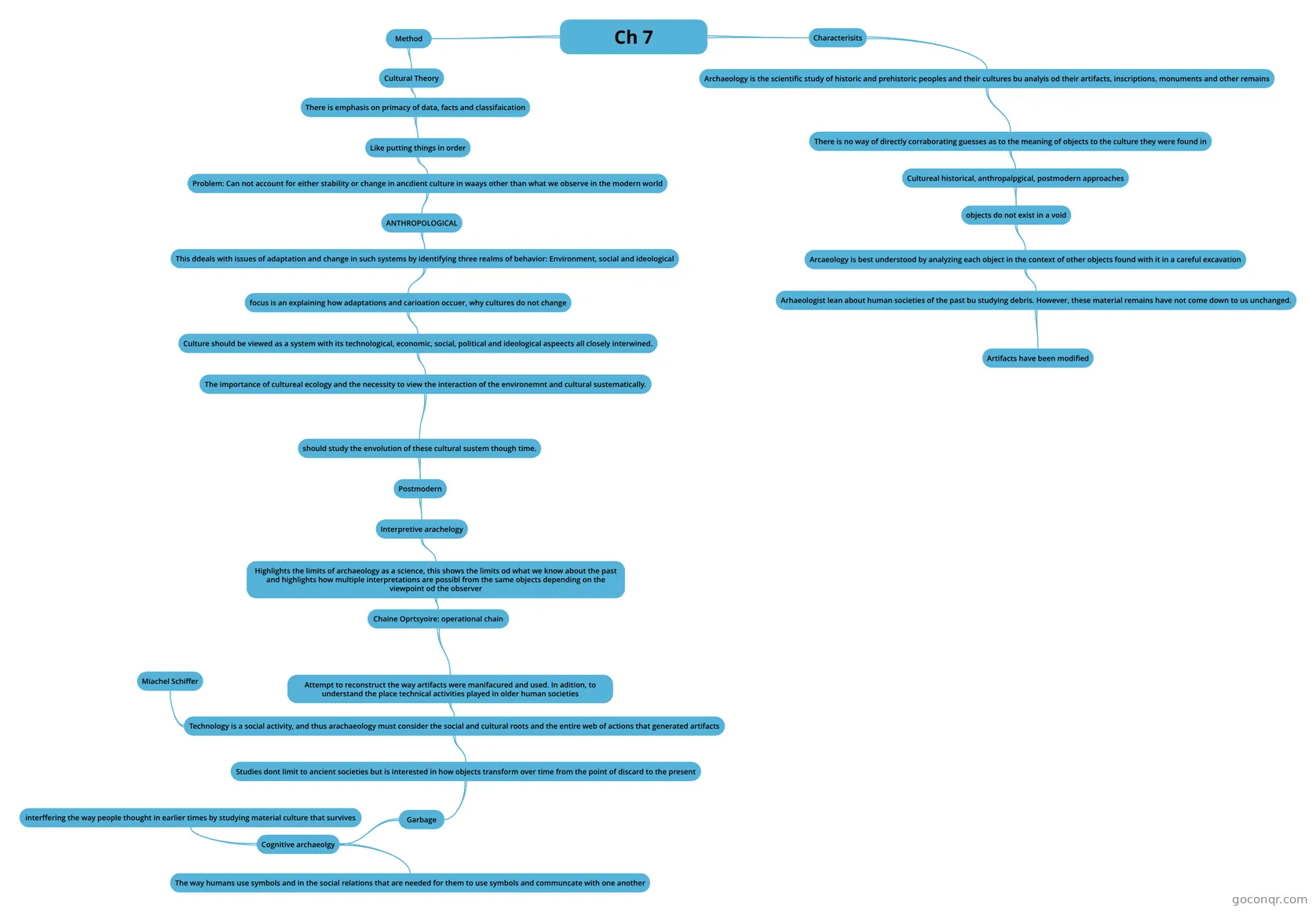 Ch 7
-
Archeological Theory and Material Culture- Chapter 7
Flashcards
See all 47 flashcards-
64 cardsarch exam 1 ch 1-4
-
36 cardsANT200Y1Y How was the Kebara Period characterized?
-
37 cards[#2] Science and Archaeology Second topic covered.
-
33 cardsArchaeology Lab Flashcards [#3] Everything about ceramics!
-
26 cardsARCHAEOLOGY
-
20 cardsAS Archaeology - 'Seahenge' Case study - Holme-next-to-the-sea What site is this?
-
29 cardsArchaeology Ch.1-3 Images for Quiz #1 of Introduction to Archaeological Fieldwork
Notes
Topics in Introduction to Archaeology and Archaeological Theory
More Anthropology topics
About Introduction to Archaeology and Archaeological Theory
GoConqr OriginalWhat the resources cover
The page opens with the broad picture. The mind map Intro to Archaeology sets out the goals of modern archaeology: cultural history, reconstructing past lifeways, documenting and explaining cultural change, and stewardship. The note The Principles of Archaeology describes the duties of an excavation team, from the director to the site supervisor.
Further maps go into social archaeology. Social Archaeology: Social Differentiation looks at gender, age, ethnicity, status and specialism, and how they show up in clothing, adornment and grave goods. Another map covers bands, chiefdoms and states, along with migration and population health.
Burial, sites and theory
Two maps, Human Burials and Burial Practises, cover graves, cists, tombs and the point that only a fraction of the dead are ever found. The flashcard deck Archaeology Sites lists places such as Uruk, Giza, Newgrange and Great Zimbabwe. Many maps also cover archaeological theory and material culture, so you can compare how different students summarised the same topic.
Where to start and in what order
- Read the Intro to Archaeology mind map for the overview.
- Skim The Principles of Archaeology to see how a dig is run.
- Move to the social archaeology and burial maps.
- Work through the theory and material culture maps.
- Finish with flashcards and quizzes.
Using maps and quizzes together
Read a map first, then close it and try a quiz such as What is Archaeology? - Quiz or Mollusks and Other Shells. Note what you missed, go back to the matching map, and try again. The deck Terminology I should be able to define/explain is handy for terms such as taphonomy, sedentism and Clovis Points.
Where this sits
This unit belongs to the Archaeology strand of Anthropology. It suits university students most, with some material for school students, and teachers can use the maps as ready-made starting points. Choose one resource today and see where it takes you.
Frequently asked questions
Which resource should I open first?
Start with the Intro to Archaeology mind map. It lays out the goals of modern archaeology, from cultural history to stewardship, and gives you a frame for everything else. Then read The Principles of Archaeology note to see how an excavation team is organised.
What do the mind maps cover?
There are over 70 mind maps. They cover the aims of archaeology, social differentiation, social and political organisation, human burials, burial practices, sites and settlement patterns, nationalism and archaeology, and many versions of archaeological theory and material culture.
Are the resources free to use?
Yes. Every resource listed here is free to open, study and take, with no account needed. A free account also saves your quiz scores and lets you make your own quizzes, mind maps, flashcards and notes.
Who made these resources?
They were made by GoConqr users, not by GoConqr itself. More than 90 contributors have added maps, flashcards, quizzes and notes, so the style and depth vary from one resource to the next.
Which levels does this page suit?
Most resources are aimed at university students, with a smaller share for school students. Teachers can also use the maps and flashcards as ready-made material for introducing archaeology and its theory.
What can I use to practise key terms?
Try the flashcard decks. Quiz #3 includes terms such as artifacts, band, chiefdom, ethnoarchaeology and feminist archaeology. Terminology I should be able to define/explain covers items like taphonomy and Lapita culture.