
Introduction to Chemistry mind maps
298 mind maps by 291 users · Page 1 of 8
This Introduction to Chemistry page gathers over 270 community-made mind maps, covering atoms, reactions, formulae and more. School students, university students and professional candidates can use them to revise chemistry concepts, while teachers can find material for lessons. The maps span school and university levels. Pick a map to get started.
Select topic
- History and Branches of Chemistry50
- Scientific Method and Lab Safety6
- Measurement in Chemistry7
- Matter: Properties and States32
- Elements, Compounds and Mixtures49
- Mixtures and Separation Techniques8
- Atomic Structure and Theory45
- The Periodic Table15
- Chemical Bonding and Intermolecular Forces86
- Ions5
- Moles and Stoichiometry11
- Chemical Reactions and Equations34
- Acids and Bases10
Mind maps
-
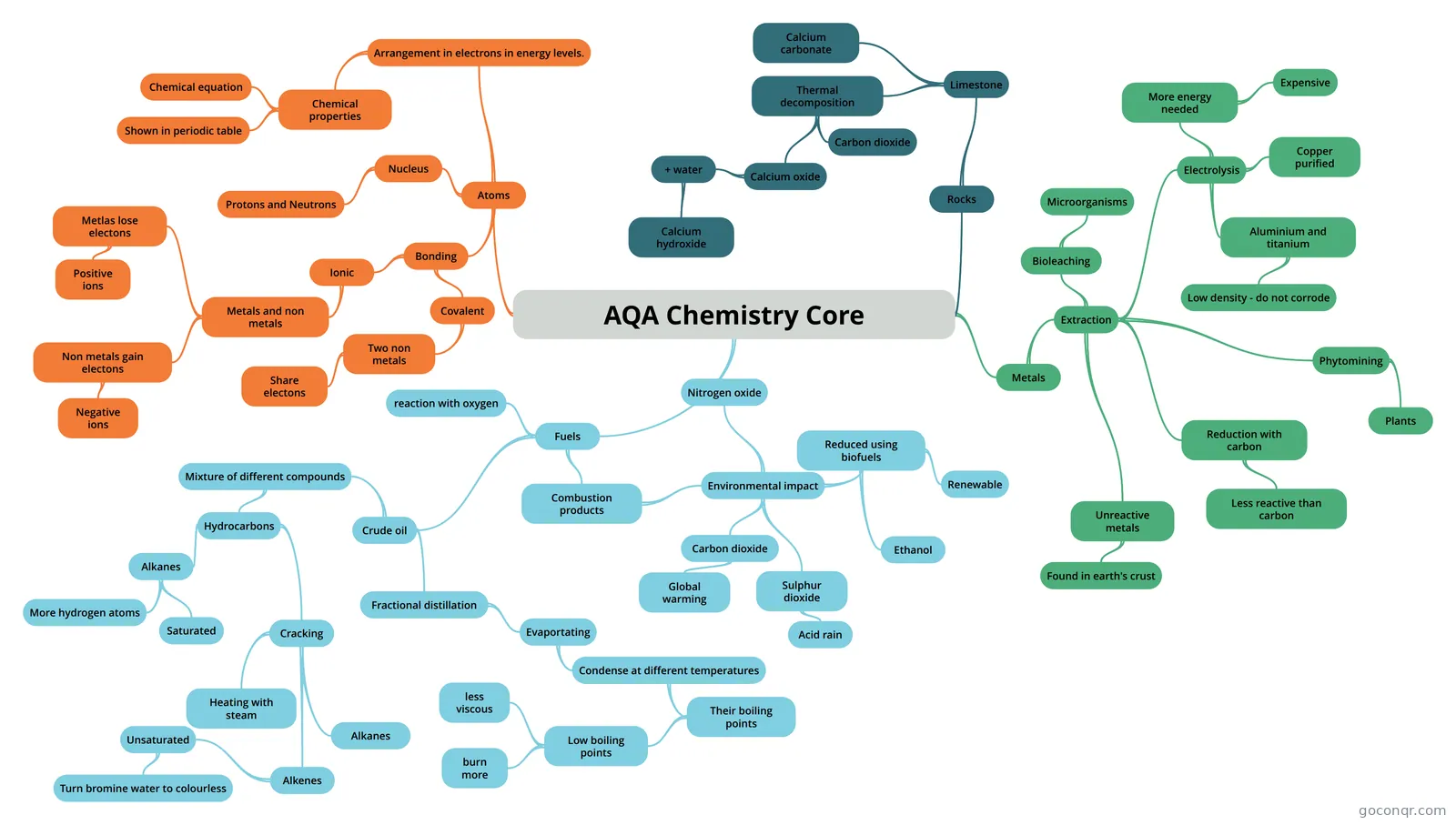 AQA Chemistry Core SCIENCE MINDMAP CHEMISTRY
-
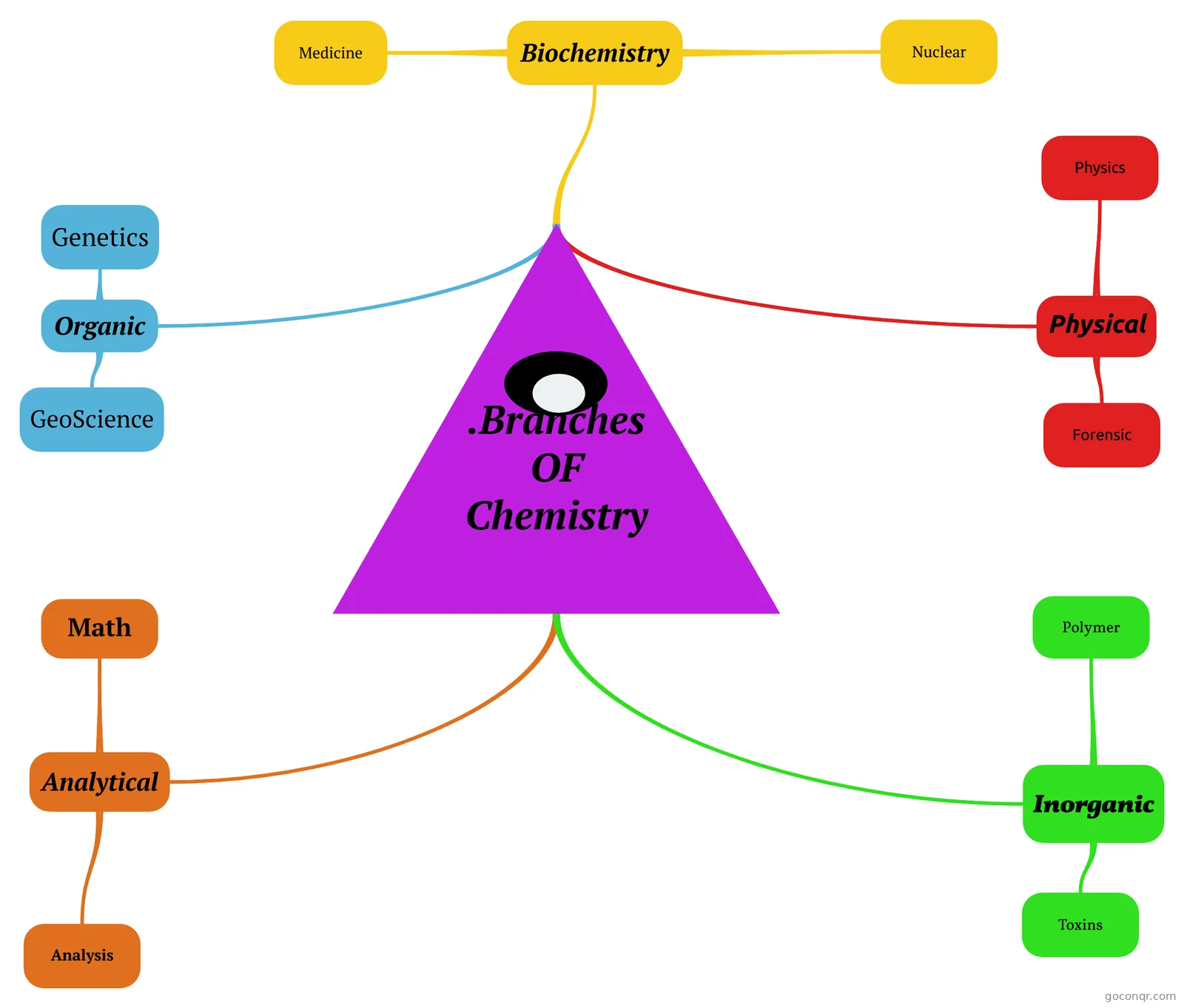 .Branches OF Chemistry I KNOW ...
-
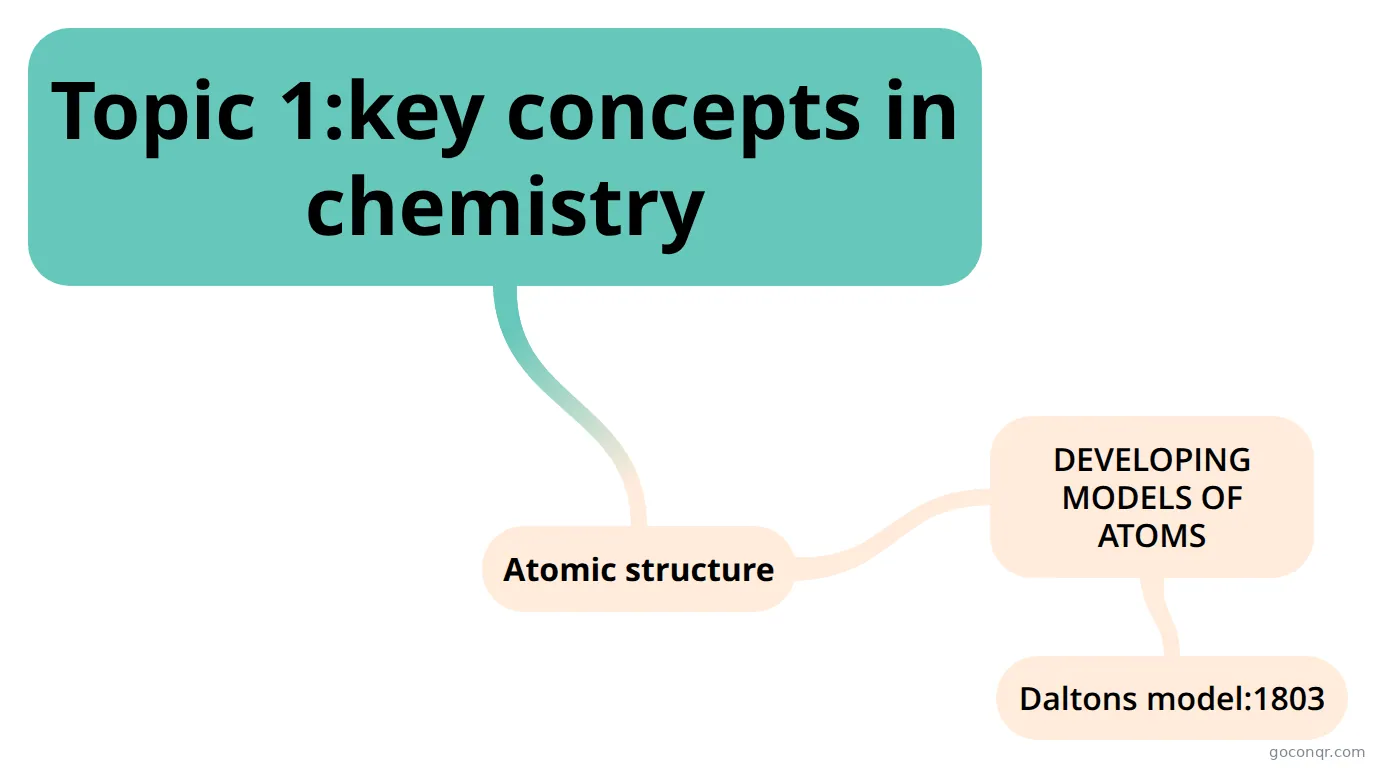 Topic 1:key concepts in chemistry A mind map on everything in topic 1 edexcel single science chemistry/triple science.
-
Chemistry 1
-
OCR A CHEMISTRY AS UNIT F321
-
Chemistry C1
-
Chem 121 Chapter 2: Atoms, Molecules, and Ions
-
Chemistry 10
-
SNC2D0-L
-
CHEMISTRY UNIT 1
-
Inorganic Chemestry
-
Chemistry C1
-
Chemestry
-
Chemistry 1 EDEXCEL triple science. Chemistry 1.
-
Chemistry: Atoms, Elements, and Compounds
-
Chem 121-- Chapter 1
-
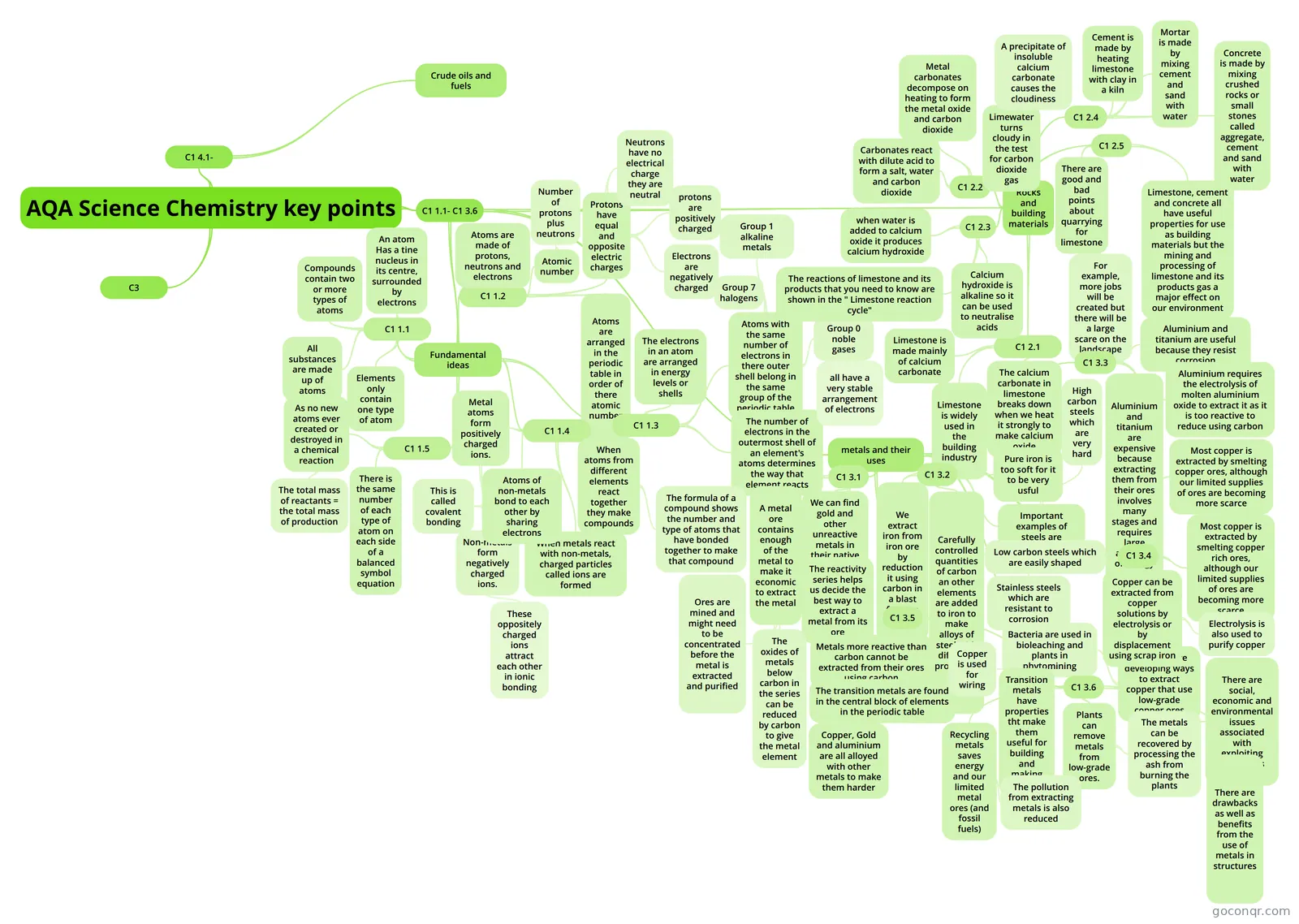 AQA Science Chemistry key points
-
Chemistry Revision
-
Formulae, equations and amounts of substances (1.1)_1
-
Formulae, equations and amounts of substances (1.1)
-
Chemistry
-
Chemistry
-
Chemistry Unit 1
-
C1
-
Chemistry Terms
-
Chemistry.
-
Importance of Chemistry in the Modern World
-
Honors Chemistry
-
Historia e importancia de la química en la vida moderna
-
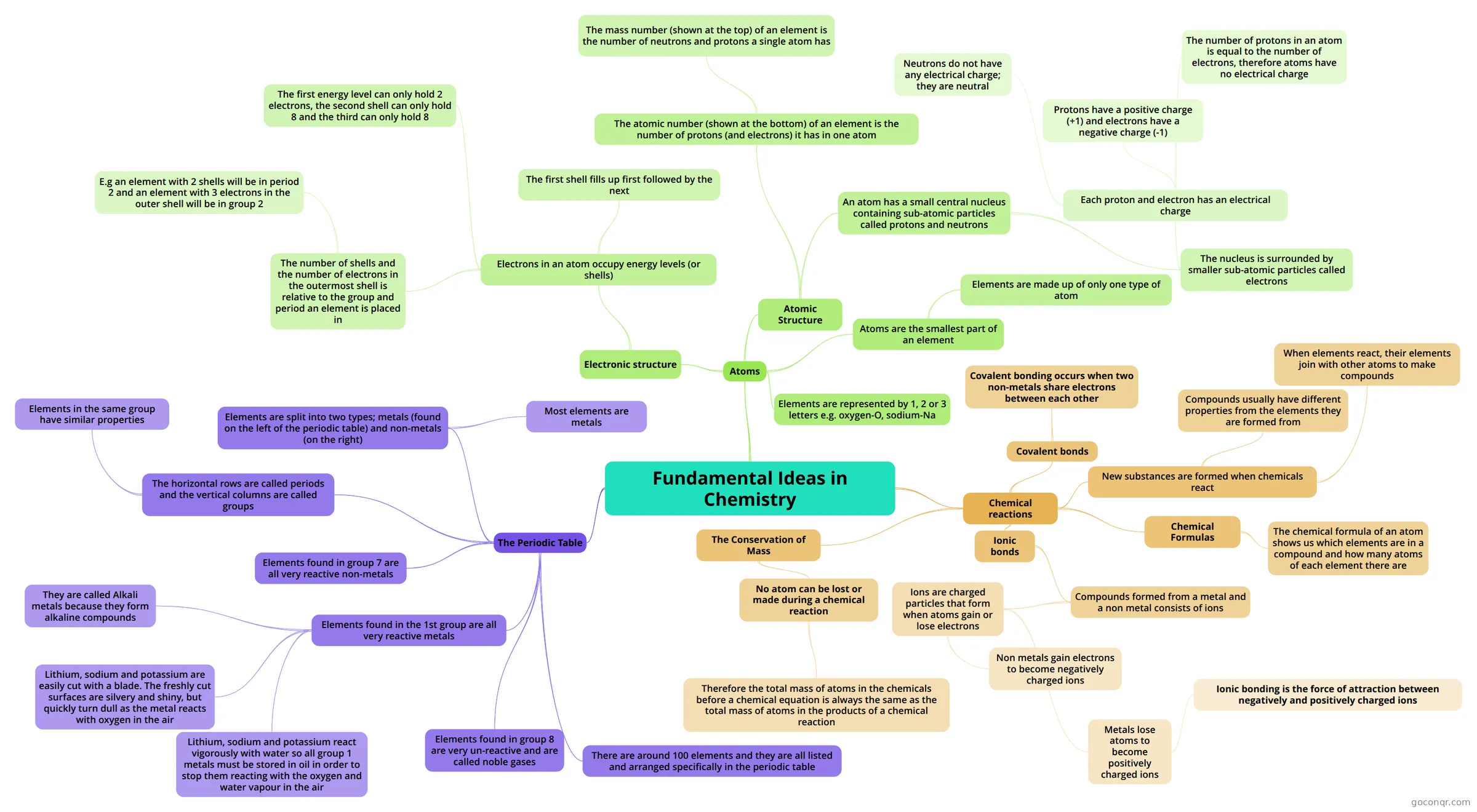 Fundamental Ideas in Chemistry
-
Fundamental Ideas in Chemistry
-
Chemistry- Penny
-
C2: Elements, Compounds, and Mixtures
-
MATTER
-
Key concepts edexcel chemisty
-
C1
-
C1 Mind Map on Chemistry, created by Olivia Evenson on 18/03/2017.
-
Chem chap #1
-
Chemistry
-
Chemistry revision
More Introduction to Chemistry resources
About introduction to chemistry mind maps
GoConqr OriginalIntroduction to Chemistry mind maps
These maps bring together different parts of the unit. Fundamental Ideas in Chemistry includes atoms and the periodic table, while Atoms and Reactions connects atoms with formulae, moles and reactions. Chemistry Terms looks at physical and chemical properties. There are also maps on elements, compounds and mixtures, and on acids and bases.
Choosing and using a map
Start with Fundamental Ideas in Chemistry if you want to revisit atoms and elements. Its branches give you a way to follow the ideas together. For a focus on reactions and formulae, move to Atoms and Reactions.
Read one branch at a time, then try to recall its points before looking again. Compare the branches with another map when you want a different view of the same topic. Switch to flashcards on the unit page for definitions, or to a quiz when you want to check your understanding. Choose a map and follow its branches as you revise.
Frequently asked questions
Which mind map is a good place to start?
Fundamental Ideas in Chemistry is a useful starting point for reviewing atoms, elements and the periodic table. If you want to focus on how atoms relate to formulae, moles and reactions, Atoms and Reactions brings those topics together in one map. Both are listed on this page.
Are the mind maps free to use?
Yes. Every map listed here is free to open and study without an account. The resources were made by GoConqr users, rather than by GoConqr. A free account also lets you save quiz scores and make your own quizzes, mind maps, flashcards and notes.
What topics do the mind maps cover?
The listed maps cover atoms, elements, formulae, reactions and chemistry terms. There are also maps on elements, compounds and mixtures, and on acids and bases. Different maps group ideas in different ways, so you can look for one that matches the topic you are revising.