
Language and Communication mind maps
439 mind maps by 343 users · Page 1 of 11
This GoConqr page gathers over 400 Language and Communication mind maps, from language development and bilingual memory to sentence processing and non-verbal communication. University students and professional candidates can revisit language and cognition, school students can practise communication topics, and teachers can find ready-made material across university and school levels. Pick a map to begin.
Select topic
- Psycholinguistics22
- Language Structure and Functions17
- Language and Thought25
- Language and the Brain6
- Theories of Language Acquisition44
- Language Development96
- Word Learning and Vocabulary Development14
- Bilingualism and Second Language Acquisition32
- Speech Perception and Language Comprehension22
- Word Recognition and Reading12
- Language and Speech Production8
- Language Disorders18
- Nonverbal Communication66
- Interpersonal Communication22
Mind maps
-
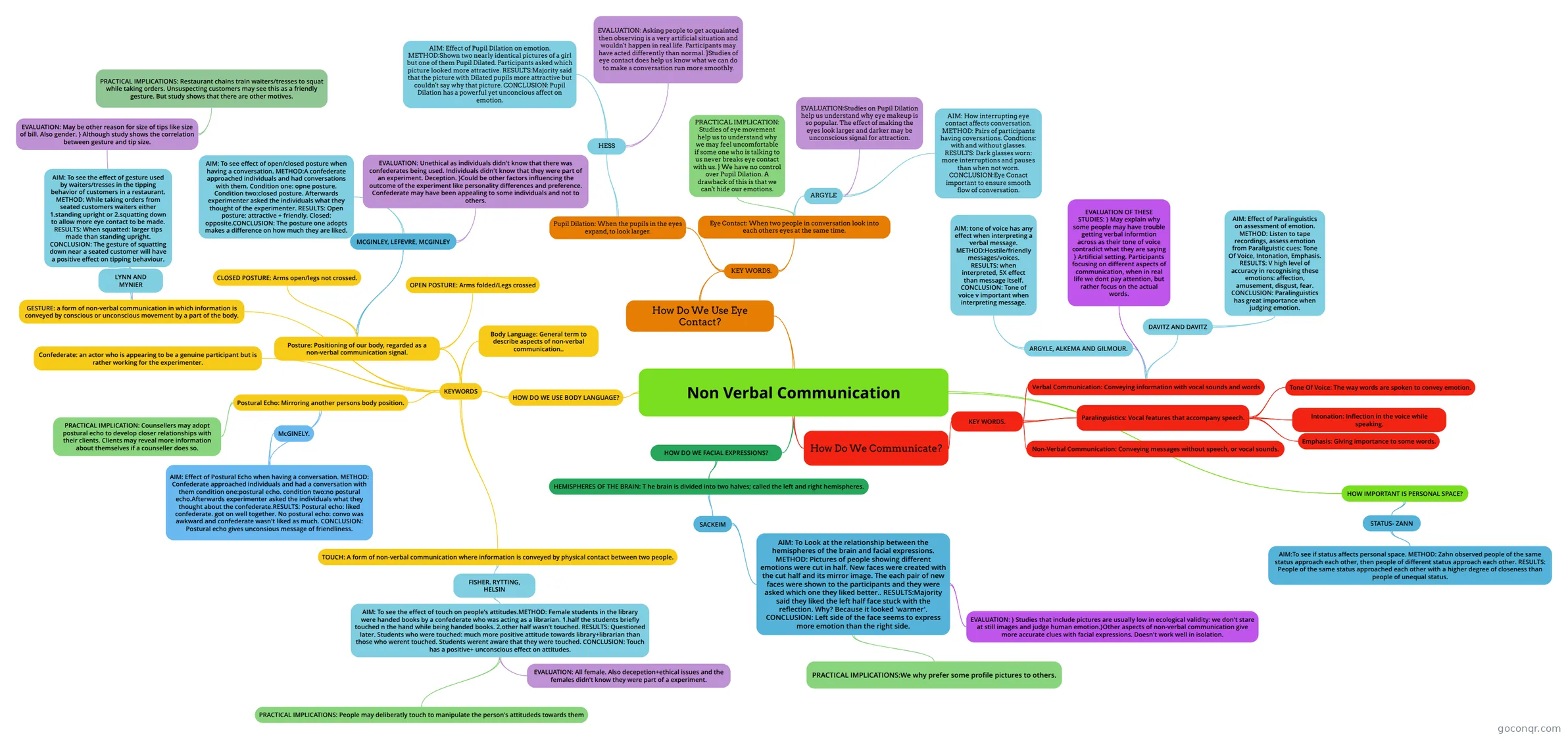 Non Verbal Communication Unit One Non verbal communication. Studies included.
-
Bilingual Memory A mindmap to summarise research articles about the bilingual memory.
-
Producing words
-
Non Verbal Communication
-
THE BRAIN The brain in pshycolinguistics
-
Bilingual Cognition versus Monolingual Cognition Initial mind map of ideas for EPQ.
-
Non-Verbal Communication
-
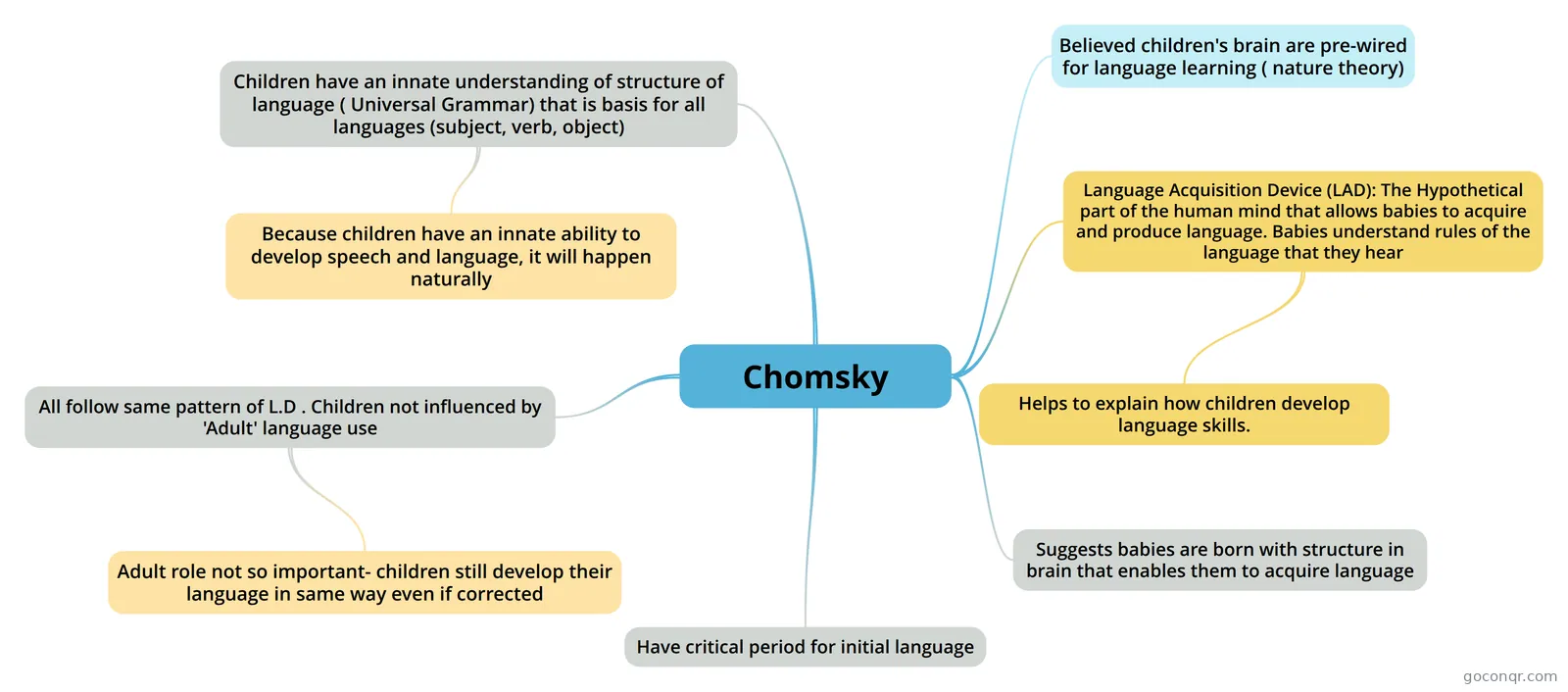 Chomsky
-
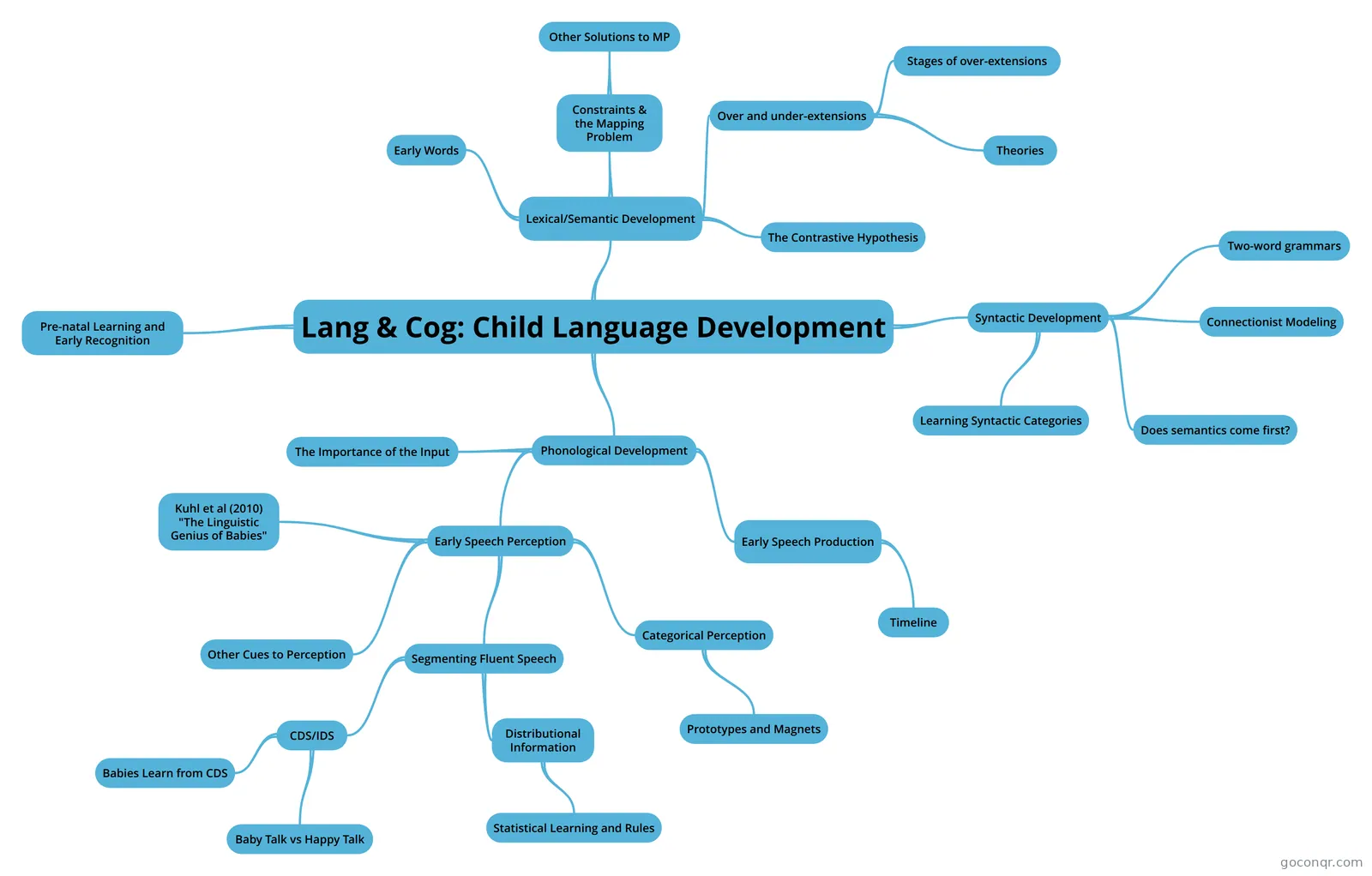 Lang & Cog: Child Language Development
-
Language and meaning + readings
-
Language Development
-
Language and meaning
-
Language development
-
Lang & Cog: Psychology of Grammar
-
Chapter 11: Language
-
week 3: language development
-
LANGUAGE PROCESSING 2
-
Sentence Processing
-
Chapter 9
-
Language
-
Developing Grammar
-
CD - Wild Children, Deaf Children and a critical period for language_2_1
-
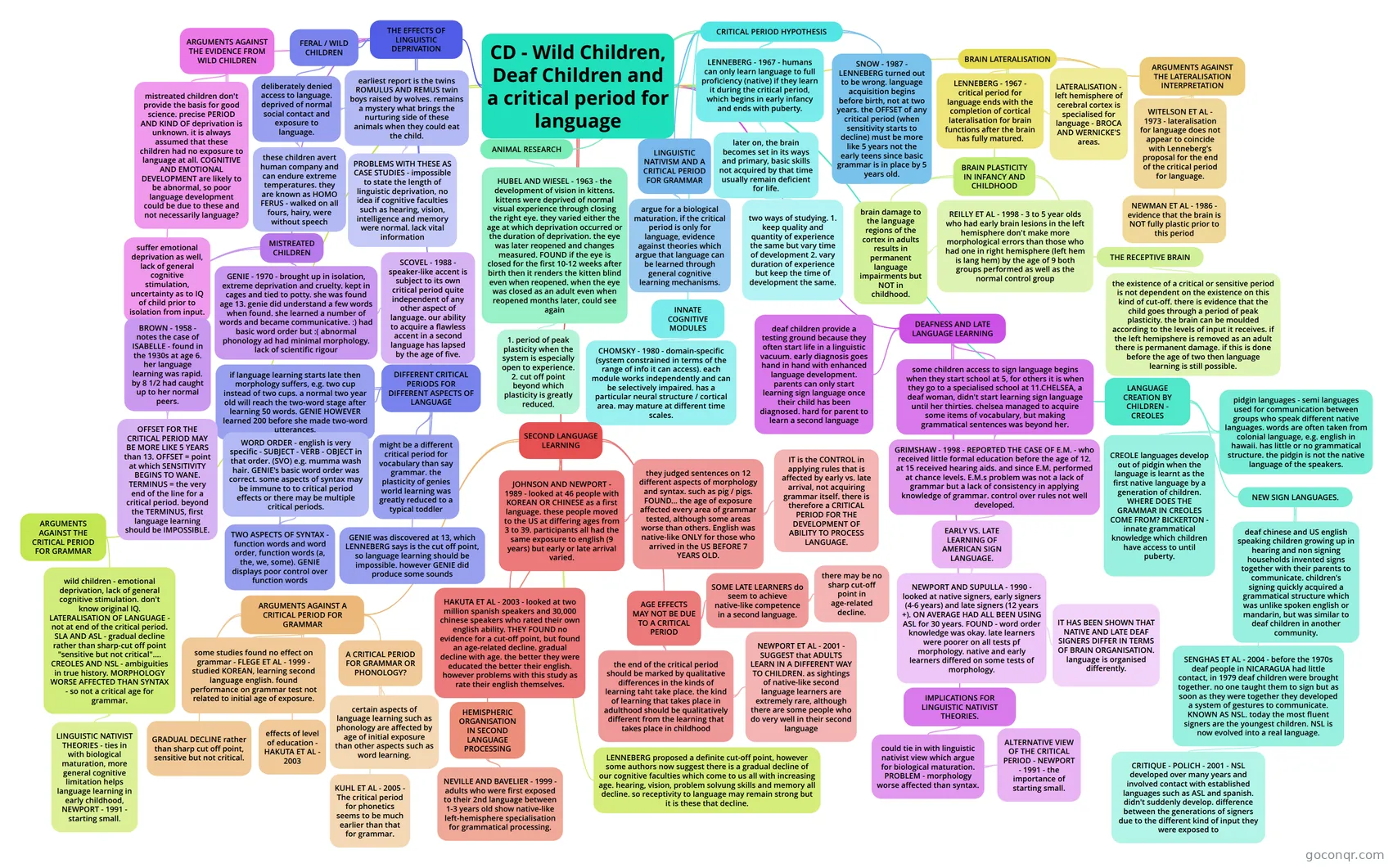 CD - Wild Children, Deaf Children and a critical period for language
-
DEVELOPMENT OF LANGUAGE AND SPELLING
-
Chapter 3: Cognition, Language, Creativity
-
CD - how children learn words_2
-
1_Non Verbal Communication Unit One Non verbal communication. Studies included.
-
Non Verbal Communication Unit One Non verbal communication. Studies included.
-
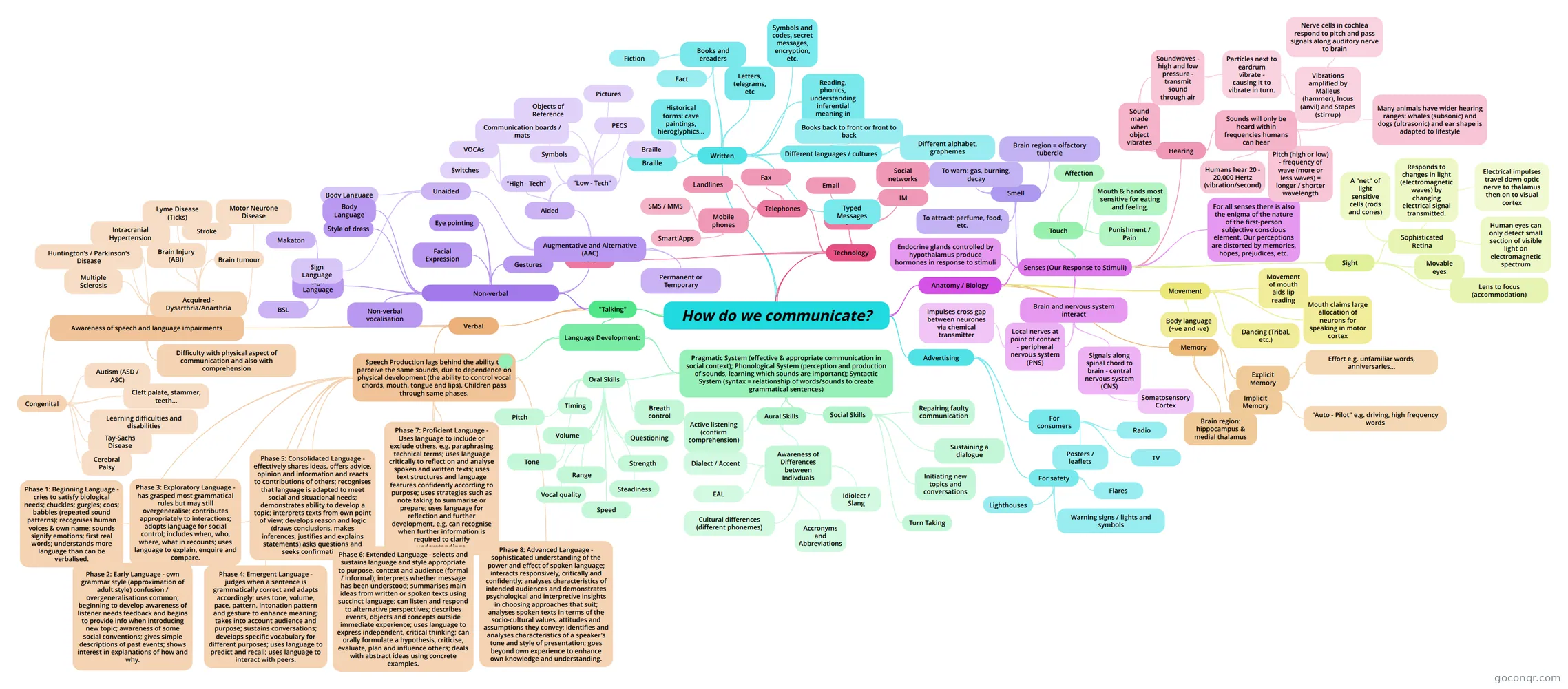 How do we communicate?
-
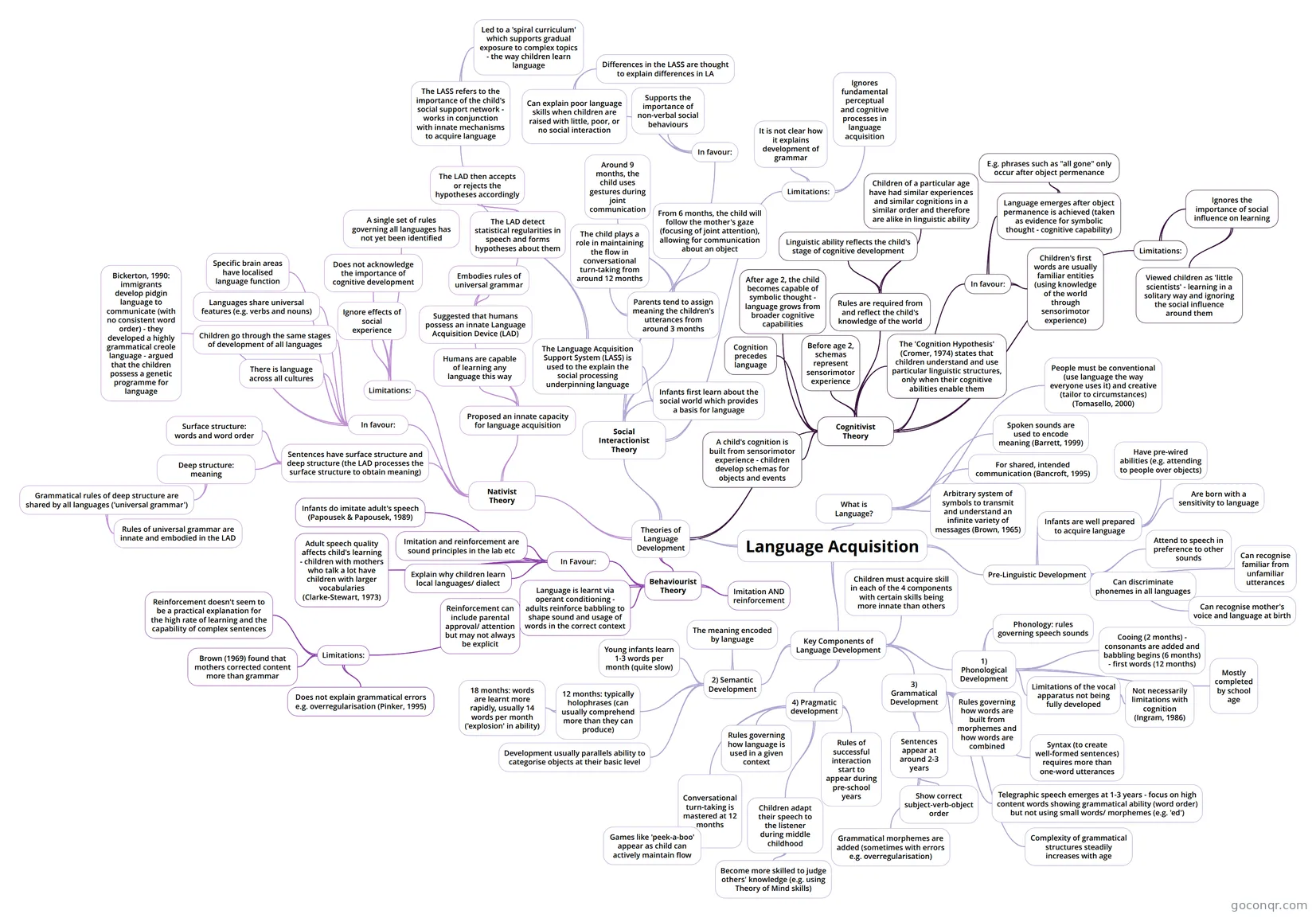 Language Acquisition
-
Language Processing - Morph Processing
-
Question 12
-
CD - Wild Children, Deaf Children and a critical period for language_1
-
CHP 10: Language Production & Bilingualism
-
CD - input and interaction part one
-
CD - Wild Children, Deaf Children and a critical period for language_1
-
Non Verbal Communication
-
Word Learning
-
Relational Dynamics
-
2. Language Acquisition
More Language and Communication resources
About language and communication mind maps
GoConqr OriginalUsing language and communication mind maps
These user-made maps show connections between ideas in the Language and Communication unit. They cover topics such as bilingual memory, speech production, sentence structure and non-verbal communication. Each map offers a different route through a topic, so its branches can help you organise what you want to revisit.
Start with Non-Verbal Communication if you want to explore how vocal features accompany speech. Its branches include tone of voice, emphasis and intonation. For a different focus, Sentence Processing looks at syntax and how sentences can be broken into smaller parts.
Move between formats
Read a branch, then try to explain its connections without looking. Return to the map where your explanation feels incomplete. When you want to check recall, switch to a quiz or flashcards on the unit page; use notes when you want more detail.
Choose a map that matches the topic you are studying and follow its branches.
Frequently asked questions
Which mind map could I start with for sentence structure?
Try Sentence Processing. It introduces syntax and breaks sentences into smaller constituents, including noun and verb phrases. Follow the branches to see how the examples fit together, then revisit any terms you want to understand more clearly before moving to another map.
Are these mind maps free to use?
Yes. Every resource listed here is free to open and study without an account. The maps were made by GoConqr users, rather than by GoConqr. A free account also lets you make your own mind maps, quizzes, flashcards and notes, and save quiz scores.
Which levels do these maps suit?
Most resources are for university study, with some for school students. University students and professional candidates can use the maps to revisit topics such as language processing, while school students can practise communication topics. Some resources mention GCSE Psychology, A-level Psychology or AP Psychology, so check each map against your course.