
Learning, Conditioning and Behaviour Analysis flowcharts
19 flowcharts by 16 users
This GoConqr page gathers flowcharts on classical conditioning, social learning and behaviour analysis. University students and professional candidates, school students and teachers can use them to practise and teach these topics. There are over 10 flowcharts, spanning school, university and professional study. Choose a flowchart to explore.
Select topic
- Learning styles and types174
- Behaviourism187
- Non-associative learning7
- Classical conditioning255
- Operant conditioning113
- Reinforcement and punishment60
- Classical and operant conditioning226
- Social and observational learning225
- Cognitive learning theory30
- Neural basis of learning11
- Behaviour analysis33
- Behaviour modification25
Flowcharts
-
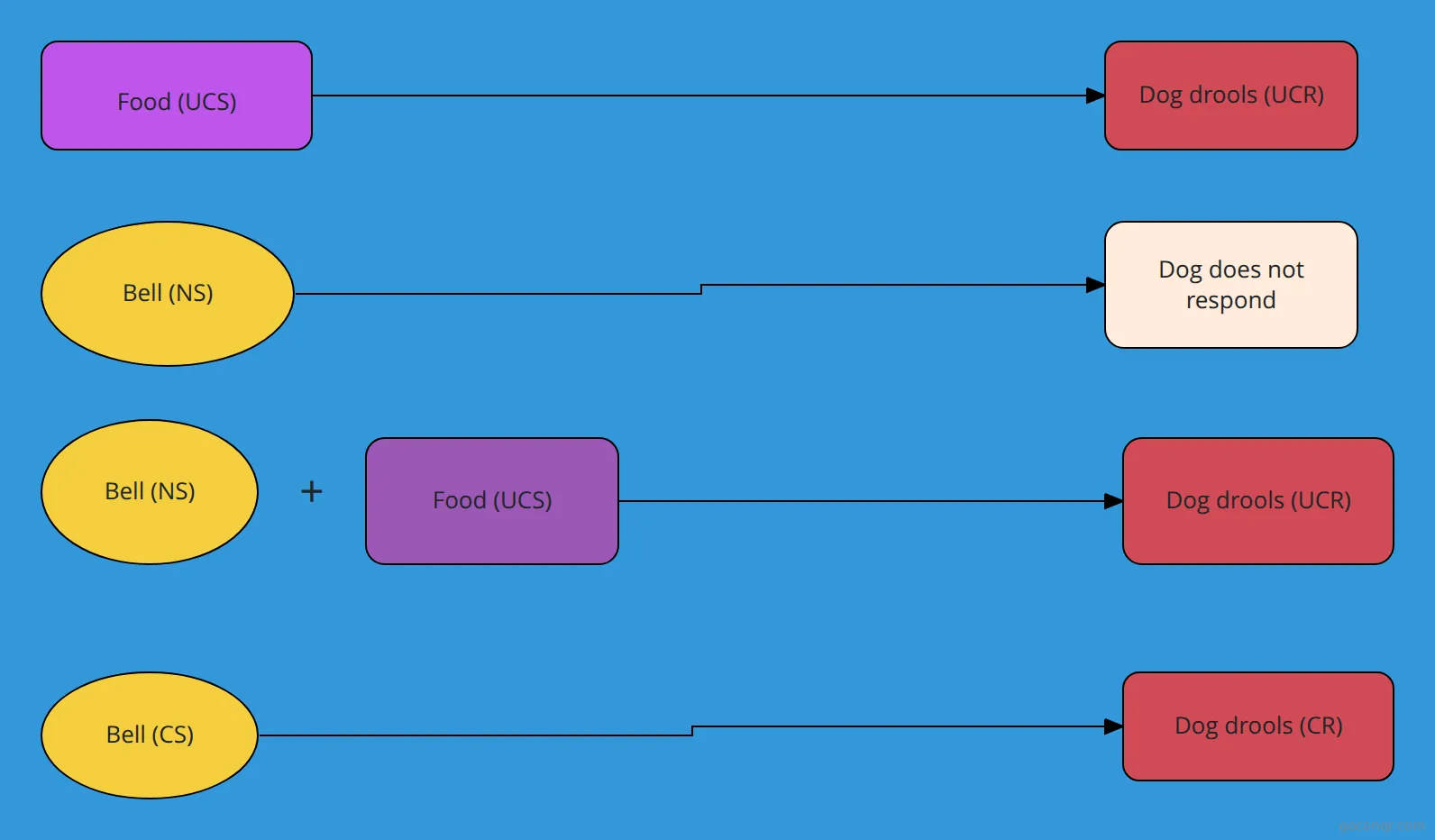 Classical conditioning (example) Example of how classical conditioning happens
-
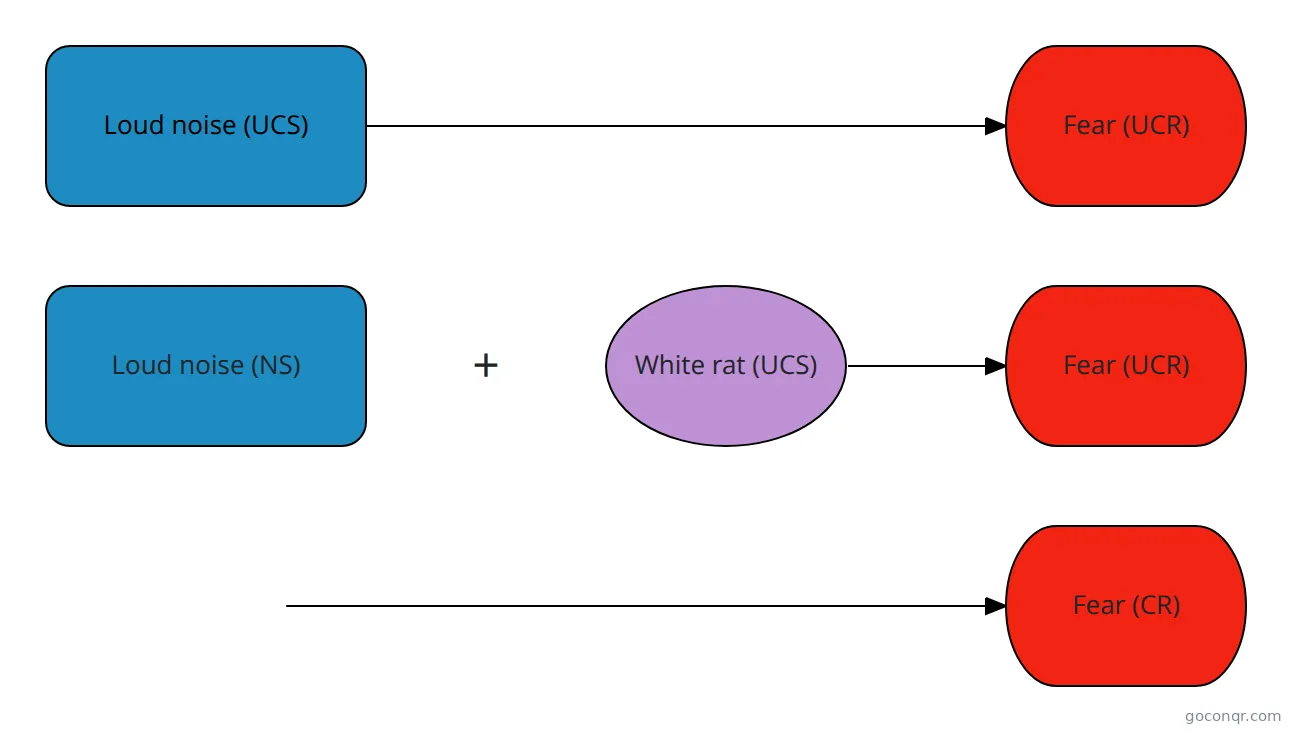 Classical conditioning- Little Albert Example of classical conditioning using little Albert
-
El Condicionamiento Clásico Y El Condicionamiento Operante
-
Principles of Learning Test 1, chapter 1,2,3 (part 1)
-
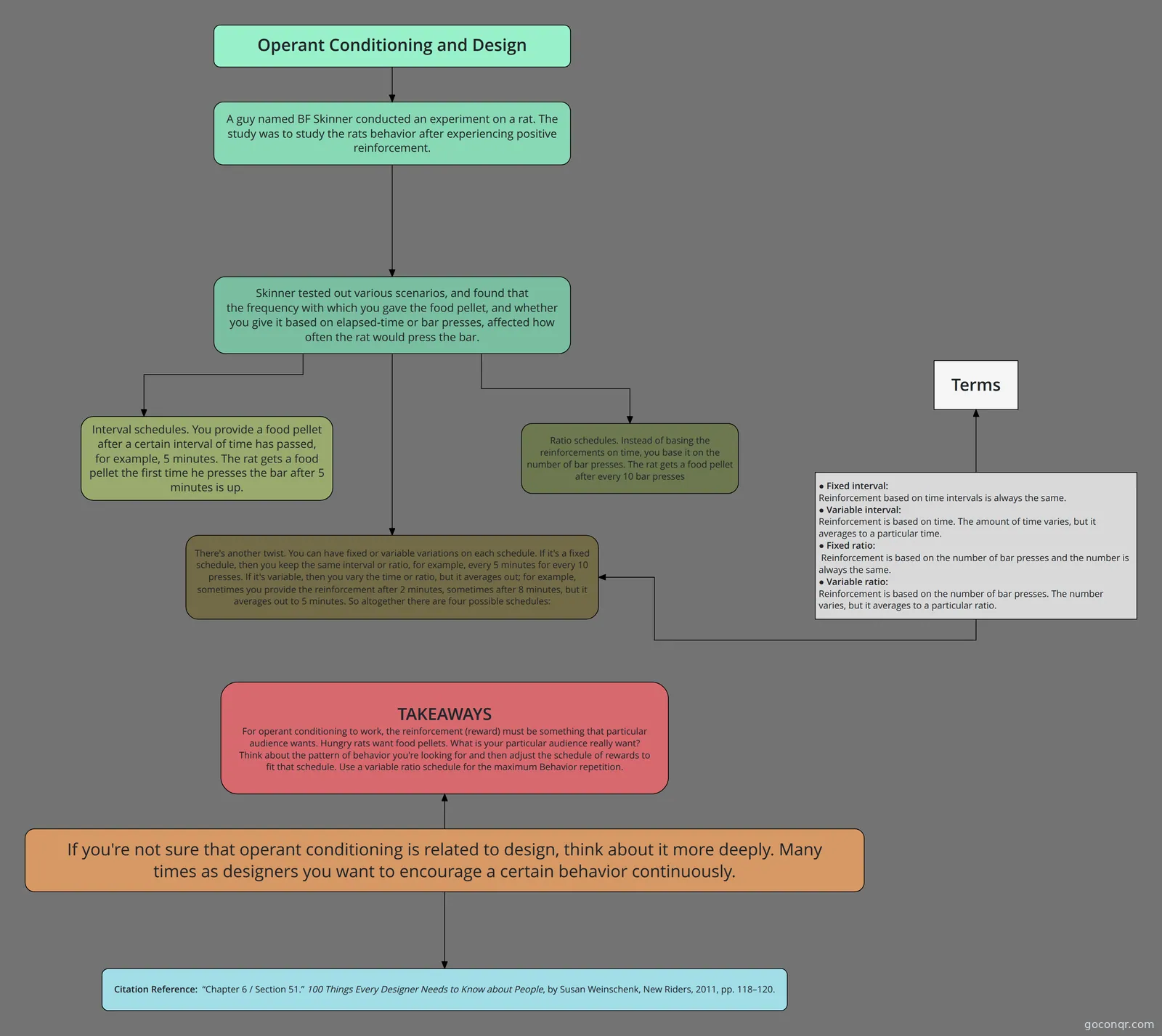 51. Variable Rewards are Powerful This resource discusses the ins and outs of the Operant Conditioning theory
-
Behavioral Theories: Pavlov and Skinner
-
Social Learning Theory
-
Classical Conditioning
-
Trigger Cycle Example - Dog encounter
-
Untitled
-
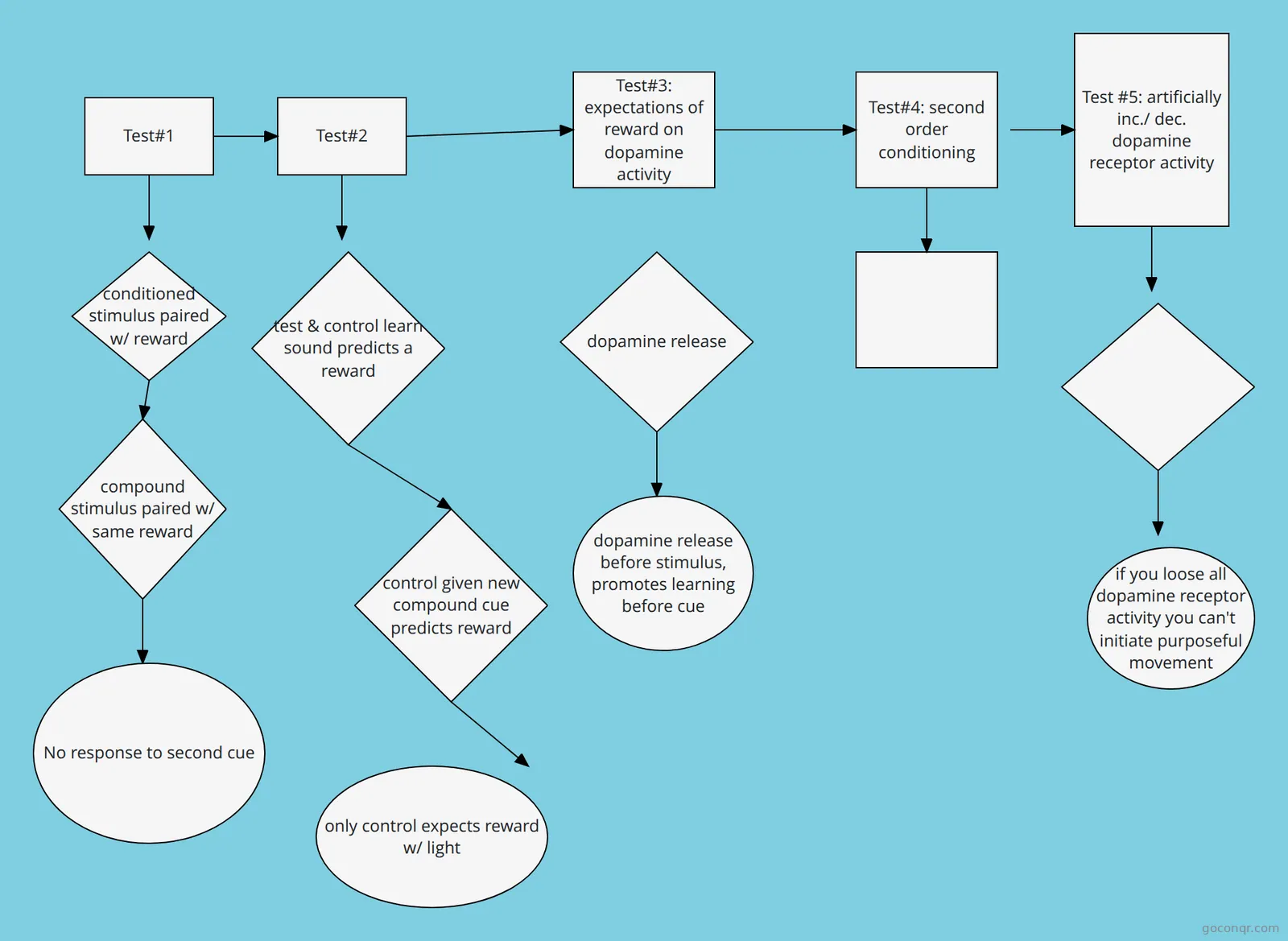 PSYC318-Paper#4
-
Contingency & Contiguity
-
Untitled
-
Nn- associative learning
-
Martin's Example of Classical Conditioning
-
Operant conditioning - Skinner's Box
-
Untitled
-
Untitled
-
Untitled
More Learning, Conditioning and Behaviour Analysis resources
About learning, conditioning and behaviour analysis flowcharts
GoConqr OriginalLearning, Conditioning and Behaviour Analysis flowcharts
These flowcharts show connections between ideas and examples in the unit. Classical conditioning (example) follows a dog’s responses to food and a bell. Social Learning Theory outlines learning through observing others. Another flowchart uses Skinner’s box to explore operant conditioning.
How to use the flowcharts
Start with Classical conditioning (example) if you want a concrete sequence to follow. Trace the stimuli and responses, then try to explain the sequence in your own words. For a different perspective, compare it with the Little Albert flowchart.
When you want to check individual terms, switch to flashcards on the unit page. If you want to test your understanding, try a quiz there. Teachers can also use a flowchart as a starting point for discussion. Pick a topic and follow its connections through a flowchart.
Frequently asked questions
Which flowchart is a useful place to start?
Try ‘Classical conditioning (example)’ for a sequence involving food, a bell and a dog’s responses. Follow the chart from the first stimulus to the later response. You can then look at the Little Albert flowchart for another example and compare the sequences.
What topics do the flowcharts cover?
The page includes flowcharts on classical conditioning, social learning and operant conditioning. ‘Social Learning Theory’ considers learning through observation, while ‘Contingency & Contiguity’ looks at relationships between stimuli. There is also a flowchart on habituation and sensitisation, and an example involving a dog encounter.
Are the flowcharts free to use?
Yes. Every resource listed here is free to open and study without an account. The flowcharts were made by GoConqr users. A free account also lets you save quiz scores and make your own quizzes, mind maps, flashcards and notes.