
Learning, Conditioning and Behaviour Analysis mind maps
1,173 mind maps by 912 users · Page 1 of 30
This GoConqr page gathers mind maps on learning, conditioning and behaviour analysis, from social learning theory to reinforcement. University students and professional candidates can use them to review these topics, while school students can revise them and teachers can find ready-made material. There are over 1,100 mind maps across secondary, university and professional levels. Choose a map to start exploring.
Select topic
- Learning styles and types174
- Behaviourism187
- Non-associative learning7
- Classical conditioning255
- Operant conditioning113
- Reinforcement and punishment60
- Classical and operant conditioning226
- Social and observational learning225
- Cognitive learning theory30
- Neural basis of learning11
- Behaviour analysis33
- Behaviour modification25
Mind maps
-
learning approach - behaviourist
-
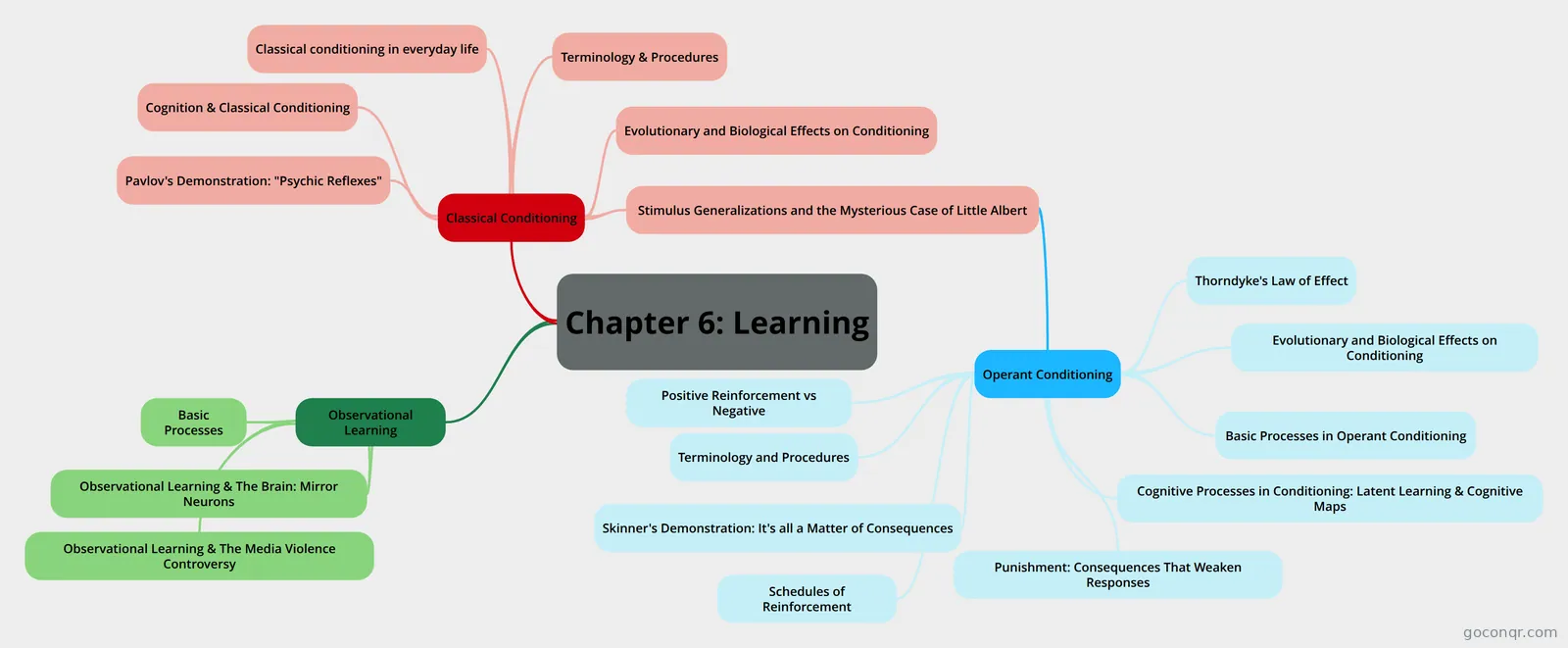 Chapter 6: Learning
-
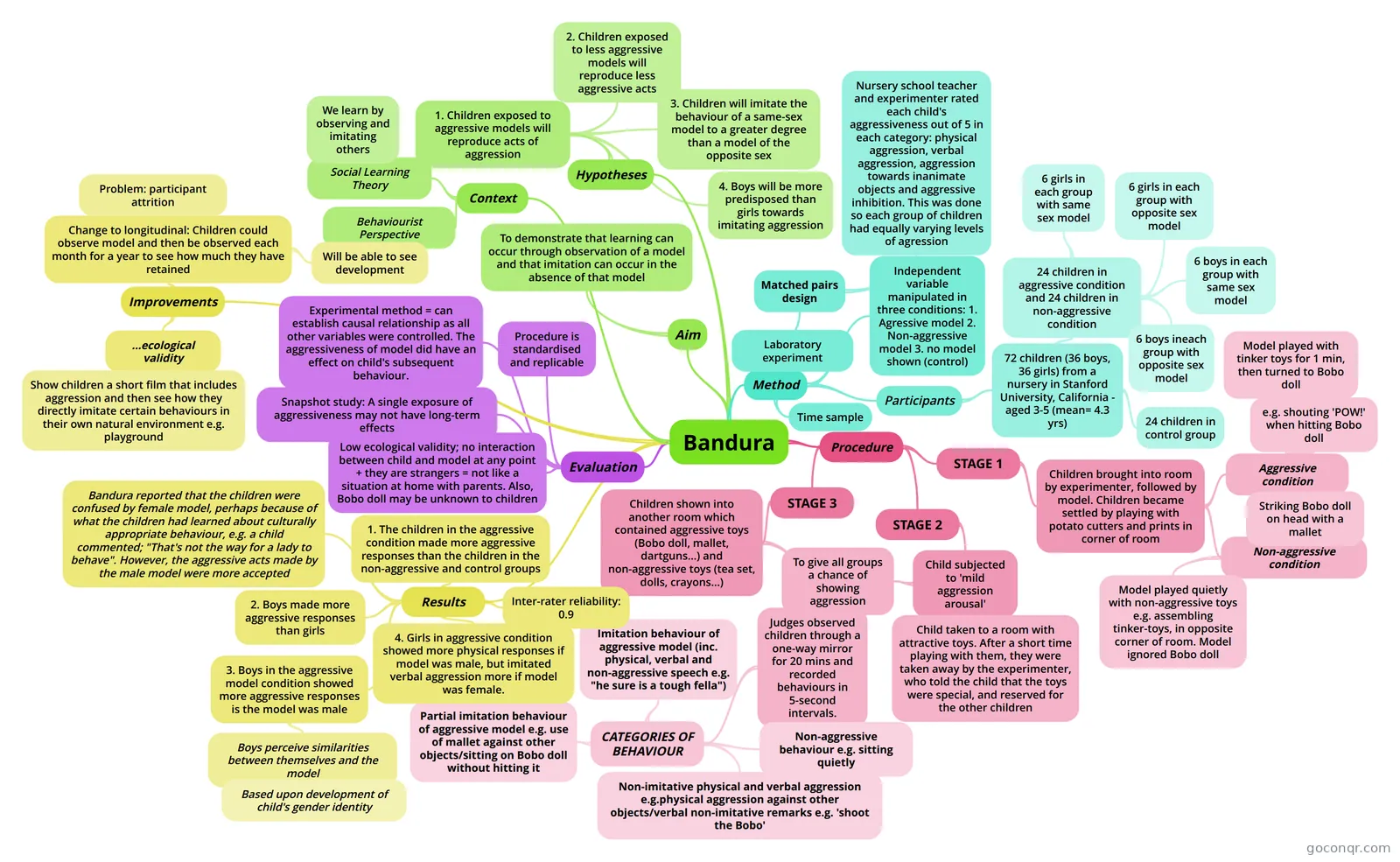 Bandura
-
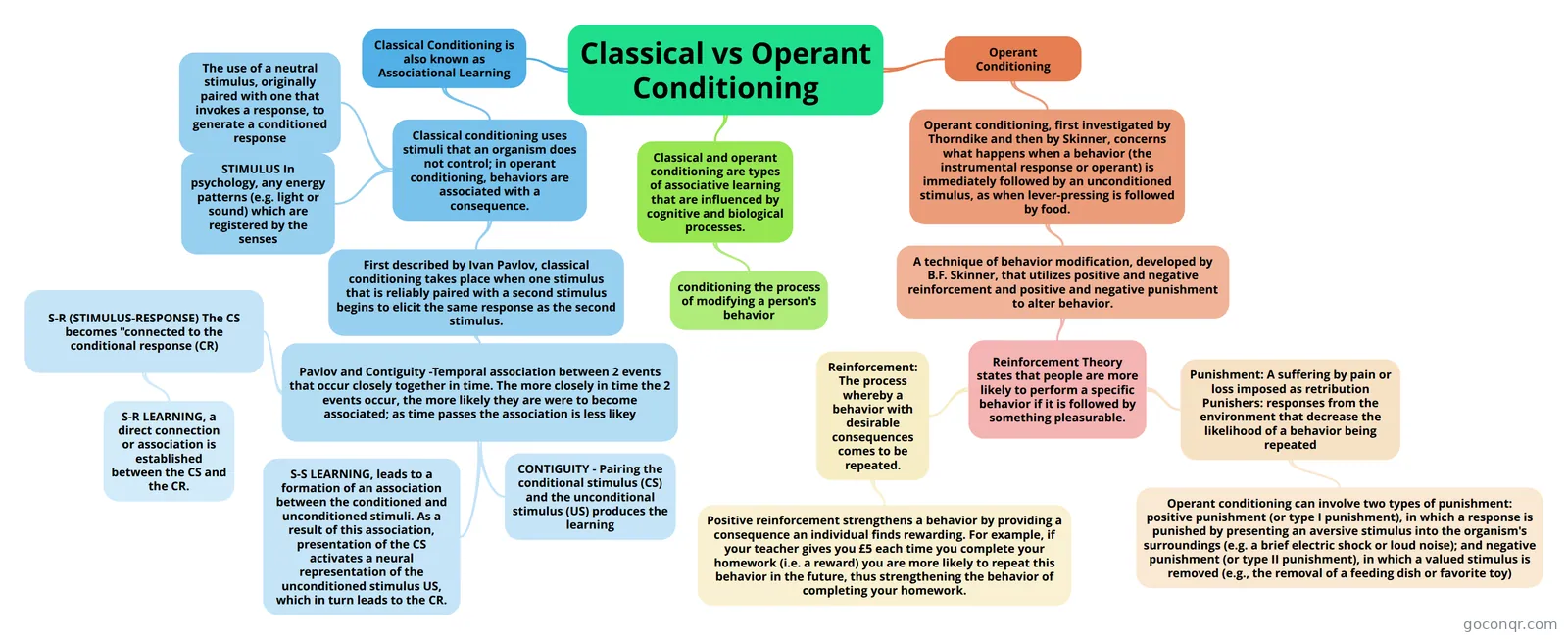 Classical vs Operant Conditioning
-
Bandura (1961,1963) Edexcel A Level Learning Theories Psychology: Bandura (1961,1963)
-
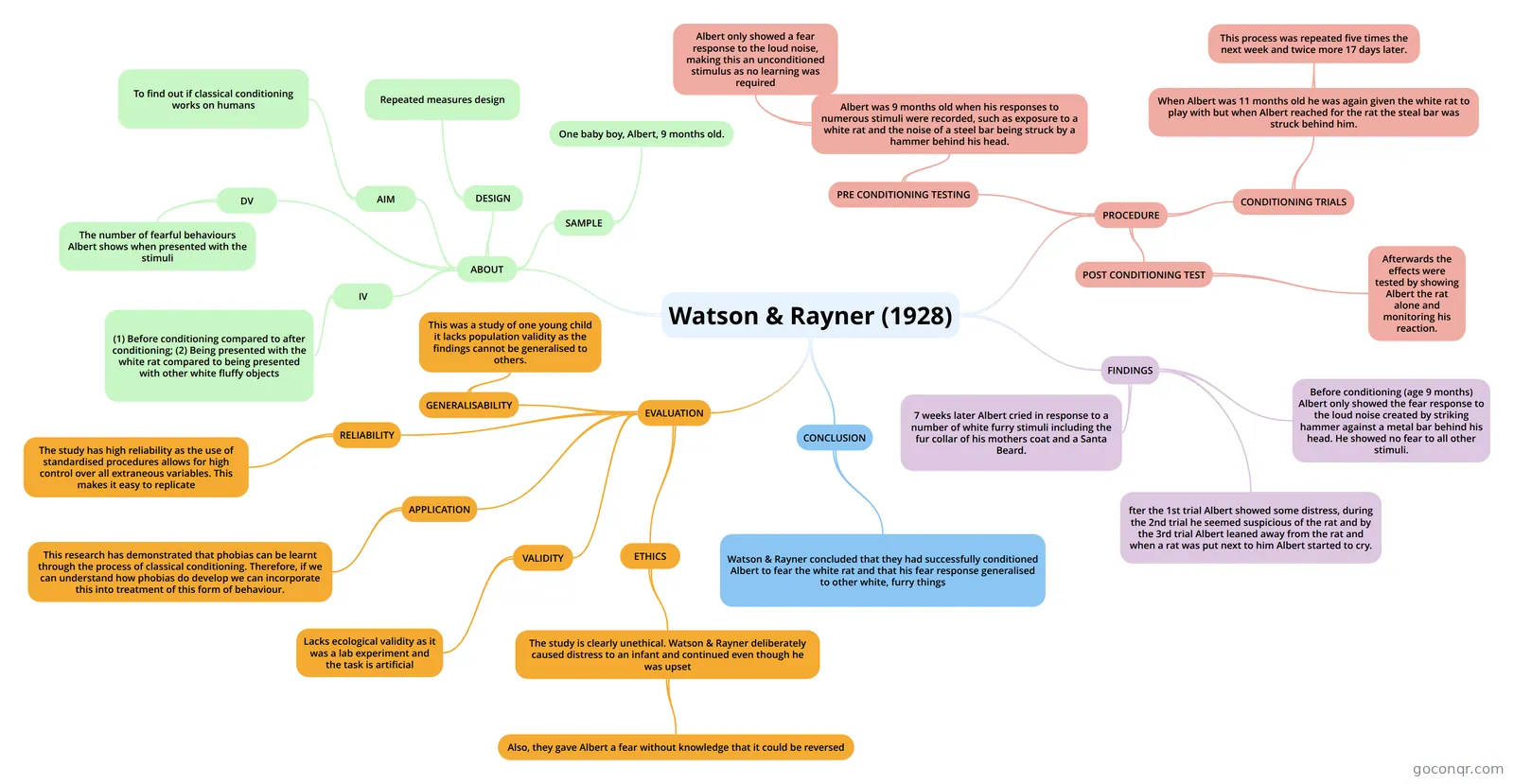 Watson & Rayner (1928) Edexcel A Level Psychology: Learning Theories Classic Study
-
 Becker Et Al (2002) Edexcel A level Psychology: Learning Theories Contemporary Study
-
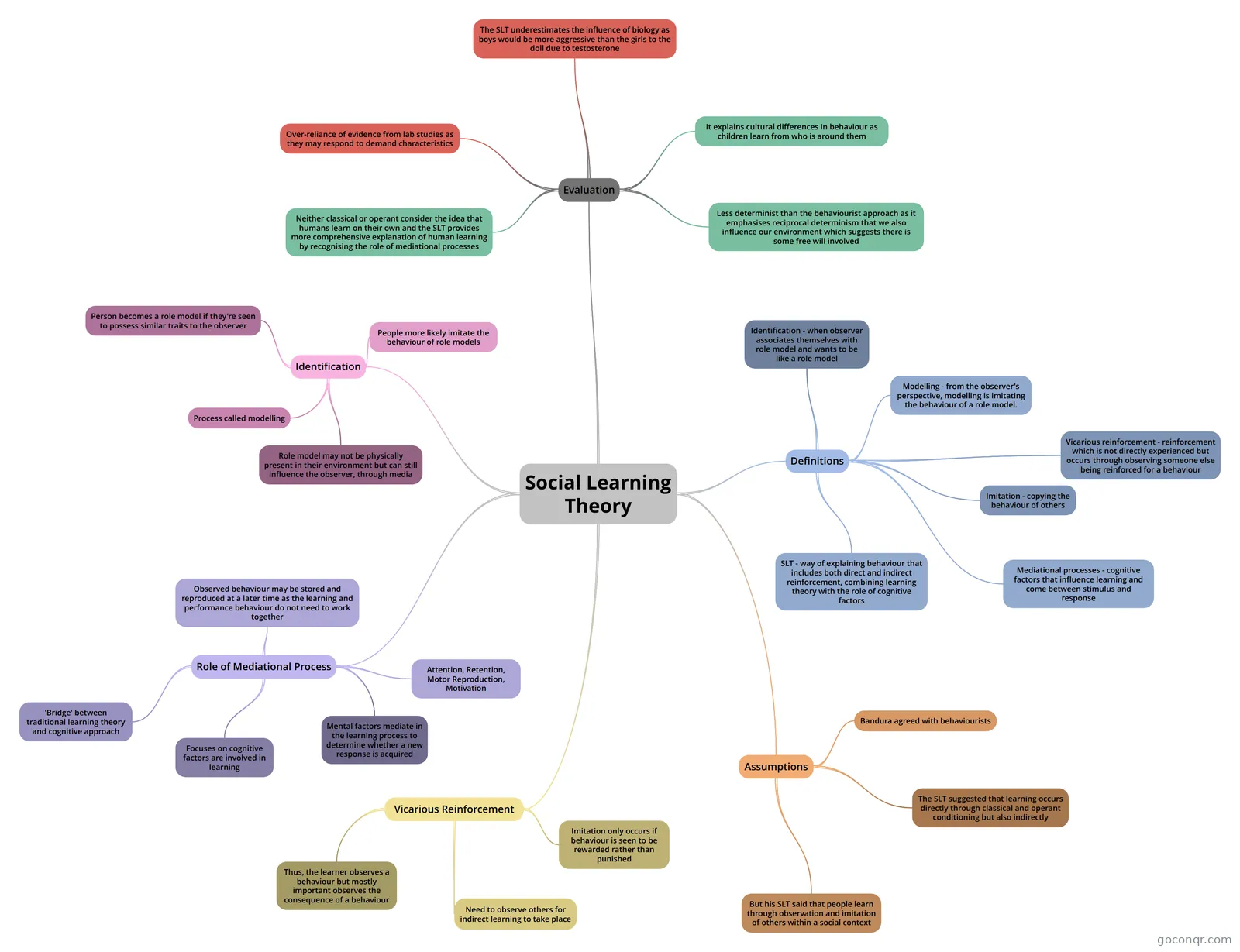 Social Learning Theory
-
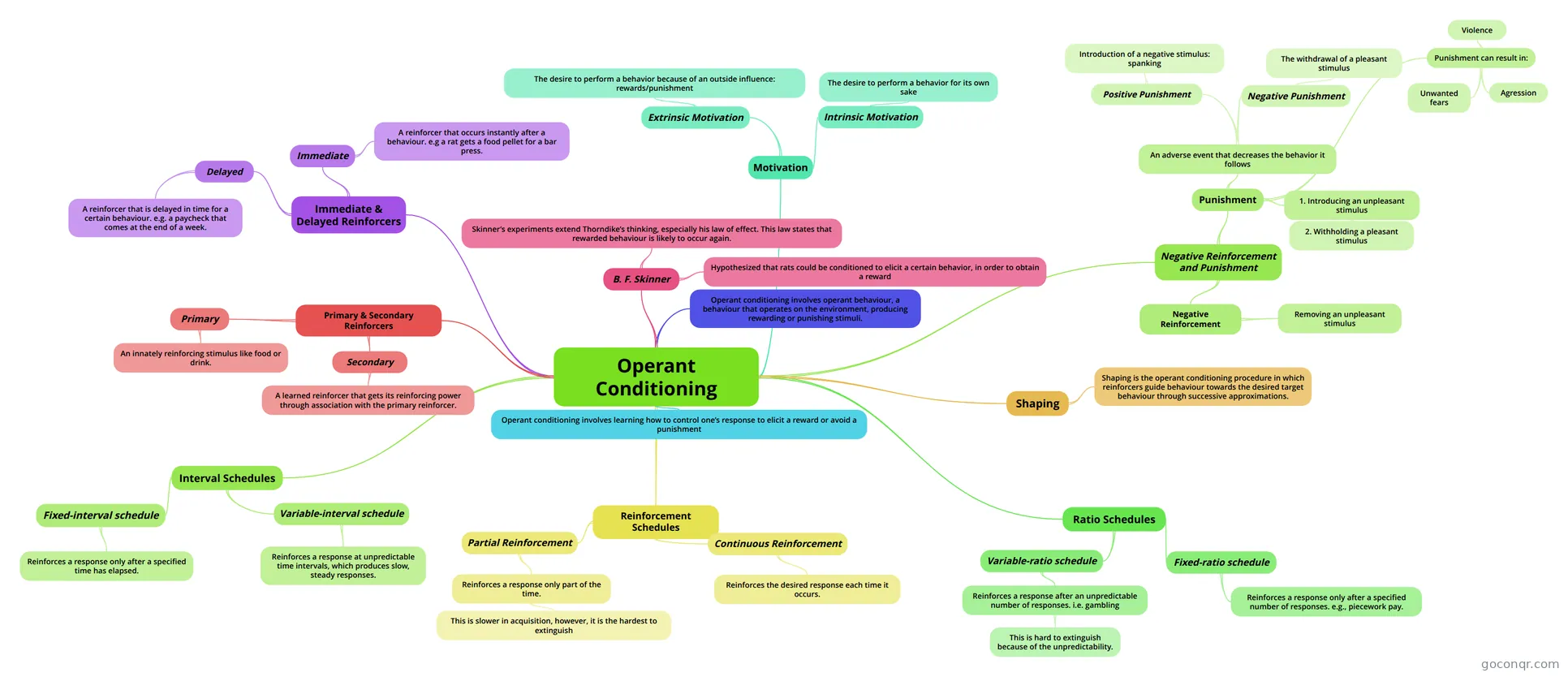 Operant Conditioning
-
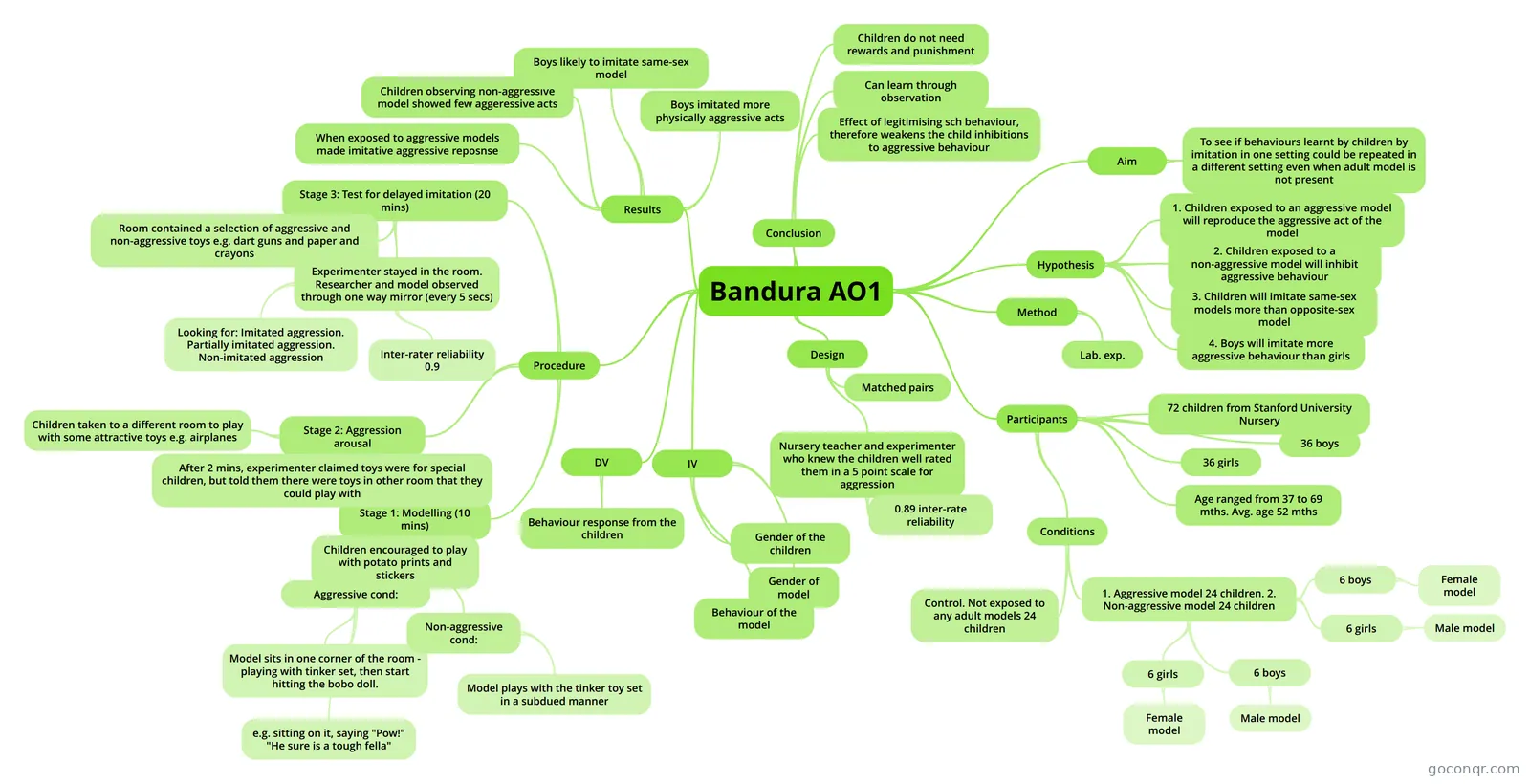 Bandura AO1
-
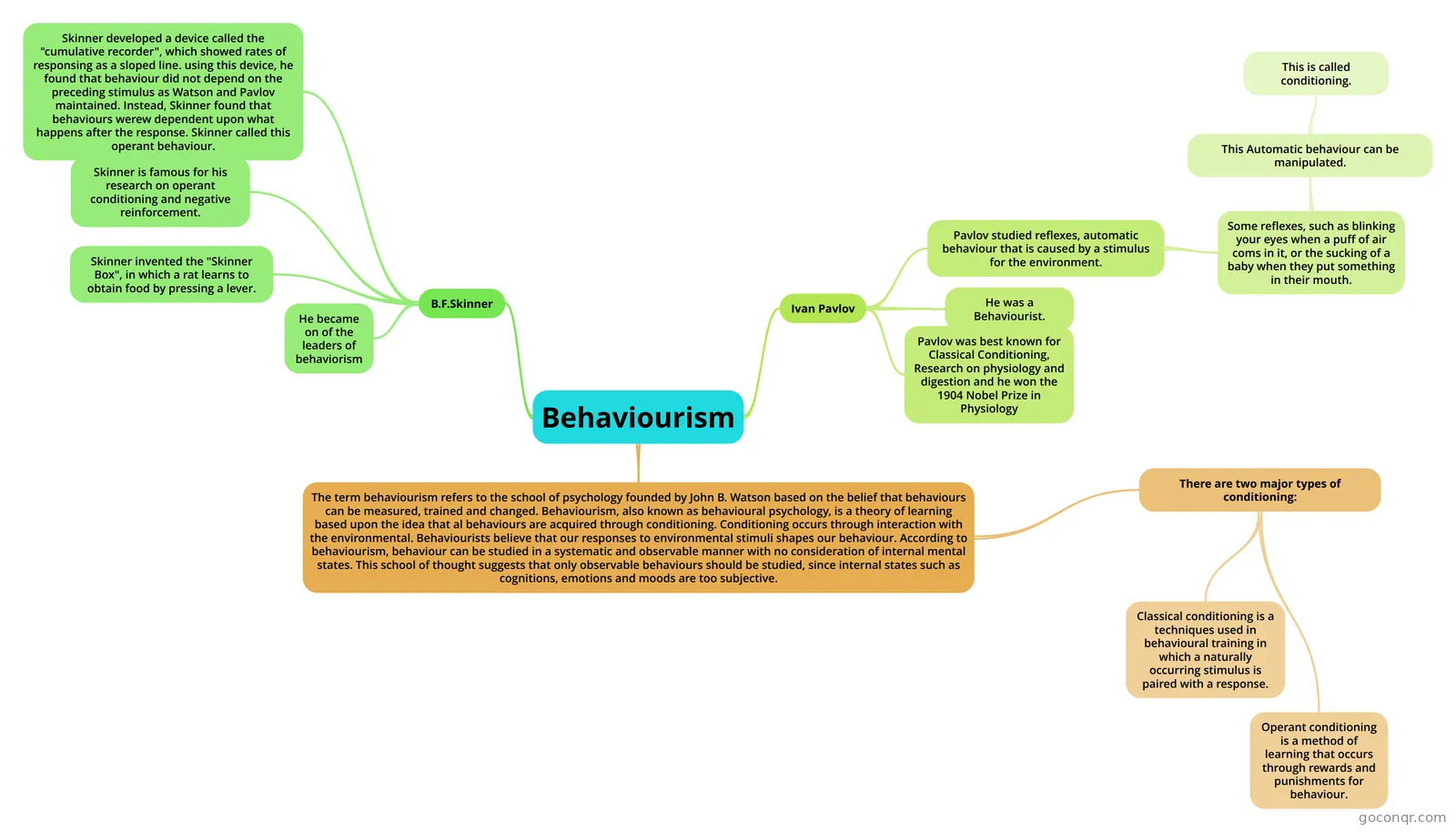 Behaviourism
-
Social Learning Theory Theories of Bandura and Rotter
-
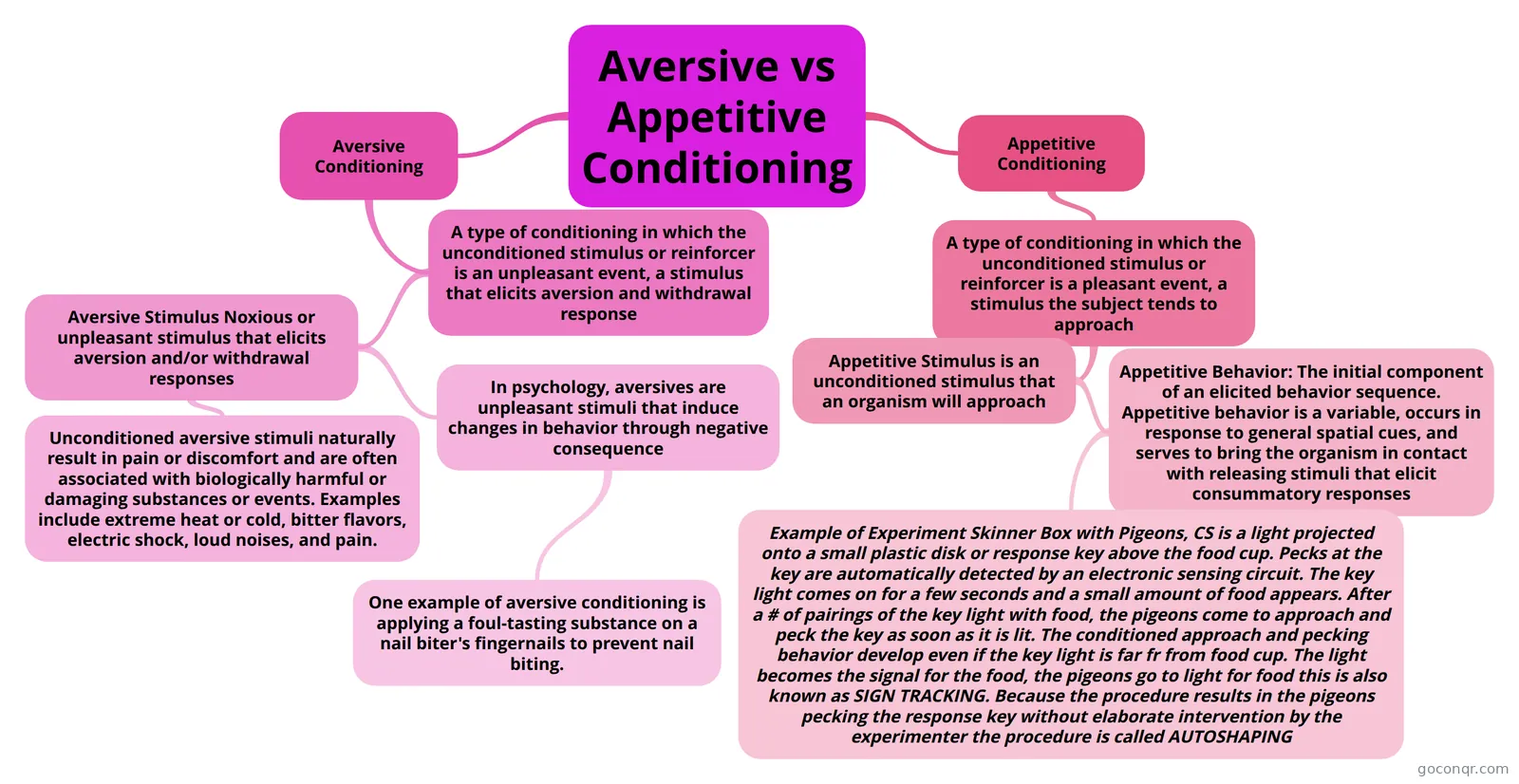 Aversive vs Appetitive Conditioning
-
 Bandura et al (1961) Evaluation
-
Bandura's social learning theory
-
Classical Conditioning Foundations
-
Bandura's Social Learning Theory
-
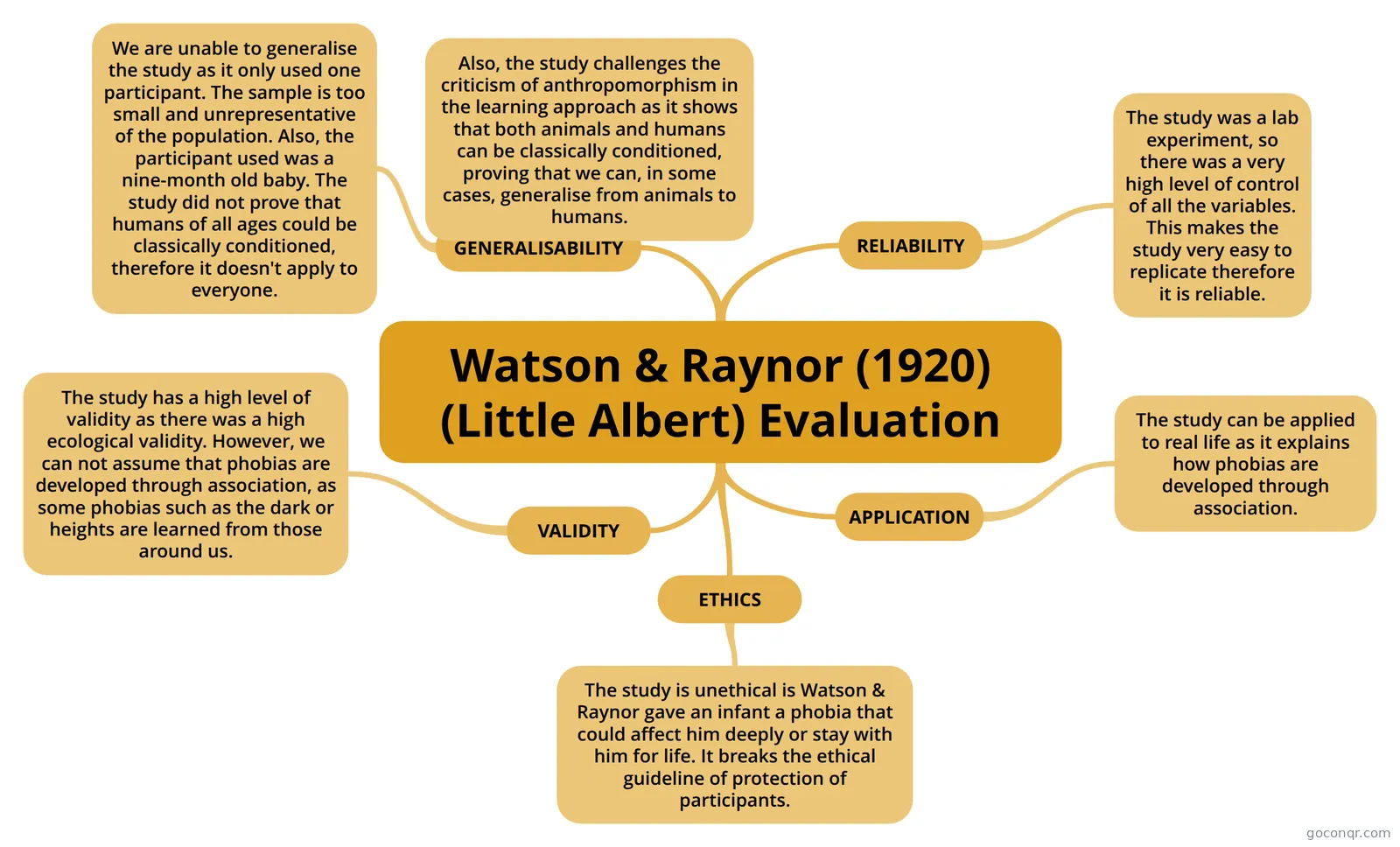 Watson & Raynor (1920) (Little Albert) Evaluation
-
Social Cognitive Learning Theories
-
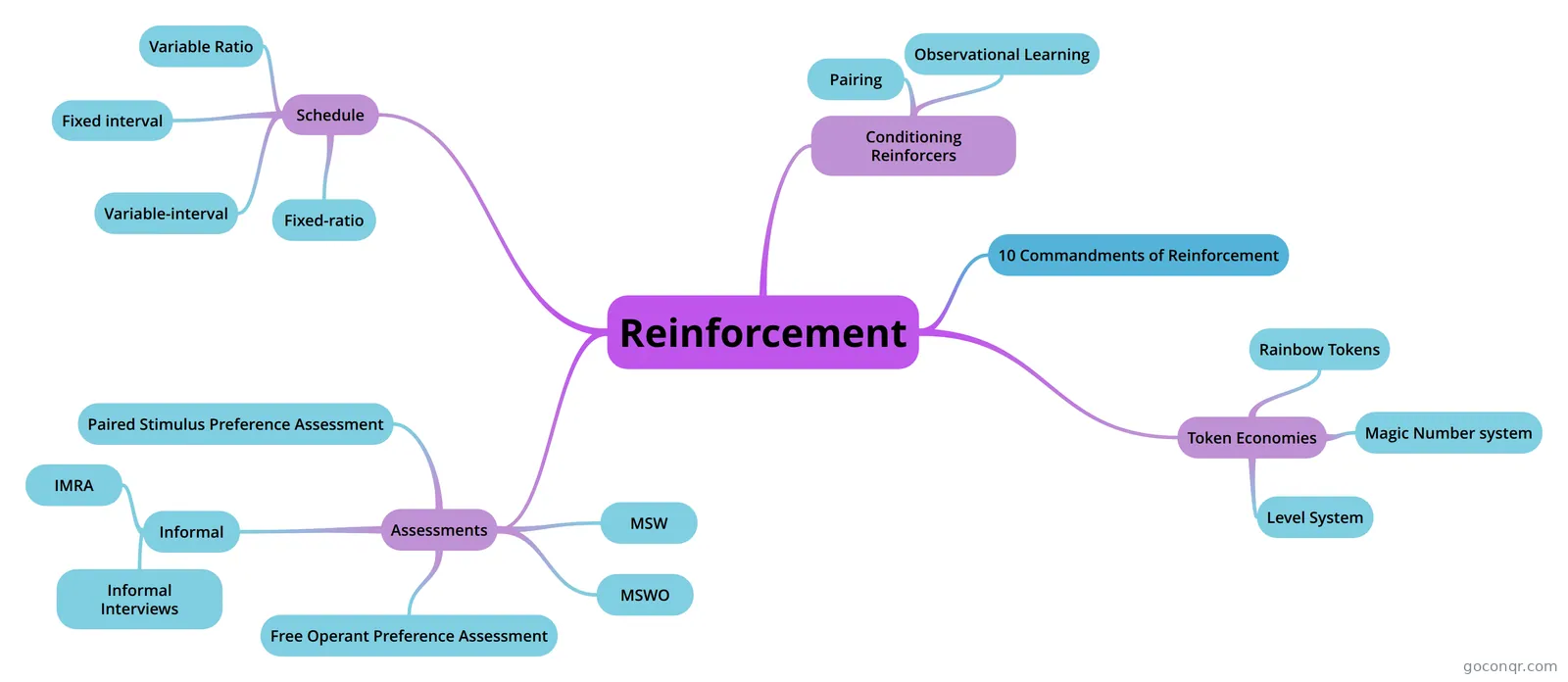 Reinforcement Overall Description of Reinforcement. To be used with flash cards.
-
Ivan Pavlov this is a ivan pavlov description
-
Classical conditioning
-
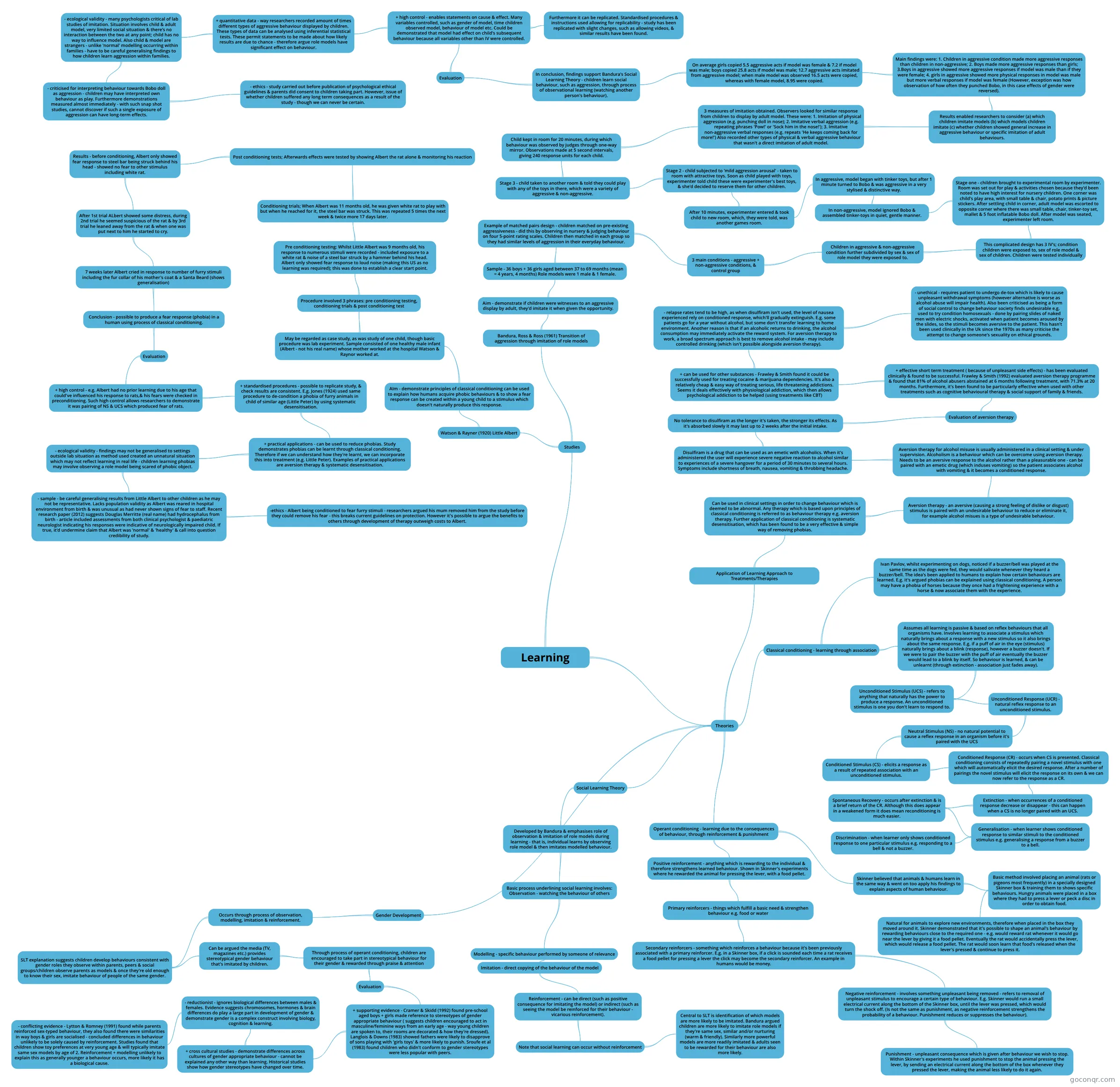 Learning
-
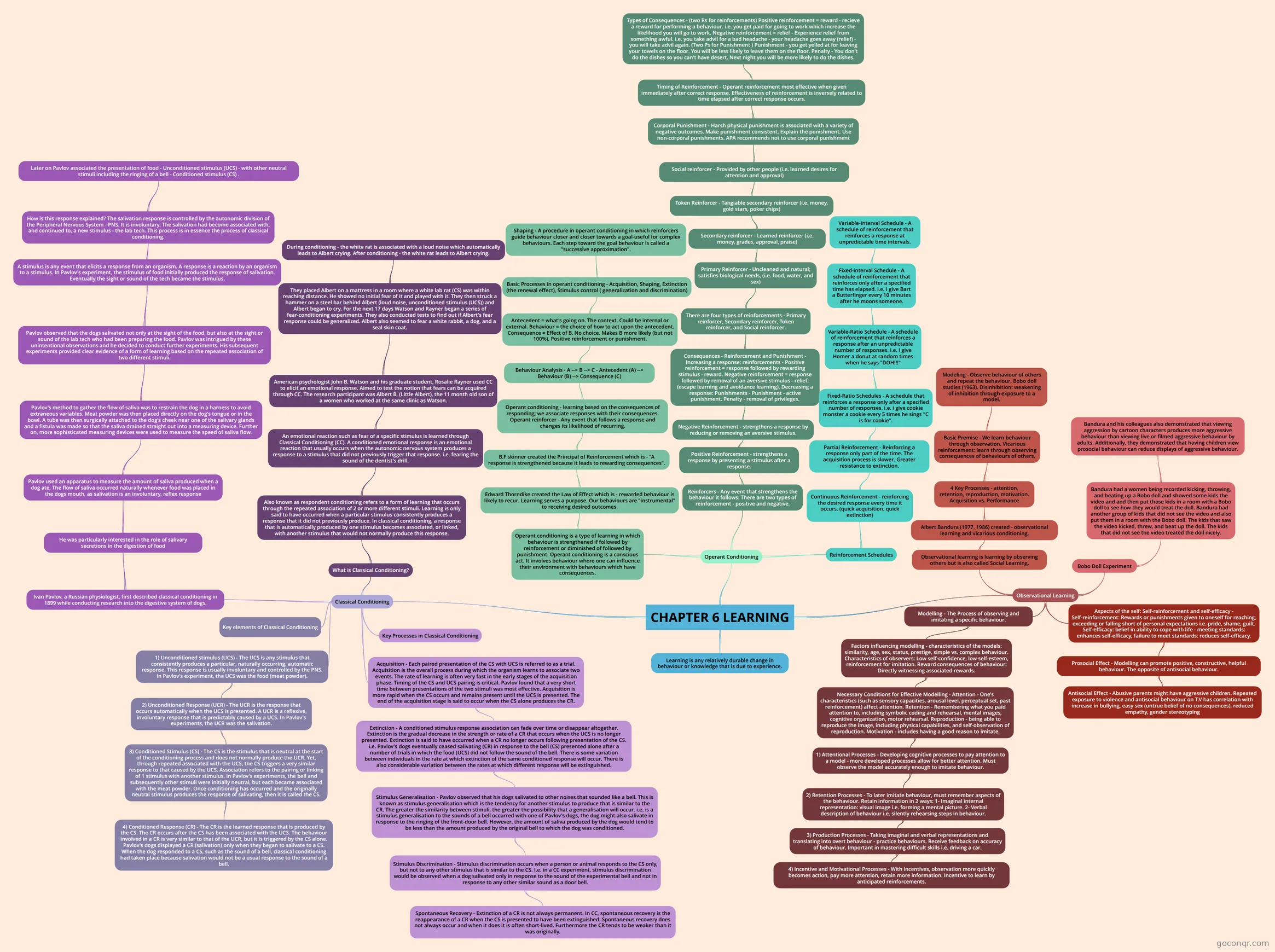 CHAPTER 6 LEARNING
-
Learning
-
Chapter 6 - Learning
-
Chapter 6: Learning
-
Rescorla Wagner cont
-
LEARNING- a relatively permanent change in behaviour that occurs as a result of experience.
-
Learning
-
Associative Learning
-
Learning
-
Chapter 6: Learning
-
Chapter Six
-
 Bandura, Ross and Ross
-
Bandura 1961
-
Learning Mind Map for chapter 6 psychology 104
-
Behaviorism
-
Social Learning Theory
-
Chapter 6 Learning
More Learning, Conditioning and Behaviour Analysis resources
About learning, conditioning and behaviour analysis mind maps
GoConqr OriginalExplore learning, conditioning and behaviour analysis mind maps
Start with Classical vs Operant Conditioning if you want to compare two approaches in one map. For a focus on social learning, Social Cognitive Learning Theories brings together ideas associated with Rotter, Bandura and Mischel.
Other maps let you follow a narrower topic. Reinforcement offers a topic to review on its own, while Behaviourism provides another route into the learning approach. The page also lists maps on Bandura's work, including one that evaluates his study.
Revise with a map
Use the branches to organise the ideas you are studying. After reading a map, cover its details and try to recall how the branches connect. Return to any branch you find difficult, then compare it with another map on the same topic.
When you want to check your recall in a different way, switch to a quiz or flashcards on the unit page. Pick a map that fits your current topic and work through it at your own pace.
Frequently asked questions
Which mind map is a useful starting point for conditioning?
Try “Classical vs Operant Conditioning” if you want to see the two approaches together. If you are focusing on one approach, the page also lists “Operant Conditioning” and “Classical Conditioning Foundations”. You can return to the comparison map after studying either topic separately.
What do the social learning mind maps cover?
The maps include definitions, imitation and reinforcement, as well as work associated with Bandura. “Social Cognitive Learning Theories” brings together ideas associated with Rotter, Bandura and Mischel. There are also maps on Bandura's study and its evaluation, so you can choose a topic that matches your revision.
Are these mind maps free to use?
Yes. Every resource listed here is free to open and study without an account. The maps were made by GoConqr users, rather than GoConqr. A free account also lets you make your own mind maps, quizzes, flashcards and notes, and saves your quiz scores.