
Classical conditioning
255 resources created by 215 users
Classical conditioning
- All Learning, Conditioning and Behaviour Analysis resources
- Learning styles and types174
- Behaviourism187
- Non-associative learning7
- Operant conditioning113
- Reinforcement and punishment60
- Classical and operant conditioning226
- Social and observational learning225
- Cognitive learning theory30
- Neural basis of learning11
- Behaviour analysis33
- Behaviour modification25
Top Classical conditioning resources
-
14 questionsClassical conditioning What is classical conditioning?
-
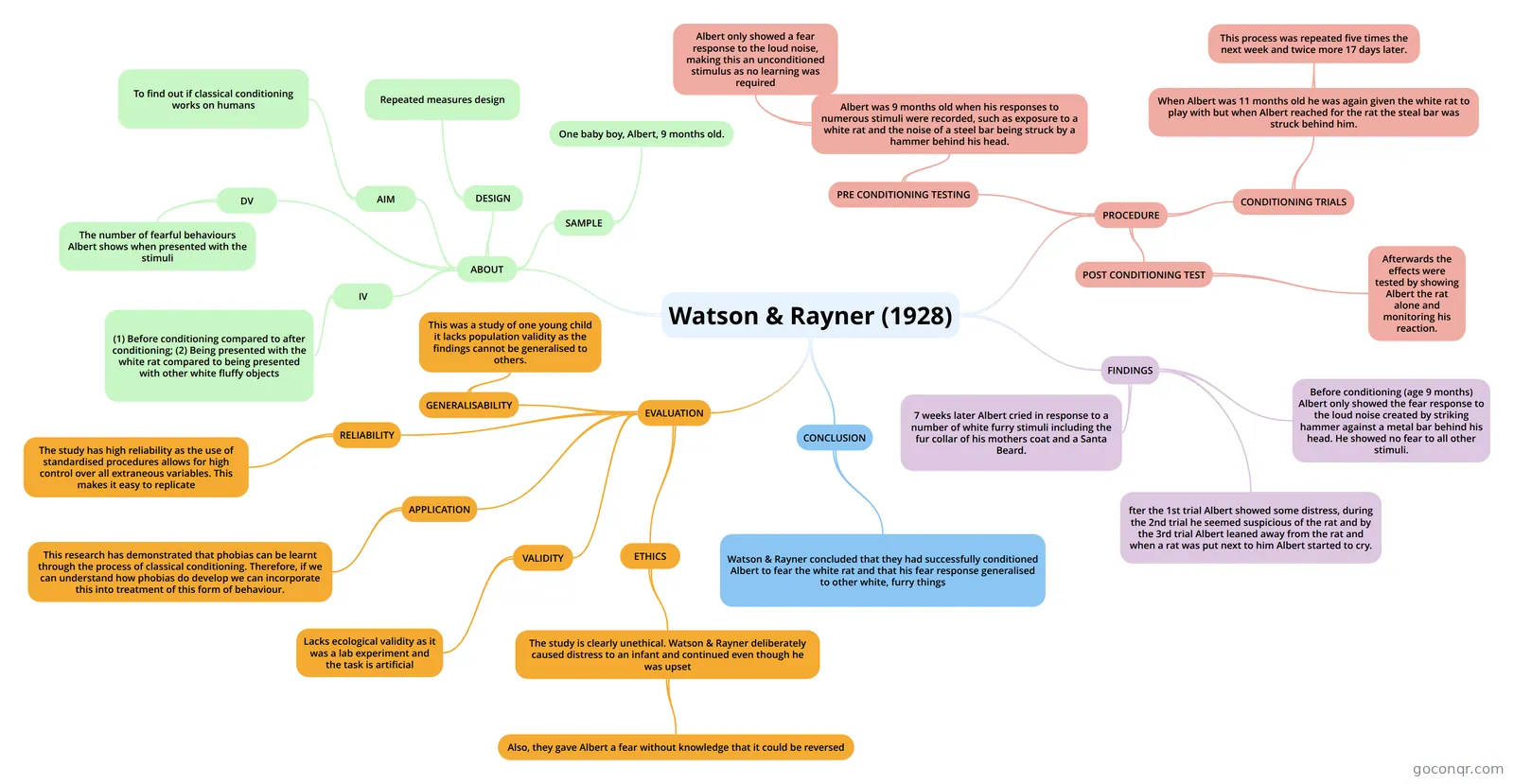 Mind map Watson & Rayner (1928) Edexcel A Level Psychology: Learning Theories Classic Study
-
22 cardsClassical Conditioning Unit 4: Development and Learning -- Module 16: Classical Conditioning
-
11 cardsAlison Psychology Course Module 1- Classical Conditioning Module 1 Part 1 Classical Conditioning
-
Mind map Classical Conditioning Foundations
-
Mind map Ivan Pavlov this is a ivan pavlov description
-
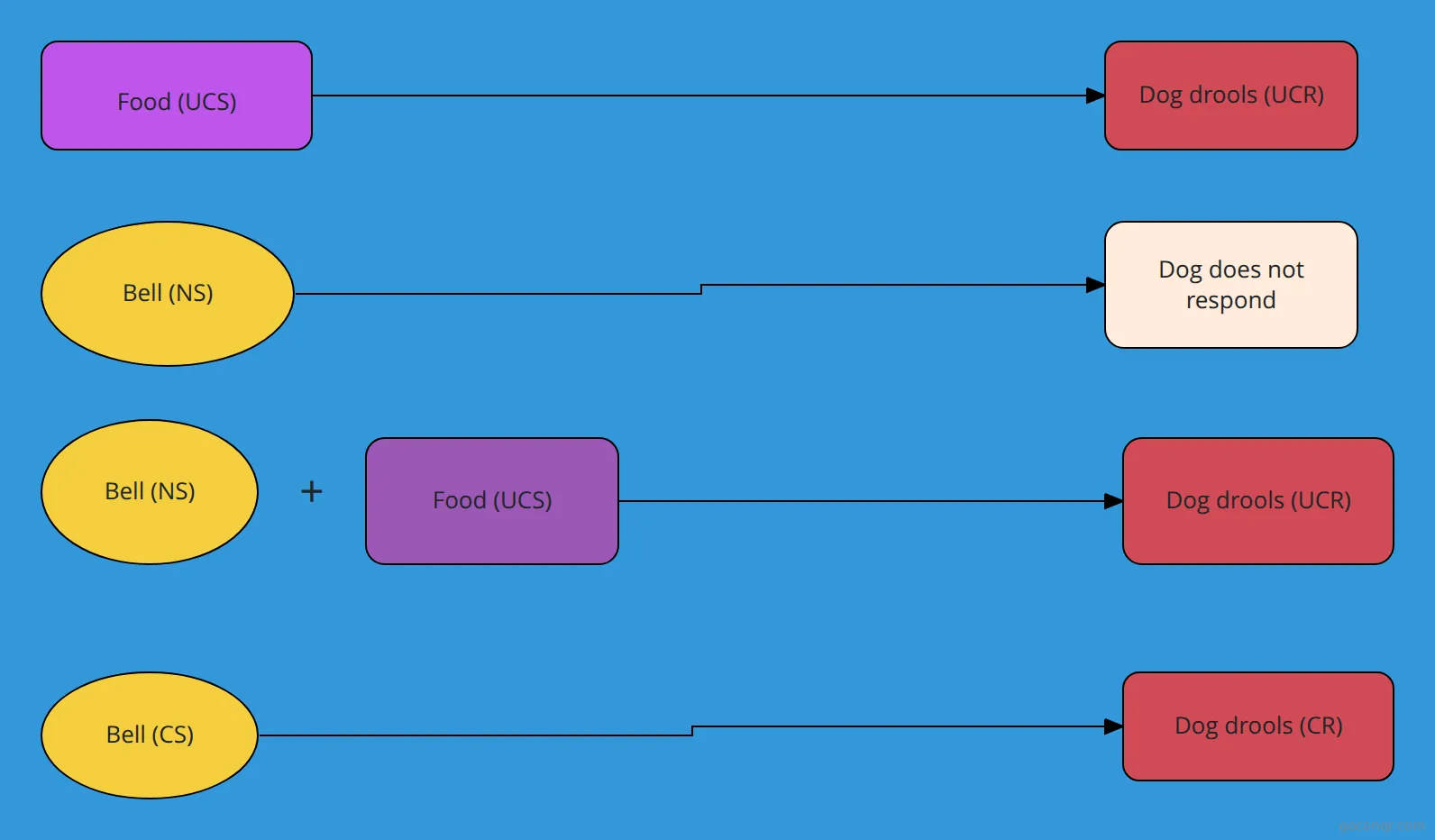 Flowchart Classical conditioning (example) Example of how classical conditioning happens
-
Mind map Classical conditioning
Quizzes
-
14 questionsClassical conditioning What is classical conditioning?
-
45 questionsLearning Exam 1: Practice Problems and Essays Alex was playing in his backyard when his neighbor's pit bull attacked him. Now whenever he sees any dog, h...
-
48 questionschapter 7 psychology of learning what is unconditioned stimulus?
-
9 questionsw a t s o n & r a y n e r 1920
-
85 questionsChapter 4 A type of learning in which an organism learns to respond with a conditioned response (CR) to a previously ...
-
10 questionsNEW WATSON & RAYNER - LITTLE ALBERT 1920
-
42 questionsIntro to Psychology- Section 3 practice quiz Pavlov found that meat powder placed on a dog's tongue will make the dog salivate. In Pavlov's terms, the m...
-
16 questionsUntitled
Mind maps
Flashcards
-
22 cardsClassical Conditioning Unit 4: Development and Learning -- Module 16: Classical Conditioning
-
11 cardsAlison Psychology Course Module 1- Classical Conditioning Module 1 Part 1 Classical Conditioning
-
72 cardsCHAPT 4: THE ROLE OF LEARNING AND ADAPTATION
-
50 cardsUntitled
-
32 cardsSensing, responding & learning In what ways do reflex behaviours change?
-
18 cards6.1 - classical conditioning
-
32 cardsPSYC 1010 Part 8 Why are habits, such as having something sweet with that cup of coffee, so hard to break?
-
32 cardsClassical Conditioning
Flowcharts
-
Classical conditioning (example) Example of how classical conditioning happens
-
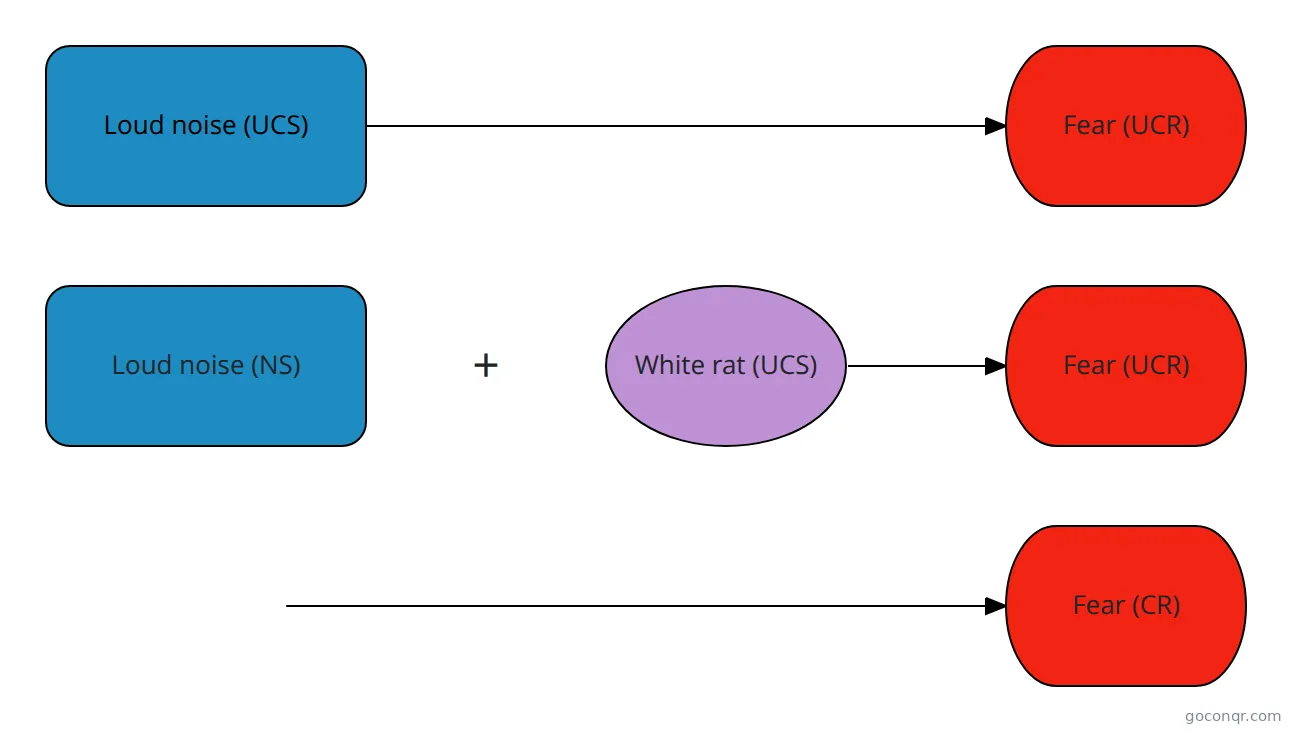 Classical conditioning- Little Albert Example of classical conditioning using little Albert
-
Principles of Learning Test 1, chapter 1,2,3 (part 1)
-
Trigger Cycle Example - Dog encounter
-
Martin's Example of Classical Conditioning
-
Untitled
Notes
-
Learning Theories 4.1 CONTENT 4.1.1 CLASSICAL CONDITIONING The main features of classical conditioning A stimulus is something in our environment that affects us; a response is our reaction to a sti...
-
Psych Chapter 5 Summary Definition of Learning 5.1 Define the term learning Learning is any relatively permanent change in behavior brought about by experience or practice and is different from maturation, which is genetically controlled. It...
-
Classical Conditioning - created from Mind Map stimulus-response learning Classical Conditioning Extinction
-
LT2 - Behaviourist Approach, CC - created from Mind Map Assumptions of Behaviourism Classical Conditioning Pavlov's Research
-
Classical condiioning Classical Conditioning It is the process by which an organism learns to connect, or associate, two stimuli that repeatedly occur together. In this process, a previously neutral stimulus is paired wi...
-
psychology exam notes ch.6 LEARNING Classical Conditioning: a learning process that happens when 2 stimuli get paid repeatedly - the first stimuli evokes a natural response by the subject, while the second doesn't. BUT, after enough ...
-
Review T3 Chapter 6 Learning- A systematic, relatively permanent change in behavior that occurs through experienceConditioning: Classical Conditioning- learning process in which a neutral stimulus becomes associated with a mean...
-
Learning Classical conditioning: neutral stimulus becomes associated with a meaningful stimulus and acquires the capacity to evoke a similar response (the response occurs w/o effort & awareness) Unconditioned stimulus: stimulu...
Slides
More Learning, Conditioning and Behaviour Analysis topics
All of Learning, Conditioning and Behaviour AnalysisLearning styles and typesBehaviourismNon-associative learningOperant conditioningReinforcement and punishmentClassical and operant conditioningSocial and observational learningCognitive learning theoryNeural basis of learningBehaviour analysisBehaviour modification