
Respiratory Pharmacology
226 resources created by 166 users
This Respiratory Pharmacology page on GoConqr gathers community-made quizzes, mind maps, flashcards and notes, from bronchodilators and inhaled corticosteroids to asthma, COPD, hay fever and cough and cold remedies. It's built for university students and professional candidates practising drug classes and treatment steps, and for teachers after ready-made material. There are over 200 resources here, including more than 30 quizzes, over 70 mind maps and over 100 flashcards. Pick a mind map to get your bearings, then try a quiz to see what sticks.
Select topic
Top Respiratory Pharmacology resources
-
Mind map Respiratory Drugs Pharmacology 214.202 Massey university NZ
-
10 questionsRespiratory Disorders Clinical Pharmacology- 5th Year PMU Adverse drug reactions of methylxanthines are
-
79 cardsAsthma and COPD Pharmacology Name one type of Asthma Medication Classification
-
33 cardsCHAPTER 36 - Antihistamines, Decongestants, Antitussives, and Expectorants PHARMACOLOGY - LILLEY
-
27 cardsWeek 2 Respiratory pharmacology
-
24 cardsChronic Asthma (3): Drugs List all systemic (oral) corticosteroids [Hint: MPP]
-
21 cardsIntegrated Cardiopulmonary Pharmacology Third Edition Chapter 4 Chapter 4 terms
-
20 cardsAsthma What is asthma
Quizzes
See all 40 quizzesMind maps
See all 77 mind maps-
Respiratory Drugs Pharmacology 214.202 Massey university NZ
-
Asthma & COPD drugs
-
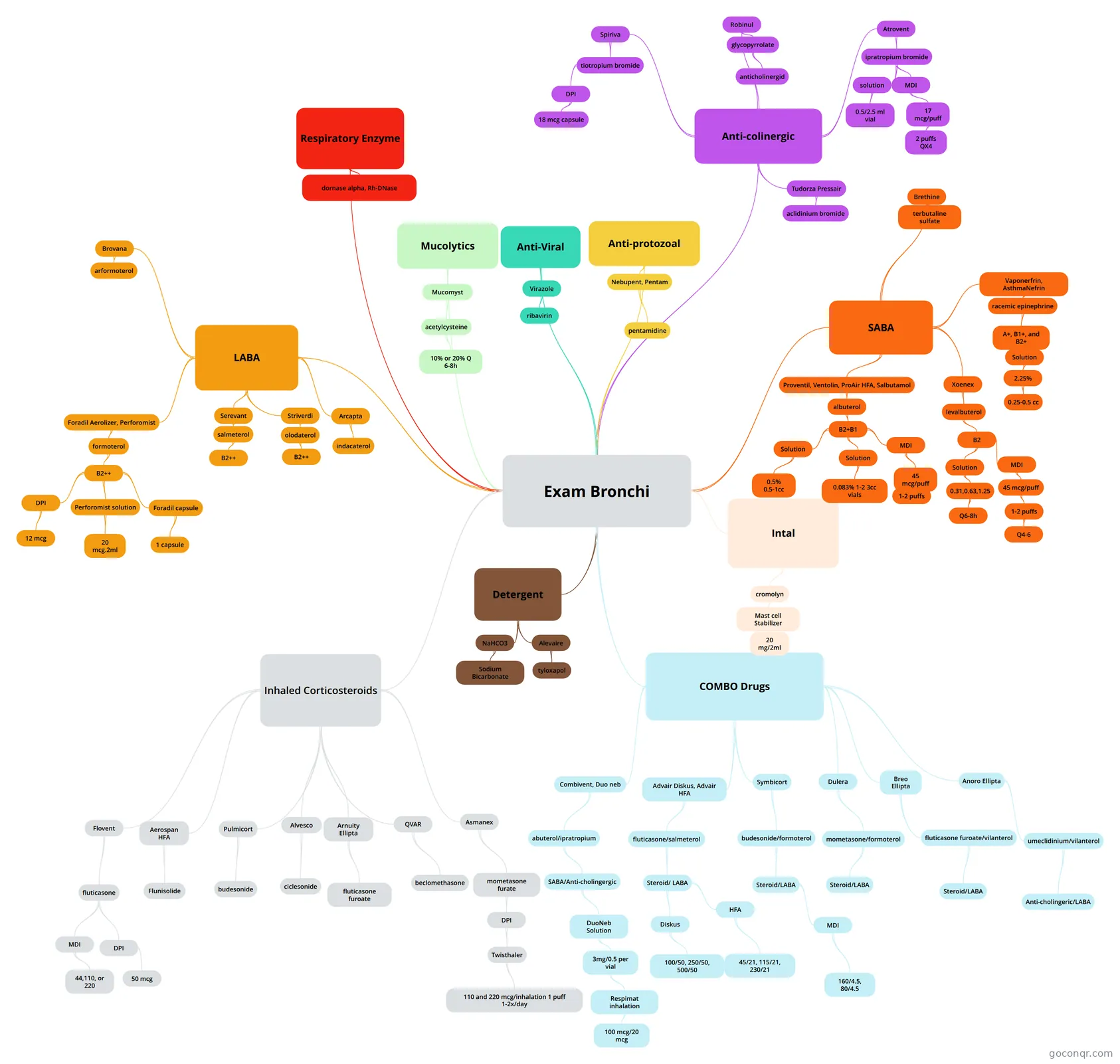 Exam Bronchi Jims drugs
-
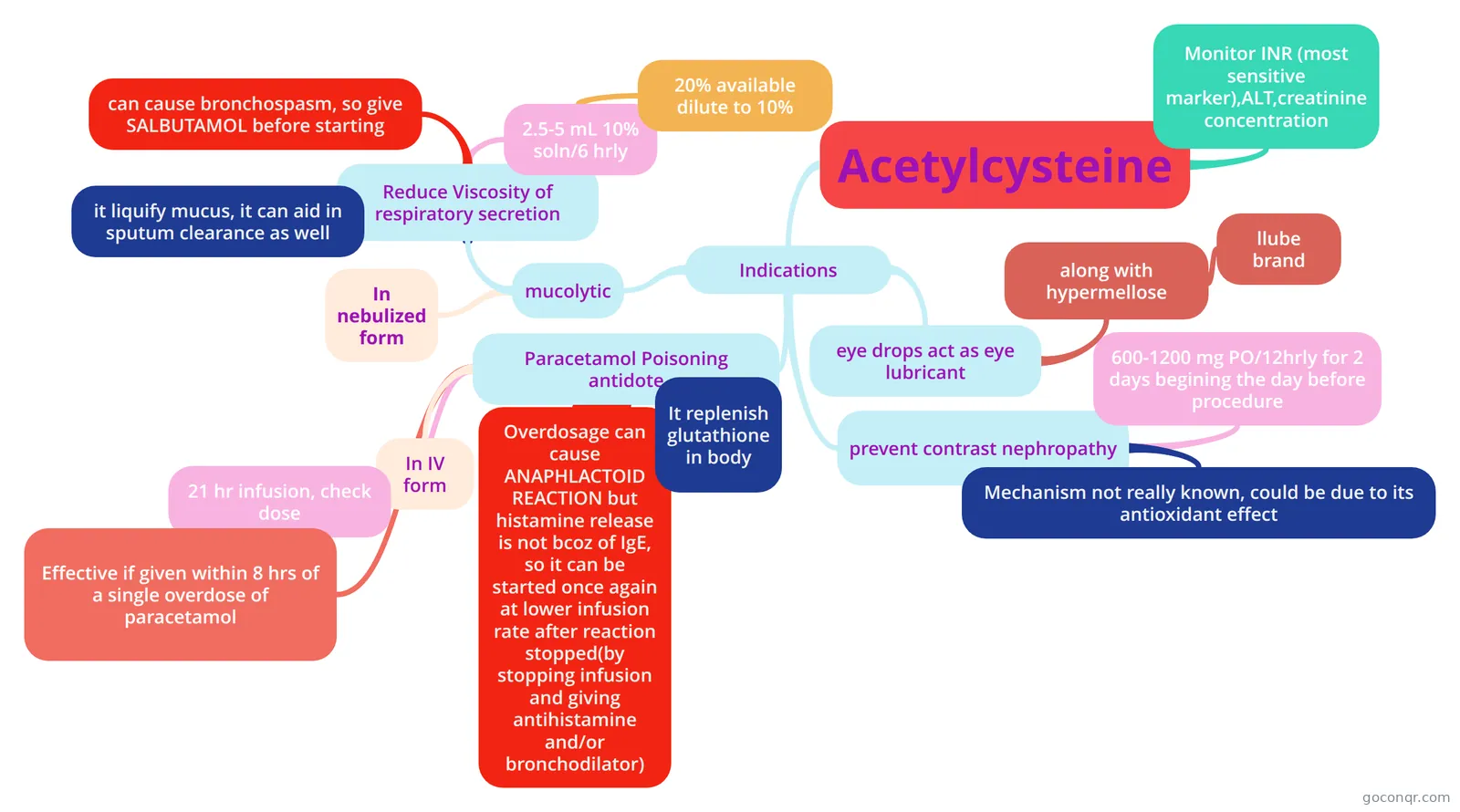 Acetylcysteine Drug used in treatment of paracetamol posioning, contrast nephropathy protection and act as mucolytic
-
IPRATROPRIUM BROMIDE ipratroprium bromide info for respiratory pharmacology
-
LEVALBUTEROL levalbuterol facts for respiratory pharmacology
-
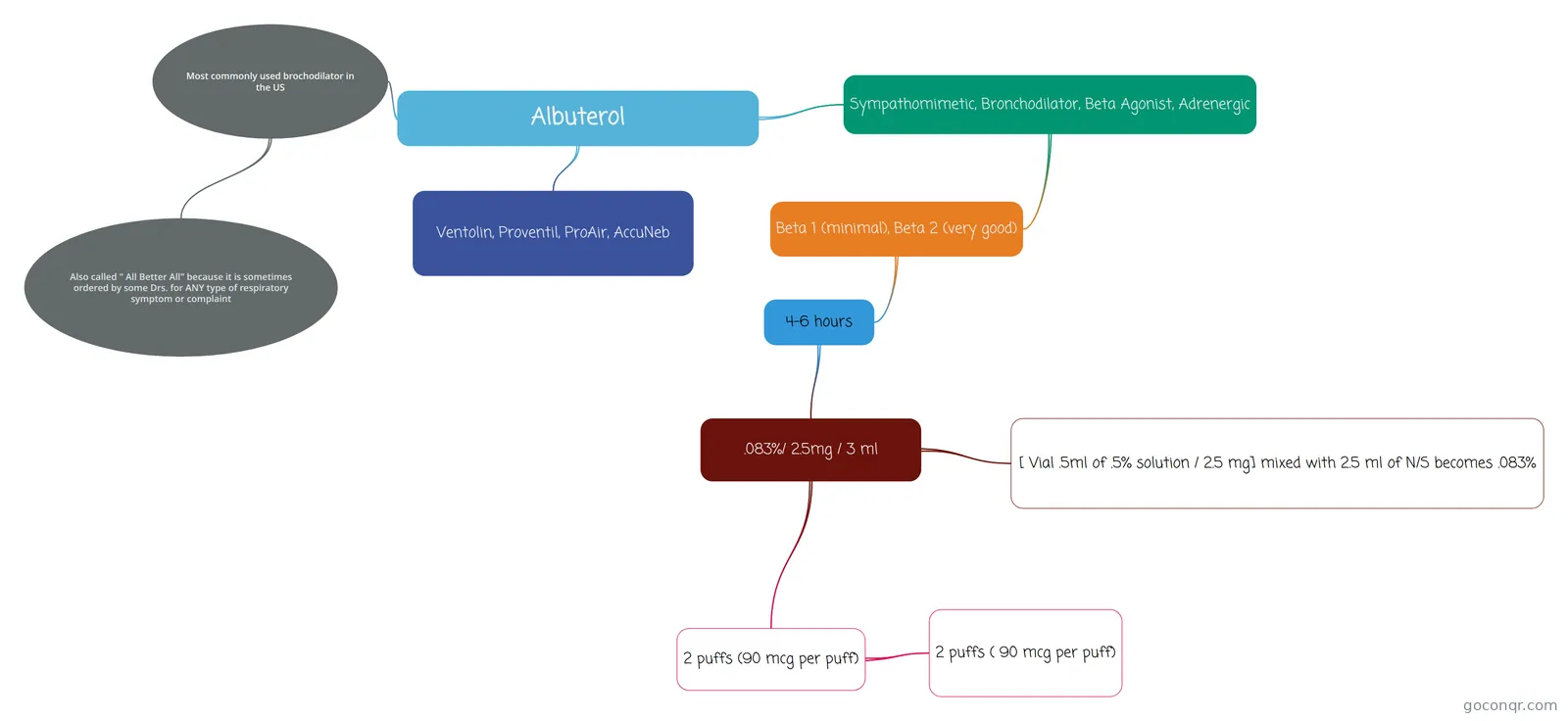 Albuterol Drug of the week( 1)
-
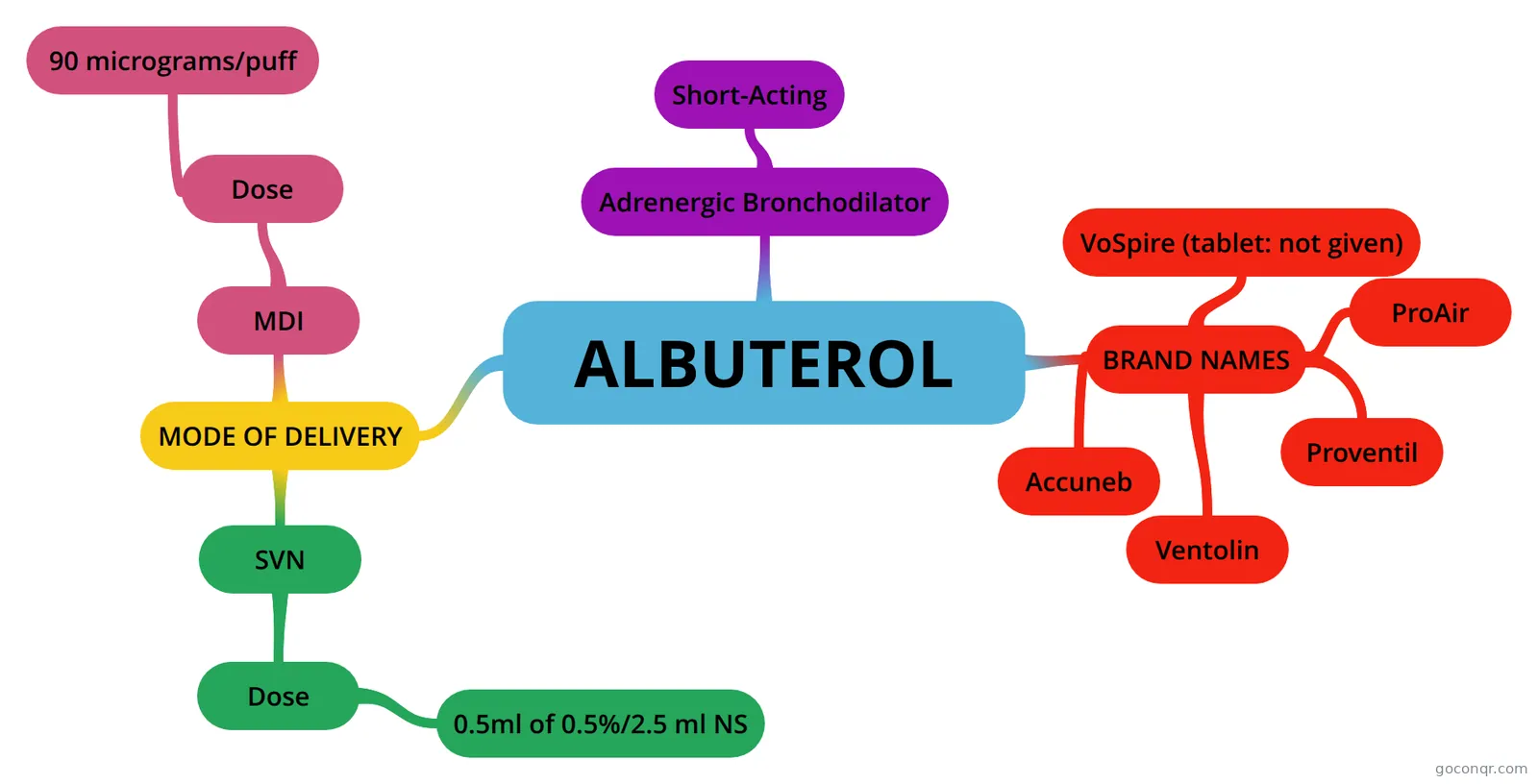 ALBUTEROL albuterol info for respiratory pharmacology
Flashcards
See all 106 flashcards-
79 cardsAsthma and COPD Pharmacology Name one type of Asthma Medication Classification
-
33 cardsCHAPTER 36 - Antihistamines, Decongestants, Antitussives, and Expectorants PHARMACOLOGY - LILLEY
-
27 cardsWeek 2 Respiratory pharmacology
-
24 cardsChronic Asthma (3): Drugs List all systemic (oral) corticosteroids [Hint: MPP]
-
21 cardsIntegrated Cardiopulmonary Pharmacology Third Edition Chapter 4 Chapter 4 terms
-
20 cardsAsthma What is asthma
-
4 cardsBeta2-Agonists Give eg's of & indications for beta2-agonists.
-
11 cards453: Test 1 Inhaler medications for COPD Albuterol (Salbutamol, ProAir, Proventil, Ventolin)
Topics in Respiratory Pharmacology
More Pharmacology topics
About Respiratory Pharmacology
GoConqr OriginalWhat this unit covers
Most of the resources here follow the drugs used for breathing problems. Asthma and COPD take up the largest share, with further material on allergic rhinitis, coughs and colds, and pulmonary arterial hypertension.
The mind map Respiratory Drugs splits bronchodilators into β2 adrenergic agonists, antimuscarinics and methylxanthines. It also separates short-acting from long-acting agents and names examples such as salbutamol, terbutaline, eformoterol and salmeterol.
Where to start
Begin with a map for the overall picture. Then move to the flashcards for detail on single drugs and classes.
- Open the mind map Respiratory Drugs to see how the classes fit together.
- Read Asthma Drugs, which separates extrinsic asthma, triggered by allergens, from intrinsic asthma.
- Move to the maps on chronic asthma management, which cover inhaler technique, a PEF meter and a stepped approach starting with a PRN SABA.
- Use the Asthma flashcards for rescue drugs, symptoms, severity and control.
Using quizzes and maps together
Study a map, close it, then take a quiz on the same topic. The quiz Drugs for Bronchospastic Disorders uses fill-in-the-blank items, such as naming salmeterol as a long-acting β2 agonist. The quiz on respiratory disorders in clinical pharmacology asks about adverse reactions of methylxanthines and β2 agonists. Wrong answers show you which part of the map to revisit.
There are also flashcards on compound β2-agonist and corticosteroid inhalers, covering examples, mechanism, side effects and cautions. They are useful once the single drug classes feel familiar.
For exam candidates
Two decks are labelled for ExCPT: ExCPT PHARM Respiratory Set 1: Asthma/COPD Medications and ExCPT PHARM Respiratory Set 2: Allergy/Cough & Cold Medications. They suit professional candidates who want focused drill.
Where it sits
This unit belongs to the strand Organ Systems, Endocrine and Immune Pharmacology, within Pharmacology. Choose a resource that matches the topic you are on, and add your own maps and flashcards where you spot a gap.
Frequently asked questions
Which resource should I open first?
Start with the mind map Respiratory Drugs. It lays out bronchodilators as β2 agonists, antimuscarinics and methylxanthines, with short-acting and long-acting examples. Once that makes sense, the Asthma flashcards and the quiz on bronchospastic disorders let you test the same ideas.
What do the mind maps cover?
They cover drug classes for asthma and COPD, stepped management of chronic asthma, inhaled corticosteroids, inhaler delivery, allergic rhinitis, and cough and cold treatments. There is also a map on acetylcysteine. Many are short, so they work well as a quick recap before a quiz.
Are there resources for the ExCPT exam?
Yes. Two flashcard decks are labelled for ExCPT. One covers asthma and COPD medications, and the other covers allergy, cough and cold medications. They suit professional candidates, and university students can use them as extra practice on the same drug groups.
Are these resources free, and who made them?
Every resource on this page is free to open, study and take, with no account needed. They were made by GoConqr users, not by GoConqr itself. A free account saves your quiz scores and lets you make your own quizzes, mind maps, flashcards and notes.
Who are these resources for?
They mainly suit university students and professional candidates who are learning respiratory drugs, from inhaler types to adverse effects. Teachers can also pick out ready-made quizzes, maps and flashcards to set as revision tasks for a class.
What if I can't find the topic I need?
Try nearby topics first. Asthma, COPD, rhinitis and cough each have several resources, and a related deck may include what you want. If a gap remains, you can build your own flashcards or mind map and use it for revision.