
Cardiovascular Pharmacology
756 resources created by 447 users
This Cardiovascular Pharmacology page on GoConqr gathers community-made quizzes, mind maps, flashcards and notes, from antiarrhythmic drugs and ACE inhibitors to statins, anticoagulants and drugs for angina. It's built for university students and professional candidates practising drug classes, actions and side effects, and for teachers after ready-made material. There are over 700 resources here, including more than 120 quizzes, over 260 mind maps and over 320 flashcards. Try a quiz to find your gaps, then build your own maps and decks.
Top Cardiovascular Pharmacology resources
-
200 cardsmed chem 2 final exam
-
81 questionsadvanced Pharm study guide for test 2 What is the significance of bradykinin in the RAAS system
-
15 questionsAntiarrhythmic Drugs
-
Mind map Pharmacology of Cardiovascular Disease
-
12 questionsdydlipidmia and HTNcrisis A 62-year-old man presents to your medication management clinic for a follow-up pharmacotherapy visit. He h...
-
48 questionsCardiovascular drugs Pharmacology A 32-year-old woman with hypertension wishes to become pregnant. Her physician informs her that she will ha...
-
Mind map CVS drugs
-
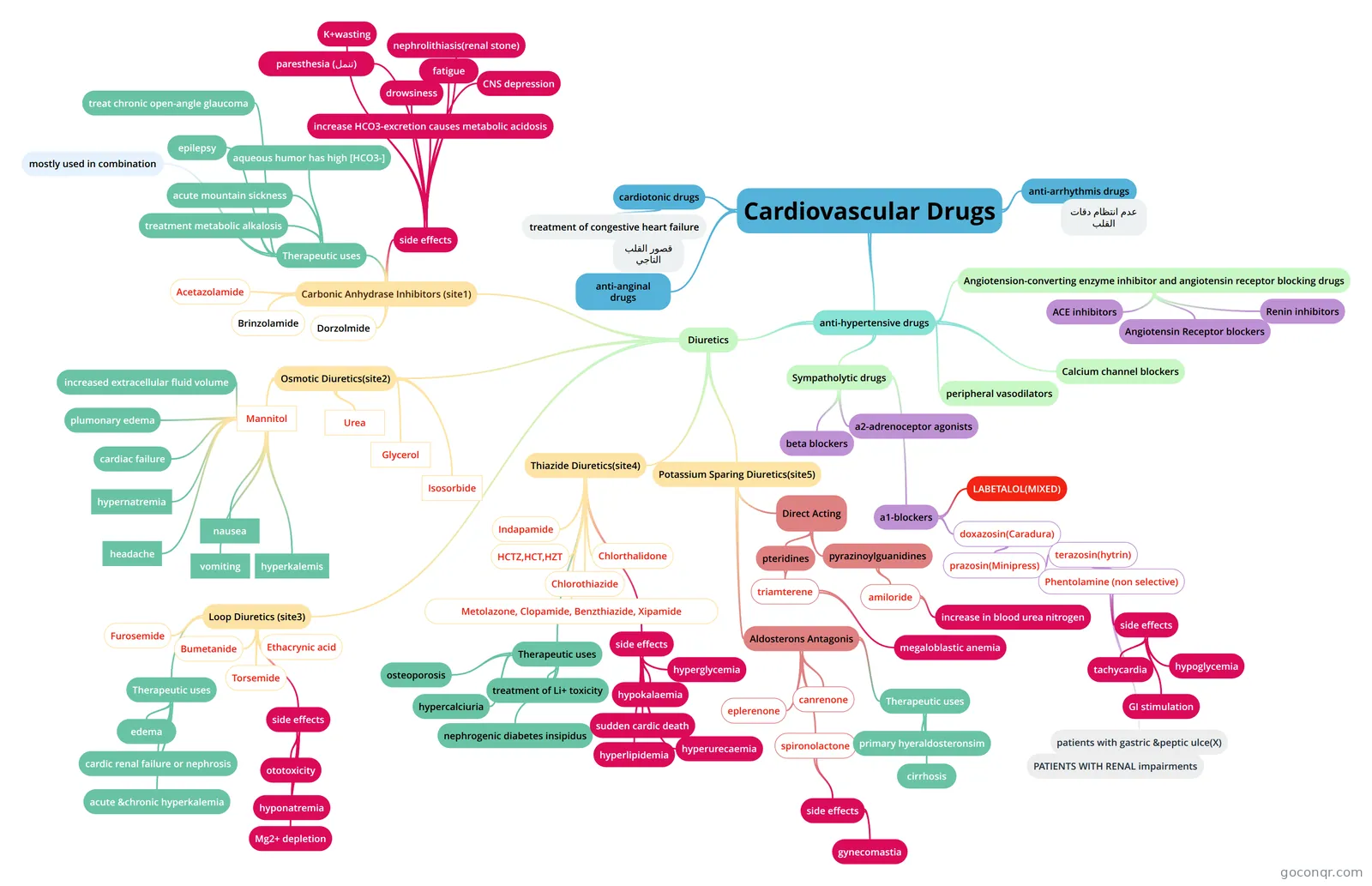 Mind map Cardiovascular Drugs a simple map for the 심혈관계 작용 약물
Quizzes
See all 136 quizzes-
81 questionsadvanced Pharm study guide for test 2 What is the significance of bradykinin in the RAAS system
-
15 questionsAntiarrhythmic Drugs
-
12 questionsdydlipidmia and HTNcrisis A 62-year-old man presents to your medication management clinic for a follow-up pharmacotherapy visit. He h...
-
48 questionsCardiovascular drugs Pharmacology A 32-year-old woman with hypertension wishes to become pregnant. Her physician informs her that she will ha...
-
97 questionsHTN,Lipid Meds T or F. African Americans respond better to a Thiazide diuretic.
-
60 questionsCardiovascular and Renal Medications Which type of medication is indicated for a patient with hypertension?
-
110 questionsaPharmacology MCQs 2- 4th Year- PMU Functional antagonists of histamine are
-
21 questionsPHARM - Exam 1 These three beta blockers are Relative Cardioselectivity: ++ Partial Agonist Activity (ISA): 0
Mind maps
See all 261 mind maps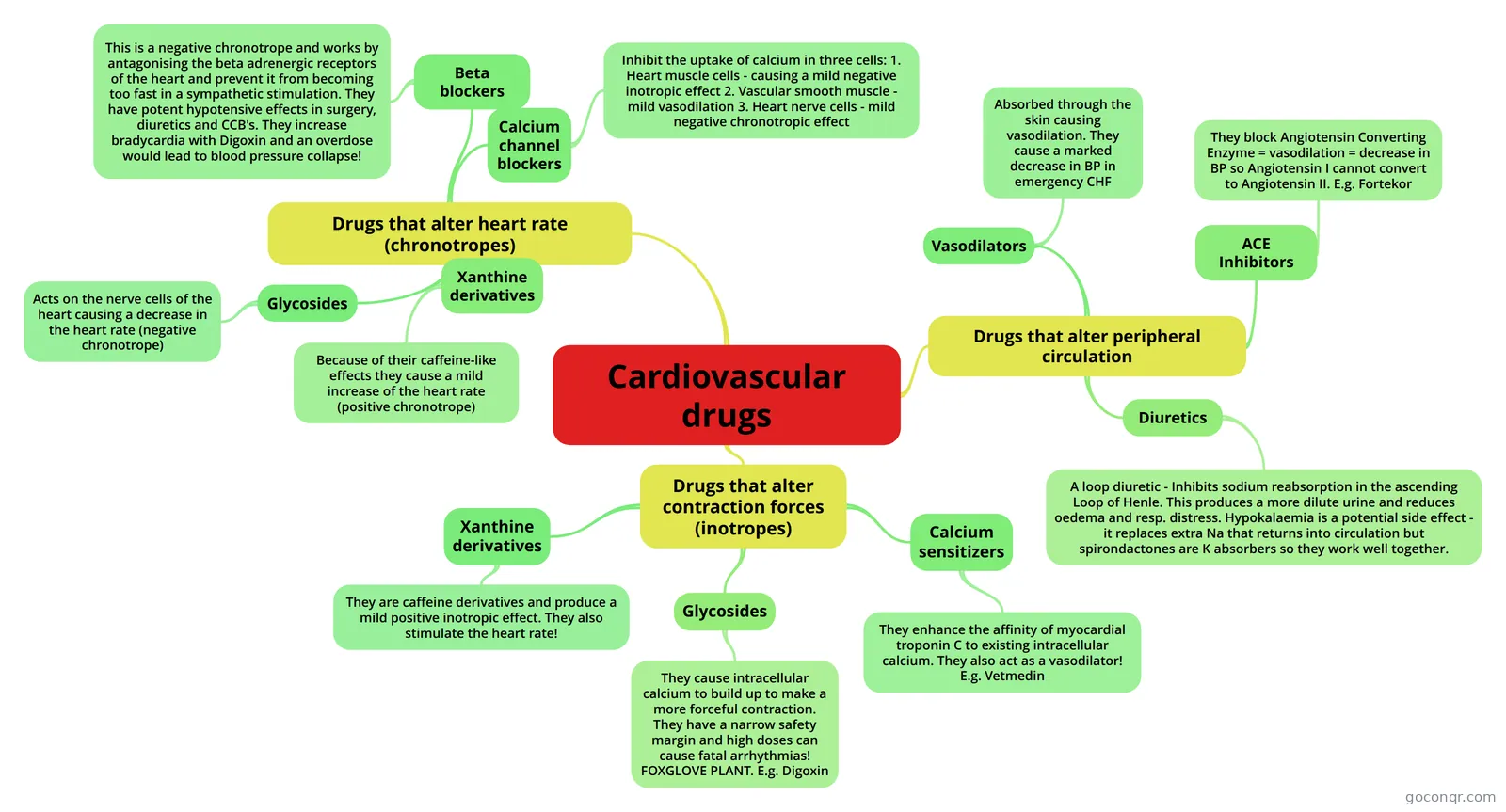
Flashcards
See all 332 flashcards-
200 cardsmed chem 2 final exam
-
4 cardsACE Inhibitors Give eg's of & indications for ACEi's.
-
161 cardsDrug List for Pharmacology 2 Exam Drugs for Anaemia
-
36 cardsAntihyperlipidemic Drugs What is the treatment of hyperlipidemia based on?
-
30 cardsCardiac Pharmacology Part 1 - Nursing ACE INHIBITORS Example & Action
-
59 cardsCardiac Drugs What are the types of medication for heart conditions
-
4 cardsCalcium Channel Blockers Give eg's of & indications for calcium channel blockers.
-
4 cardsAngiotensin Receptor Blockers (ARB's) Give eg's of & indications for ARB's
Notes
See all 16 notes-
Anti-arrhythmic drugs (AARD's) Tachyarrhythmias - heart beating too fast Bradyarrhythmias - slow paced heart rate and rhythm Sino atrial node controls and regulates the cardiac cycle - if control is lost, can result in ectopic foci (sin...
-
Lec 4 - Pharmacology of cardiac rhythm Cardiac conduction & Action potentials - refresh i) Anatomy of cardiac conduction ii) Cardiac action potentials APs in cardiac pacemaker cells = longer than skeletal or nerve APs! Broken up into 3 phases: ...
-
Exam 7- Bahouth Objectives What are the 3 primary indications for treatment of cardiac arrhythmias? 1. Abnormal Sinus Rhythm 2. Ectopic beats caused by changes in normal impulse formation abnormal automaticity 3. Ectopic beats caused by a...
-
Drugs Used in Heart Failure K & C p719.
More Pharmacology topics
About Cardiovascular Pharmacology
GoConqr OriginalWhat this unit covers
The resources here follow the main drug groups used for the heart and circulation. Mind maps such as Pharmacology of Cardiovascular Disease lay out ACE inhibitors, diuretics, angiotensin II receptor blockers, aldosterone antagonists, beta blockers and calcium channel blockers side by side. Others, like CVS drugs, split the topic into anti-angina drugs, diuretics and drugs that change cardiac contractility.
Where to start
Begin with a broad map to see the whole picture. Cardiovascular Drugs groups medicines into anti-hypertensive, anti-anginal, anti-arrhythmic and cardiotonic drugs, and covers the treatment of congestive heart failure. Another map, Cardiovascular drugs, sorts them by effect on contraction force, heart rate and peripheral circulation.
Then move to one class at a time. Flashcard decks such as ACE Inhibitors, Calcium Channel Blockers and Antihyperlipidemic Drugs suit short, repeated sessions.
Using quizzes and maps together
Read a map, close it, then take a quiz on the same topic. The Antiarrhythmic Drugs quiz asks you to match each drug with its description. The Cardiovascular drugs Pharmacology quiz uses clinical questions, such as choosing an antihypertensive for a woman who wishes to become pregnant. The quiz Drugs for Heart Failure is a good check after the heart failure maps.
- Map first, to see how the classes relate.
- Quiz next, to spot what you cannot yet recall.
- Flashcards last, to drill the gaps.
Beyond the basics
Some resources reach into blood and clotting, including the decks Fibrinolytic drugs and Anti-coagulant drugs. Lipid-lowering material sits here too. Some listed resources mention ExCPT and USMLE, so professional candidates will find items to practise with.
Where this unit sits
This unit belongs to the strand Cardiovascular, Renal and Blood Pharmacology within Pharmacology. Pick a topic that matches your next lecture, try a quiz, and then make your own maps or flashcards from what you find.
Frequently asked questions
Which resource should I open first?
Start with the mind map Pharmacology of Cardiovascular Disease. It sets out the main drug classes in one place, including ACE inhibitors, diuretics, beta blockers and calcium channel blockers. After that, try the Antiarrhythmic Drugs quiz to see how much has stuck.
What do the mind maps cover?
They cover antihypertensives, anti-anginal drugs, antiarrhythmics, cardiotonic drugs and heart failure treatment. Some focus on one class, such as statins, diuretics or angiotensin receptor blockers. Others, like Cardiovascular drugs, group medicines by their effect on contraction force, heart rate and circulation.
Are the resources free to use?
Yes. Every resource listed here is free to open, study and take, with no account needed. They were made by GoConqr users, not by GoConqr. A free account also saves your quiz scores and lets you make your own quizzes, mind maps, flashcards and notes.
Which levels and exams do these suit?
The material is aimed at university students and professional candidates, with teachers also able to use it as ready-made content. Some listed resources mention ExCPT and USMLE, so those preparing for such exams can find relevant practice alongside general course revision.
How do I revise a single drug class?
Pick a class-specific resource, such as the Calcium Channel Blockers flashcards or the Angiotensin Converting Enzyme Inhibitors mind map. Read it through, then test yourself with a related quiz like Antihypertensive Drugs. Repeat the cards until the actions and side effects come easily.
What if I cannot find my topic?
Look at neighbouring resources first, since topics overlap. Anticoagulant, fibrinolytic and lipid-lowering material is listed separately from antihypertensives. If something is still missing, you can make your own notes, maps or flashcards with a free account.