
Post-War Britain
149 resources created by 92 users
This Post-War Britain page on GoConqr gathers community-made mind maps, flashcards, quizzes, notes and slides, from Attlee's Labour government and the Suez crisis to Thatcherism and the 1984-85 miners' strike. It's built for school students revising for A-level History, GCSE History or A-level Politics, and for teachers after ready-made material. There are over 800 resources here, including more than 20 quizzes and over 600 mind maps. Pick a period, try a quiz to find your gaps, then build your own revision set.
Top Post-War Britain resources
-
 Mind map Anarchy in the UK? Media, popular culture and society in the 1970s
-
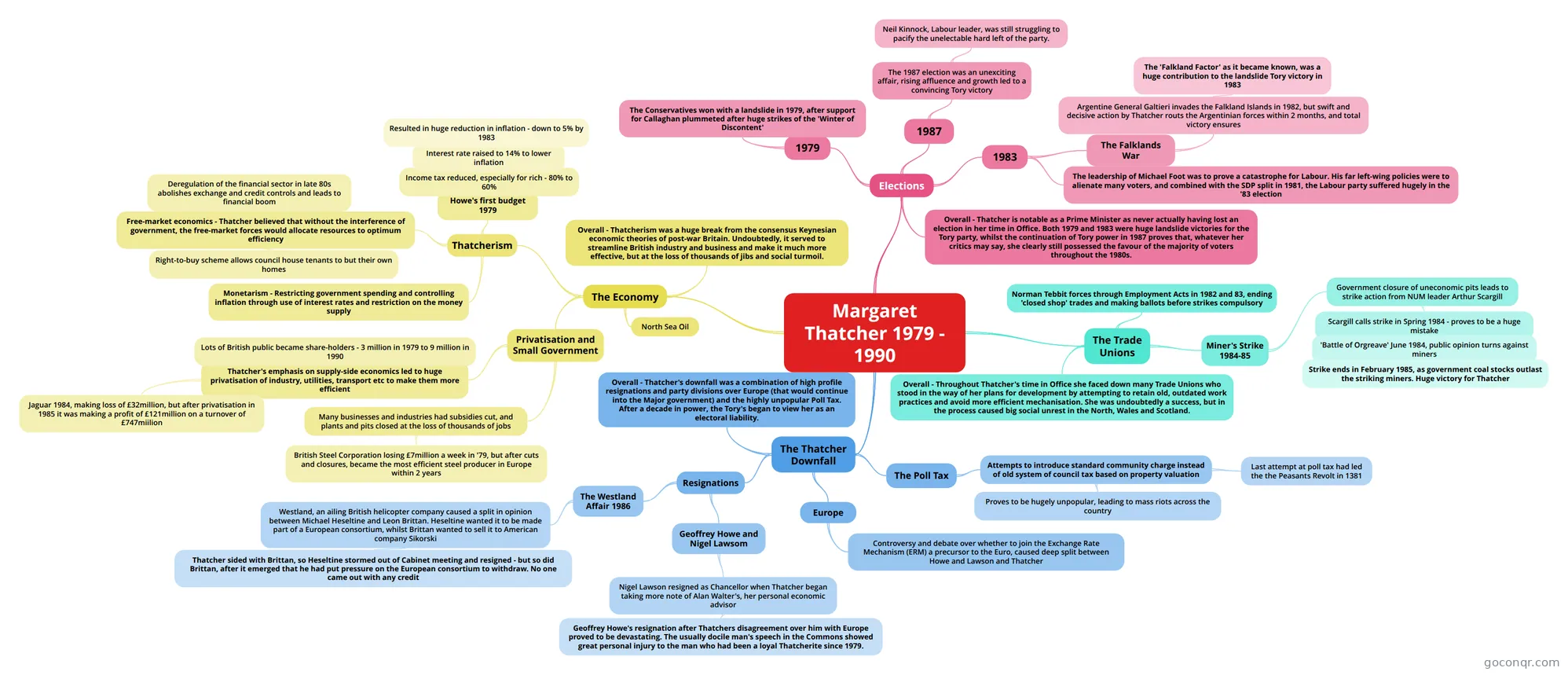 Mind map Margaret Thatcher 1979 - 1990
-
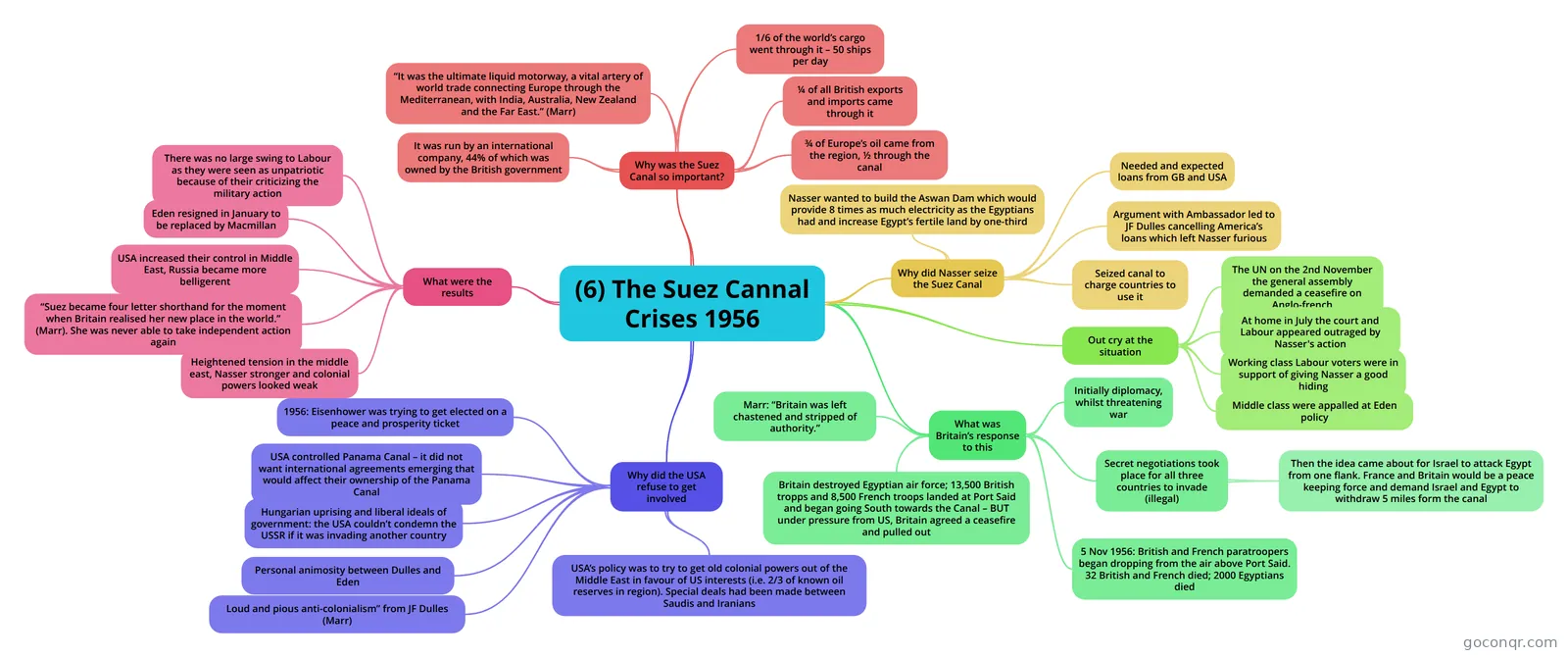 Mind map (6) The Suez Cannal Crises 1956
-
Mind map The 'Liberal Landslide' 1906 The general election, 1906
-
 Mind map Reasons for Conservative Dominance 1951-64
-
 Mind map WILSON'S GOVERNMENT: ECONOMIC POLICIES & PROBLEMS (1964 - 1970)
-
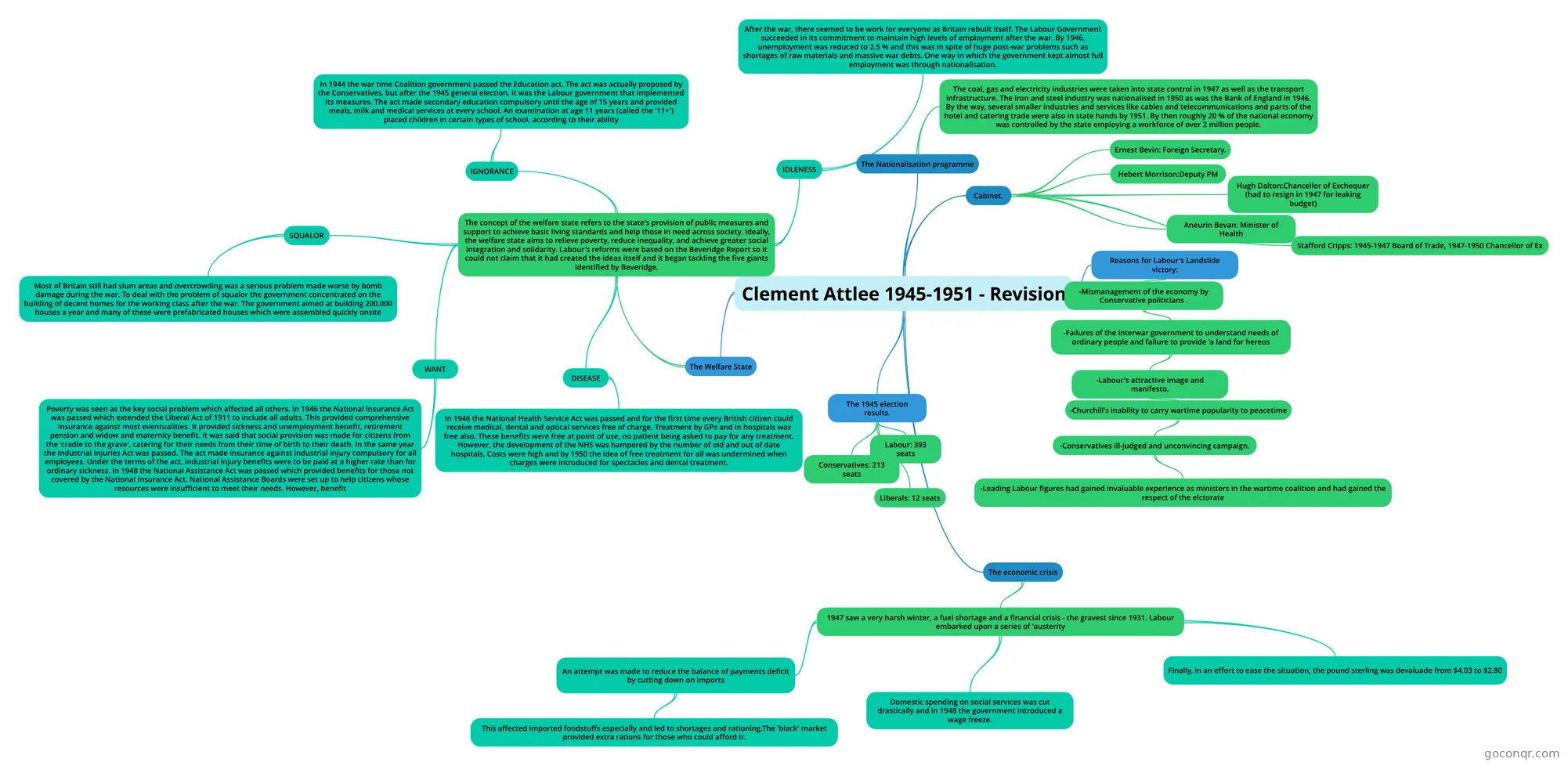 Mind map Clement Attlee 1945-1951 - Revision Important stuff on Attlee
-
34 cardsThe Making of Modern Britain, 1951 - 2007 Age of Affluence
Quizzes
Mind maps
See all 109 mind maps-
Anarchy in the UK? Media, popular culture and society in the 1970s
-
Margaret Thatcher 1979 - 1990
-
(6) The Suez Cannal Crises 1956
-
The 'Liberal Landslide' 1906 The general election, 1906
-
Reasons for Conservative Dominance 1951-64
-
WILSON'S GOVERNMENT: ECONOMIC POLICIES & PROBLEMS (1964 - 1970)
-
Clement Attlee 1945-1951 - Revision Important stuff on Attlee
-
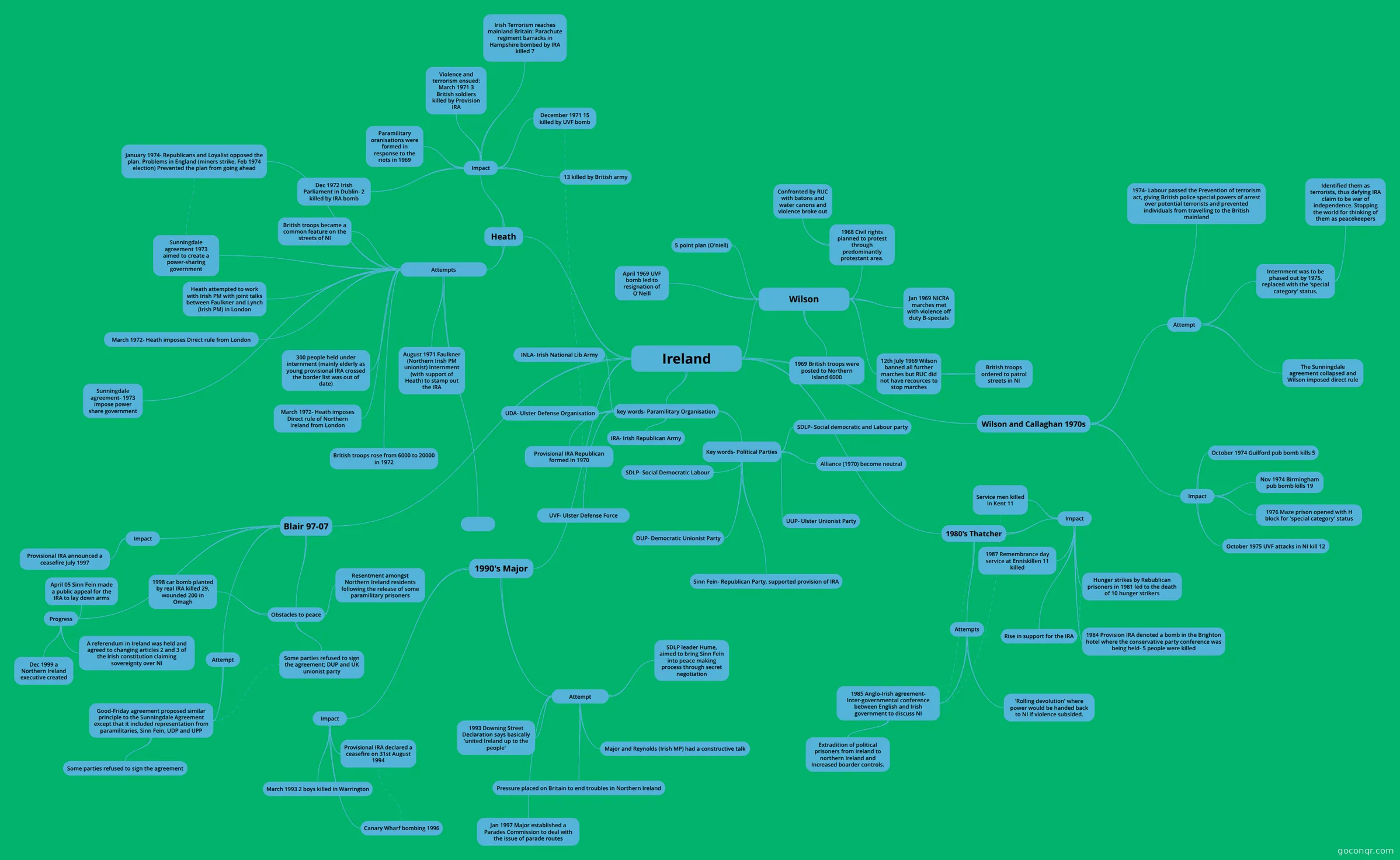 Ireland Modern Britain
Flashcards
See all 27 flashcards-
34 cardsThe Making of Modern Britain, 1951 - 2007 Age of Affluence
-
6 cards1979-90 - Margaret Thatcher A general overview of the period.
-
20 cardsBritain 1951 to 1964 An overview of each Prime Minister in the period and the similarities running throughout.
-
25 cardshistory british society key topic 1 Key Topic 1:: The Liberals, Votes for women & social reform
-
30 cardsKey Terms One Nation Tories
-
38 cardsBritain: historical interpretations
-
20 cardsHistory - Teenagers What was it like for teenagers in ther early 1950s?
-
62 cardsPost War Britain What is a welfare state?
Notes
-
Britain Under Margaret Thatcher - Timeline 1970-1975 - Thatcher under Heath18th June 1970 - Conservatives win the general election with Edward Heath as leader. Thatcher becomes Secretary of State for Education and Science.September 1970 - In response to f...
-
British Society and Economy in the 1950s British Society and Economy in the 1950sThe British Family in the 1950s: Men went to work and were the ‘breadwinners’ for the family. Most men worked in manufacturing or heavy industry. Women could do a limited range ...
-
Reasons for the 1906 Liberal landslide - created from Mind Map Liberals secured a landslide victory over the Conservatives 400 seats to 157. Boer War (1889-1902) 40% of British recruits were declared unfit for military surface suggesting that poor health was weakening the nation'...
-
fact file on key figures William Pitt the Younger- Prime Minister Born- 28th May 1759 Death- 23 January 1806 Father: William Pitt the elder PM, Earl of Chatham, responsible of victories of 7 years war Mother: sister of former Whig...
-
Conservative domination, 1951-64 Why did the Conservatives win the 1951 election? was it Conservative strength, Labour weakness, or was it the electoral system? Labour polled more seats than Conservatives in the 1951 election, yet won fewer seat...
-
Making of Modern Britain topic summaries The changing role of women Thirteen Wasted Years · Housewives (21= average age of marriage; 75% of women= married) · 1/5 of women worked in 1951 (family allowance ensured they didn’t need to work, though) · No trade u...
-
Lloyd-George as Prime Minister "The Man who won the War"Personality:-dynamic and determined-pragmatic-charismatic speaker-flexible Early successes post-war:- Health and Transport Ministries created- Demobilisation went smoothly- Post-War Industry B...
Slides
More History topics
About Post-War Britain
GoConqr OriginalWhat the resources cover
The page follows British politics, economy and society from 1945 into the Thatcher years. Early material includes the mind map Clement Attlee 1945-1951 - Revision and the notes on the economic and social policies of Attlee's Labour Government. The NHS mind map explains why the health service was created, with the Beveridge Report of 1942 and shocked reactions to living conditions after evacuation.
The middle decades
For the 1950s and early 1960s, look at the notes British Society and Economy in the 1950s, which describe the family, with men as breadwinners and most working in manufacturing or heavy industry. Mind maps on Conservative dominance from 1951 to 1964 sit alongside the Suez crisis maps, which ask why the canal mattered, why Nasser seized it and why the USA refused to get involved. Then come the Wilson and Heath governments, plus a mind map on media and popular culture in the 1970s.
Thatcher and after
The mind map Margaret Thatcher 1979 - 1990 covers the economy, elections, trade unions and her downfall, including monetarism. The miners' strike has a mind map on tactics, a set of notes and a flashcard deck. One slide set looks at Blair and New Labour and the welfare state.
Where to start and how to combine formats
- Begin with a broad mind map such as Britain 1945 - 1990 to see the sequence.
- Move to a period map, then read the matching notes.
- Test yourself with a quiz such as Britain 1945-51 or Conservative Dominance (1951-64).
- Use flashcard decks like Prime Ministers to fix names and dates.
If a quiz exposes a weak spot, go back to the map for that topic. Several maps also come with notes, so you can read, then check.
Where it sits
This unit belongs to the strand The Cold War and the Contemporary World in History. Choose one period today, open its map and see what you already know.
Frequently asked questions
Which resource should I open first?
Start with the mind map Britain 1945 - 1990 for an overview of the whole period. Then choose a government or event, such as Attlee, Heath, Wilson or Thatcher, and read its map before trying a related quiz.
Which quizzes are available?
There are more than 20 quizzes. Examples include Britain 1945-51, The post-war consensus 1951-64, Conservative Dominance (1951-64), Britain 1951-2007, and two on race and immigration. Some are shorter tests, so use them after reading a map.
What do the mind maps cover?
They cover prime ministers and governments, the NHS and welfare reforms, the Suez crisis, immigration, social attitudes, media in the 1970s, Thatcherism and the miners' strike. Many break each topic into questions such as why something happened and what followed.
Which exams are these suitable for?
The resources mention A-level History, GCSE History and A-level Politics. Almost all of them are at school level, so they suit school students, and teachers can use them as ready-made material for lessons or revision.
Are the resources free, and who made them?
Every resource listed here is free to open, study and take, with no account needed. They were made by GoConqr users, not by GoConqr. A free account also saves your quiz scores and lets you make your own quizzes, maps, flashcards and notes.
What if my topic is missing?
Look at neighbouring resources first, as a topic may sit inside a wider map or deck, such as Key Events in British Politics: 1945 - 1990. If you still find a gap, you can make your own flashcards or notes for it.