
Early Civilizations and the Ancient Near East
252 resources created by 225 users
This Early Civilizations and the Ancient Near East page on GoConqr gathers community-made mind maps, flashcards, quizzes, notes and slides, from Mesopotamia and Egypt to the Indus Valley, Persia and Ancient Israel. It's built for school students revising a topic and teachers after ready-made material. There are over 1,900 resources here, including more than 150 quizzes and over 900 mind maps, made by over 1,500 contributors. Pick a topic, try a quiz to spot your gaps, then build your own revision sets.
Top Early Civilizations and the Ancient Near East resources
-
32 cardsAncient Mesopotamia & Egypt Ch. 2 Ancient Mesopotamia & Egypt
-
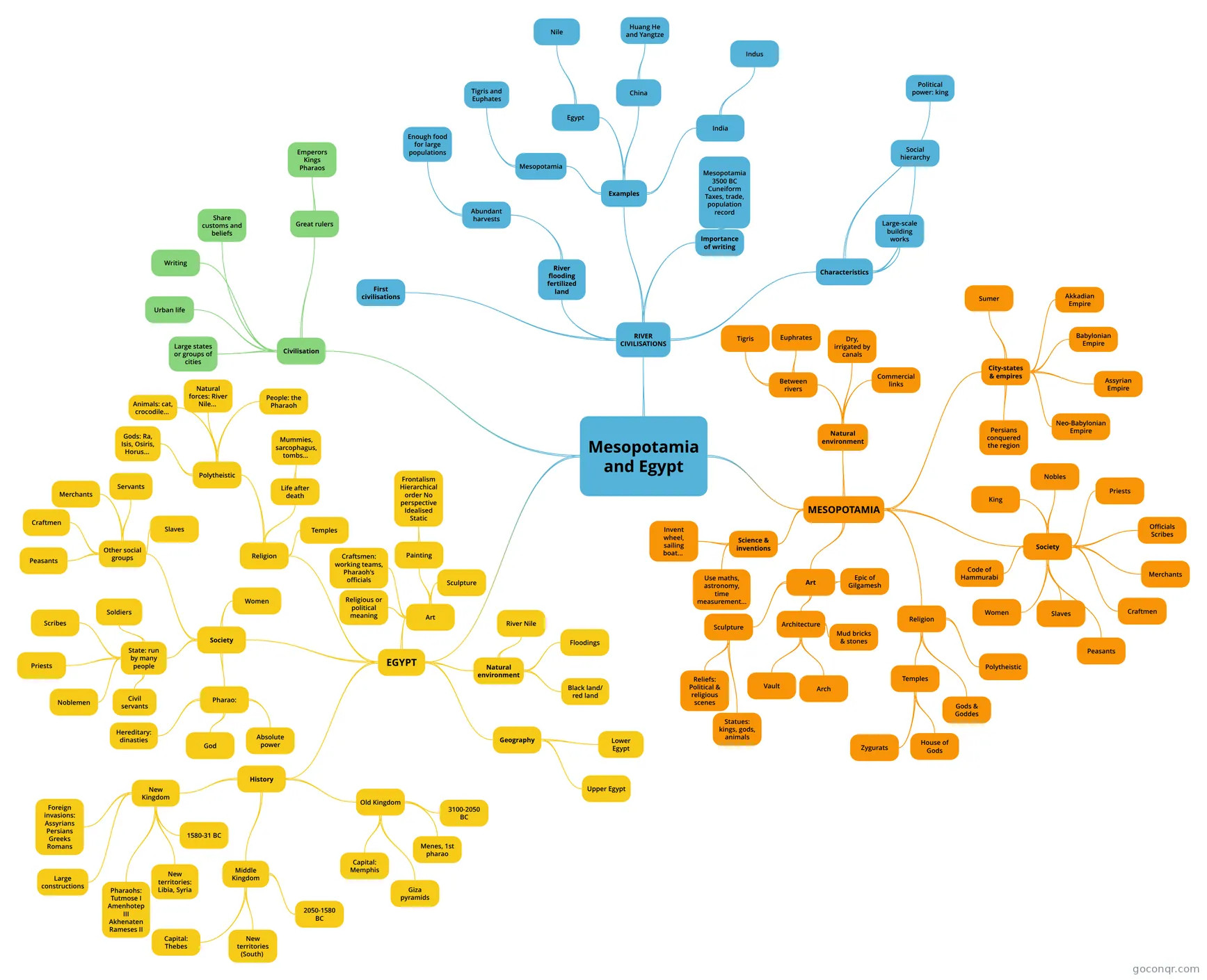 Mind map Mesopotamia and Egypt Mapa Mental en Mesopotamia and Egypt, creado por Mónica Garrido en 17/11/2018.
-
28 questionsAncient Egypt Study Guide A large waterfall.
-
41 cardsAncient Mesopotamia & Egypt Located in what is today Iraq & Syria; the earliest human civilizations began here
-
30 cardsCh 2 Ancient Mesopitamia & Egypt ch 2 Flash cartds
-
Mind map Mesopotamia
-
33 cardsch.2 Ancient Mesopotamia my work
-
39 cardsCh. 2 Ancient Mesopotamia & Egypt ch. 2 Ancient Mesopotamia & Egypt Voc
Quizzes
See all 34 quizzes-
28 questionsAncient Egypt Study Guide A large waterfall.
-
22 questionsHistory Review 8th grade Miss Erika MESOPOTAMIA Mesopotamia Quiz to study.
-
53 questionsWest In the World: HIST150- Exam One In prehistoric times, the people were known as 'survivalists' and relied on what practice to sustain them?
-
10 questionsBabylonia & Assyria While the Babylonians flourished in Mesopotamia what was happening to the Assyrians
-
11 questionsSocial Studies: Jewish History: Ch. 12 TCI Curriculum The scattering of the Jewish people outside their homeland beginning in 586 B.C.E.
-
10 questionsPersian coursework quiz What was the ancient road called that stretched through Susa, Persia, 5th century.
-
50 questionsHIS118 - Test #2 Review Chinese civilization had features that were typical of other early civilization we have encountered, such a...
-
22 questionsMesopotamia / Fertile Crescent
Mind maps
See all 51 mind maps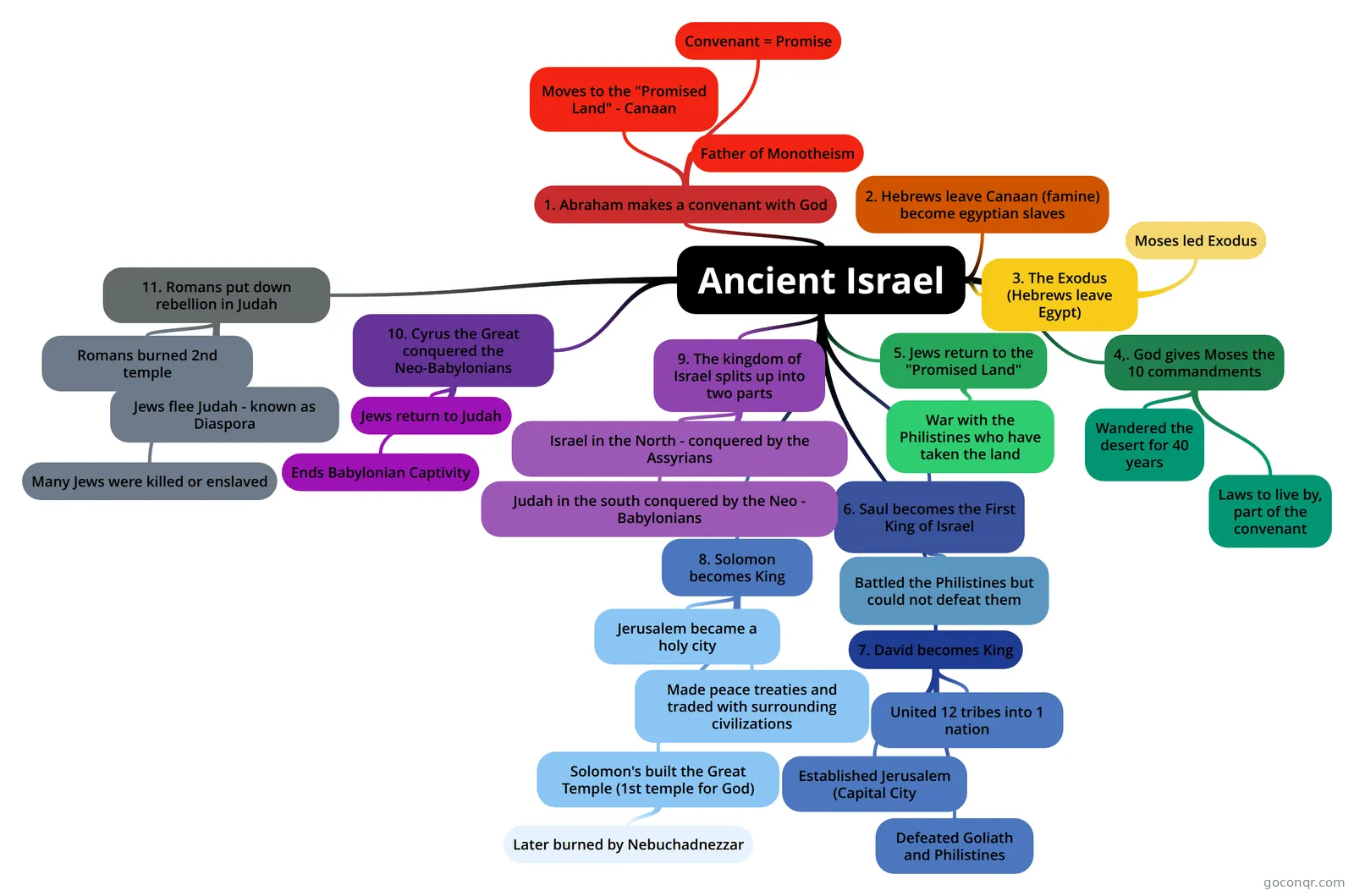
Flashcards
See all 158 flashcards-
32 cardsAncient Mesopotamia & Egypt Ch. 2 Ancient Mesopotamia & Egypt
-
41 cardsAncient Mesopotamia & Egypt Located in what is today Iraq & Syria; the earliest human civilizations began here
-
30 cardsCh 2 Ancient Mesopitamia & Egypt ch 2 Flash cartds
-
33 cardsch.2 Ancient Mesopotamia my work
-
39 cardsCh. 2 Ancient Mesopotamia & Egypt ch. 2 Ancient Mesopotamia & Egypt Voc
-
33 cardsCh.2 Ancient Mesopotamia & Eygpt vocabulary words world history
-
32 cardsAncient Mesopotamia & Egypt Name means "land between the rivers"; where the 1st civilization began; present day Iraq & Syria
-
32 cardsAncient Mesopotamia & Egypt Name means "land between the rivers": where the first civilization began: present day Iraq & Syria
Notes
-
Introduction to Ancient Rome There's No Place Like Rome Week One TOPIC: There's No Place Like Rome Sources: Source A: Polybius Histories 6.52.10–6.55.4 Now not only do Italians in general naturally excel Phoenicians and Africans i...
-
Early Civilizations 9th Grade World History 1 ReviewMesopotamia and Egypt Similarities Between Mesopotamia and EgyptGeography: Egypt and Sumer were both situated on the fertile land. The climate there was hot in both places Both were sep...
-
FINAL GLOBAL Paleolithic AGEstart of human advancment. started in Africa Old Stone Age: palcolithic agehunter-gather, migratedno homeseat berries and other naturly grown plants, raw meat.Neolithic Age: New Stone Age begging of the...
-
Chapter 1 Notes Archeology: dig up the artifacts Anthropology: analyze the artifactsHominids: first humans - 5 million years ago - East Africa - Climbed down from the tree...
-
The Ancient Israelites Around 1000 B.C., a people called Israelites built a kingdom in Canaan. Canaan was a region along the Mediterranean Sea in southwest Asia. The religion the Israelites practiced would one day affect much of the w...
Slides
More History topics
About Early Civilizations and the Ancient Near East
GoConqr OriginalWhat the resources cover
The unit centres on the river civilisations. The top mind map, Mesopotamia and Egypt, links urban life, writing, shared customs and beliefs, and great rulers such as kings and pharaohs. The flashcard decks cover the key vocabulary: the Fertile Crescent, ziggurats, theocracy, cuneiform, Hammurabi's Law Code, the Nile, inundation, silt, King Menes, dynasties and pharaohs.
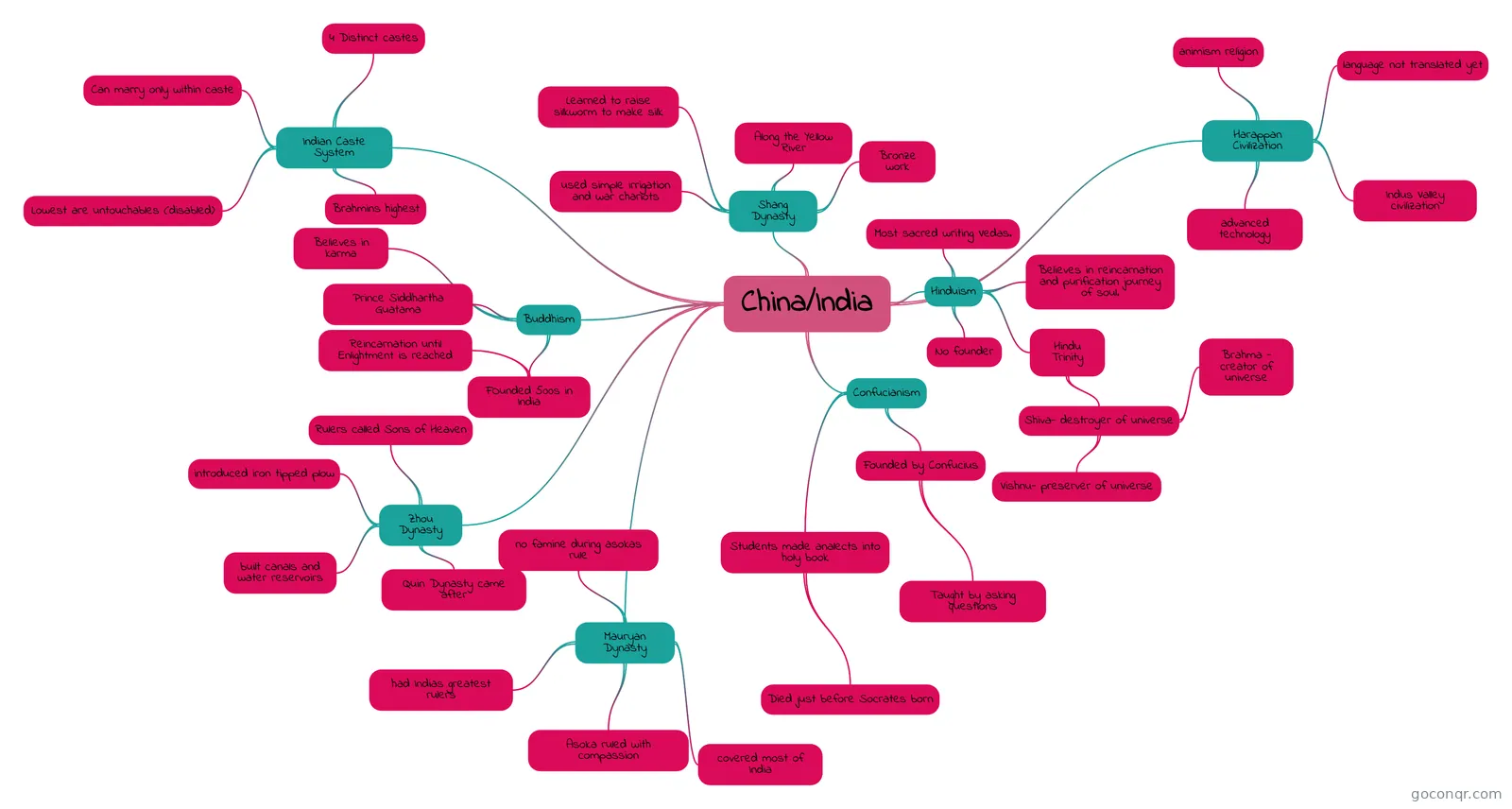
The unit also reaches beyond these two regions. You will find mind maps on the Indus Valley Civilisation, Early Chinese Civilizations, Ancient Israel and Iranian Dynasties. There are also decks on Xerxes, Cambyses II and the conquest of Babylon, plus a quiz on Cyrus the Great for OCR Ancient History.
Where to start
- Open the mind map Mesopotamia and Egypt for the big picture.
- Work through the flashcard deck Ancient Mesopotamia & Egypt until the key terms feel familiar.
- Read the slides Ancient Egypt and Mesopotamia, which compare the two societies on religion, culture, economics, politics and technology.
- Move on to the Indus Valley and Persian material.
Using quizzes and maps together
Try a quiz first, such as Ancient Egypt Study Guide or Babylonia & Assyria, and note what you got wrong. Then go back to the matching mind map and trace those branches. Finish with the flashcards on the same topic. Some quizzes are labelled for AP World History, so students on that course can pick them out easily.
Where it fits
This unit sits in the strand Foundations and the Ancient World, within the subject History. It is the starting point for work on early states, writing, law and empire.
Choose one topic today, open a mind map and see how much you can recall before checking the detail.
Frequently asked questions
Which resource should I open first?
Start with the mind map Mesopotamia and Egypt. It gives an overview of river civilisations, urban life, writing, shared beliefs and rulers. After that, the flashcard deck Ancient Mesopotamia & Egypt helps you learn the key terms before you test yourself.
What do the mind maps cover?
The mind maps go beyond Mesopotamia and Egypt. They include the Indus Valley Civilisation, Early Chinese Civilizations, Ancient Israel, Iranian Dynasties, and Darius I and Xerxes on imperial administration. There is also one on the six characteristics of civilization, useful for comparing different societies.
Are these resources free to use?
Yes. Every resource listed here is free to open, study and take, with no account needed. They were made by GoConqr users, not by GoConqr itself, so styles vary. Browse a few decks or maps and use the ones that suit how you revise.
Which exams do the resources mention?
The listed resources mention GCSE Ancient History and AP World History. For example, there are AP World History quizzes on Mesopotamia, the Indus River Valley and the Olmecs. Most material is aimed at school students, so check that a resource matches your own course.
Is there anything for teachers?
Yes. Teachers can use ready-made slide sets such as Ancient Egypt and Mesopotamia, which compares the two societies, along with quizzes and study-guide notes. You can set a quiz as a quick check, or use a mind map to open a lesson.
What if my topic is missing?
Look at nearby topics first, such as Sumer, Babylonia and Assyria, Persia or the Indus Valley, as many are covered in several formats. If you still cannot find it, you can make your own quiz, mind map, flashcards or notes with a free account, which also saves your quiz scores.