
The USA in the 1920s
281 resources created by 187 users
This History page on GoConqr gathers community-made mind maps, quizzes, flashcards and notes on The USA in the 1920s, from the Roaring Twenties boom and Prohibition to the Wall Street Crash, the Great Depression and the New Deal. It's built for school students revising a topic and teachers after ready-made material. There are over 1,900 resources here, including more than 80 quizzes and over 1,300 mind maps, mostly at secondary level. Pick a mind map, try a quiz to find your gaps, then make your own flashcards.
Top The USA in the 1920s resources
-
Mind map America: Boom, Bust & Recovery Part 2: 1917-1954
-
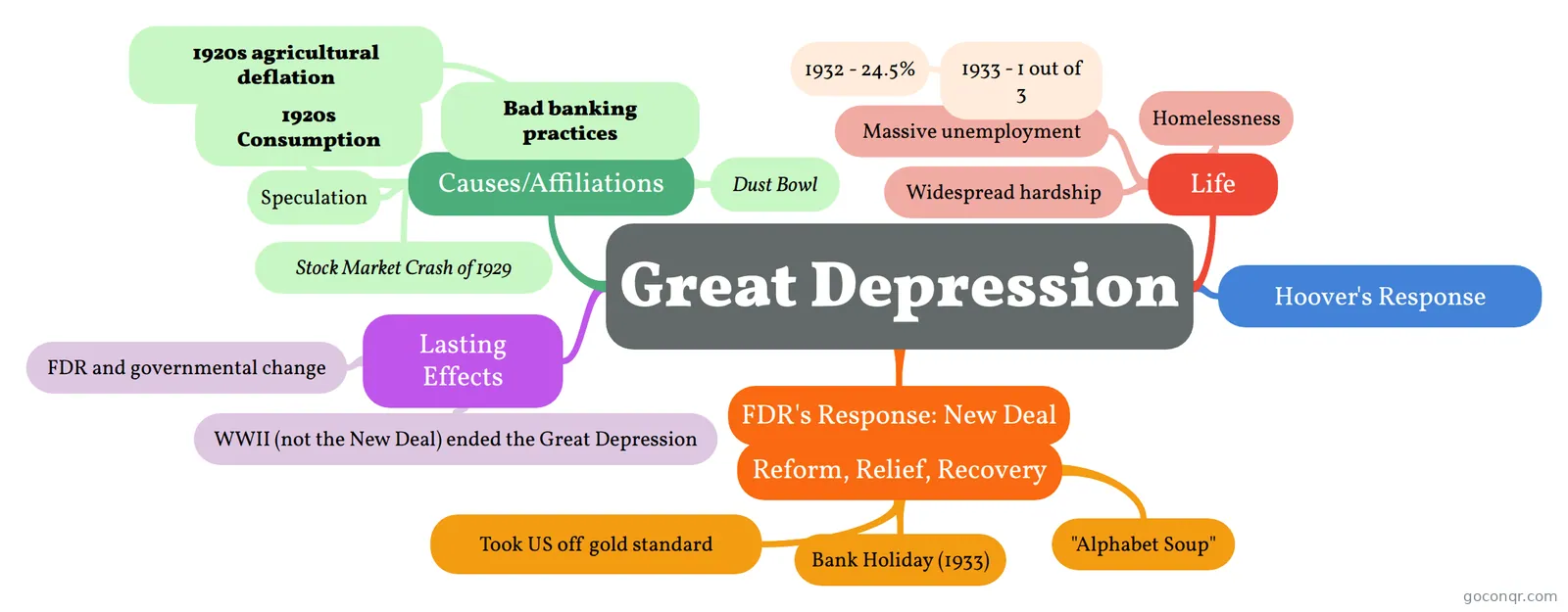 Mind map Great Depression
-
40 questionsThe New Deal and WW2 - America 1932 - 1945 How many people were unemployed in America in 1932?
-
38 questionsPart 5 US History EOC The changing image of women during the 1920s was symbolized by the
-
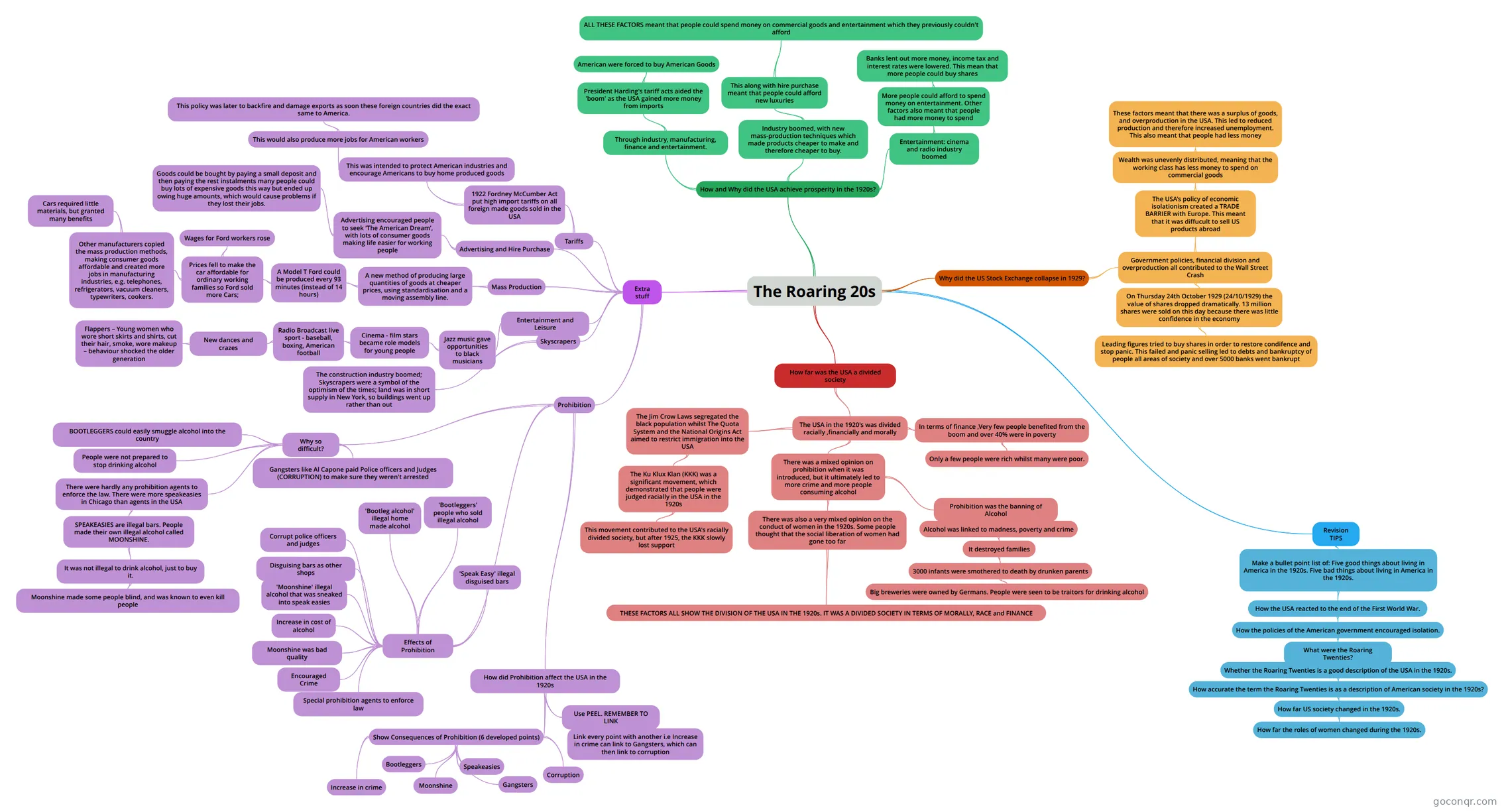 Mind map The Roaring 20s
-
18 questions32 The Politics of Boom and Bust, 1920 - 1932 All of the following are among Warren G. Harding's weaknesses as president EXCEPT:
-
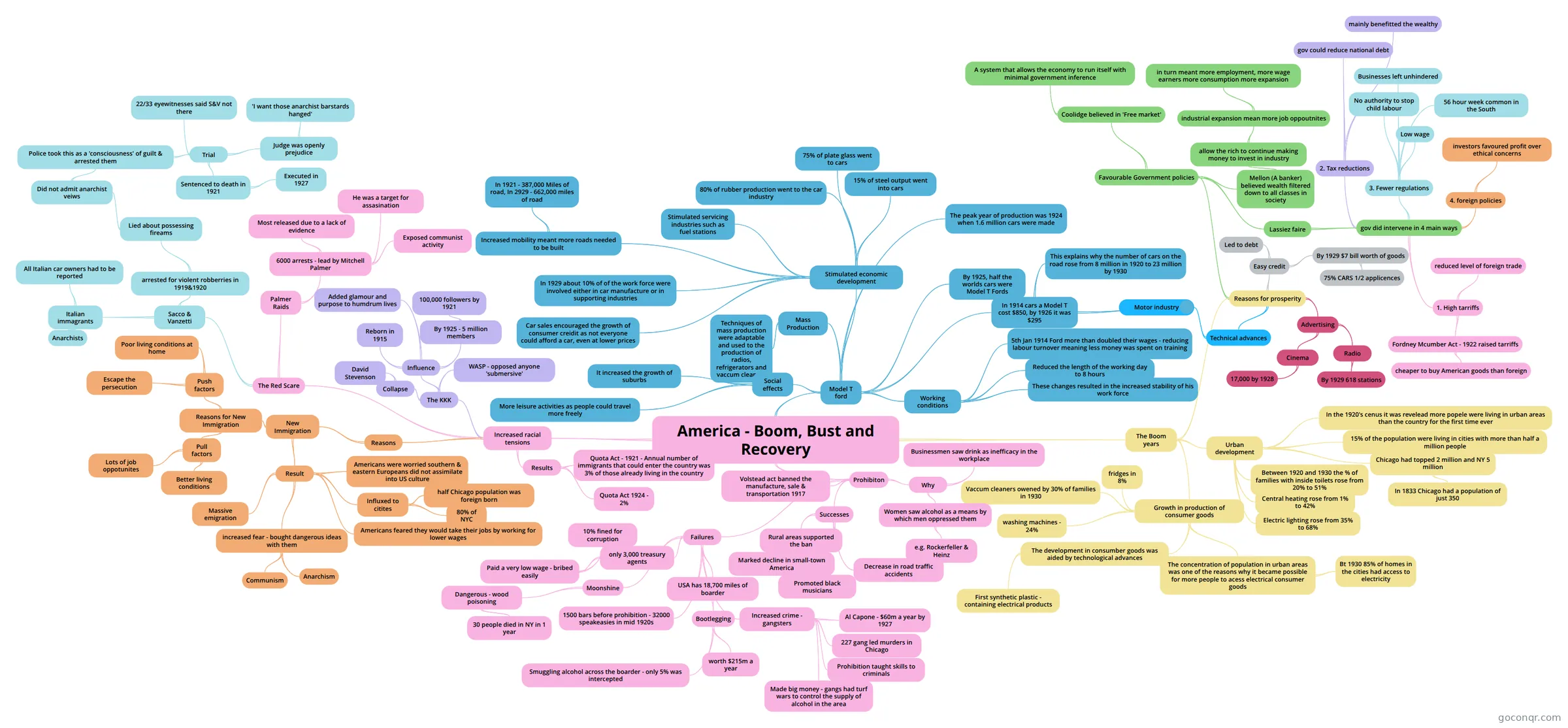 Mind map America - Boom, Bust and Recovery
-
Mind map For and Against Herbert Hoover 1928-32
Quizzes
See all 24 quizzes-
40 questionsThe New Deal and WW2 - America 1932 - 1945 How many people were unemployed in America in 1932?
-
38 questionsPart 5 US History EOC The changing image of women during the 1920s was symbolized by the
-
18 questions32 The Politics of Boom and Bust, 1920 - 1932 All of the following are among Warren G. Harding's weaknesses as president EXCEPT:
-
16 questionsUSA: Boom, Bust and Recovery One cause of the US economic boom of the 1920s was the doubling of industrial output
-
19 questionsThe Roaring Twenties (part one) How many Americans died in the First World War?
-
9 questionsLife in the 1920's In what ways were women's roles changing in the 1920s?
-
21 questionsRoaring 20s quiz What were Flappers?
-
54 questionsThe Roaring 20s (Study Quiz) Practice Test for US Honors History II, at Phillipsburg Highschool. Chapter 24, The New Era. November 1, 2015
Mind maps
See all 162 mind maps-
America: Boom, Bust & Recovery Part 2: 1917-1954
-
Great Depression
-
The Roaring 20s
-
America - Boom, Bust and Recovery
-
For and Against Herbert Hoover 1928-32
-
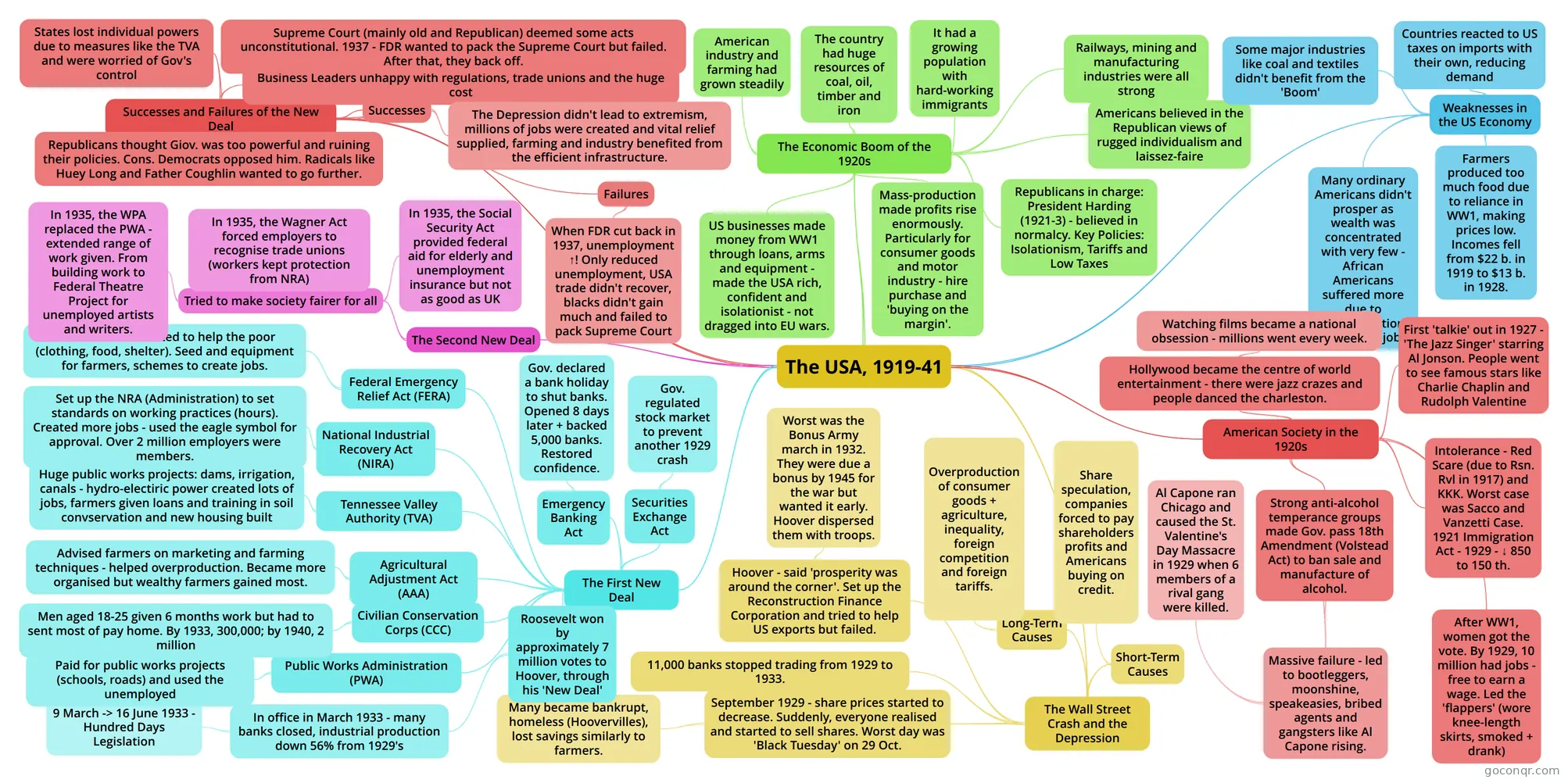 The USA, 1919-41 This Mind Map on ExamTime contains a comprehensive overview of US American History from 1919-1941
-
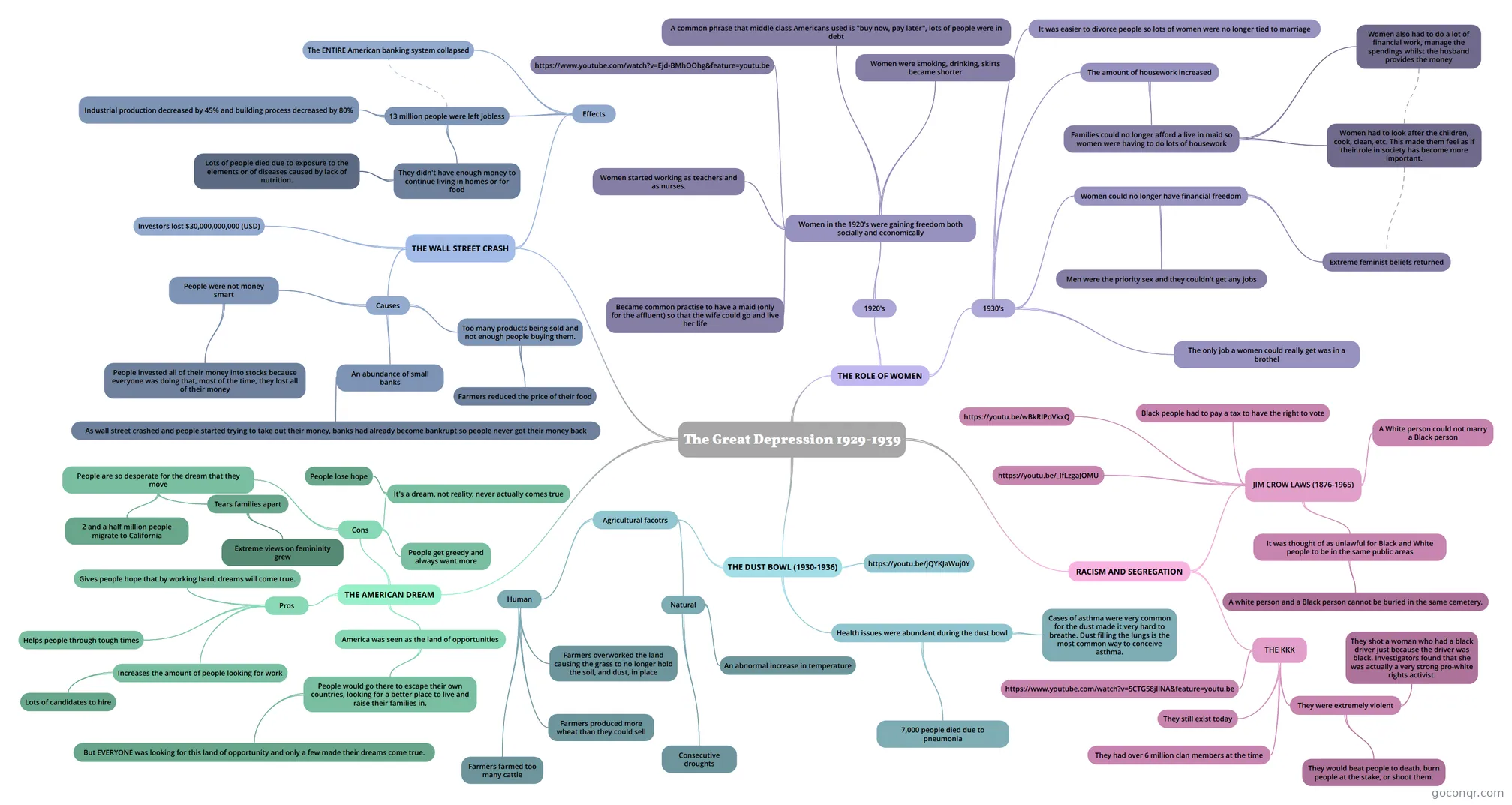 The Great Depression 1929-1939 For of mice and men english exam GCSE to help with context
-
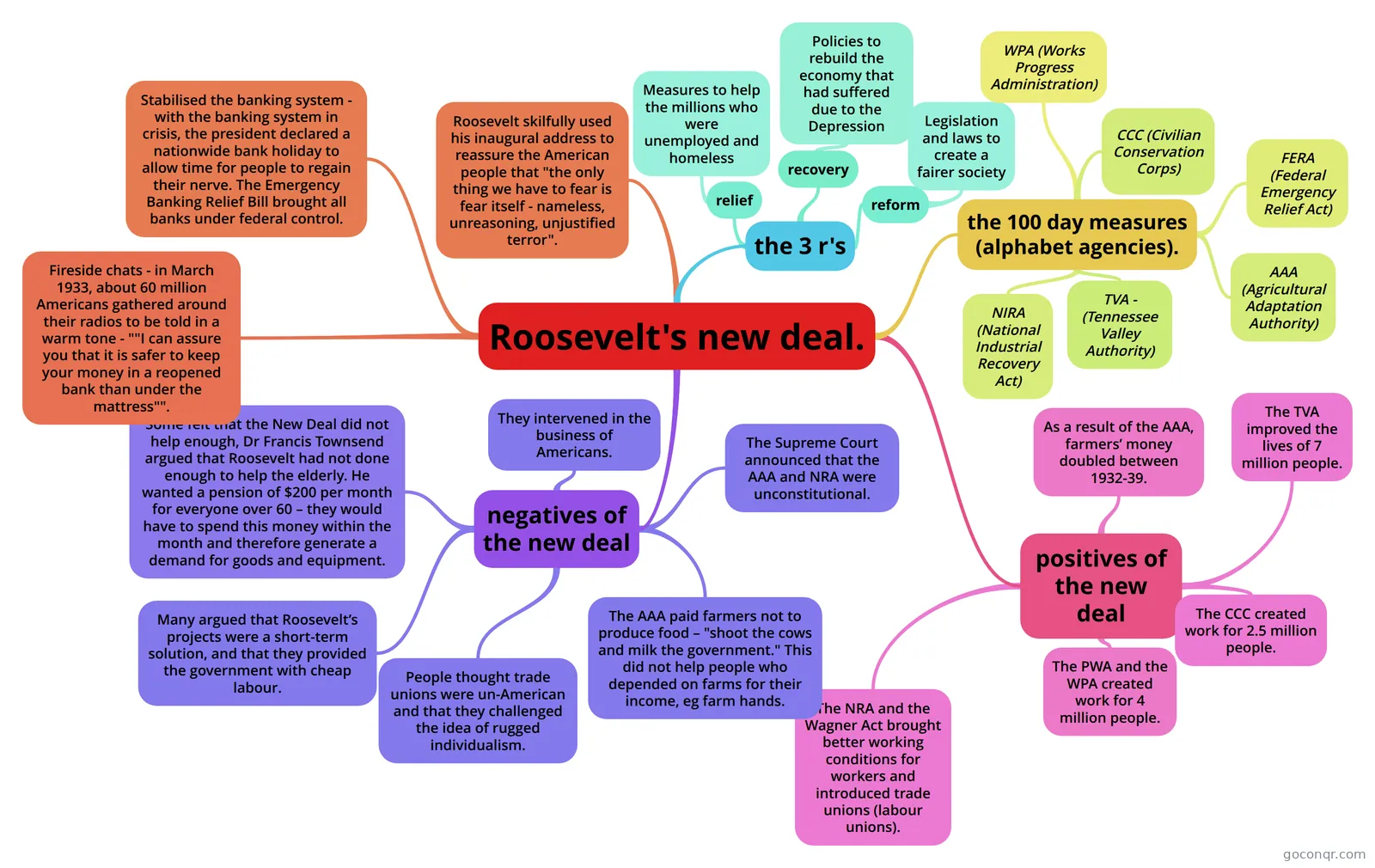 Roosevelt's new deal.
Flashcards
See all 78 flashcards-
31 cardsUSA 1920-1955 How was there a boom in the 1920s?
-
16 cardsChapter 33: The New Deal First thing to write for Chapter 33, topic?
-
4 cardsThe Wall Street Crash of October 1929 and the Depression Short-Term Causes of the Crash
-
7 cardsFirst New Deal (Hundred Days) Emergency Banking Act
-
9 cardsThe New Deal - Flash Cards What happened in the USA after the Wall Street Crash of 1929?
-
6 cards6 History-Prohibition What is prohibition?
-
5 cardsChapter 17 ACII Honors True or False? In his policies, Calvin Coolidge aligned himself and the government with big business.
-
28 cardsUSA 1918-1929 League Of Nations
Notes
See all 13 notes-
Context of Great Gatsby Women The role of women was in a period of transition during the 1920's. This was a result of: The work they were engaged in during the First World War (1914-1917), as they had enjoyed the freedom their jobs provided,...
-
The New Deal - Notes After the wall street crash of 1929. USA fell in to a dark age known as the great depression (1930s). Nobody had jobs and those who did couldn't even afford food, Since all the prices were too high.Industries and busi...
-
History Chapters 31-33 What was the Red Scare? A time in which Americans greatly feared communism along with Russia What was the 18th Amendment? The Prohibition of alcohol Why didn't the 18th Amendment work? It was not v...
-
Chapter 22 Key Terms Red Scare of 1919-1920: A short-lived but intense period of political intolerance inspired by the post-war strike wave and the social tensions and fears generated by the Russian Revolution.Palmer Raids: In 1919 and 19...
-
From Boom to Bust and the Wall Street Crash Boom to Bust:-there were 'speak easy's', where the illegal alcohol was sold. There became a lot of tension between gangs who fought for control over possession of the alcohol-more Americans moved from the country to t...
-
Causes and Consequences of the Wall street Crash How Far was Speculation Responsible for the Wall Street Crash? Overconfidence/SpeculationMuch of the raised prices were because investors thought they could make money easily without risk by buying shares and selling ...
-
the roaring twenties - created from Mind Map flappers women in the 1920s wore shorter dresses went to lots of parties lower waistline disobeyed the prohibition the prohibition the ban of alcohol in the 1920s lots of people disobeyed the prohibition it had the op...
-
The Wall Street Crash: causes and effects Causes of the Wall Street Crash Long Term Causes1. Overproduction in American IndustryBecause of new production methods, Industry was churning out goods which couldn't be sold. Therefore there was a drop in sales and ...
Slides
More History topics
About The USA in the 1920s
GoConqr OriginalWhat this unit covers
The page follows the story of the USA from the boom to the Depression and recovery. The mind map The Roaring 20s asks how and why the USA achieved prosperity, pointing to industry, manufacturing, finance and entertainment. Mass Production (Henry Ford) looks at standardisation, the moving assembly line and the effect on the economy and workforce. Others cover fashion, leisure, immigration, Prohibition and the Ku Klux Klan.
Where to start
Begin with an overview map. The USA, 1919-41 splits the period into the economic boom, American society in the 1920s, the Wall Street Crash and Depression, and the First and Second New Deal. GCSE History- America 20's & 30's asks questions such as how far the USA was a divided society.
- Read an overview map to see the whole period.
- Move to a focused map such as Prohibition or Wall St Crash.
- Check the detail in flashcards like The Alphabet Agencies.
The Depression and the New Deal
The Great Depression mind map covers causes, Hoover's response, widespread hardship and lasting effects. Roosevelt's new deal. sets out the three Rs: reform, recovery and relief. Further maps cover opposition to the New Deal and why Roosevelt won in 1932.
Using quizzes and maps together
Study a map first, then test yourself. Roaring 20s quiz and Wall Street Crash 1929 suit a quick check. For harder, essay-style thinking, try The Great Depression or the Harding-era quiz on the politics of boom and bust. Note which answers you missed, then go back to the matching map.
Where it fits
This unit sits in the Americas strand of History. Teachers can use the maps and flashcard decks as ready-made starters or revision material. Choose one map today, take a quiz on it, and see what you still need to review.
Frequently asked questions
Which resource should I open first?
Start with the mind map The USA, 1919-41. It gives a whole-period outline: the 1920s boom, American society, the Wall Street Crash and Depression, and the First and Second New Deal. Once you know the shape, move to a narrower map or a quiz.
What do the mind maps cover?
They cover the boom and its causes, Henry Ford's mass production, fashion and leisure, immigration, Prohibition, the Ku Klux Klan, the Wall Street Crash, Hoover, the Great Depression and the New Deal, including the alphabet agencies and opposition to Roosevelt.
Are the resources free to use?
Yes. Every resource listed on this page is free to open, study and take, with no account needed. They were made by GoConqr users, not by GoConqr itself, so it is worth checking them against your own course materials.
Which exams do these resources suit?
Most are secondary level. The listed resources mention GCSE History, A-level History, AP US History, Edexcel iGCSE History and IGCSE History. Check your own specification, since topics and focus differ between courses.
Are there quizzes for testing myself?
Yes, there are more than 80 quizzes. Examples include Roaring 20s quiz, Wall Street Crash 1929, Life in the 1920's and America's golden age? - 1919 - 1929. Use them after a mind map to find what you still need to revise.
What if I can't find a topic I need?
Try a nearby map or flashcard deck first, as many topics overlap. If something is still missing, a free account lets you make your own quizzes, mind maps, flashcards and notes, so you can fill the gap yourself.