
Programming Fundamentals mind maps
1,769 mind maps by 1,499 users · Page 1 of 45
This GoConqr page gathers Programming Fundamentals mind maps on topics from Python and arrays to debugging and robust programs. School students and university students can revise programming concepts, while teachers can find ready-made material; most resources are at school level, with some at university level. Explore over 1,700 mind maps and pick one to start.
Select topic
- Algorithms and Flowcharts105
- Programming Languages131
- IDEs, Compilers and Interpreters165
- Python Programming99
- Programming Syntax65
- Variables, Constants and Data Types191
- Operators and Boolean Logic53
- Arrays and Data Structures43
- Control Structures89
- Functions and Procedures41
- Programming Paradigms35
- Robust Programming and Testing209
- Software Development13
- Game Programming Projects156
- Robot Programming Challenges16
Mind maps
-
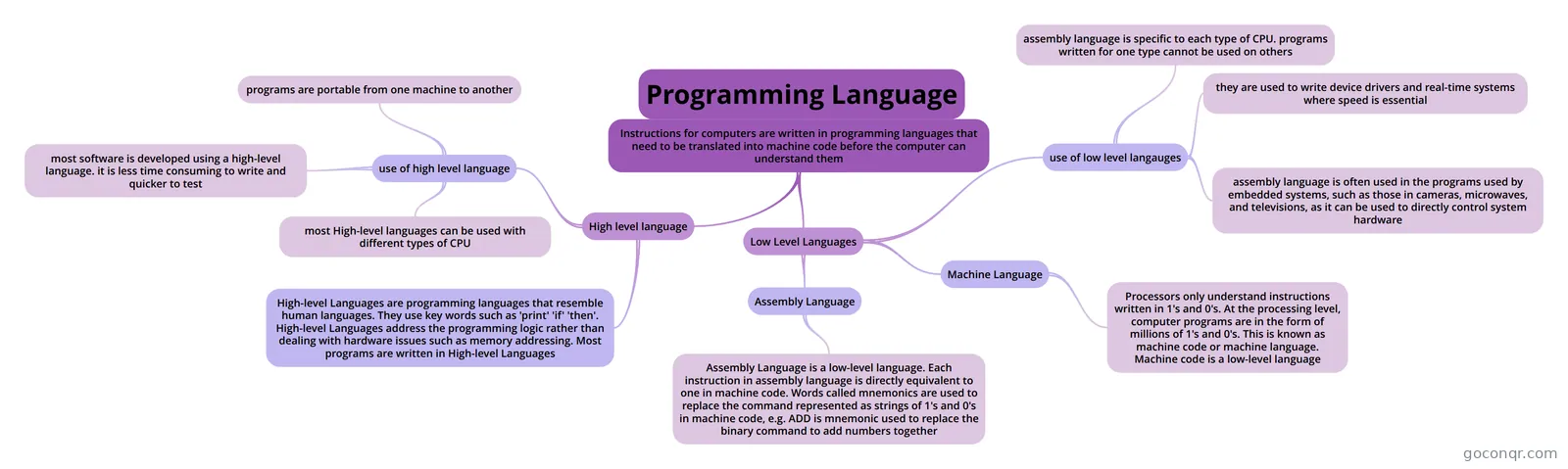 Programming Language
-
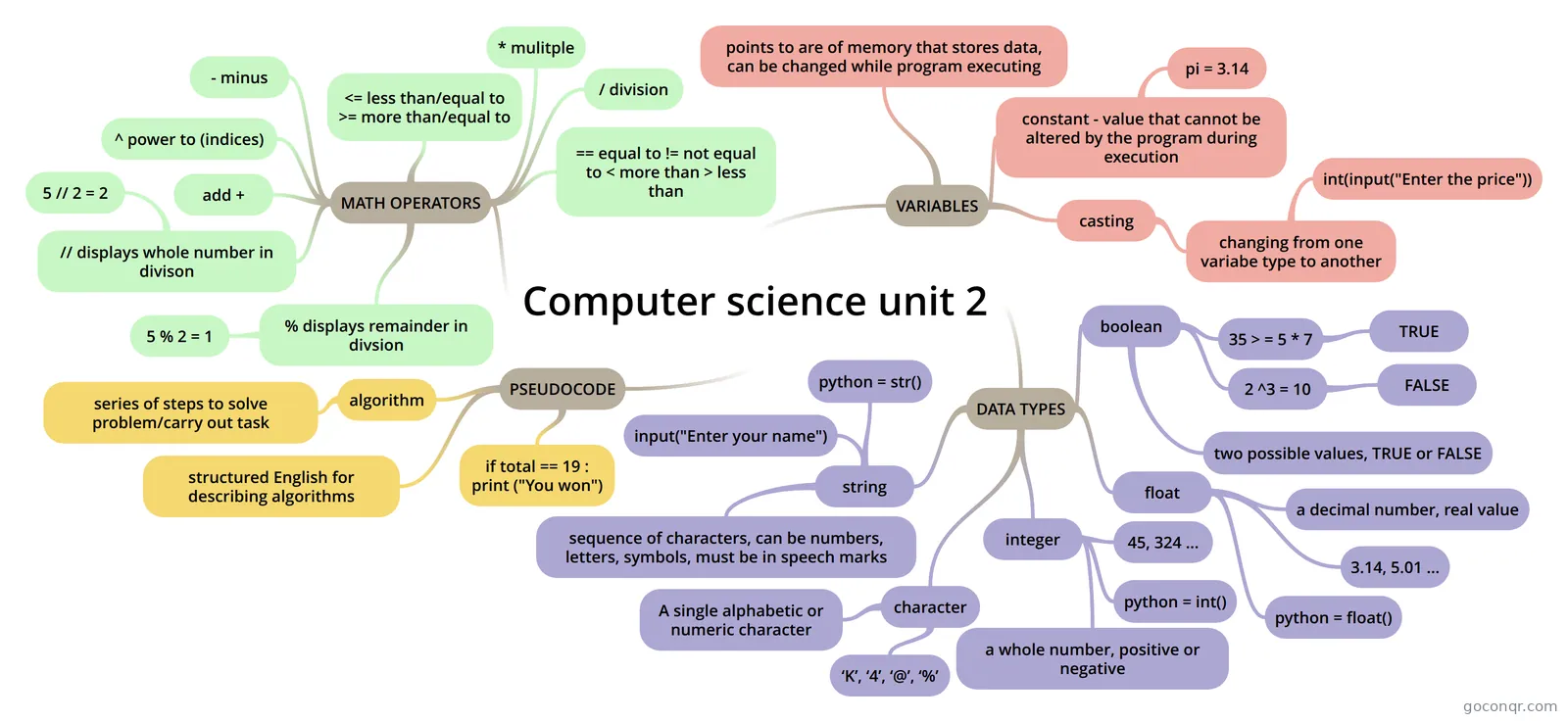 Computer science unit 2 Includes: variables (constants,casting, data types) math operators pseudocode
-
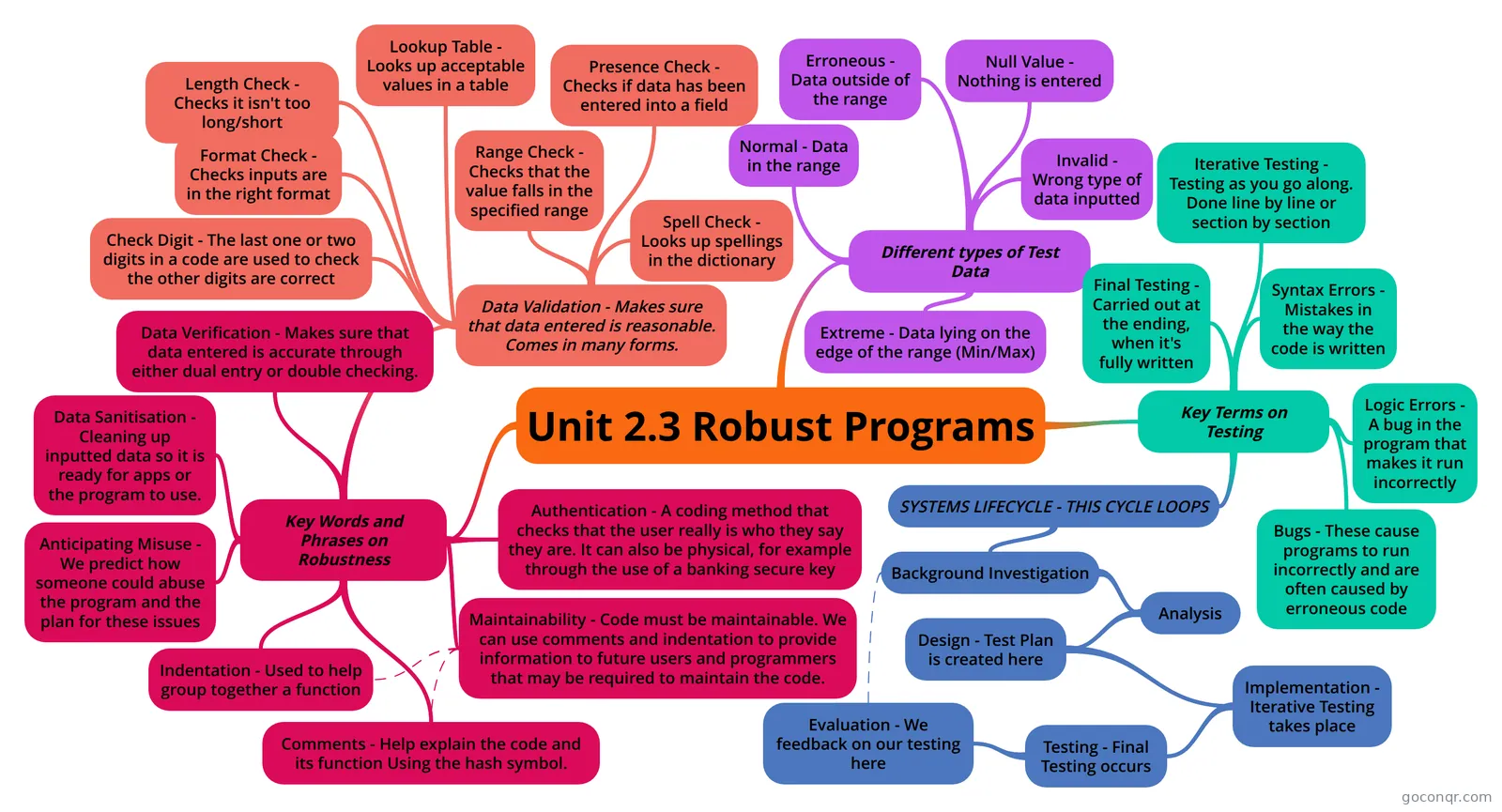 Unit 2.3 Robust Programs My Unit 2.3 Mind Map for OCR GCSE Computing
-
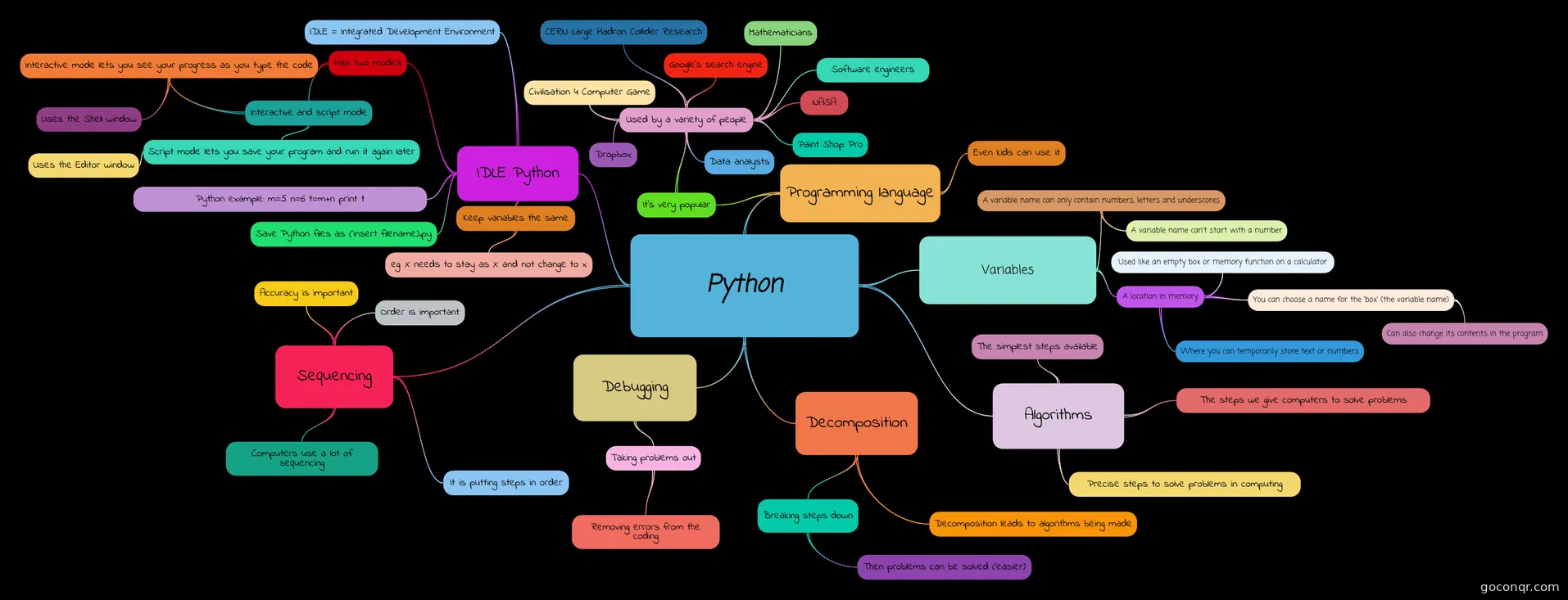 Python Mind-map on programming language Python
-
RAPTOR
-
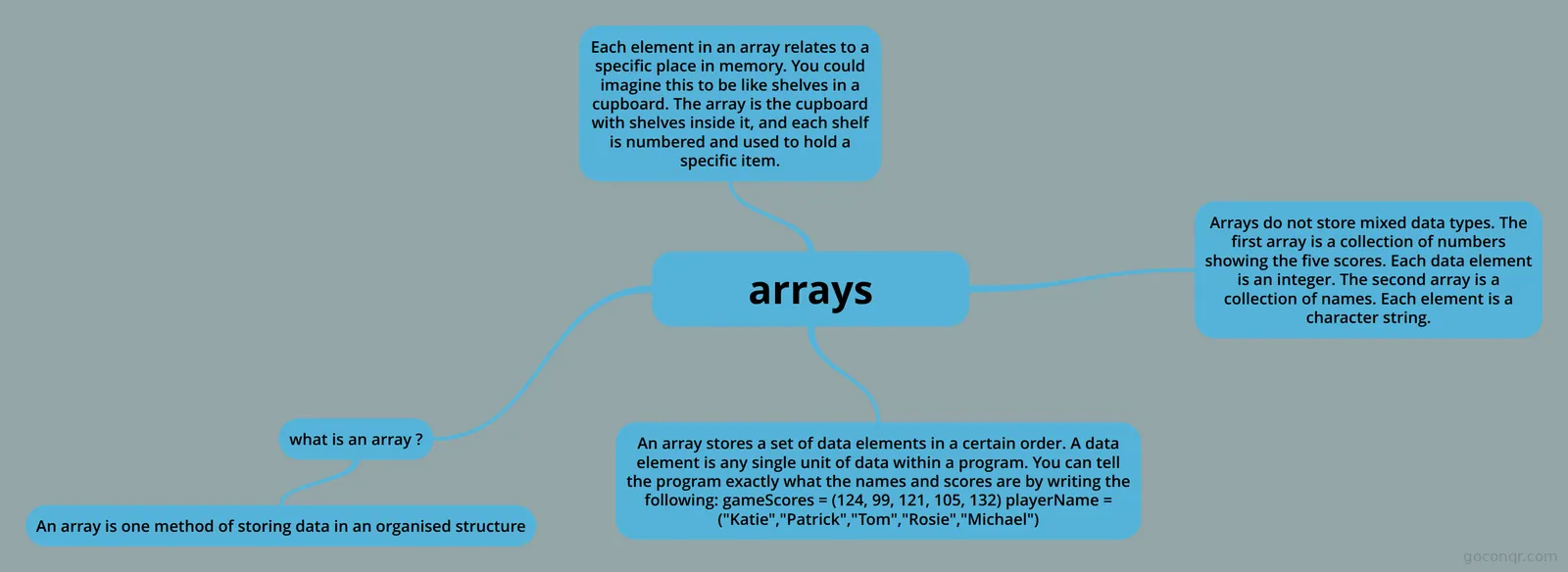 arrays ah yeet
-
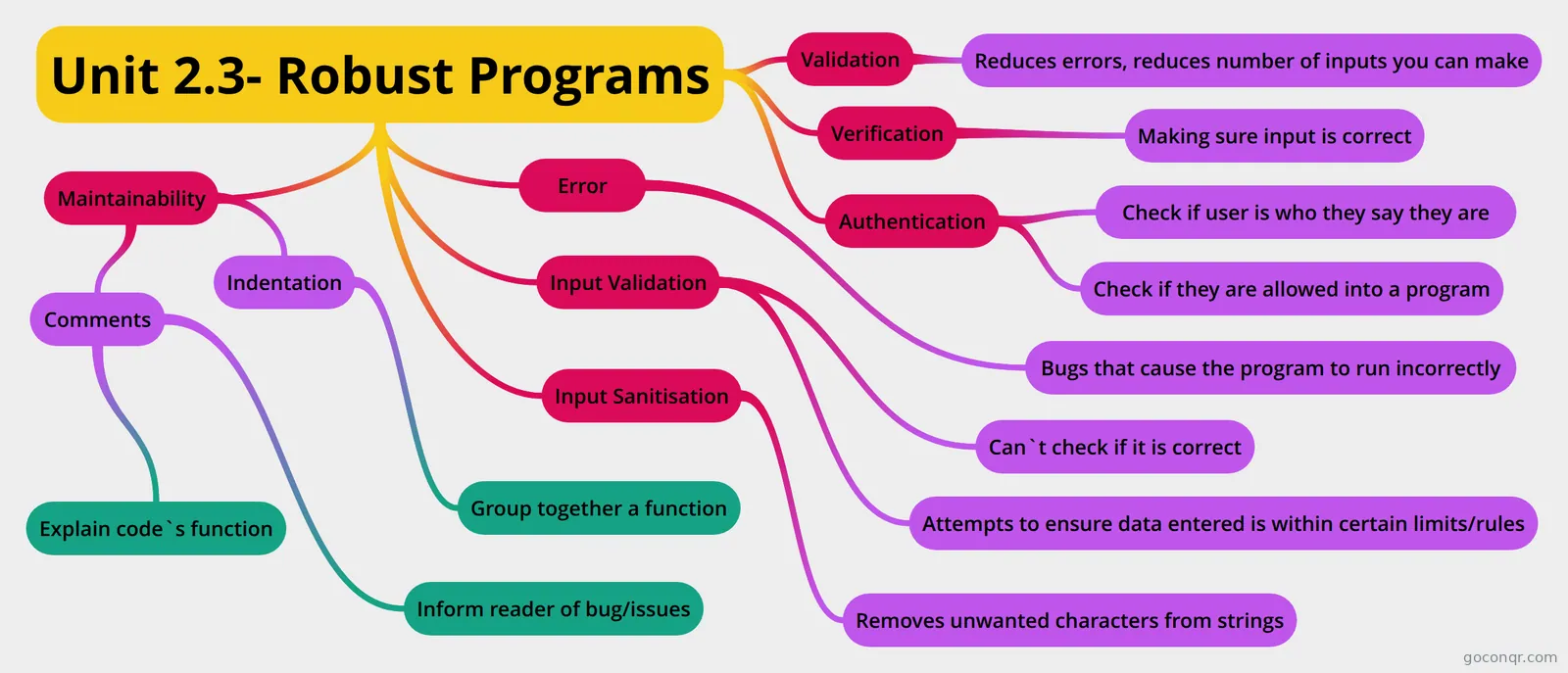 Unit 2.3- Robust Programs
-
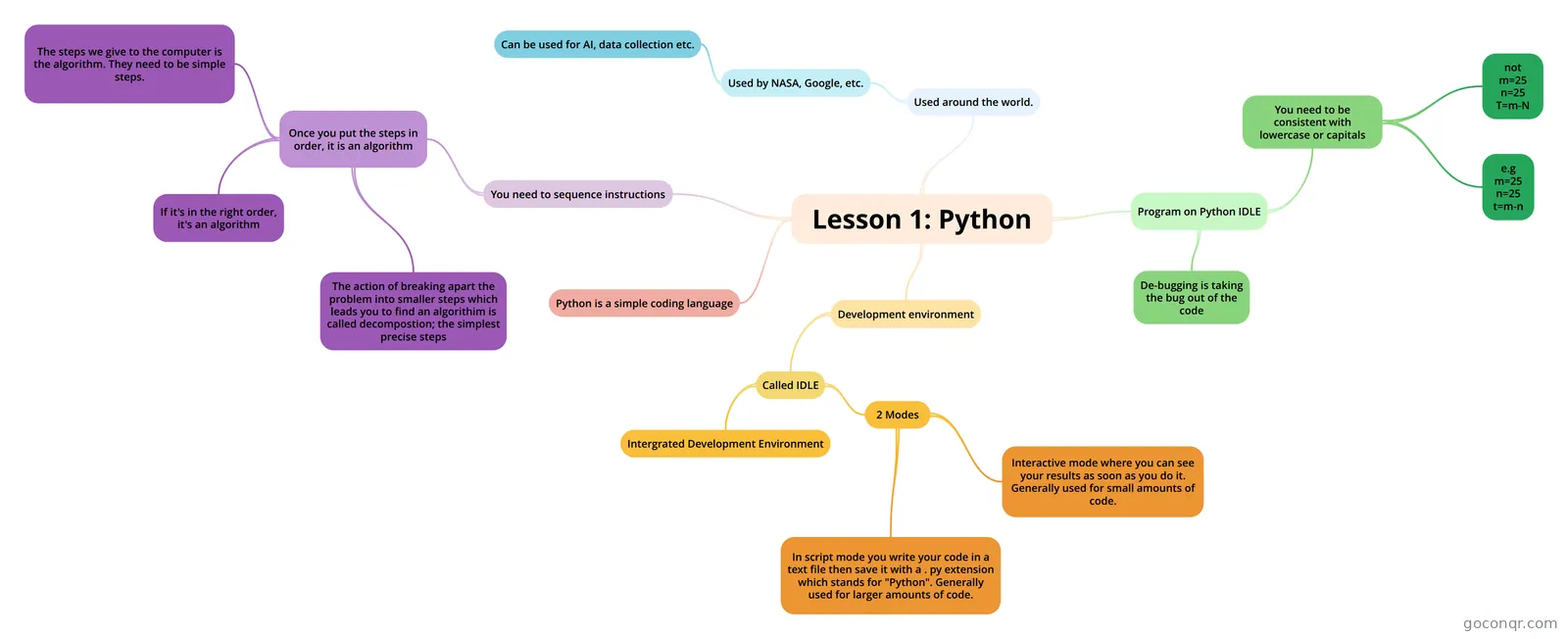 Lesson 1: Python
-
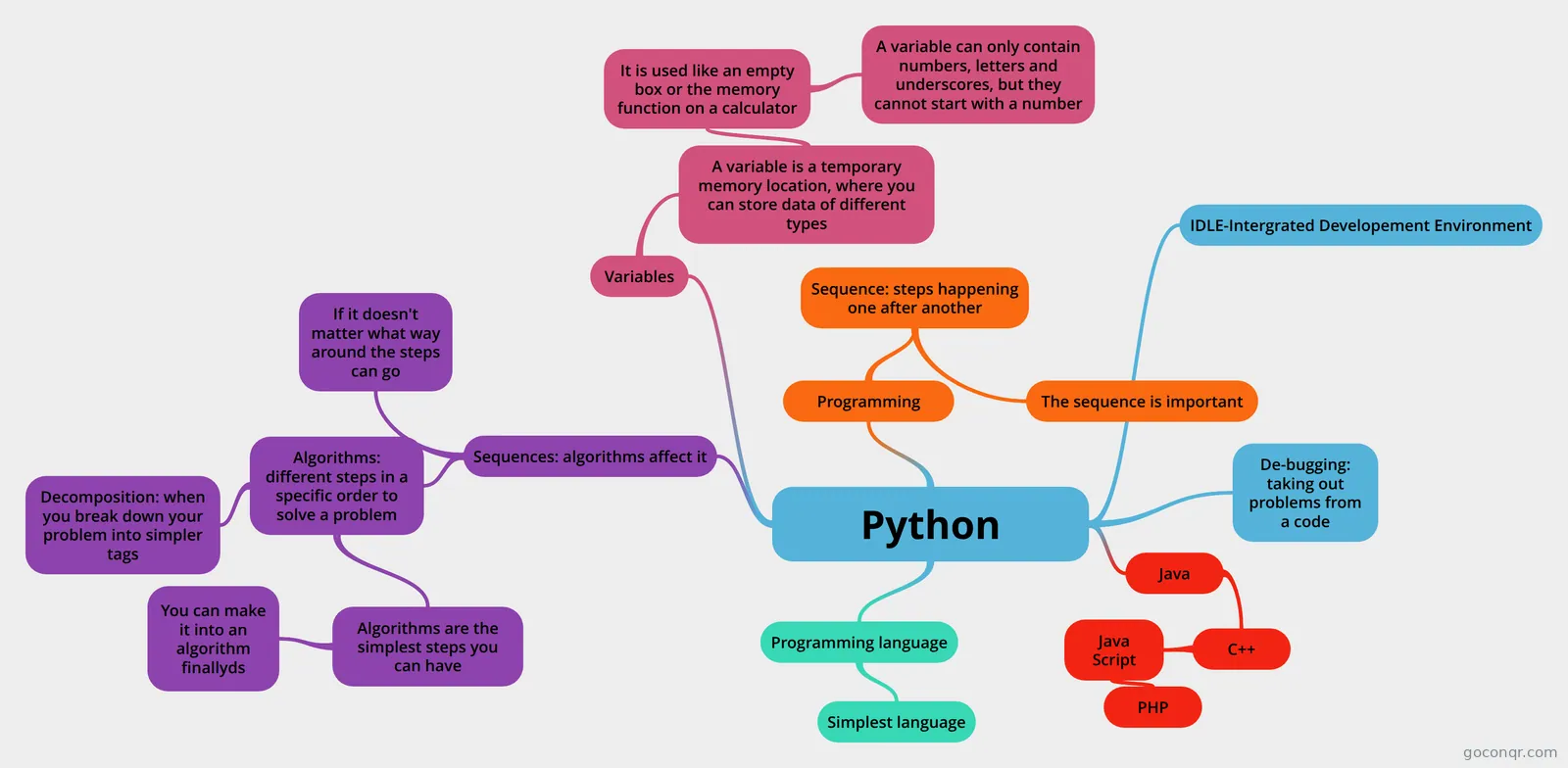 Python
-
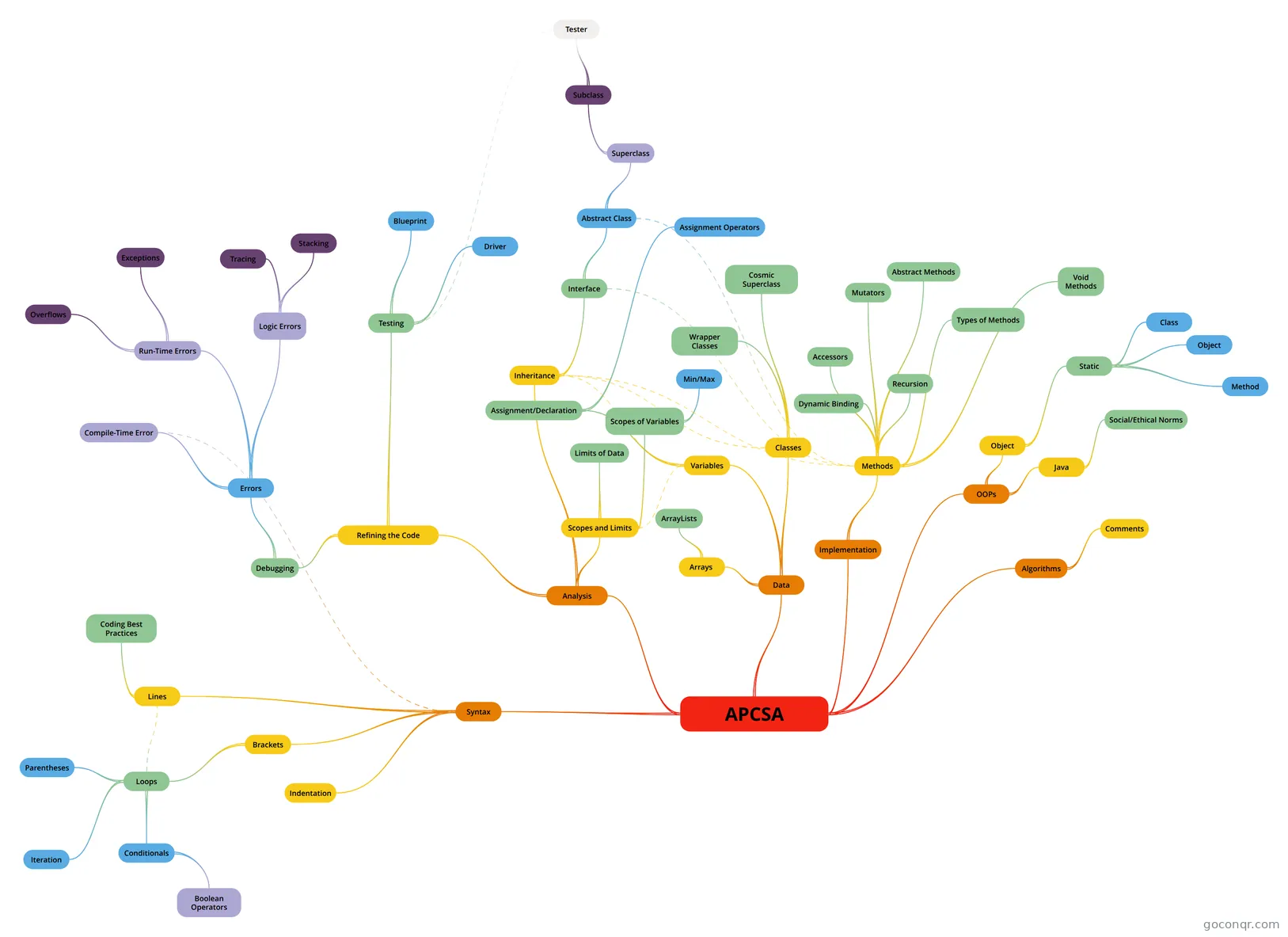 APCSA
-
Computer Science 2.1.3
-
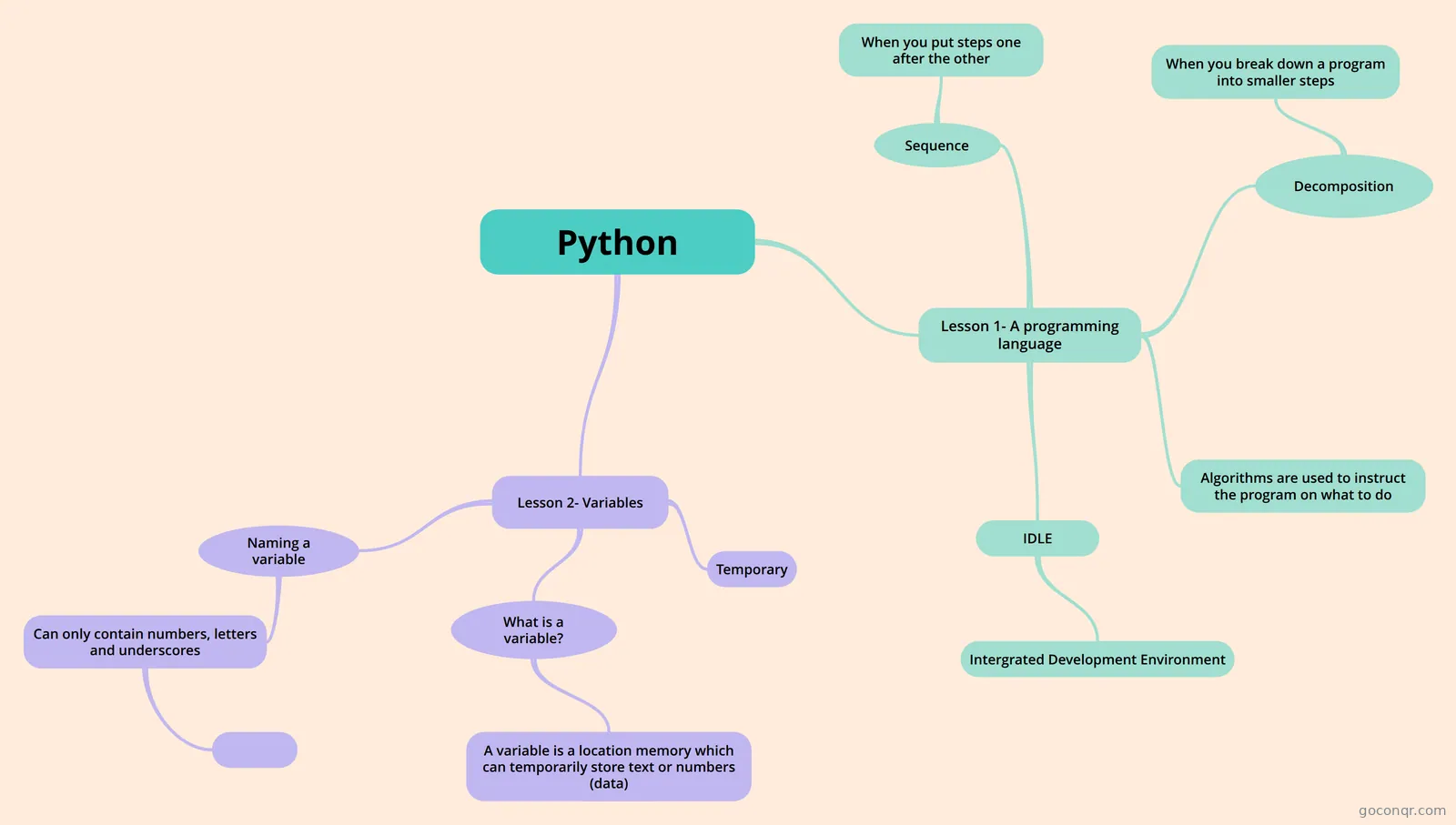 Python A mindmap to help people with this language. By Hannah Rayner
-
Debugging Here is my mind map about what to do when debugging my code. Debugging is when you correct code which has a...
-
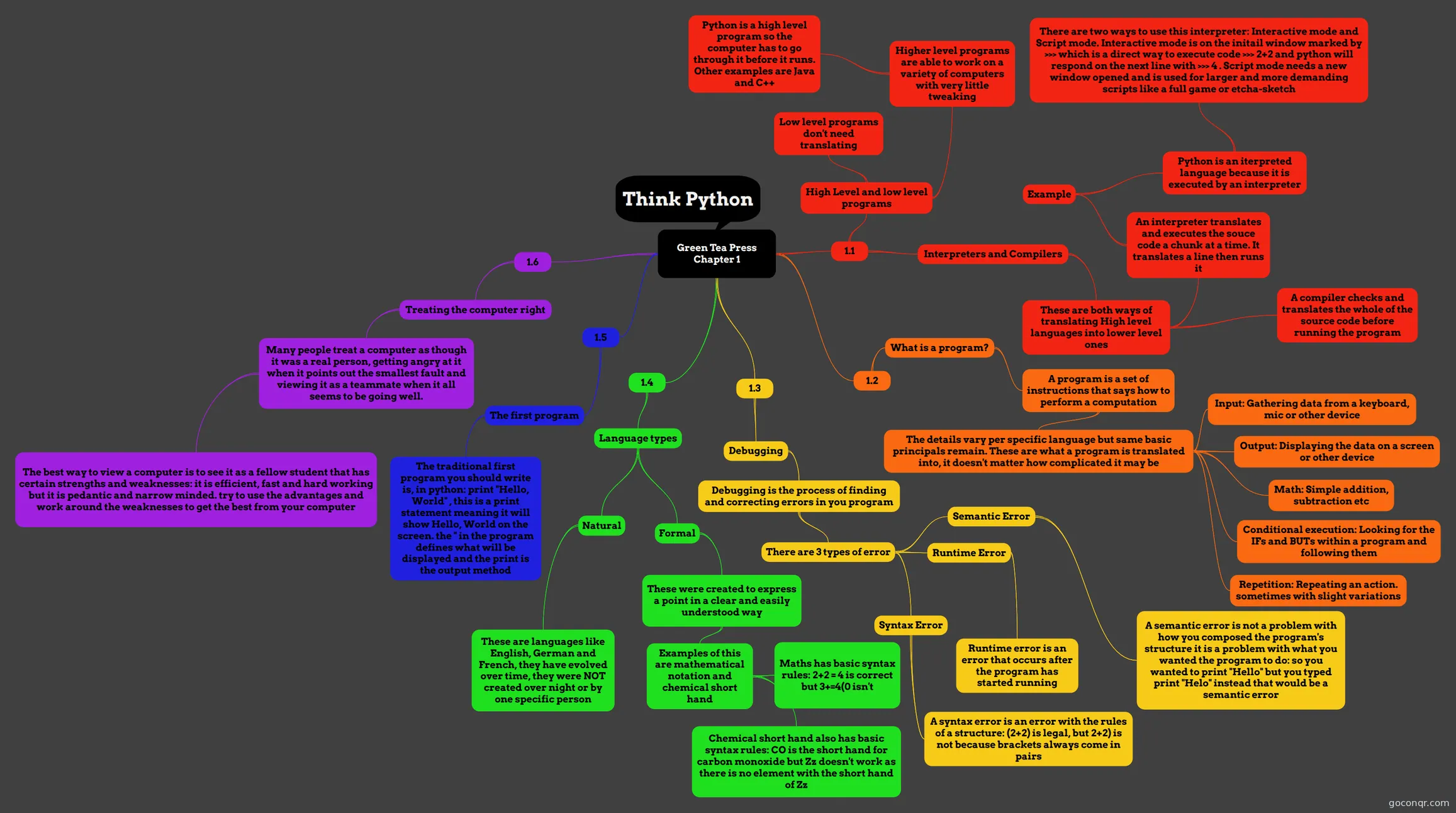 Think Python A mind map of chapter 1 in the Green tea press "Think Python"
-
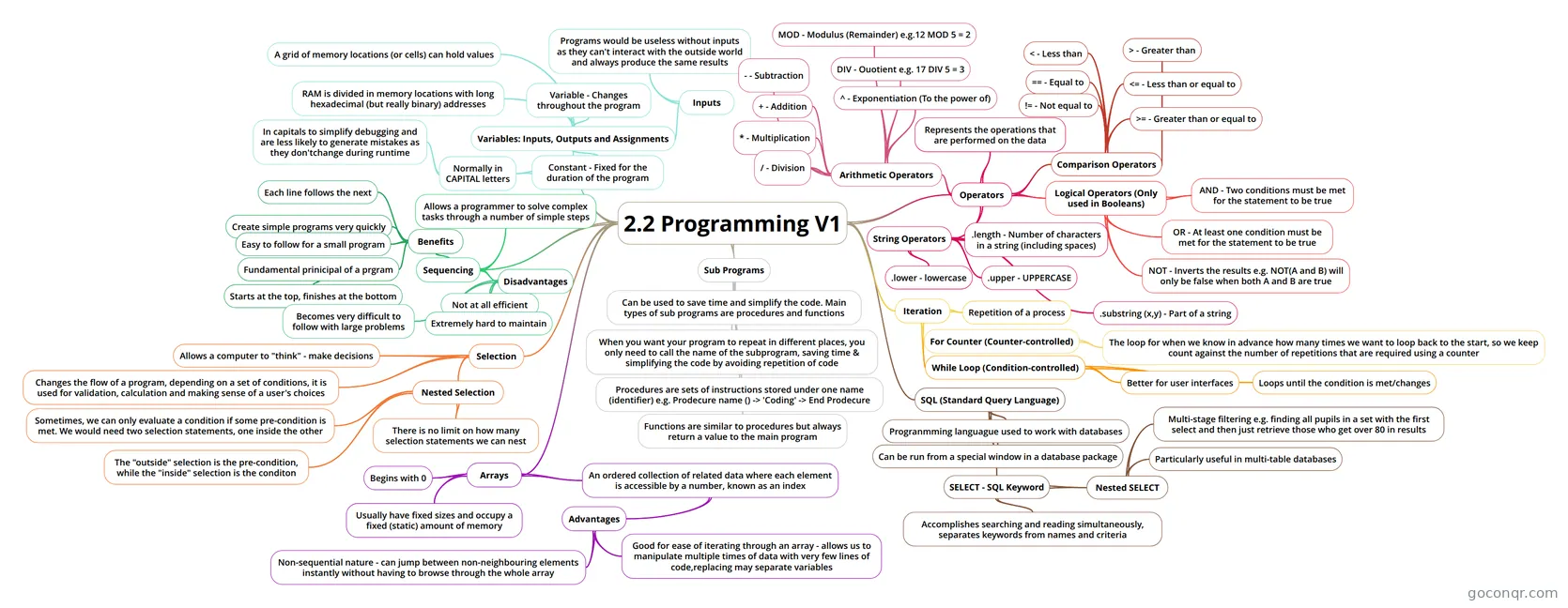 2.2 Programming V1
-
2.2 - programming techniques
-
Unit 2.3 Robust Programs My Unit 2.3 Mind Map for OCR GCSE Computing
-
Programming Concepts
-
Defensive design
-
A-Level Computer Science Theory
-
Programming Concepts
-
Specialized Topics Continued
-
Python
-
Text Based Adventure Game Mind Map
-
OCR Computing - F452 - Programming techniques and logical methods (in progress)
-
Python
-
Technical proposal
-
Programming
-
Python Text-Based Adventure Game
-
Item 2: Python Game
-
Progamming C
-
Year 9 - Item 2
-
Programming tech
-
Programming
-
text based game
-
Fundamentals of Data Structures
-
Item 2 - DIGI T2 Mind Map
-
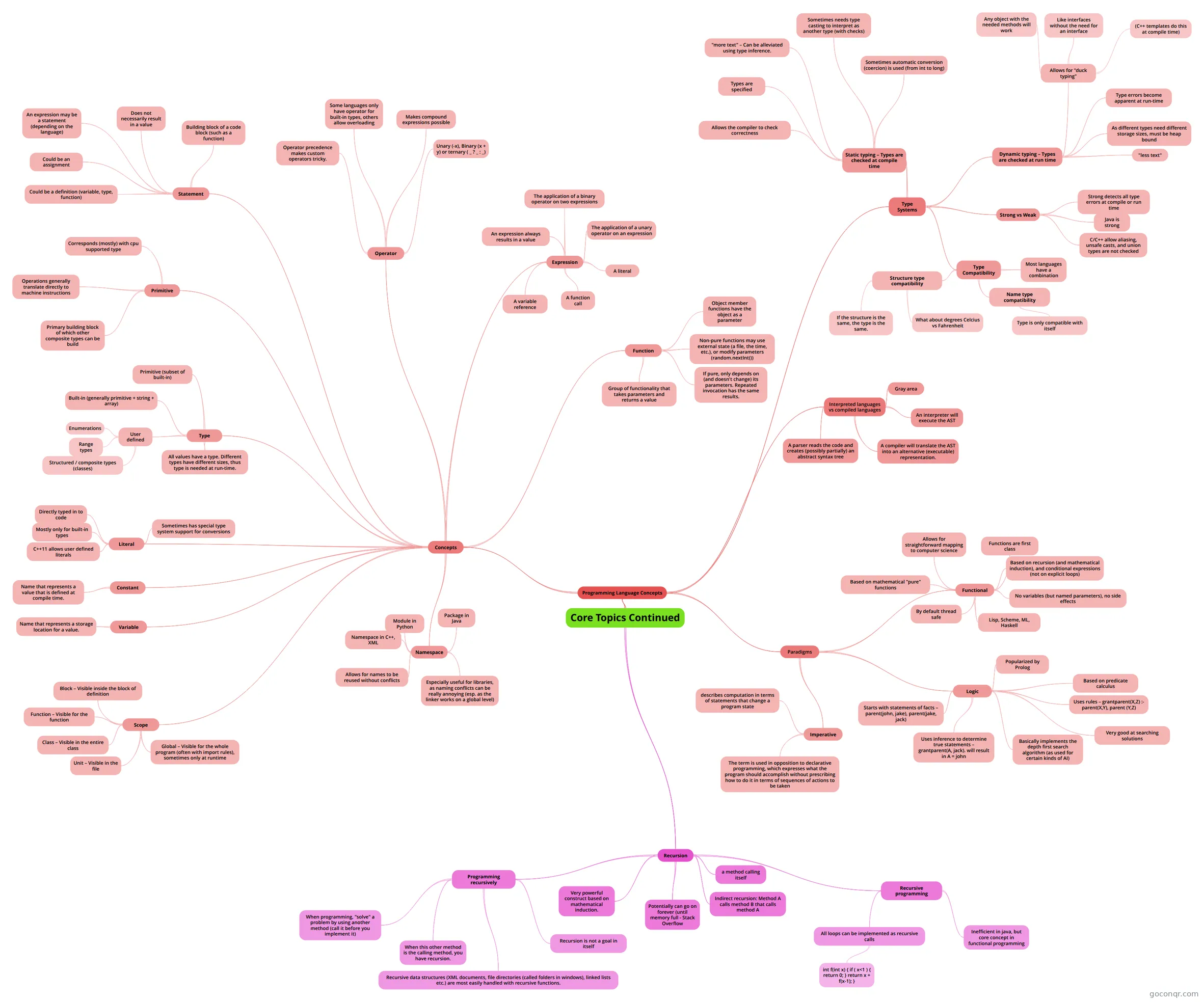 Core Topics Continued
-
Core Topics Continued
-
Digital Technologies Assignment
More Programming Fundamentals resources
About programming fundamentals mind maps
GoConqr OriginalWhat the Programming Fundamentals mind maps cover
The maps connect ideas across programming languages, algorithms, arrays and program design. A Python map covers algorithms and sequencing, while another includes variables and decomposition. Debugging looks at syntax and logic errors, and the map on robust programs covers validation and maintainability.
How to revise with a map
Start with a Python map covering algorithms and sequencing if you want to review how instructions are ordered. Follow the branches, then cover their labels and try to recall the connections. Return to the map to check what you missed.
For a different view, RAPTOR introduces a flowchart-based programming environment. If you want to check your recall after studying a map, switch to a quiz on the unit page. Flashcards can also help when you want to revisit individual terms. Choose a map that matches the topic you are studying.
Frequently asked questions
Which mind map could I start with?
A Python mind map covering algorithms and sequencing is a useful starting point if you are reviewing the order of instructions. Another Python map includes variables and decomposition. For errors, the Debugging map separates syntax errors from logic errors and gives you a different topic to explore.
Are these mind maps free to use?
Yes. Every mind map listed here is free to open and study, and you do not need an account. The resources were made by GoConqr users. A free account also lets you save quiz scores and make your own quizzes, mind maps, flashcards and notes.
Which levels do these mind maps suit?
Most resources on the page are at school level, with a smaller share at university level. School students can revisit topics such as arrays and debugging, while university students can look for maps that match their course. Teachers can also select user-made maps for their teaching.