
Project Schedule Management mind maps
199 mind maps by 118 users · Page 1 of 5
This page gathers over 190 Project Schedule Management mind maps, made by more than 110 GoConqr users. They cover topics from activity dependencies to estimating and schedule development. Professional candidates and university students can use them to revise scheduling, while teachers can find material for teaching at these levels. Pick a map to explore.
Select topic
Mind maps
-
Project Time Management
-
6. PROJECT SCHEDULE MANAGEMENT
-
The Work Breakdown Structure and Project Estimation
-
Project time management
-
Enter text here
-
EARNED VALUE MANAGEMENT
-
The Five Secrets of Project Scheduling
-
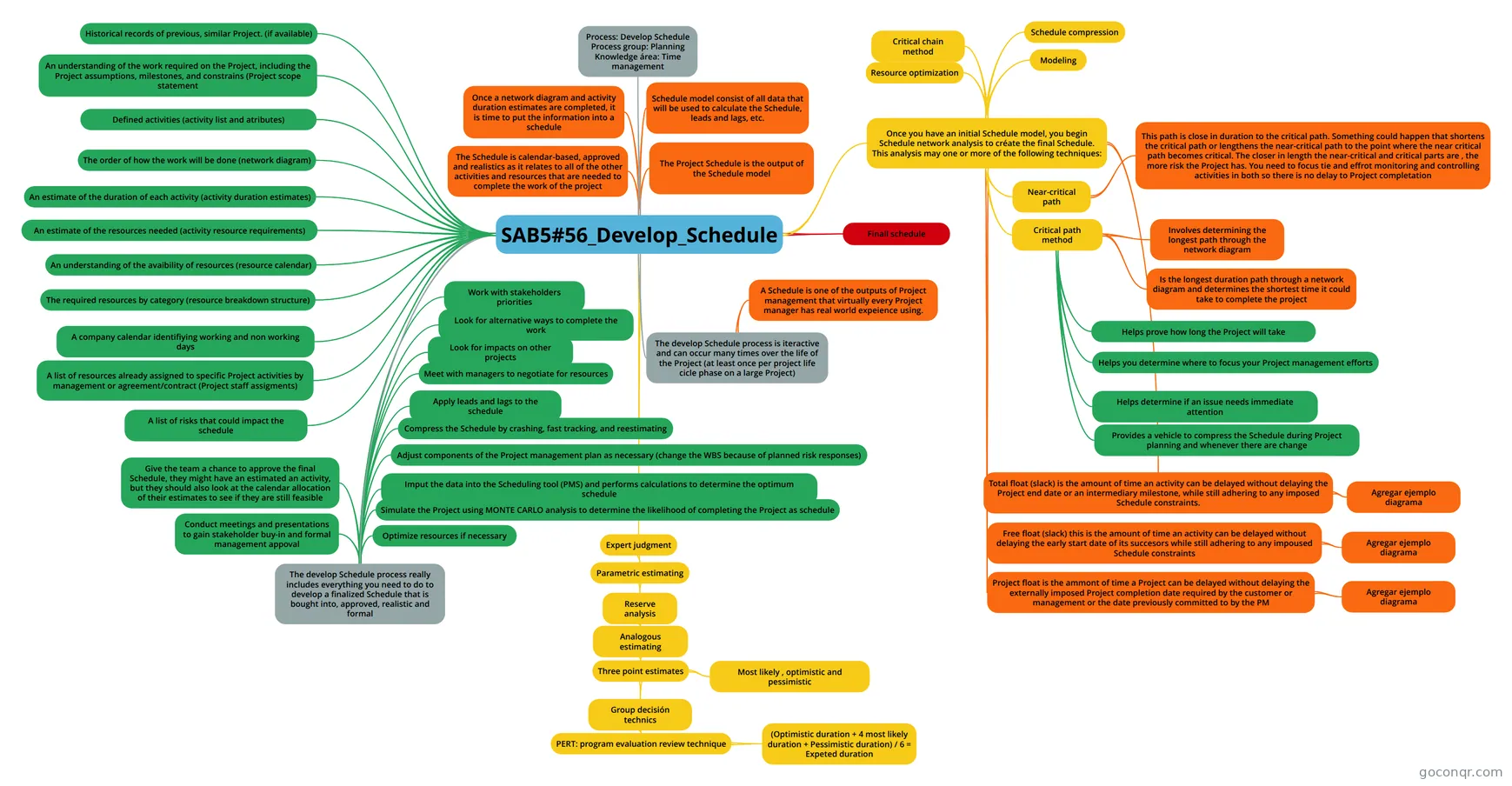 SAB5#56_Develop_Schedule
-
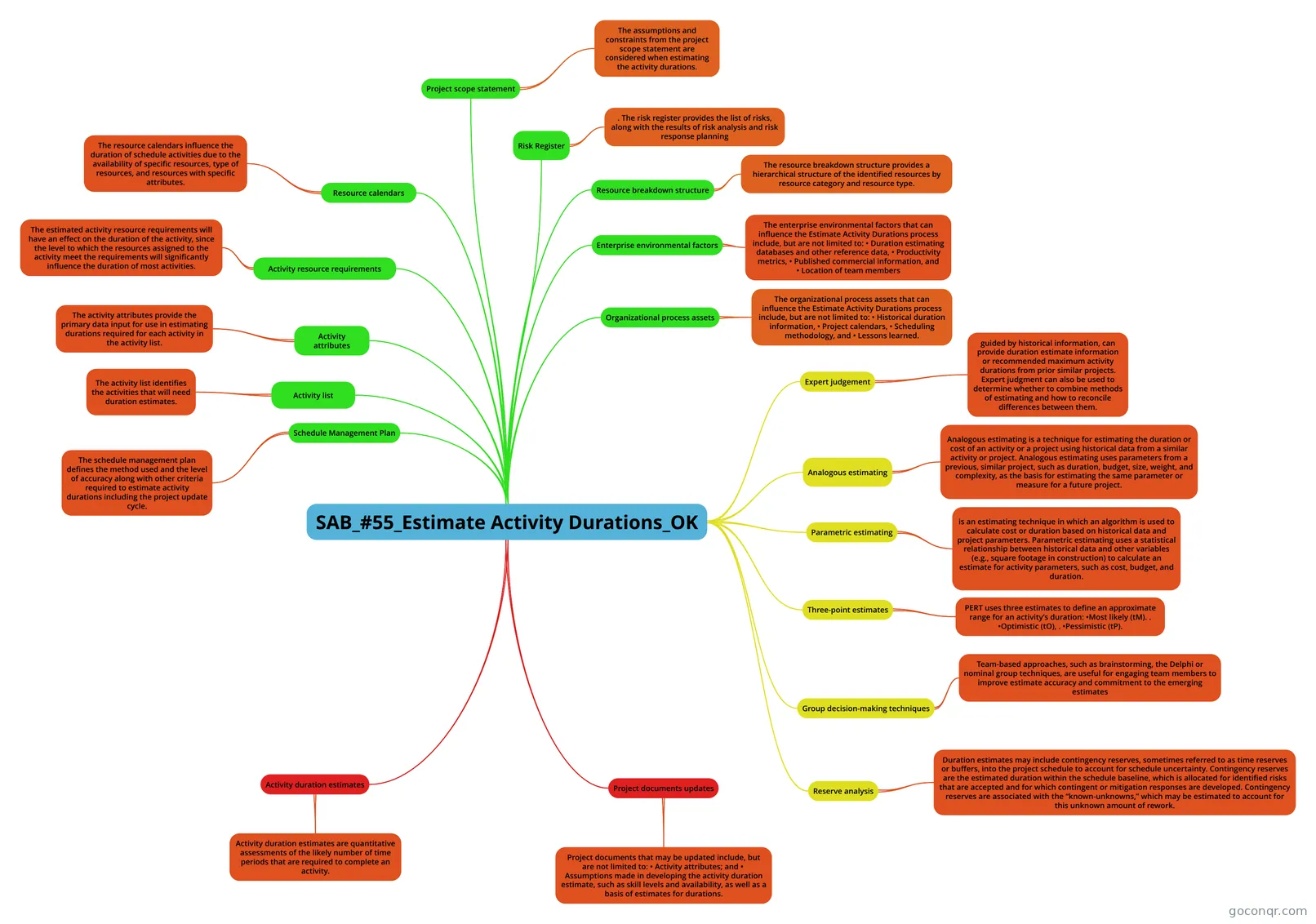 SAB_#55_Estimate Activity Durations_OK
-
Chapter 10: Critical Path Method
-
PROJECT TIME MANAGEMENT
-
Cap 6. Project Time Management
-
PROJECT TIME MANAGEMENT
-
TC#62#63_Optimization_Resource_Analysis_Diagram_Red
-
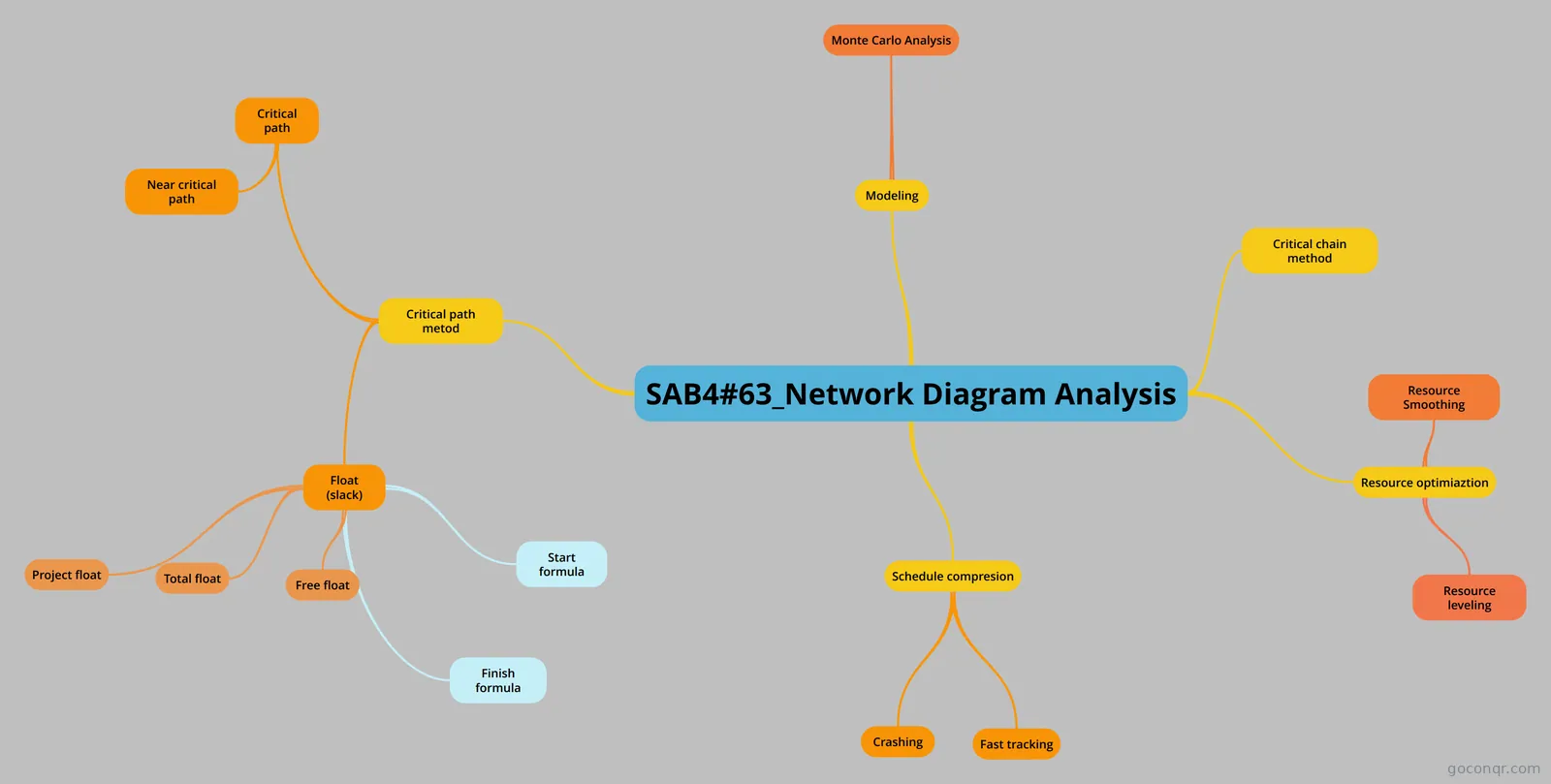 SAB4#63_Network Diagram Analysis
-
Sabpms#59_60 Types_Estimations and Leads_&_Lags
-
#58#59 Dependencies of Activities and Types of Estimates
-
PR___JECT TIME MANAGEMENT
-
PROJECT TIME MANAGEMENT
-
PROJECT TIME MANAGEMENT
-
PROJECT TIME MANAGEMENT
-
SAB7#056 Develop Schedule
-
SAB7#056 Develop Schedule
-
SAB_#63_Analysis_Diagram_Red_Ok
-
Sab8#65:_Method_Control_Schedule_Project
-
SAB9#58_59_Types_Relation_Activities_&_Types_Estimations(Modified)
-
Planning Time
-
PROJECT TIME MANAGEMENT
-
Schedule Barcharts
-
SAB7#063 Analysis Diagram Red
-
SAB7#63_Analysis Diagram Red
-
GPO_VIP#19-Analisis_Diagrama_Red/Compresión_Calendario
-
SAB9#56_Develop Schedule (Modified)
-
SAB9#58_59_Types_Relation_Activities_&_Types_Estimations
-
058_&_059_Types_Relation_Activities_&_Types_Estimations
-
Project Schedule Management
-
SAB6#56 Develop_Schedule
-
Chapter 8
-
SAB_#52_Def Activities
-
PROJECT TIME MANAGEME
More Project Schedule Management resources
About project schedule management mind maps
GoConqr OriginalProject Schedule Management mind maps
Start with Project Time Management for a view of the scheduling processes in one map. Its branches cover activities, estimates, schedule development and control, making it a useful point of reference as you explore the other maps.
For a closer look at relationships between activities, use the map on dependencies. It distinguishes mandatory and discretionary links, as well as internal and external ones. The estimating map brings together methods including analogous, parametric and one-point estimating.
Revise with a map
Follow a branch, then cover the map and try to recall its main terms. Reopen it to check what you remembered. A map on developing the schedule can help you explore topics such as compression and resource optimisation.
When you want to practise individual terms rather than follow branches, switch to the flashcards on the unit page. Choose a map and begin with a topic you want to revisit.
Frequently asked questions
Which mind map is a useful starting point?
Project Time Management is a useful starting point because it brings the scheduling processes together in one map. Its branches cover defining and sequencing activities, estimating resources and durations, and developing and controlling the schedule. From there, you can look at a more focused map.
What do the mind maps cover?
The maps cover planning, activity dependencies, estimating and schedule development. For example, one map separates internal and external dependencies, while another includes analogous, parametric and one-point estimating. There are also maps on leads and lags, schedule control and network diagram analysis.
Are these mind maps free to use?
Yes. Every resource listed here is free to open and study without an account. The maps were made by GoConqr users, rather than by GoConqr. A free account also lets you make your own mind maps, quizzes, flashcards and notes, and save quiz scores.