
Property, White-Collar and Cyber Crime
4 resources created by 4 users
This Property, White-Collar and Cyber Crime page on GoConqr gathers community-made mind maps, quizzes, flashcards and notes, from scams, fraud and burglary to corporate crime, cyber bullying and online sexual exploitation. It's built for university students and school students revising a topic, and for teachers after ready-made material. There are more than 40 resources here, including over 20 mind maps and 8 quizzes. Pick a mind map to get your bearings, then try a quiz to see what has stuck.
Top Property, White-Collar and Cyber Crime resources
Quizzes
Mind maps
Flashcards
Flowcharts
More Criminology topics
About Property, White-Collar and Cyber Crime
GoConqr OriginalWhat the page covers
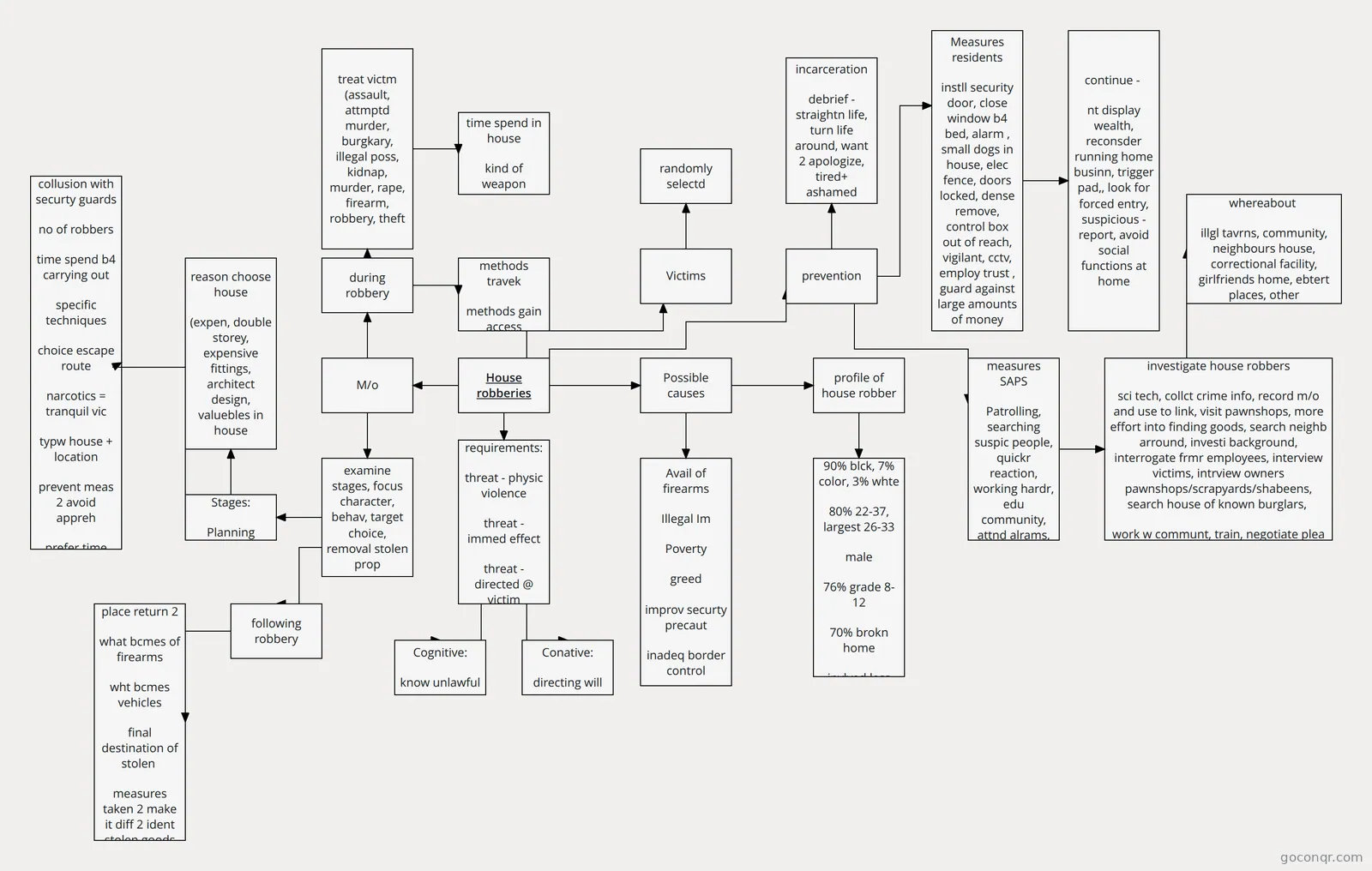
The resources fall into three broad areas: property crime, white-collar and corporate crime, and cybercrime. Property crime appears in the Forensic Psychology Y2 Revision Quiz, which asks which act defines burglary and what separates a domestic from a non-domestic burglary, and in the House robberies flowchart. White-collar crime is covered by Crimes of the powerful, which starts from Edwin Sutherland's definition of a crime committed by a person of high respectability and high social status. Cybercrime runs through quizzes, flashcards and maps on online harms.
Where to start
- Open Crimes of the powerful for the idea of white-collar and corporate crime.
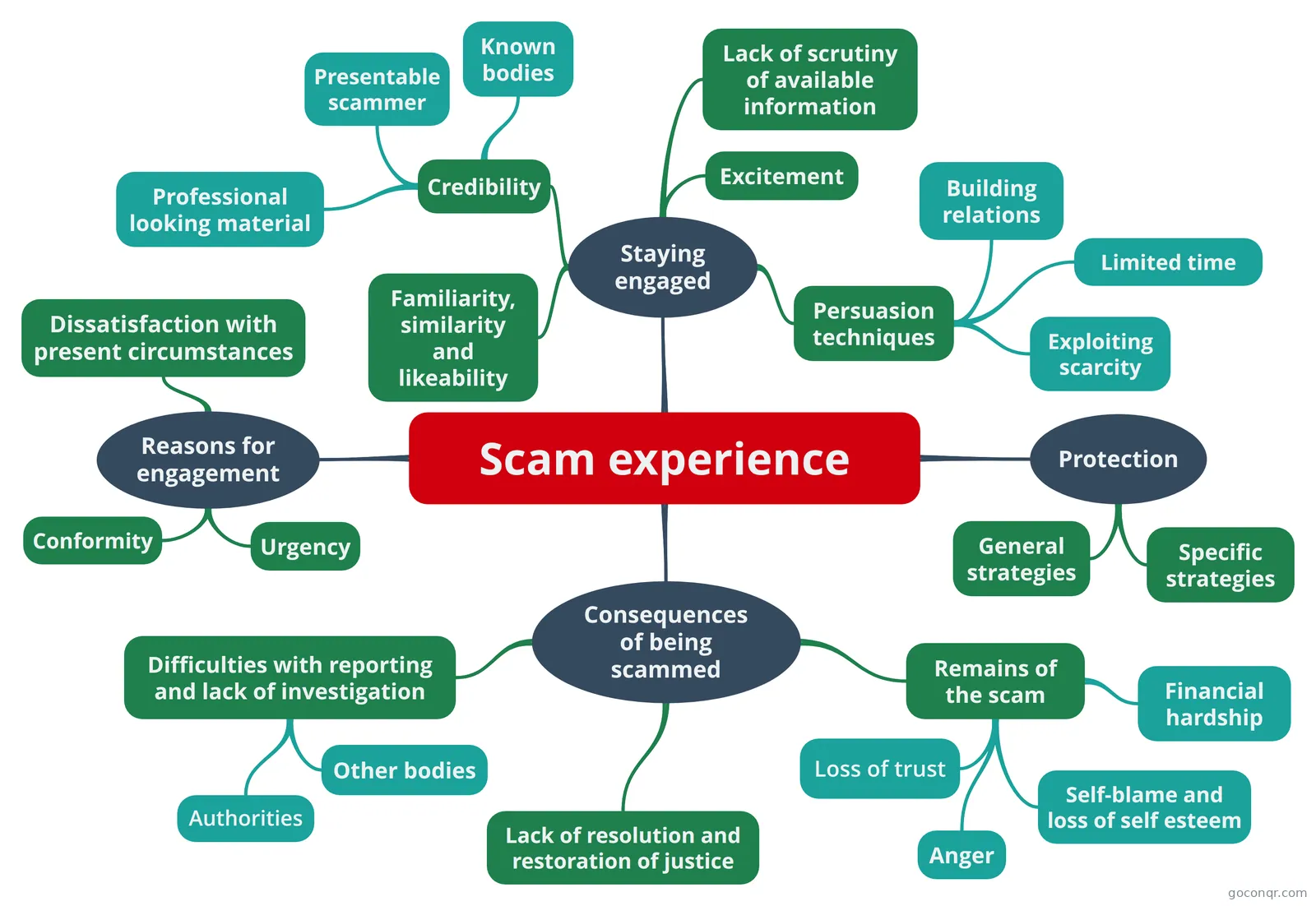
- Read the Scam experience mind map, which moves from reasons for engagement to consequences and the difficulties of reporting.
- Look at the fraud map for types such as investment scams, false charities and medical alert scams.
- Move on to Online Sexual Exploitation, which covers definitions, the UK Sexual Offences Act (2003), prevalence and offender motives.
Using quizzes and maps together
Read a map first, then test yourself. The Revision Questions quiz asks which examples are computer-focused crime and what the collapse of space-time barriers means. The Cybercrime quiz looks at Wall's four categories and the problems of policing. Note the questions you miss, then go back to the matching map or flashcard deck.
Flashcards for definitions
The flashcard decks suit short recall. CH. 11 (White Collar Crimes) covers Sutherland and how white-collar offences are dealt with. The deck titled five asks for the categories used to define cybercrime and for the difference between internet-enabled and other types.
Where it sits
This unit belongs to the Types of Crime strand in Criminology. Everything here was made by GoConqr users, so styles vary. Choose one resource, work through it, then add a map or deck of your own.
Frequently asked questions
Which resource should I open first?
Start with the Crimes of the powerful mind map. It sets out how white-collar and corporate crime is defined, beginning with Edwin Sutherland. After that, the Scam experience and fraud maps show how those ideas apply to everyday victims, and the quizzes let you check what you remember.
What do the mind maps on scams and fraud cover?
The Scam experience map looks at reasons for engagement, staying engaged, protection, consequences, and difficulties with reporting and lack of investigation. The fraud map lists types such as investment scams, false charities and medical alert scams. Two maps on the stages of the scam process are also listed.
Are the resources free to use?
Yes. Every resource on this page is free to open, study and take, with no account needed. They were made by GoConqr users, not by GoConqr itself, so it is worth comparing a few on the same topic. A free account saves your quiz scores and lets you make your own.
Which quizzes are available on cybercrime?
There are two quizzes called Cybercrime, plus Revision Questions. They ask about computer-focused crime, cyber pornography, advanced fee fraud, the digital technologies behind cybercrime, Wall's categories and policing issues. Together they give a quick check on definitions and types.
Who are these resources suited to?
They suit university students and school students revising crime topics, and teachers who want ready-made material. Most of the resources are at university level, with a good share at school level. Use the maps for an overview and the quizzes and flashcards for practice.
Is there anything on property crime?
Yes. The Forensic Psychology Y2 Revision Quiz asks which act defines burglary and what separates domestic from non-domestic burglary. There is also a flowchart on house robberies and a note titled Thief. For wider context, the map on crimes that can affect businesses is worth a look.