
Criminological Theories
657 resources created by 439 users
This Criminological Theories page on GoConqr gathers community-made mind maps, quizzes, flashcards, slides and notes, from classical and positivist schools to strain, control, Marxist and realist ideas. It's built for university students and professional candidates, school students and teachers after ready-made material, with practice for A-level Sociology, Psychology and Criminology and WJEC Criminology. There are over 600 resources here, including more than 40 quizzes, over 400 mind maps and more than 100 flashcard decks. Pick a theory, try a quiz to find your gaps, then build your own.
Select topic
- Classical and positivist criminology23
- Biological theories of crime96
- Biosocial theories of crime32
- Psychological theories of crime17
- Developmental theories of crime6
- Chicago School and social ecology12
- Anomie and strain theories12
- Differential association and social learning29
- Social control theories20
- Labelling theory7
- Marxist, conflict and critical criminology42
- Feminist criminology5
- Realism, rational choice and routine activity47
- Theories of intimate partner violence10
- Black Lives Matter and criminology16
Top Criminological Theories resources
-
45 questionsSCR10-12 Strain theory is said to reflect which of the following “perspectives” on the relationship between crime an...
-
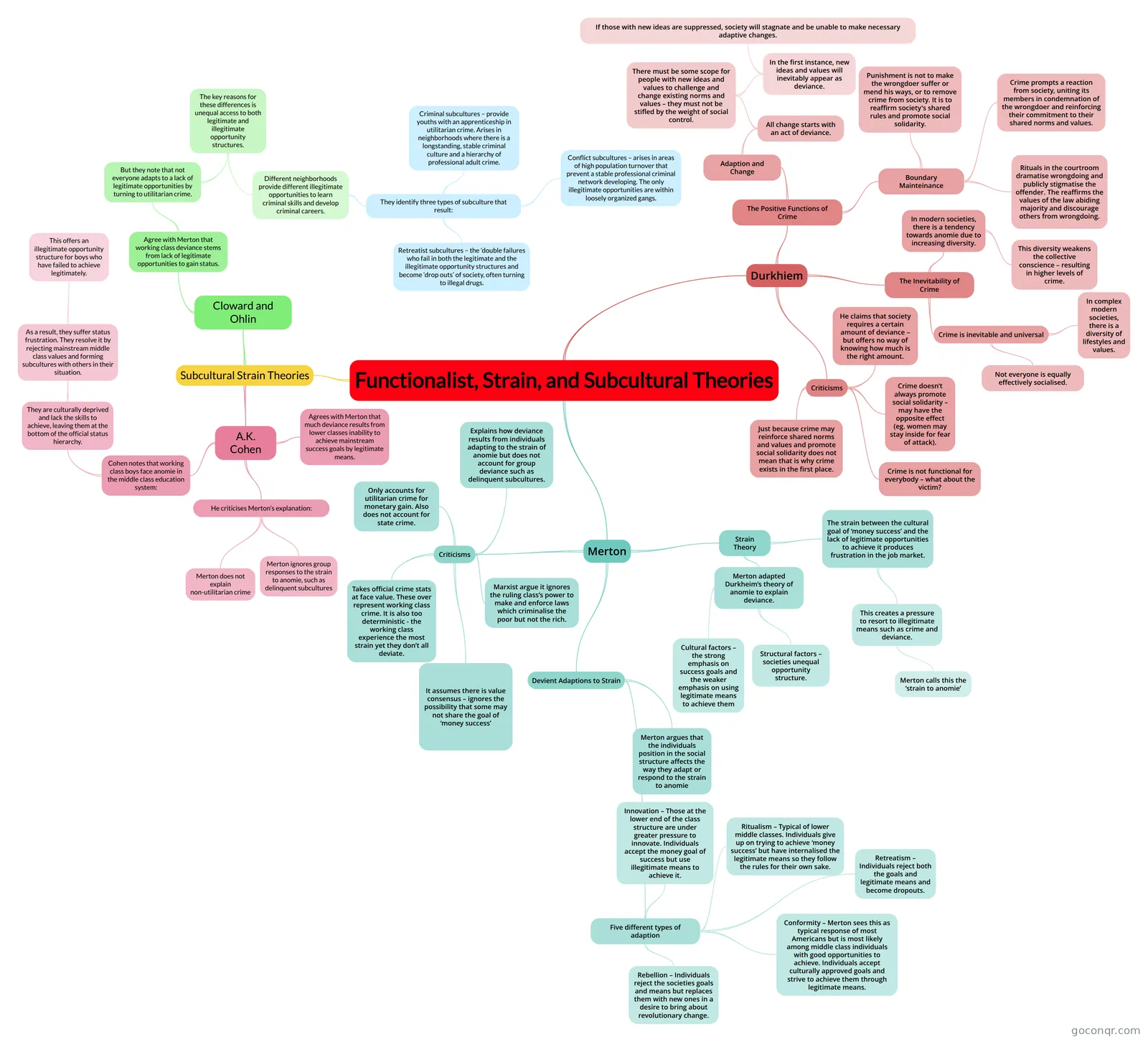 Mind map Functionalist, Strain, and Subcultural Theories Functionalism, Strain and Subcultural Theories
-
Mind map Part 2 - Ch 7: Social Structure and Anomie Ch 7: Social Structure and Anomie
-
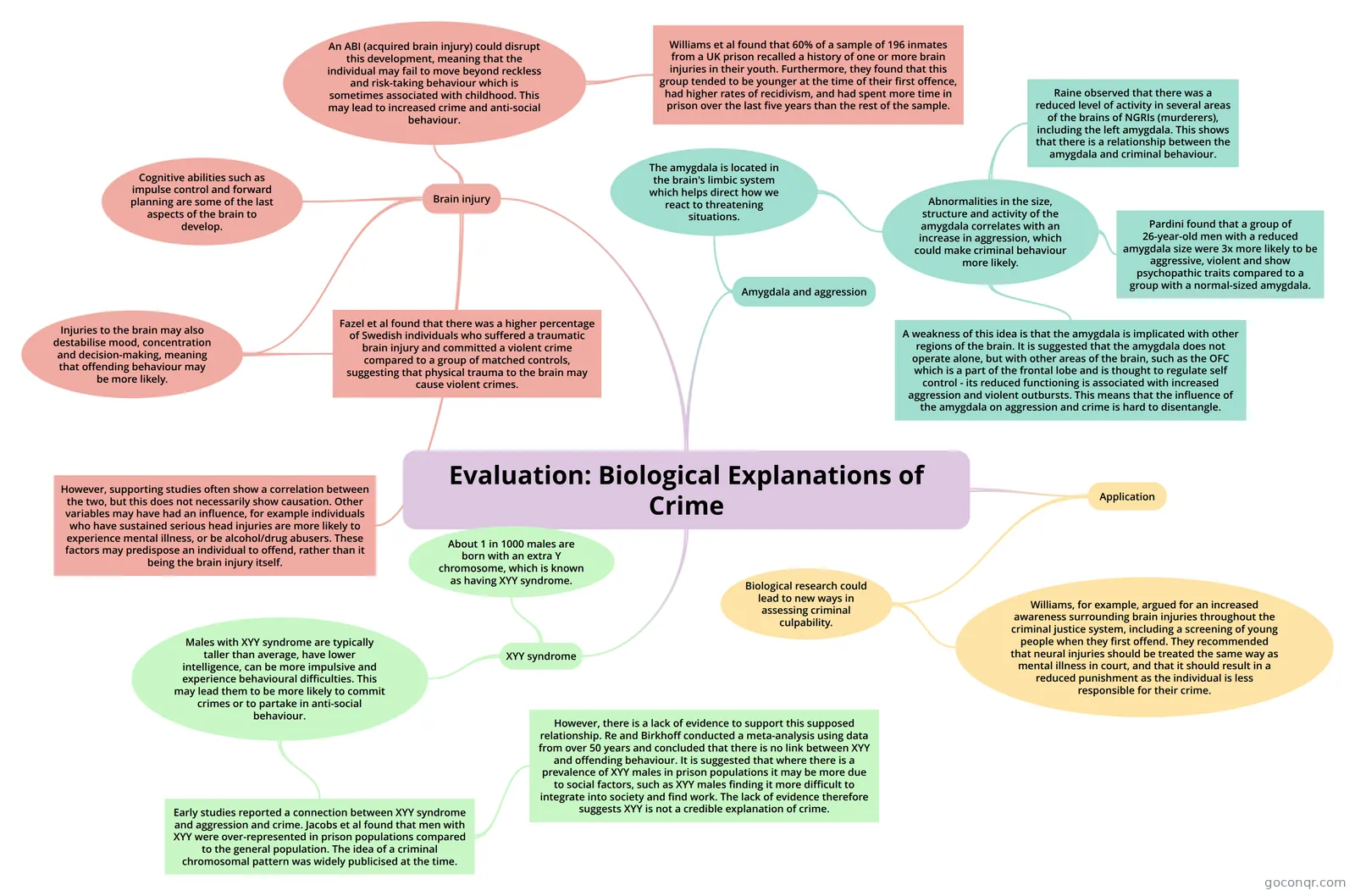 Mind map Evaluation: Biological Explanations of Crime
-
Mind map Part 2 - Ch 8: Differential Association Ch 8: Differential Association
-
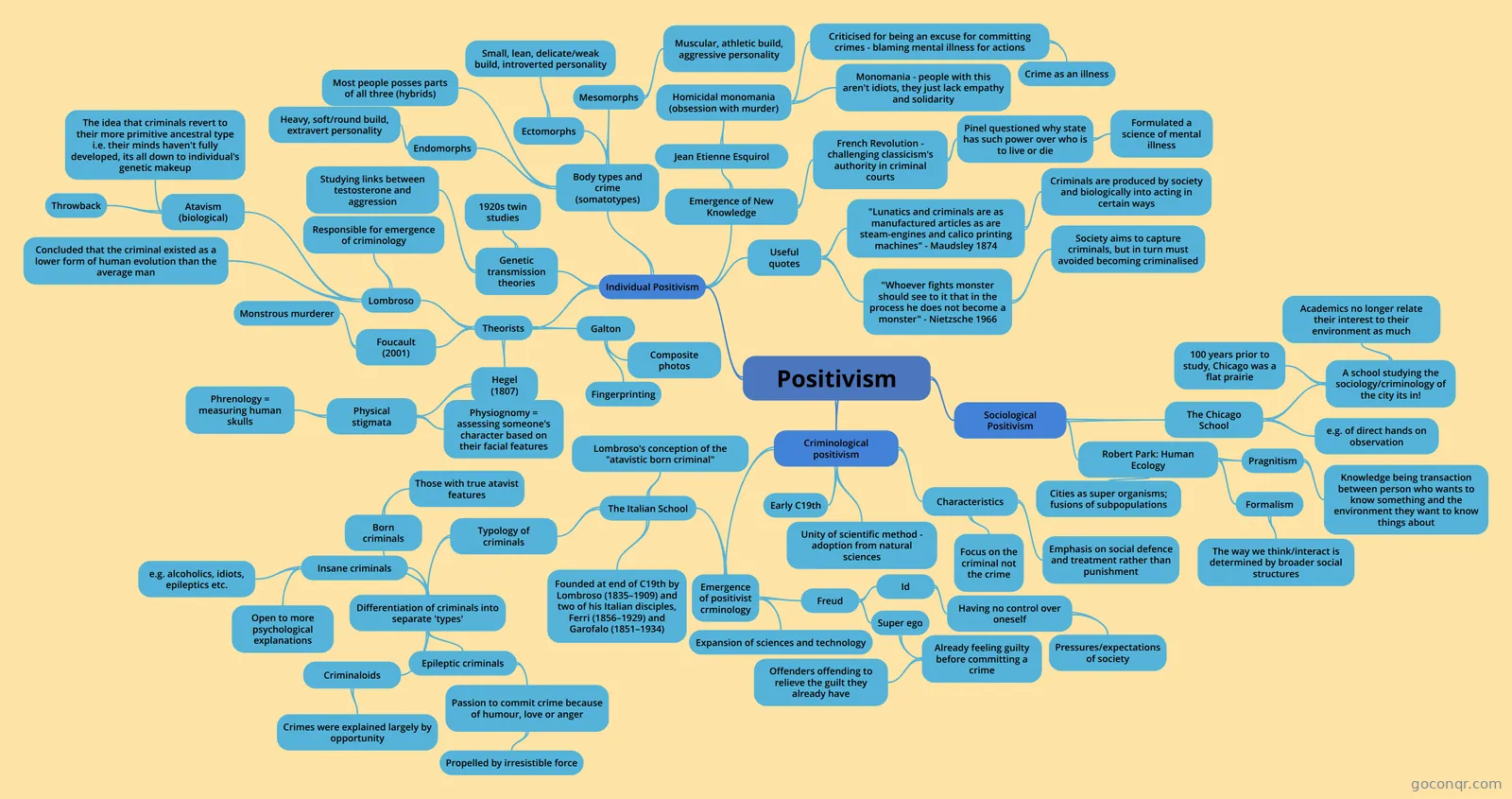 Mind map Positivism
-
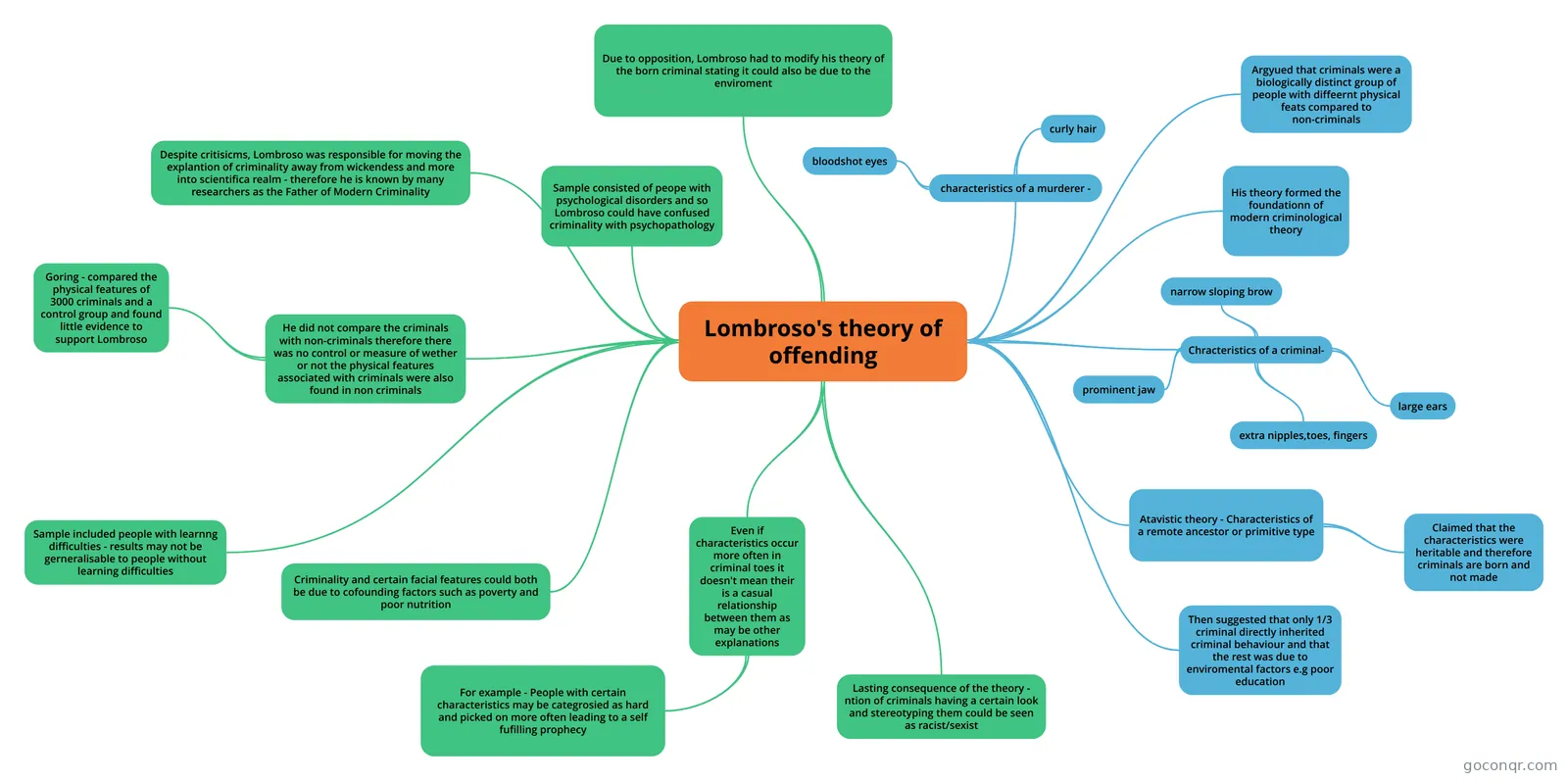 Mind map Lombroso's theory of offending Lombroso's theory of offending
-
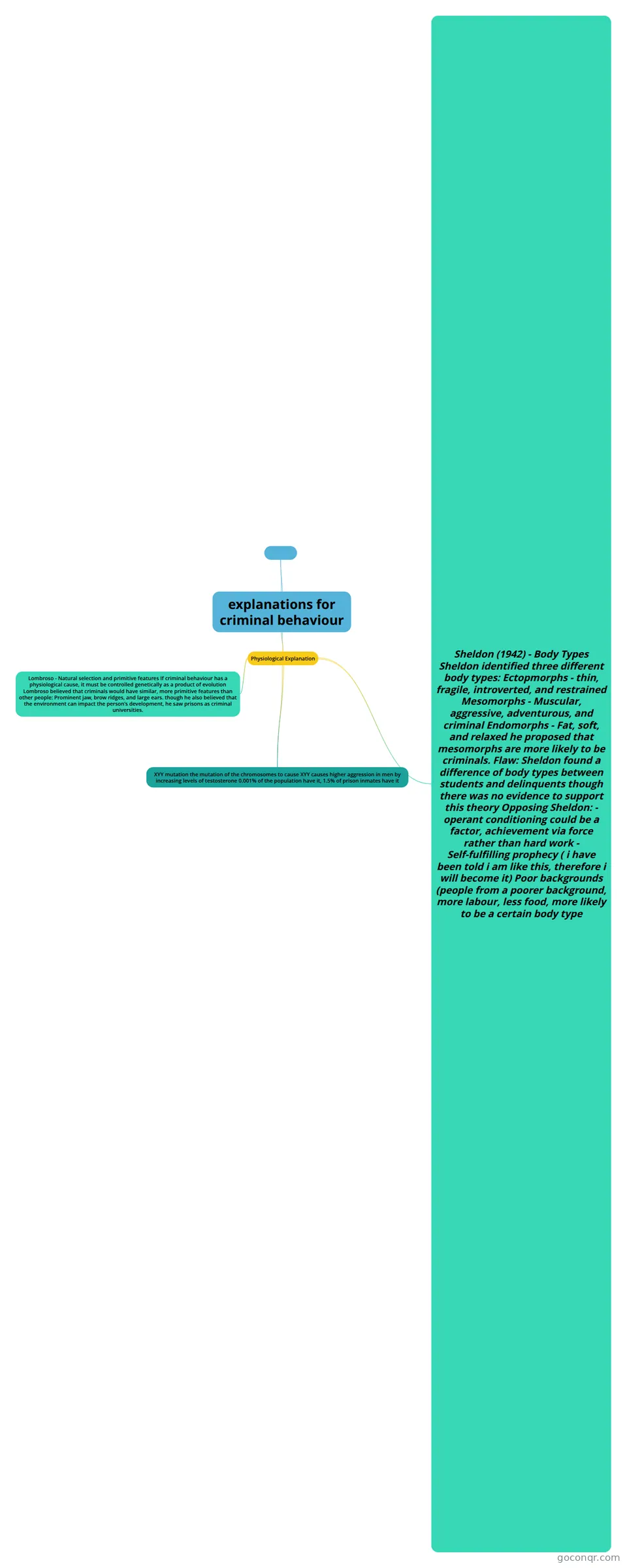 Mind map explanations for criminal behaviour Mind Map on explanations for criminal behaviour, created by Jason Farrance on 21/01/2018.
Quizzes
See all 52 quizzesMind maps
See all 449 mind maps-
Functionalist, Strain, and Subcultural Theories Functionalism, Strain and Subcultural Theories
-
Part 2 - Ch 7: Social Structure and Anomie Ch 7: Social Structure and Anomie
-
Evaluation: Biological Explanations of Crime
-
Part 2 - Ch 8: Differential Association Ch 8: Differential Association
-
Positivism
-
Lombroso's theory of offending Lombroso's theory of offending
-
explanations for criminal behaviour Mind Map on explanations for criminal behaviour, created by Jason Farrance on 21/01/2018.
-
 Criminology Theories Case studies to learn for criminology
Flashcards
See all 101 flashcards-
39 cardsCh. 16 Developmental Theories What are Developmental Theories?
-
200 cardsChapter 2: Origins of Criminal Behaviour - Developmental Risk Factors ORIGINS OF CRIMINAL BEHAVIOUR
-
200 cardsChapter 1: Introduction to Criminal Behaviour JUST-WORLD HYPOTHESIS (LERNER & MILLER, 1980)
-
51 cardsSoc 225 Week 12 Introduction to Race and Criminology - Race
-
11 cardsTheories of Deviance Theories of Deviance
-
52 cardsChapter 1.5: Introduction to Criminal Behaviour DRUG USE SELF-REPORT SURVEYS
-
18 cardsCriminology theorists Cesare Beccaria (1738 - 1794)
-
36 cardsIntroduction to Criminal Behavior Study set created based off of Key Concepts in Chapter One of Curt R. Bartol and Anne M. Bartol's "Criminal...
Flowcharts
See all 24 flowcharts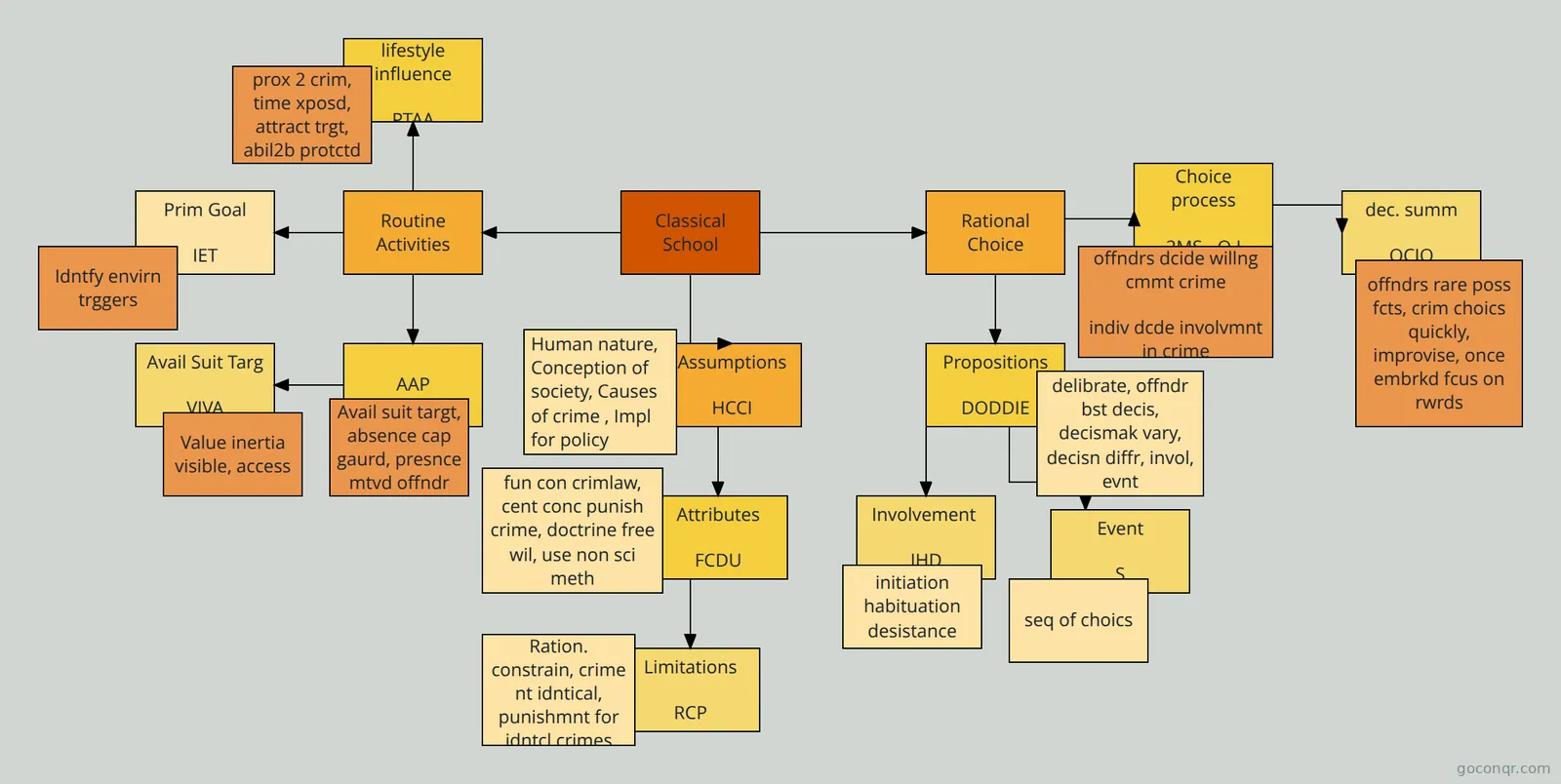
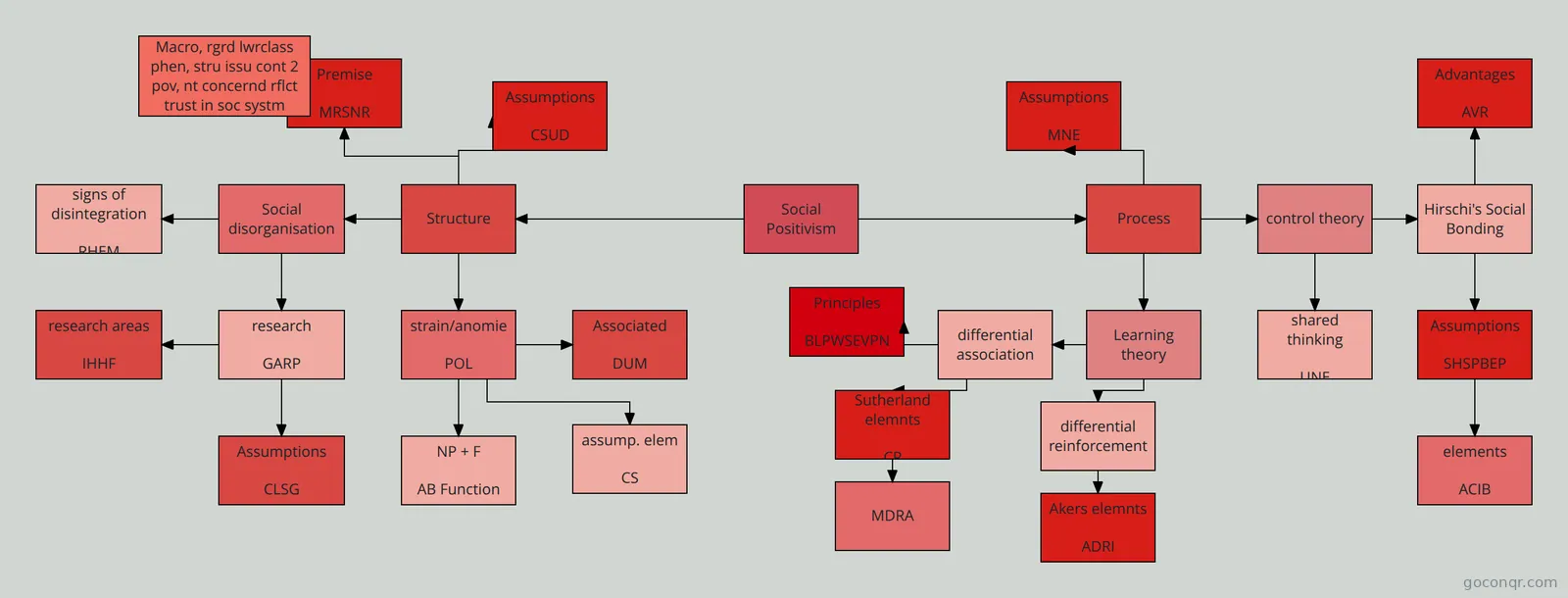
Notes
See all 21 notes-
Rational choice theory (25) Prep Rational Choice Theory (25) Introduction: This theory focuses on the rationality in human actions, and emphasizes the human decision-making process. This theory also focuses on the...
-
Module 2 Definitions: Anomie: arises when norms of society are unclear or are no longer applicable. Attachment: an element of bond. Sociological counterpart of the superego or conscience, a measure of the connectedness between...
-
Bandura Social bonding (15) Prep Discuss Bandura's social learning theory (15) Bandura's social learning theory is part of the Behavioral perspective from the Psychological Positivism. This branch of behaviour theory is...
-
Classical School Short summary CLASSICAL SCHOOL Rational, Free will, Weigh up pros and cons. Consistent cjs will eliminate crime. Assumptions CS = HCCI Human nature - SRWA Conception of society ...
-
Positivist school assumptions POSITIVIST SCHOOL Deterministic approach, offenders do not have control and are forced into committing criminal acts. Offenders should be treated rather than punished. Assumptions PS =...
Slides
See all 10 slidesTopics in Criminological Theories
More Criminology topics
About Criminological Theories
GoConqr OriginalWhat this unit covers
The resources on this page follow the main explanations of crime. Biological ideas appear in the mind map Lombroso's theory of offending, which covers atavistic theory, and in Evaluation: Biological Explanations of Crime, which looks at brain injury, the amygdala and XYY syndrome. Psychological and social psychological views sit alongside them, with maps on psychodynamic and learning approaches.
Sociological theories are well covered too. Functionalist, Strain, and Subcultural Theories deals with Durkheim, Merton and anomie. Other resources cover differential association, control theories, rational choice, routine activity, labelling, Marxism and left and right realism.
Where to start
- Open the slide set Characteristics of Criminal Behaviour. It explains that crime is a social construct that depends on the law.
- Read the mind map Positivism and the classical and positivist school resources to see how early thinking divides.
- Move on to individual theories, one at a time, using the flashcard decks on strain, control and the Chicago School.
Using quizzes and maps together
Read a mind map first, then test yourself. The quiz Anomie & Strain Theories pairs well with the strain maps, and the quiz Differential Association Theory fits the maps on Sutherland and Cressey. Where a question catches you out, go back to the map branch, then try the quiz again.
Flashcard decks such as Social Bond Theory (Hirschi 1969) help you fix names, dates and key terms. Evaluation maps help with essay points, so compare strengths and weaknesses across theories.
Where it fits
This unit belongs to the Theories of Crime strand of Criminology. Its resources suit A-level Sociology, Psychology and Criminology, WJEC Criminology and university courses, and they were made by GoConqr users.
Choose one theory that you find hard, work through its map and quiz, then make a short set of flashcards of your own.
Frequently asked questions
Which resource should I open first?
Start with the slide set Characteristics of Criminal Behaviour. It explains what counts as a crime and why that depends on the law. After that, the Positivism mind map gives a clear picture of how early explanations of offending developed.
What do the mind maps cover?
The mind maps range across biological ideas such as Lombroso, strain and anomie, differential association, control theories, rational choice, Marxism and left and right realism. Some also cover psychodynamic and learning approaches, so you can compare explanations side by side.
Are the resources free to use?
Yes. Every resource listed here is free to open, study and take, with no account needed. If you want to save quiz scores or make your own quizzes, mind maps, flashcards and notes, you can add a free account.
Which exams and levels do these suit?
The listed resources mention A-level Sociology, A-level Psychology, A-level Criminology and WJEC Criminology. Most are aimed at university students and professional candidates, with a smaller share for school students, and teachers can use them as ready-made material.
Who made these resources?
They were made by GoConqr users, not by GoConqr itself. Over 400 contributors have added maps, quizzes, flashcards and notes, so styles differ. Compare a few on the same theory and check them against your own course materials.
What if I can't find a theory I need?
Try searching for a related name, such as the theorist or the school of thought. If nothing fits, you can build your own mind map or flashcards on that theory and use the existing maps on similar theories as a guide.