
Forensic Psychology
210 resources created by 166 users
This Forensic Psychology page on GoConqr gathers community-made mind maps, flashcards, quizzes, notes and slide sets, from defining and measuring crime to offender profiling, interviewing and treatments for offenders. It's built for school students, university students and professional candidates revising a topic, plus teachers after ready-made material. There are over 200 resources here, including more than 90 mind maps, over 80 flashcard decks and more than 15 quizzes, with A-level Psychology among the exams mentioned. Try a quiz to spot your gaps, then see what you can add.
Select topic
- Defining and Measuring Crime19
- Biological Explanations of Crime9
- Psychological and Social Explanations of Crime27
- Developmental and Youth Offending6
- Mental Disorders and Offending5
- Offender Profiling34
- Forensic Assessment and Risk Prediction9
- Forensic Evidence9
- Investigative Interviewing and Confessions7
- Eyewitness Testimony and Identification7
- Psychology in the Courts10
- Sentencing, Prisons and Restorative Justice10
- Offender Treatment and Rehabilitation26
Top Forensic Psychology resources
-
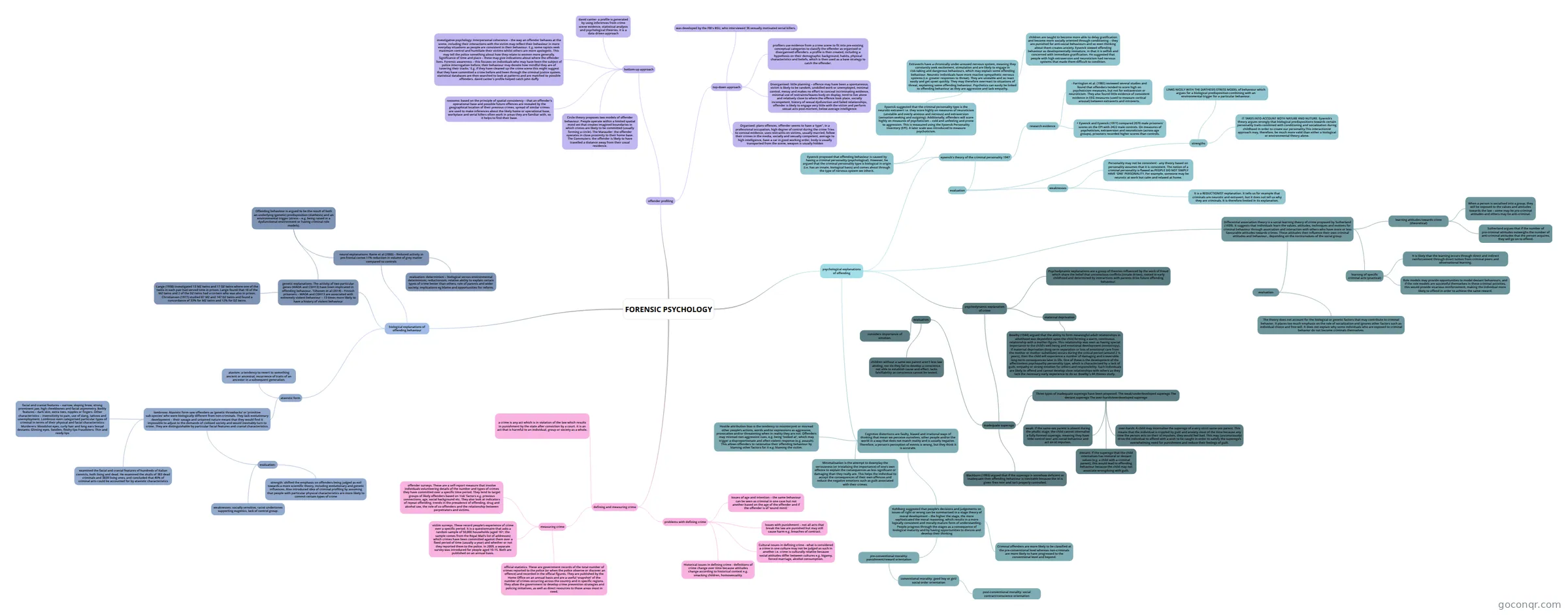 Mind map FORENSIC PSYCHOLOGY still editing!!
-
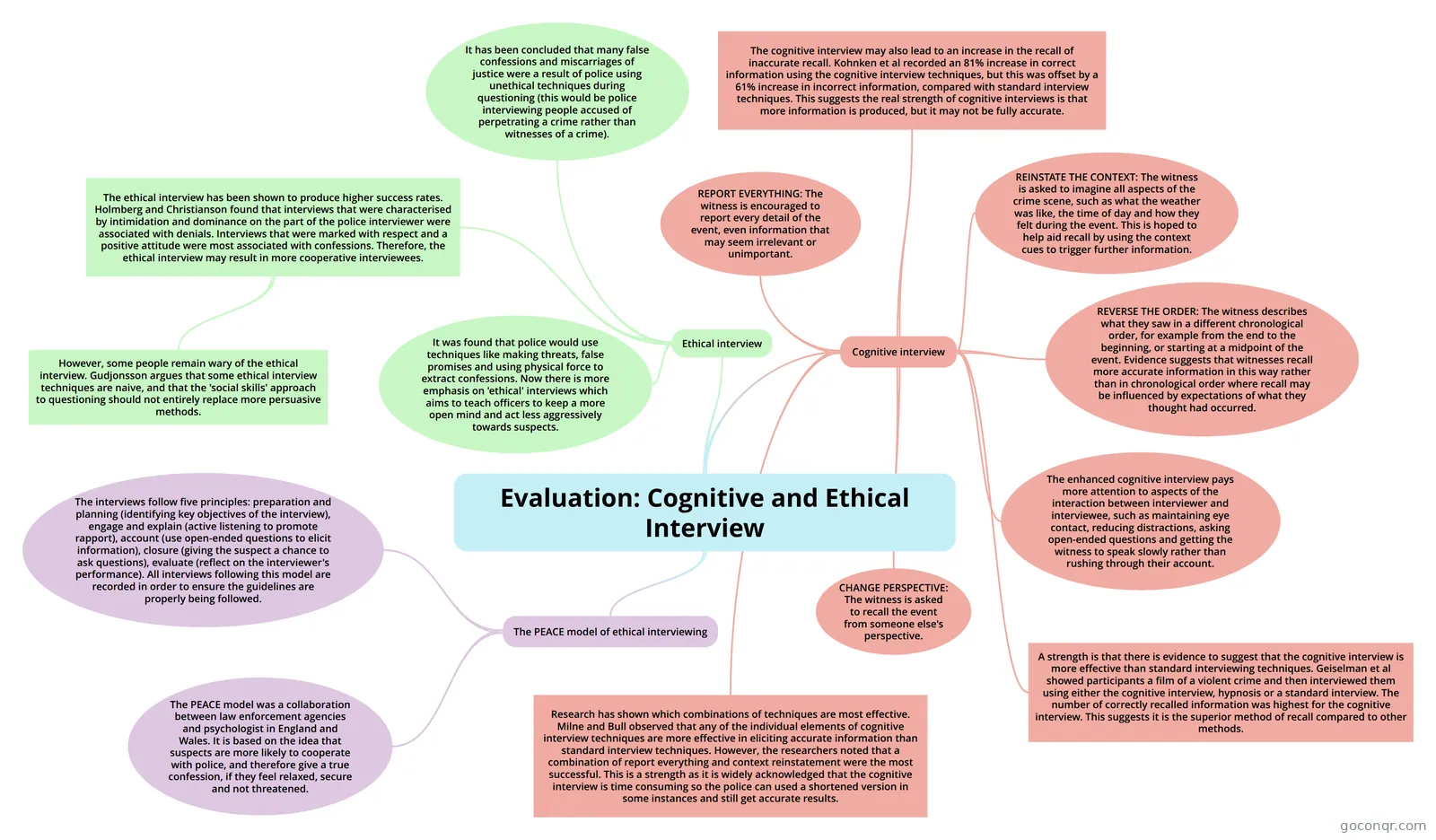 Mind map Evaluation: Cognitive and Ethical Interview
-
 Mind map Evaluation: Biological Treatment for Offenders (Diet)
-
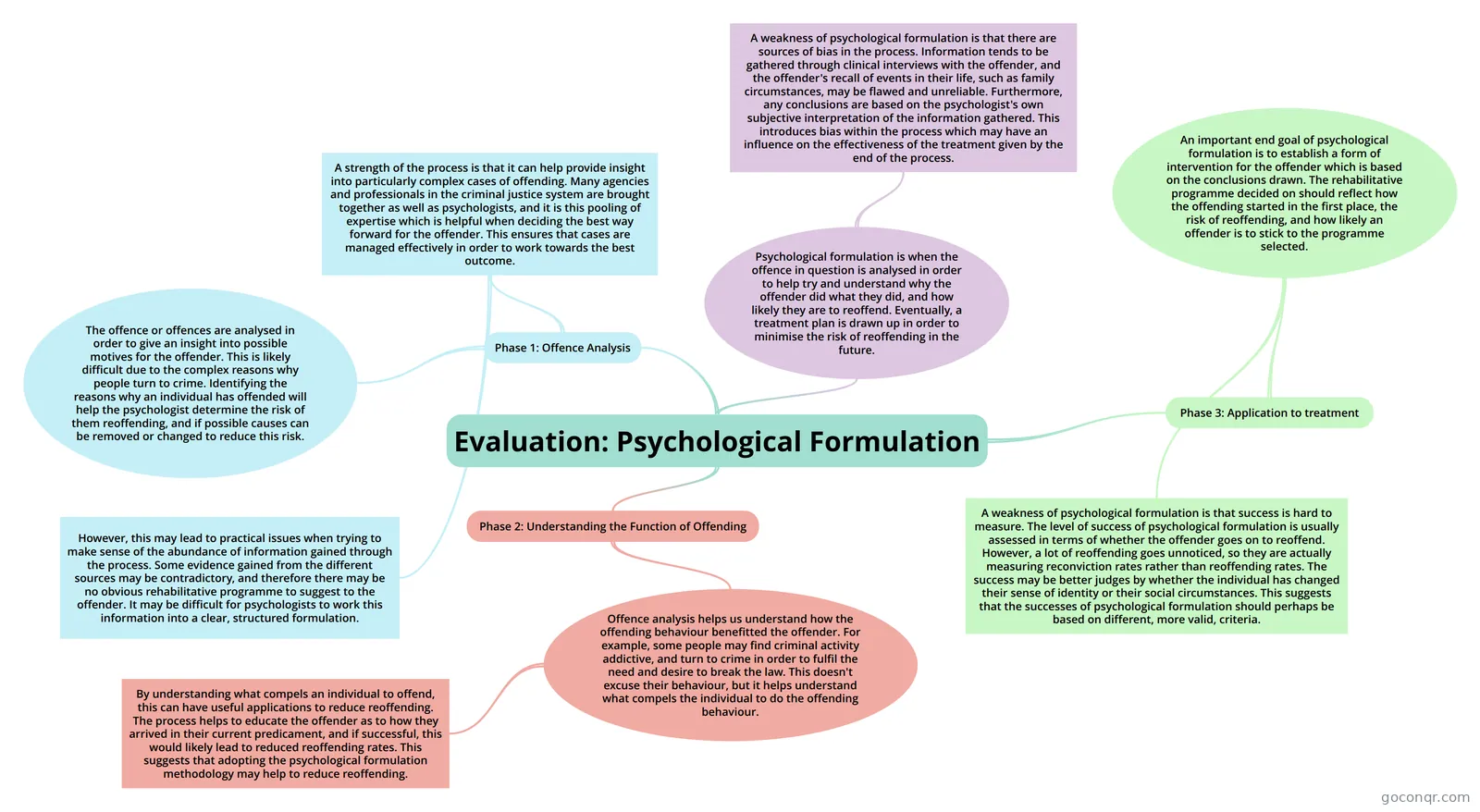 Mind map Evaluation: Psychological Formulation
-
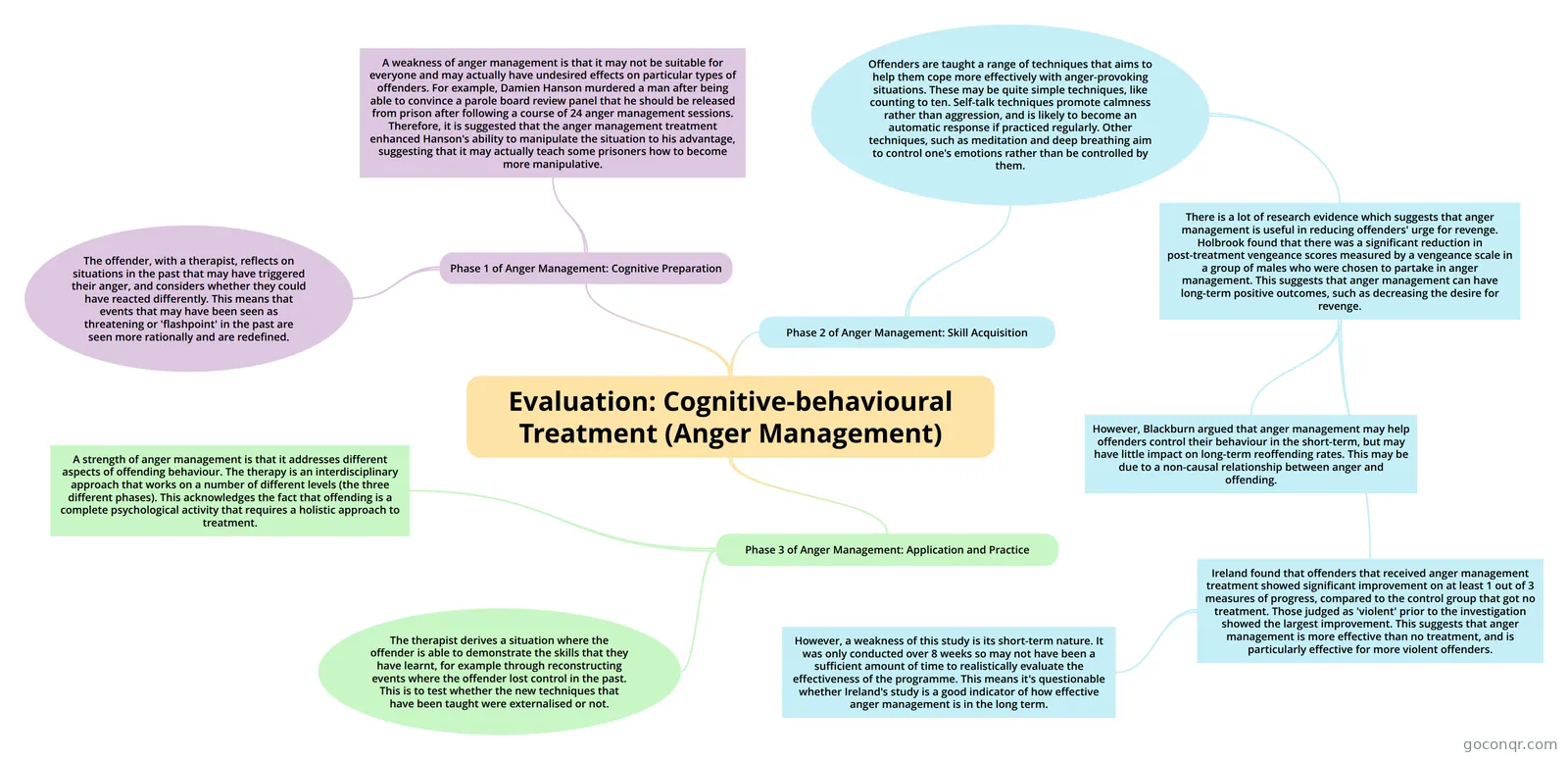 Mind map Evaluation: Cognitive-behavioural Treatment (Anger Management)
-
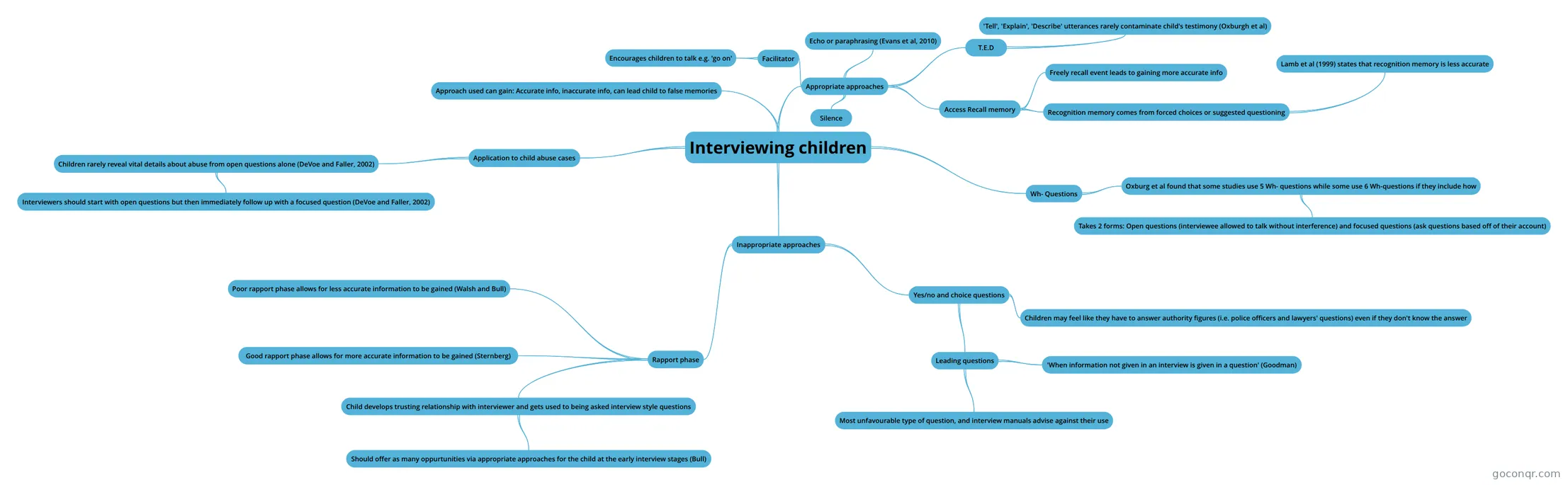 Mind map Interviewing children Legal psychology
-
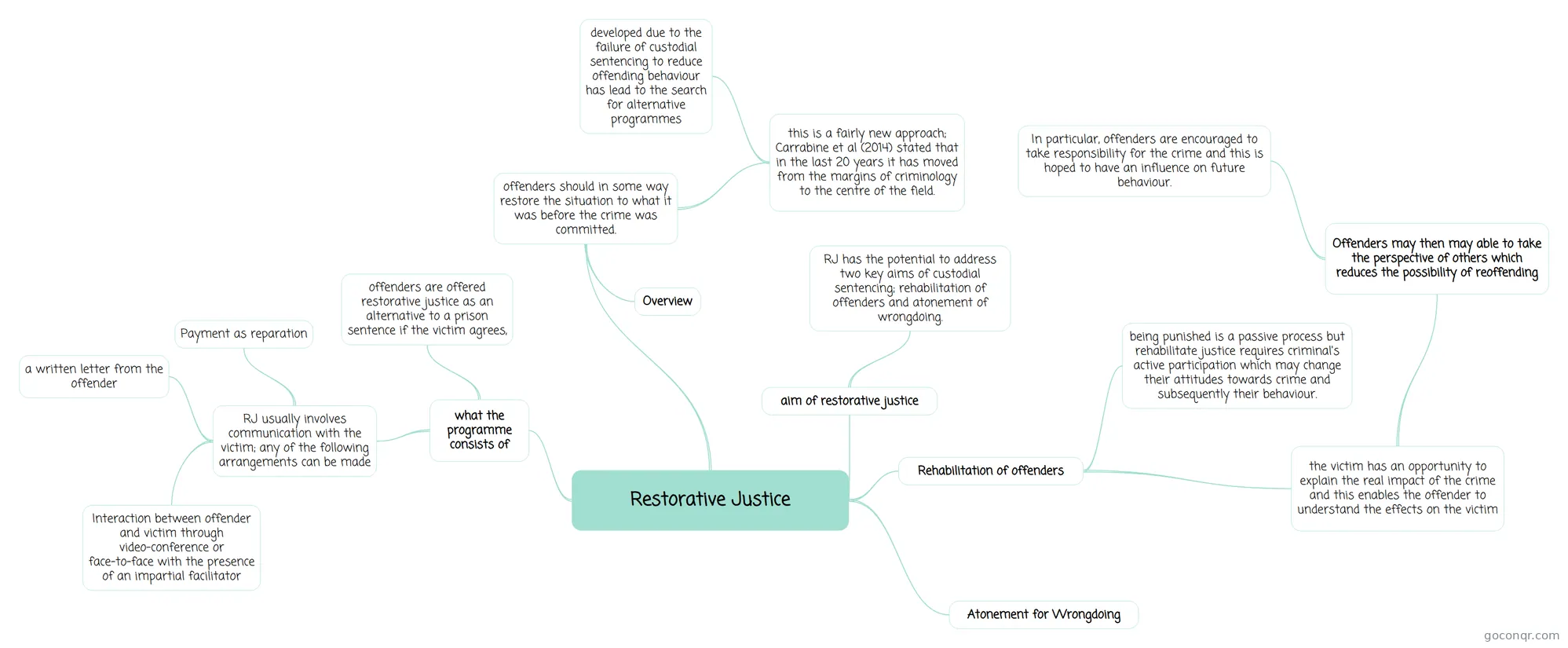 Mind map Restorative Justice
-
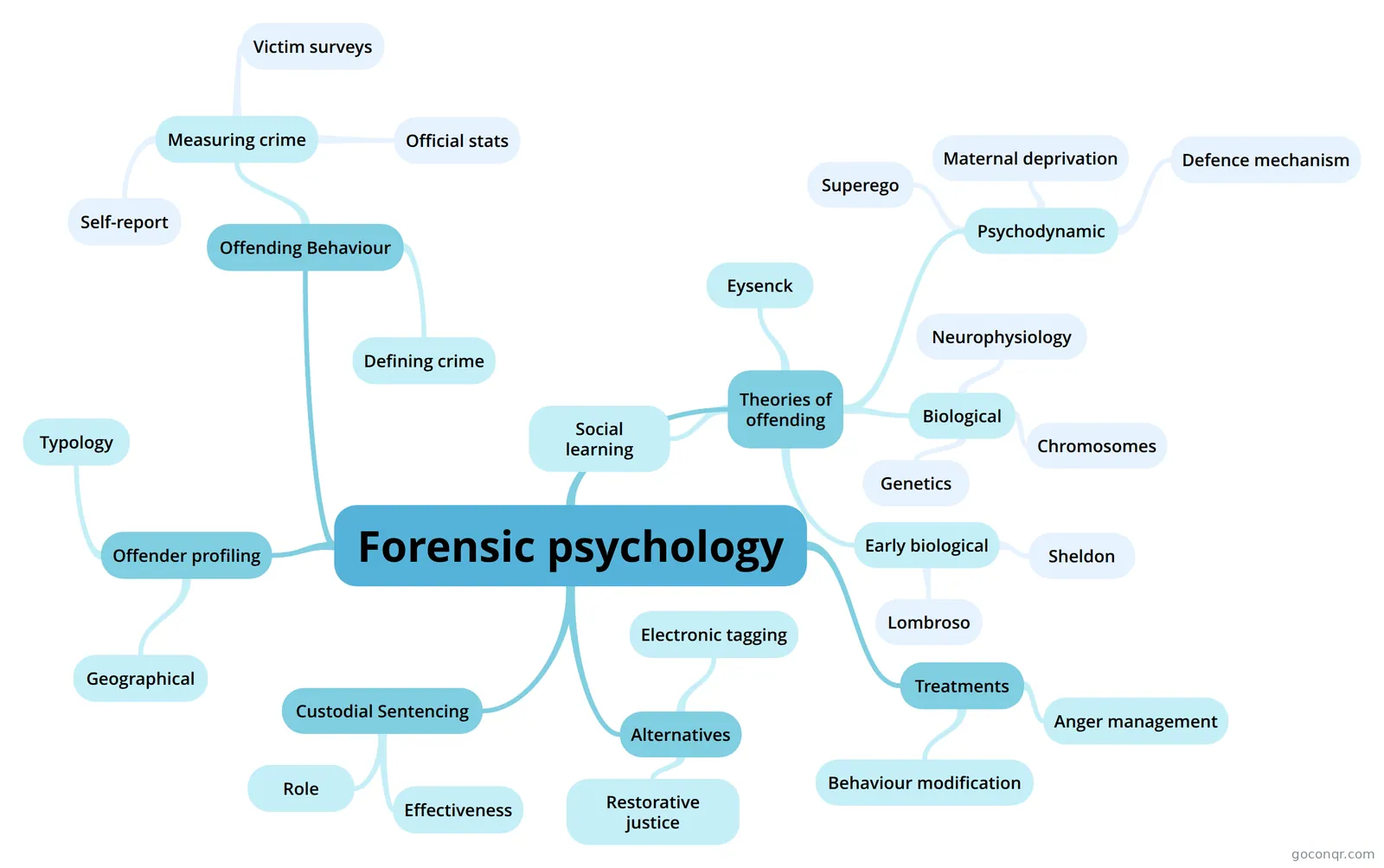 Mind map Forensic psychology Forensic psychology mind map with notes in greater detail
Quizzes
See all 16 quizzes-
85 questionsLaw Exam Which psychological phenomenon have some psychologists used to argue that traumatic memories are recorded a...
-
4 questionsrole of amygdala: bio explanation for crim beh
-
43 questionsForensics studies quiz
-
58 questionsForensic psychology What are the four prime principles of sentencing?
-
7 questionsOffender profiling assumptions
-
18 questionsForensics A review of people with mental health problems or learning disabilities in the criminal justice system. The...
-
22 questionsWJEC Forensic Psychology Select the therapies that are used to treat and punish offenders
-
22 questionsOCR Psychology A2 Revision: Categories What categories does Pennington and Hastie fall in?
Mind maps
See all 96 mind maps-
FORENSIC PSYCHOLOGY still editing!!
-
Evaluation: Cognitive and Ethical Interview
-
Evaluation: Biological Treatment for Offenders (Diet)
-
Evaluation: Psychological Formulation
-
Evaluation: Cognitive-behavioural Treatment (Anger Management)
-
Interviewing children Legal psychology
-
Restorative Justice
-
Forensic psychology Forensic psychology mind map with notes in greater detail
Flashcards
See all 84 flashcards-
53 cardsPsychology - Forensic Psychology
-
86 cardsforensic psychology PSYCHOLOGY UNIT A2 problems in defining crime - cultural issues
-
86 cardsForensic Psychology
-
62 cardsForensic Psychology
-
32 cardsPsychology and The Law How frequent are wrongful convictions (percentage)? In WC cases, what percentage of cases result in the act...
-
21 cardsForensic Psychology OCR- Making a case - Interviewing suspects What are the 3 core studies in Interviewing a suspect ?
-
9 cardsdefining & measuring crime
-
178 cardslegal and forensic psychology What are the main differences of Forensic and clinical psychologists? a. The client, roles and clinical ass...
Flowcharts
Notes
-
Forensic Psychology Bio explanations of offending behaviour Historical Approach (Atavistic Form) Atavistic form = Criminal activity is attributed to the fact that offenders are genetic throwbacks /primitive subspecies that are ill-suited...
-
Forensic Psychology - Turning to Crime What makes a criminal? Why do you think some people turn to crime? Some examples; Money Revenge Attention seeking Family involved in crime Wish to be better than others; greed Faulty genes Chemical imbalances Power Ha...
-
Forensic Psychology Defining and Measuring Crime Problems with Defining Crime Historical Period - some crimes are time bound as attitudes and social norms change, affecting people's behaviour and the law. Culture - attitudes ar...
-
Two treatments for offenders Anger management Anger is considered healthy however when it forms into aggressive outbursts which may lead to criminal behavior and violent acts They could be one to one but often involve group group work - cognitive...
-
Forensic - evaluation + studies: FORENSIC STUDIES + EVALUATIONS:REDUCTIONISM: (over simplification of human behaviour) Raine Daley and Wilson Brunner Kohlberg Sutherland HOLISM: (emphasis on the whole rather than subsequent parts) Bruce The Cognitive...
-
Foresic psychology Definition of crimeCrime is behaviour that is classed wrong by the law. However, there are 2 factors that are problematic when defining the word crime. Culture is one of them, this is because laws vary between culture...
-
Criminal Notes Psychological formulation Describe asses what infulneces a offenders behaviour and minimising the potential for recividism psychologists would look at the person's early experiences from childhood; core beliefs and tr...
Slides
Topics in Forensic Psychology
More Criminology topics
About Forensic Psychology
GoConqr OriginalWhat this unit covers
The resources follow the main strands of forensic psychology. The mind map FORENSIC PSYCHOLOGY opens with defining and measuring crime, including the idea that a crime is an act that breaks the law and is punished by the state after conviction. Other maps and decks cover offender profiling, theories of offending, custodial sentencing, and alternatives to prison.
Where to start
Begin with the overview mind map Forensic psychology, which lays out offender profiling, offending behaviour, theories of offending, treatments and restorative justice in one place. Then the flashcard decks Defining & measuring crime and Ways of Measuring Crime give you the basics before you move on.
Working through the topics
- Profiling: the deck Bottom-Up Typology - Canter and Heritage and the flowchart Top Down Approach - Criminal Profiling sit side by side, so you can compare the two approaches.
- Interviewing: the maps Evaluation: Cognitive and Ethical Interview and Interviewing children look at what helps witnesses give accurate detail and what can lead to false memories.
- Treatment: Evaluation: Cognitive-behavioural Treatment (Anger Management) and Evaluation: Biological Treatment for Offenders (Diet) weigh up different ways of working with offenders.
- Justice: Restorative Justice and Courts + Juries cover how the system responds.
Using quizzes and maps together
Read a map first, then test yourself. The quiz Defining and measuring crime pairs well with the crime-definition map, and Offender profiling assumptions fits the profiling topics. Where a quiz catches you out, go back to the matching map or deck and read that branch again. Some resources are tied to A-level Psychology study, such as OCR A2 Forensic Psychology Key Studies, while others suit university courses.
Where it sits
This unit belongs to the Forensics and Criminal Investigation strand of Criminology. Pick a topic that you find hardest, open a quiz, and then make a map or deck of your own to fill any gaps.
Frequently asked questions
Which resource should I open first?
Start with the mind map called Forensic psychology. It gives a broad outline, from offender profiling and theories of offending to custodial sentencing, treatments and restorative justice. After that, choose the topic that feels weakest and open the matching flashcard deck or quiz.
Which quizzes are there for practice?
There are over 15 quizzes. Examples include Defining and measuring crime, Offender profiling assumptions, Bottom-Up Approach, WJEC Forensic Psychology and OCR Psychology A2 Revision: Categories. Use them after reading a map to see which points you remember and which need another look.
What do the mind maps cover?
The maps cover defining and measuring crime, offender profiling, cognitive and ethical interviewing, interviewing children, restorative justice, anger management and diet-based treatments. Some also look at the role of the forensic psychologist, such as carrying out one-to-one risk assessments.
Are these resources free, and who made them?
Yes. Every resource listed here is free to open, study and take, with no account needed. They were made by GoConqr users, not by GoConqr itself. A free account also saves your quiz scores and lets you create your own quizzes, maps, flashcards and notes.
Which levels and exams do they suit?
The mix leans towards school students, with a large share for university students and a small number for professional candidates. A-level Psychology is the exam mentioned in the listed resources. Teachers can also use the maps, decks and slide sets as ready-made material.
What if I can't find my topic?
Try a nearby title first, since topics are often grouped under broader names such as Treatments of offending or Turning to Crime. If something is still missing, you can make your own mind map, flashcard deck or quiz on it.