
Public Speaking and Oral Communication
28 resources created by 24 users
This Public Speaking and Oral Communication page on GoConqr gathers community-made quizzes, mind maps, flashcards and notes, from stage fright and audience analysis to organising main points, supporting material and persuasive speaking. It's built for university students and school students practising speech planning, delivery and vocabulary, and for teachers after ready-made material. There are over 300 resources here, including more than 30 quizzes, over 200 mind maps and over 50 flashcard decks. Pick a topic that matches your next speech, then try a quiz to see what you remember.
Top Public Speaking and Oral Communication resources
-
56 questionsFinal practice Part 1 The verbal and nonverbal signals an audience gives a speaker are called...
-
45 cardsPublic Speaking Midterm Study Guide Public Speaking midterm study guide.
-
20 cardsTTU COMS 2300 FINAL Things a speaker should do
-
 Mind map Fundamentals of Public Speaking Final Exam Public Speaking Final
-
10 cardsPublic speaking an organized, face-toface, prepared, intentional (purposeful) attempt to inform, entertain, or persuade a g...
-
89 questionsCOMM 1100 Exam #4 a powerful form of communication that includes a speaker who has a reason for speaking, an audience that gi...
-
22 cardsComm 120 Midterm Know the main components of a story.
-
41 questionsChapters 11 - 15 & Appendix A (Interviews) In preparation for her speech, Mattie asked her classmates questions about how they would respond to her to...
Quizzes
-
56 questionsFinal practice Part 1 The verbal and nonverbal signals an audience gives a speaker are called...
-
89 questionsCOMM 1100 Exam #4 a powerful form of communication that includes a speaker who has a reason for speaking, an audience that gi...
-
41 questionsChapters 11 - 15 & Appendix A (Interviews) In preparation for her speech, Mattie asked her classmates questions about how they would respond to her to...
-
11 questionsBasic Announcing Self-Test (ONA) For anybody in section A, should they need help to study.
-
9 questionsch12-16 practice There can be as many opinions in your audience as there are people.
-
6 questionsPlanning and Presenting Effectively Articulation involves using proper body language, specifically with your hands.
-
6 questionsListening With a Purpose Because eye contact can make some audience members uncomfortable, it should be avoided.
-
6 questionsVocal Variety
Mind maps
See all 10 mind maps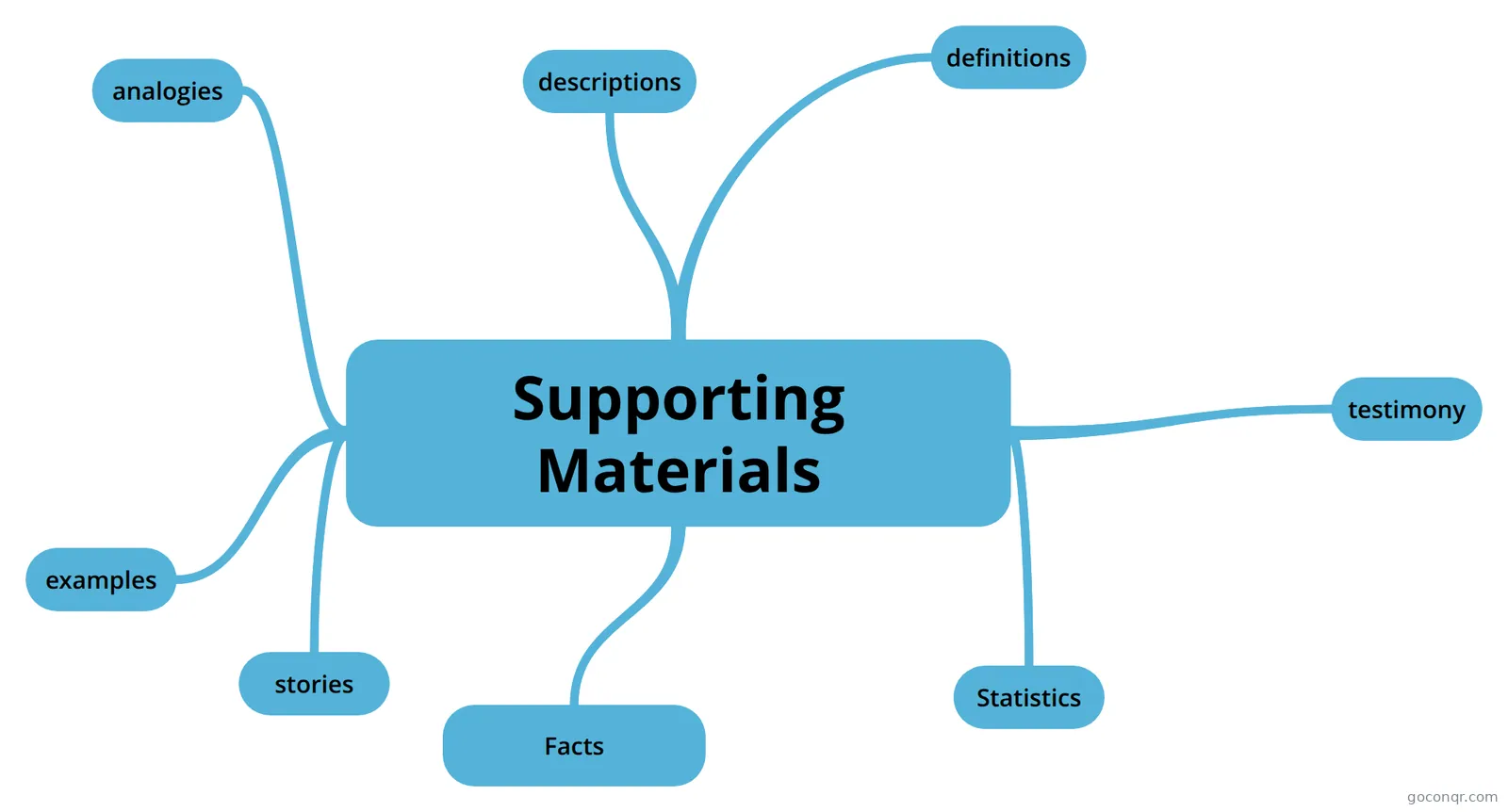
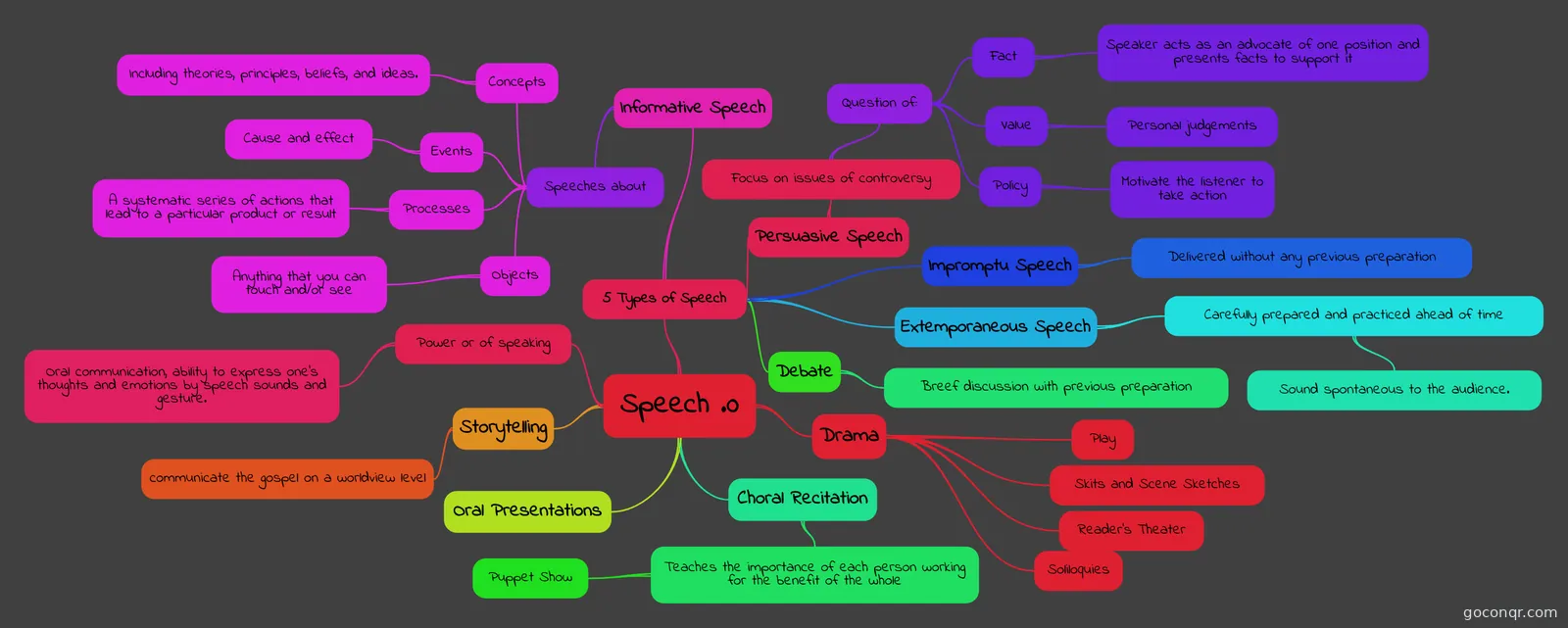
Flashcards
-
45 cardsPublic Speaking Midterm Study Guide Public Speaking midterm study guide.
-
20 cardsTTU COMS 2300 FINAL Things a speaker should do
-
10 cardsPublic speaking an organized, face-toface, prepared, intentional (purposeful) attempt to inform, entertain, or persuade a g...
-
22 cardsComm 120 Midterm Know the main components of a story.
-
54 cardsPublic Speaking Midterm
-
20 cardsOral Comm //
-
8 cardsGlossary on Ethics in Public speaking Ethics
-
31 cardsChs 12-16
Flowcharts
Notes
More Communication and journalism topics
About Public Speaking and Oral Communication
GoConqr OriginalWhat the resources cover
The resources here were made by GoConqr users and follow the usual stages of a speech course. Early material deals with nerves and the communication process. The flashcard deck Public Speaking Midterm Study Guide starts with stage fright, adrenaline, positive nervousness and visualisation, then moves to speaker, message, channel, listener and feedback. It also covers ethical speechmaking.
Later items look at building a speech. The mind map Verbal and visual support in presentations sets out clarity, interest and proof, along with definitions, examples, stories, statistics, comparisons and quotations. A flashcard deck titled Public Speaking lists ways to divide a speech: topical, chronological, spatial, causal, pro-con and problem-solution.
Where to start
If you are new to the topic, open the mind maps first. Introduction to Public Speaking, Planning a speech and Analyzing your audience give a quick overview. Then move to Organizing Your Main Points and Gathering Supporting Material.
For persuasion, try Persuasive Speaking and Informative vs Persuasive. The deck TTU COMS 2300 FINAL adds modes of persuasion, canons of rhetoric, Monroe's sequence and logical fallacies.
Using quizzes and maps together
- Read a mind map on one topic, such as supporting materials.
- Take a quiz without looking at it. Final practice Part 1 asks about audience feedback and cultural differences in communication styles.
- Note what you missed, then return to the map for those branches.
- Use flashcards for terms that need repeating, such as ethnocentrism or feedback.
Where this unit sits
This unit belongs to the strand Public Speaking, Rhetoric and Persuasion, within Communication and journalism. Most resources suit university students, with a good share for school students, and teachers can use the maps and quizzes as ready-made material.
Next step
Choose one topic from your next assignment, open a map on it, and see how much you can explain before you check the quiz.
Frequently asked questions
Which resource should I open first?
For an overview, try the mind maps Introduction to Public Speaking or Planning a speech. If you would rather test yourself straight away, the quiz Final practice Part 1 covers audience feedback and cultural differences in communication styles. Both are free to open, and you can move on to the topic maps afterwards.
What do the mind maps cover?
There are over 200 mind maps. They cover goals of a speaker, audience analysis, organising main points, supporting materials, visual aids, informative and persuasive speaking, and the benefits of public speaking education. Some are short outlines, while others, like the one on verbal and visual support, list many branches.
Are the resources free to use?
Yes. Every resource on this page is free to open, study and take, with no account needed. A free account also saves your quiz scores and lets you make your own quizzes, mind maps, flashcards and notes, which is handy if you want to adapt a topic to your own course.
Who made these resources?
They were made by GoConqr users, not by GoConqr itself. Over 280 contributors have added material, so styles and depth vary. Some items follow a particular course, such as the deck TTU COMS 2300 FINAL, while others are general overviews of speaking skills.
Which levels do the resources suit?
Most of the material is aimed at university students, with around a quarter suited to school students. Teachers can use the maps, quizzes and slide sets as ready-made material. Pick items by title and check the content against your own course before relying on them.
What if I cannot find my topic?
Try a nearby title first. Delivery and voice are covered by the quiz Vocal Variety and the deck U2 L1 SPEAKING EXPRESSIVELY, while openings appear in the notes Famous Speech Openings. If something is still missing, you can build your own map or flashcards with a free account.