
Reading Comprehension and Text Analysis mind maps
87 mind maps by 84 users · Page 1 of 3
This GoConqr page gathers mind maps on close reading, language and text analysis from the Reading Comprehension and Text Analysis unit. With over 80 maps for school-level revision, it is for school students practising reading skills and teachers looking for revision material. Choose a map to start exploring.
Select topic
- Active Reading Strategies6
- Vocabulary and Context Clues7
- Main Ideas and Supporting Details11
- Text Structure9
- Author's Purpose and Text Types7
- Language Devices and Techniques21
- Tone and Style5
- Visual and Multimodal Texts5
- Critical Reading and Evaluation12
- Media and Non-Fiction Texts10
- Comparing Texts8
- Textual Evidence and Written Responses9
- Reading Exam Techniques16
Mind maps
-
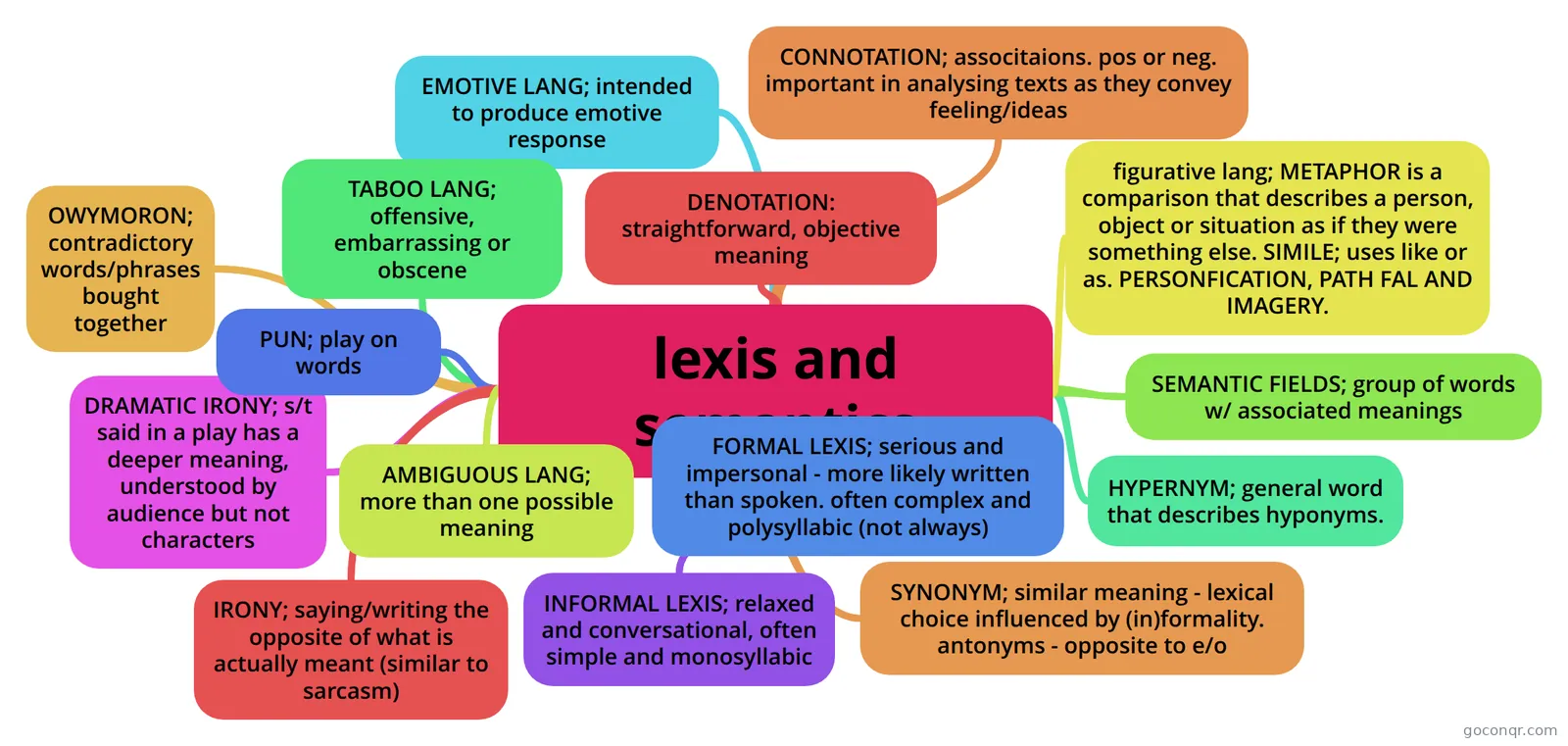 lexis and semantics
-
How to answer all types of CT questions
-
Text 24: Salty Dog
-
Strategies for 5 Areas of Reading
-
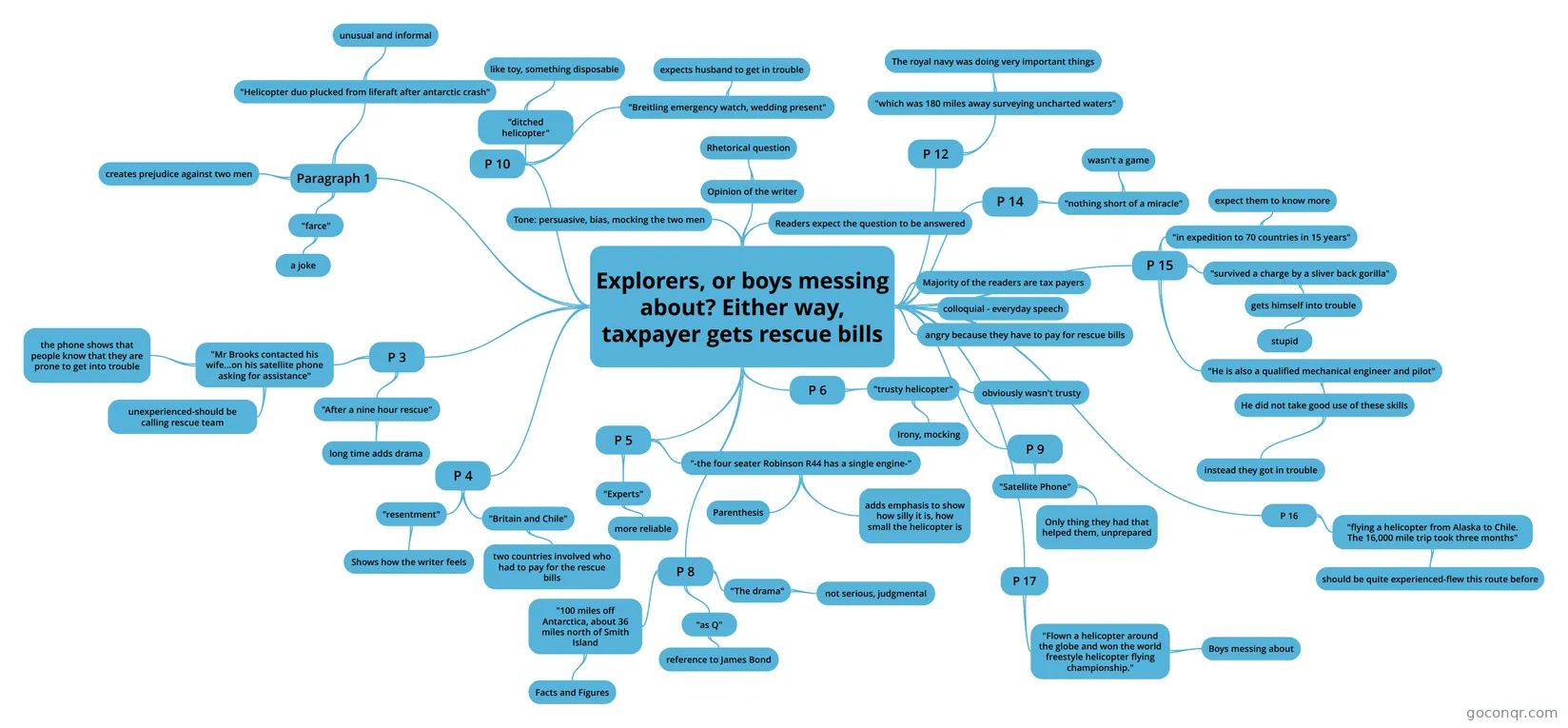 Explorers, or boys messing about? Either way, taxpayer gets rescue bills
-
How To Read
-
Your guide to beach safety
-
Lingual devices to position responders
-
Close Reading Formulas
-
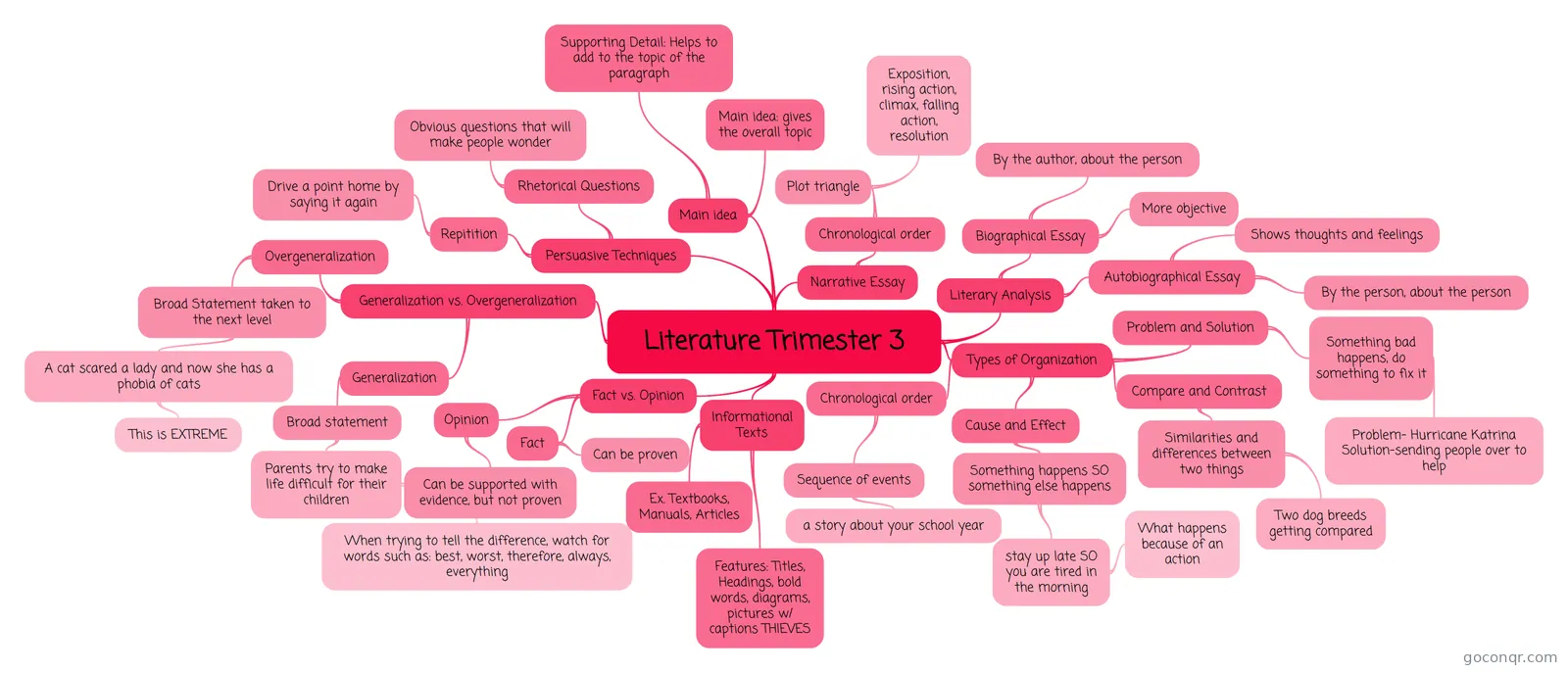 Literature Trimester 3
-
English
-
English question four
-
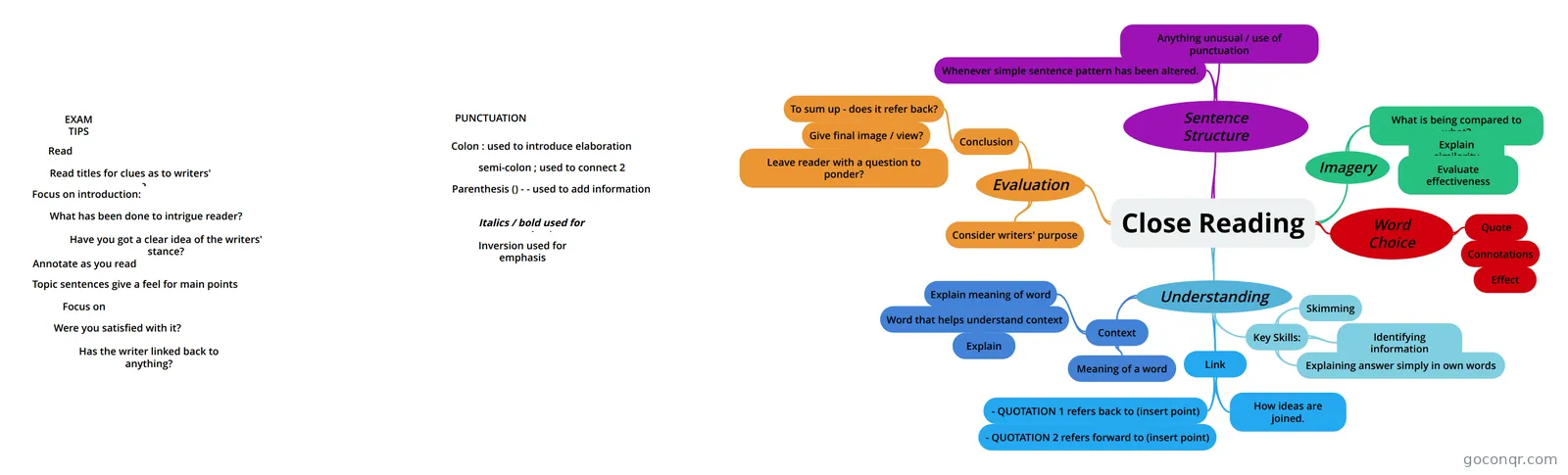 Close Reading How to answer Close Reading questions in English.
-
Analyzing Texts
-
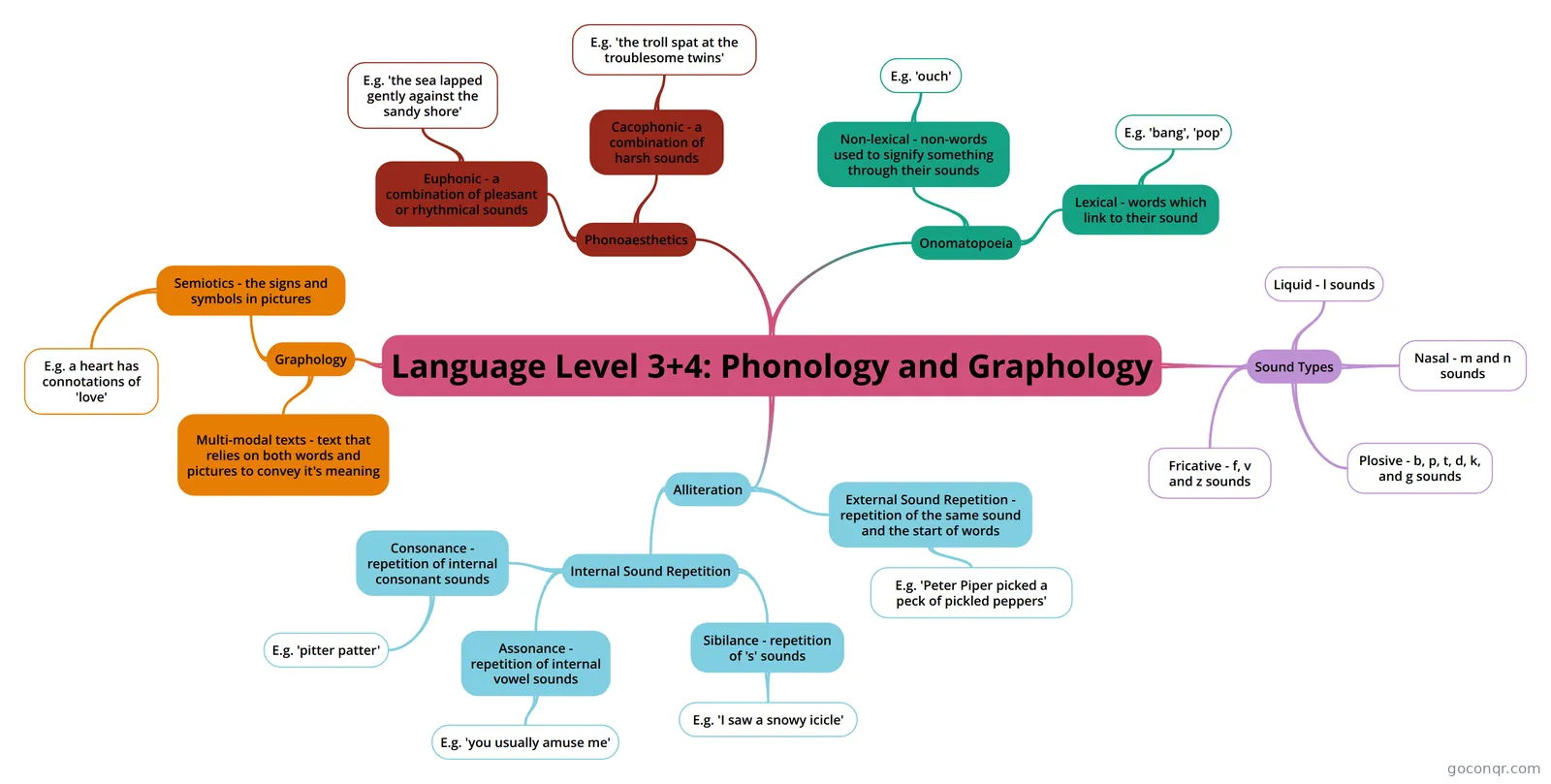 Language Level 3+4: Phonology and Graphology finished
-
Climate Change: The Facts: Revision
-
foundational texts & historical accounts
-
Language Analysis
-
topic, main idea, details
-
non - fiction texts
-
English Terminology
-
Writer's Effects
-
In every comparison:
-
SITE Bookmark
-
Favorite stories
-
Creating Readers for Modern Times
-
Source 2
-
OCR Enlgish revison question 2B
-
Main purpose of the text.
-
Paper1 Question2
-
Question 2
-
wonga.com
-
Q3 Structure
-
Be the best at reading
-
Paris City Guide
-
Critical Reading
-
Question 3
-
EATING SPICY FOODS LINKED TO CANCER PROTECTION AND LONGEVITY
-
Multi modal texts
-
What we analyse to be evaluative thinkers
More Reading Comprehension and Text Analysis resources
About reading comprehension and text analysis mind maps
GoConqr OriginalReading comprehension and text analysis mind maps
These maps organise ideas around close reading, language and the features of texts. Close Reading covers skills including skimming, identifying information and explaining answers in your own words. English Terminology gives definitions of terms used to discuss language and interaction.
Using the maps
Start with Close Reading if you want a route through reading skills. For help with a particular question, Close Reading Formulas sets out steps for imagery and context questions. English question four focuses on comparing how language is used for effect in two texts.
Follow the branches of a map, then try explaining the connections without looking. Return to a branch if you need to check a term or a step. When you want to test your recall or practise a question, switch to a flashcard deck or quiz on the unit page.
Pick a map and follow a branch that matches what you are revising.
Frequently asked questions
Which mind map should I start with?
Close Reading is a starting point for reviewing skills such as skimming and identifying information. If you are working on a particular question type, Close Reading Formulas gives steps for imagery and context questions. Both maps offer a way to organise your revision.
Are these mind maps free to use?
Yes. Every resource listed here is free to open and study without an account. The maps were made by GoConqr users. A free account also lets you make your own mind maps, quizzes, flashcards and notes, and save your quiz scores.
What do the mind maps cover?
The maps cover close reading skills, language terminology and ways to approach questions. For example, Close Reading includes skimming and identifying information, while English question four looks at comparing language effects in two texts. The listing also includes maps on inference skills and presentational features.