
Reading Comprehension and Text Analysis
157 resources created by 148 users
This Reading Comprehension and Text Analysis page on GoConqr gathers community-made quizzes, mind maps, flashcards and notes, from text structure and fact versus opinion to close reading and language analysis. It's built for school students practising how to read, question and write about texts, and for teachers after ready-made material. There are over 140 resources here, including more than 10 quizzes, over 80 mind maps and 30 flashcard decks, made by over 130 contributors. Pick a quiz to find your gaps, then explore the maps.
Select topic
- Active Reading Strategies6
- Vocabulary and Context Clues7
- Main Ideas and Supporting Details11
- Text Structure9
- Author's Purpose and Text Types7
- Language Devices and Techniques21
- Tone and Style5
- Visual and Multimodal Texts5
- Critical Reading and Evaluation12
- Media and Non-Fiction Texts10
- Comparing Texts8
- Textual Evidence and Written Responses9
- Reading Exam Techniques16
Top Reading Comprehension and Text Analysis resources
-
10 questionsSequence/Chronological Order, Cause/Effect, and Problem/Solution Ice-cream is a delicious frozen treat that comes in a many different colors and flavors. Two of my favorite...
-
5 questionsThe Patchwork of History What does Loretta Pettway use to tell stories about her life and the past in Gee's Bend, Alabama?
-
3 questionsText Structure Quiz Which text structure did the author use in the following paragraph? Icebergs-giant blocks of ice that float...
-
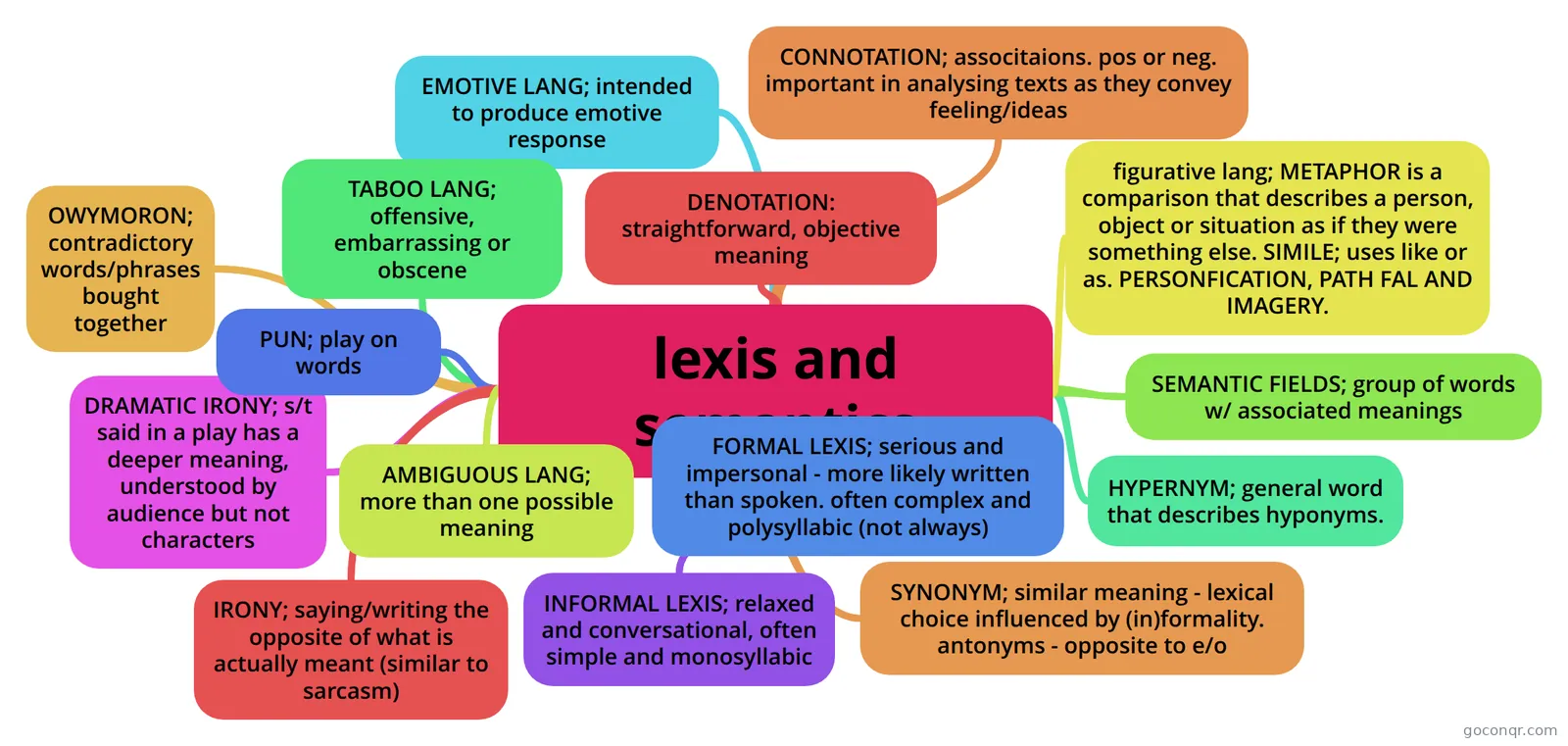 Mind map lexis and semantics
-
5 questionsExamining authorial context and narrative viewpoints In the two accounts,of the accident given in the extract from Touching the Void, Joe and Simon demonstrate ...
-
27 cardsLanguage Analysis Techniques Alliteration Repetition of a consonant Eg: Rapid Rise
-
30 cards1_English language devices revision Flash cards with language devices, what each language device is and means and an example
-
18 questionsUntitled 1. What detail from the passage indicates that the old woman is concerned about the main character's well b...
Quizzes
See all 22 quizzes-
10 questionsSequence/Chronological Order, Cause/Effect, and Problem/Solution Ice-cream is a delicious frozen treat that comes in a many different colors and flavors. Two of my favorite...
-
5 questionsThe Patchwork of History What does Loretta Pettway use to tell stories about her life and the past in Gee's Bend, Alabama?
-
3 questionsText Structure Quiz Which text structure did the author use in the following paragraph? Icebergs-giant blocks of ice that float...
-
5 questionsExamining authorial context and narrative viewpoints In the two accounts,of the accident given in the extract from Touching the Void, Joe and Simon demonstrate ...
-
18 questionsUntitled 1. What detail from the passage indicates that the old woman is concerned about the main character's well b...
-
5 questionsSelecting evidence from TEXT 1: Anne Frank's diary Look at the question opposite. The key words have been highlighted for you. What are you being asked to do ...
-
5 questionsTEXT 2: Martin Luther King's speech What is different about the type of injustice that Martin Luther King writes about compared to the injustic...
-
5 questionsTemporary Unemployment (Narrative) Where does the narrator of the story work?
Mind maps
See all 87 mind maps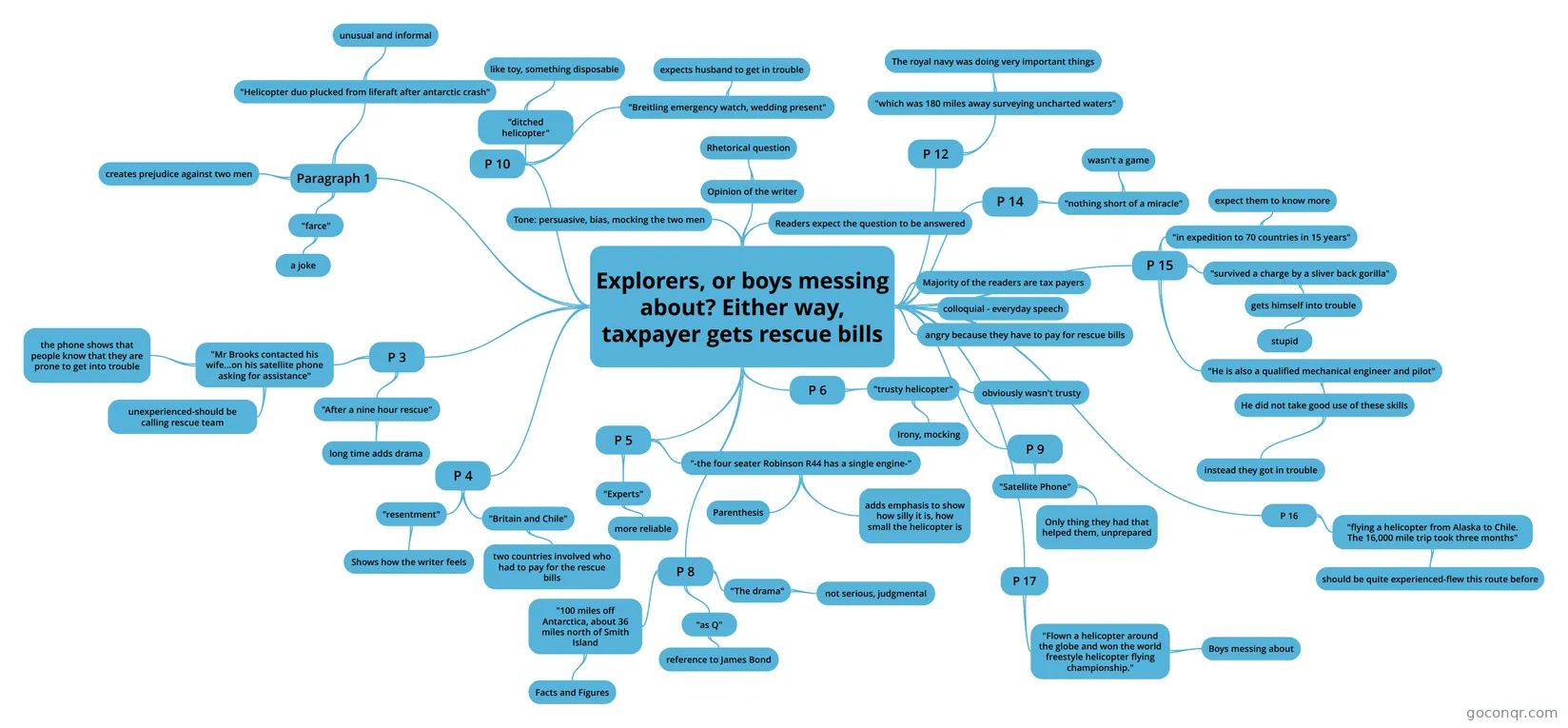
Flashcards
See all 30 flashcards-
27 cardsLanguage Analysis Techniques Alliteration Repetition of a consonant Eg: Rapid Rise
-
30 cards1_English language devices revision Flash cards with language devices, what each language device is and means and an example
-
14 cardsUntitled What is Imagery?
-
28 cardsEnglish terminology for AS
-
22 cardsEnglish Lang Lit Terminology flashcards
-
17 cardsLanguage Arts Flash Cards What is the Central Idea?
-
28 cardsUnfamiliar Text Flashcards These flashcards are made to help NCEA Level 1 students learn their unfamiliar texts quickly and efficientl...
-
33 cardsRUAE Flashcards a one sentence paragraph
Flowcharts
Notes
See all 14 notes-
RUAE Questions - Structures Final RUAE Question This final questions always asks either: key areas of agreement between the 2 passages key areas of disagreement between the 2 passages key areas of both agreement and disagreement between the 2 pa...
-
Analyzing an extract PEAZR A method of analyzing a text, by making a point, giving evidence, analyzing and explaining, (optional) zooming on important or key words and stating the effect on the reader. The point should always come first, ...
-
Practice: Outline Directions: Look at each of the following five paragraphs and then complete the outline for each paragraph. Notice that words such as first, also, another, and finally often signal each new item of support. &nbs...
-
Notes Techniques and conventions Introduction: "let down" hyperbole "respect" antitheis 1. What happened "our" inclusive language "highly innapropriate" understatement "every value" hyperbole 2. W...
-
Reading Inventory Reading InventoryPreparing to ReadTitle What can you infer from the title of the article about the author's attitude toward the subject or the general tone of the essay? Who do you think is the author's audience? What...
-
Setting Setting The setting is what surrounds the story whether someone’s at school, or the park, those are all settings. There are many things authors can describe in the setting such as the date or time of day, the location...
-
Paper 1: Visual and Language Elements of Texts Visual Elements colour pattern light spacing lines proportion balance symbols logos product identification medium charts graphs tables Language Elements syntax punctuation repetition logical fallacies ima...
-
Untitled Question 2 language what effect does it have on the reader? relevent subject points powerful important words chosen word class: adjectives, nouns, verbs, adverbs over all mood a...
Slides
Topics in Reading Comprehension and Text Analysis
More Spanish language (as a school subject) topics
About Reading Comprehension and Text Analysis
GoConqr OriginalWhat this page covers
The resources here focus on reading closely and explaining what you find. Some deal with text structure: the quiz Sequence/Chronological Order, Cause/Effect, and Problem/Solution and the Text Structure Quiz ask you to spot how a paragraph is organised. Others look at fact and opinion, main ideas and details, inference and prediction.
A large share is aimed at exam-style reading and language analysis. Titles mention GCSE English, National 5 English, GCSE Spanish and IGCSE English, so many items suit secondary students.
Where to start
- Try the Text Structure Quiz to see how well you spot patterns in a paragraph.
- Move to Fact and opinion and Main Ideas and Details to practise the basics.
- Use Inference Practice and Predictions to read between the lines.
- Finish with the quiz The Patchwork of History, which asks you to find explicitly stated evidence in a text.
Using maps and flashcards
The mind map lexis and semantics explains denotation and connotation, and why word associations matter when you analyse a text. English question four sets out how to compare the way language is used in two texts, with band descriptions to check against. English Terminology gives short definitions of terms such as adjacency pair and agenda setting.
The flashcard deck Language Analysis Techniques covers devices such as alliteration, anecdote and appeal to authority. How to answer close reading questions breaks down word choice, tone, imagery and sentence structure questions. Read a map first, then test yourself with a deck.
Where it fits
This unit sits in the Reading and Text Analysis strand of Spanish language as a school subject. Teachers can pick a quiz for a quick check, or share a map or deck as revision material.
Choose one quiz today, then see which maps and decks help you fill the gaps it shows.
Frequently asked questions
Which quiz should I try first?
Start with the Text Structure Quiz. It asks which structure an author used in a paragraph, such as the one describing icebergs, so it shows quickly whether you can spot patterns. If that feels easy, try Fact and opinion or Inference Practice next.
What do the mind maps cover?
The mind maps cover language and reading skills. Examples include lexis and semantics, which explains denotation and connotation, English question four on comparing language across two texts, and English Terminology. Others look at close reading, inference skills and presentational features.
Are the resources free to use?
Yes. Every resource on this page is free to open, study and take, with no account needed. A free account also saves your quiz scores and lets you make your own quizzes, mind maps, flashcards and notes.
Which exams do these resources suit?
Most resources are for secondary school students. Some mention GCSE English, National 5 English, GCSE Spanish or IGCSE English, so check each title and excerpt to see whether it matches your course before you start revising.
Who made these resources?
They were made by GoConqr users, not by GoConqr itself. Over 130 contributors have added quizzes, mind maps, flashcards and notes, so styles and exam focus vary. Look through a few to find the ones that suit how you revise.
What if I can't find what I need?
Try a nearby topic. If you can't find a deck on tone, for example, the flashcards on close reading or the notes on analysing an extract may help. You can also build your own map or deck from your class notes.