
Judaism
502 resources created by 332 users
This Judaism page on GoConqr gathers community-made mind maps, flashcards, quizzes and notes, from Abraham, Moses and the Exodus story to Shabbat, kashrut and life after death. It's built for school students revising beliefs, festivals and key words, and for teachers after ready-made material. There are over 480 resources here, including more than 10 quizzes, over 290 mind maps and over 120 flashcards, made by over 320 contributors. Pick a topic, try a quiz to find your gaps, then make your own revision sets.
Top Judaism resources
-
9 cardsEduqas GCSE - Religious Studies - Judaism - Mourning Rituals What should the Person do if they know they're Dying?
-
33 cardsRE - Judaism Y10 Mock Name 5 characteristics of God
-
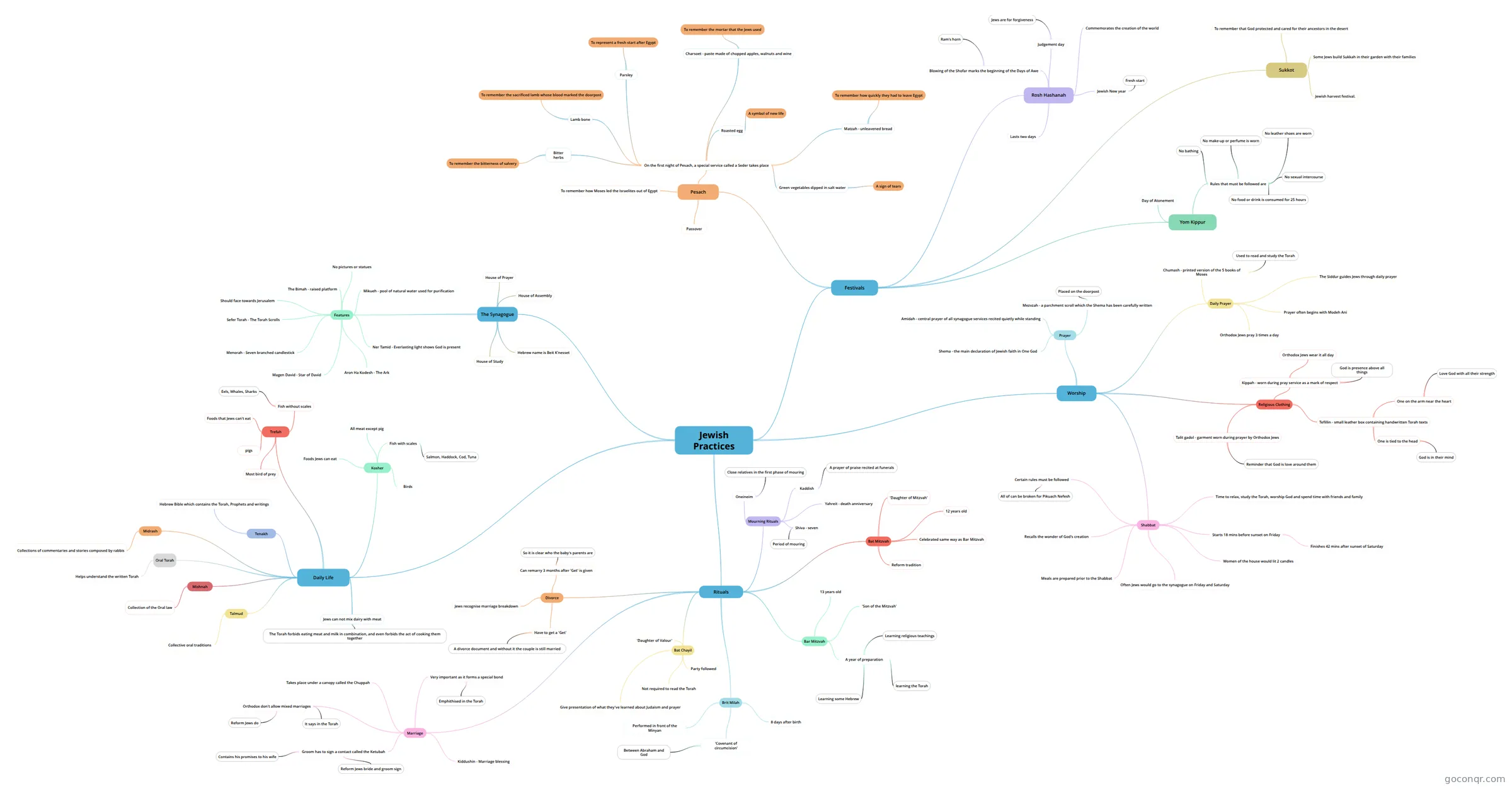 Mind map Jewish Practices
-
18 cardsEduqas GCSE - Religious Studies - Judaism Festivals What is Rosh Hashanah and what does it celebrate?
-
 Mind map GCSE RE: Judaism
-
 Mind map Jewish Beliefs and Teachings
-
38 cardsEduqas - RE GCSE - Judaism (Brief) Definitions
-
 Mind map Shabbat
Quizzes
See all 24 quizzes-
45 questionsJudaism Quiz Review
-
17 questionsYear 9 - RE Quiz
-
4 questionsRevision: Judaism-2, Practices a) Outline three reasons why Jews pray in public.
-
8 questionsRE — Judaism Key Words
-
9 questionsjudaism quiz
-
6 questionsrELIGION eSSAY
-
22 questionsJudaism What type of religion is Judaism
-
18 questionsJewish Terms Hostility toward Jews and Judaism; ranges from attitudes of disfavor to active persecution.
Mind maps
See all 297 mind maps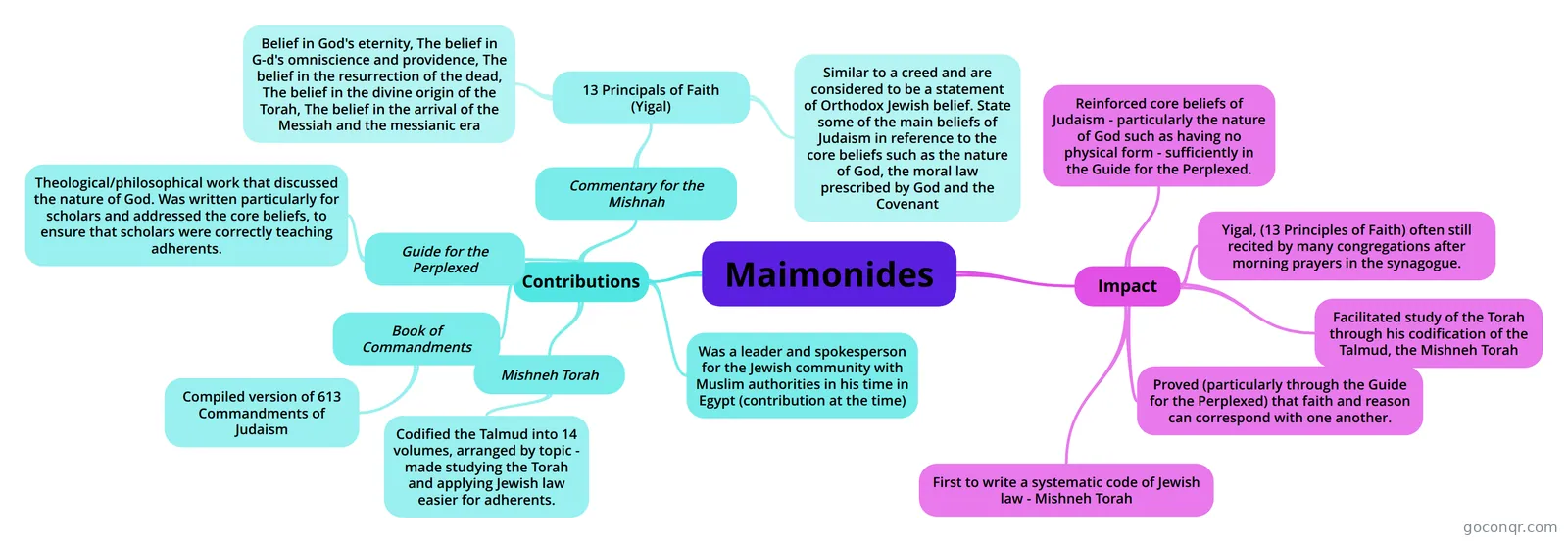

Flashcards
See all 124 flashcards-
9 cardsEduqas GCSE - Religious Studies - Judaism - Mourning Rituals What should the Person do if they know they're Dying?
-
33 cardsRE - Judaism Y10 Mock Name 5 characteristics of God
-
18 cardsEduqas GCSE - Religious Studies - Judaism Festivals What is Rosh Hashanah and what does it celebrate?
-
38 cardsEduqas - RE GCSE - Judaism (Brief) Definitions
-
26 cardsJudaism Key Words
-
8 cardsEduqas GCSE - Religious Studies - Judaism - Shekinah What does Shekinah literally mean?
-
3 cardsLiving the Jewish Life- Mikveh Notes Multi-Faith Topi on Jews
-
6 cardsJudaism Life After Death 1
Flowcharts
Notes
See all 40 notes-
Judaism Test Study Guide Judaism Test Study Guide The test is 50 points. Abraham Family Tree - know which religions came out of it and which sides they came from (Isaac vs. Ishmael). Judaism Issac Christianity David Islam ...
-
Untitled The Nature of God: God as One The belief in one God influences the way that Jews view the world. Jews believe that God is always present in people's lives. Also, everything they see and experience is considered ...
-
Poverty and Wealth - created from Mind Map Religious views of wealth and of the causes of hunger, poverty and disease Causes Alcohol Natural Disasters Lack of Jobs War Addication Use of money Teachings about the use of money Giving to charity Being rich is OK ...
-
Religious studies Revision Religious Studies Revision JudaismThe promise land- The place where Jews believe they will be safe and free.- The jews first entered the promise land when Moses freeed the Jews from slavery in Egypt.- Jews believe tha...
-
Judaism beliefs - created from Mind Map reform jews are modern Jews who have adapted to modern culture. they choose what mitzvots to follow. The important thing for them is living a good life on earth. orthodox Jews are traditional Jews, their way of life i...
-
Rosh Hashanah and Yom Kippur Rosh Hashanah Rosh Hashanah is the Jewish equivent of New Year, but it is in late September During the festival Jews recall how God created the world in 6 days and rested on the seventh – It is the day of rest and a d...
-
js A notes BELIEFS AND SOURCES OF AUTHORITY The Tenach is the holiest book in Judaism. its made up of 24 books in 3 sections (torah, neviim, ketuvim). Orthodox Jews believe the Torah was written by G-d and the laws cannot ...
-
The Mezuzah What is the Mezuzah? The Mezuzah is a small parchment scroll, which has two portions of the Torah written on it by hand. The mezuzah is placed into a metal case to protect it The two the parts of the Torah found in th...
Slides
See all 15 slidesTopics in Judaism
More Religion and theology topics
About Judaism
GoConqr OriginalWhat this page covers
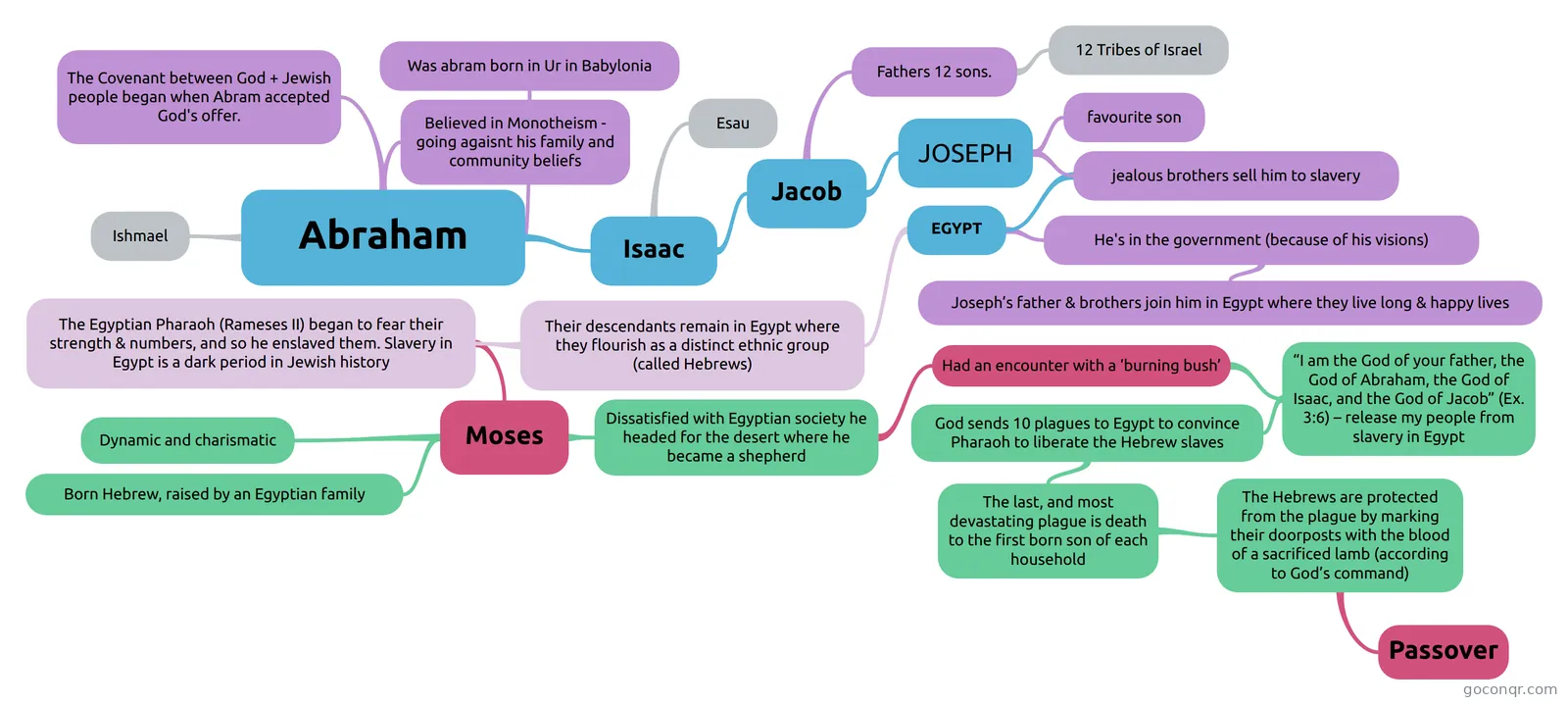
The unit brings together material on Jewish beliefs, worship, festivals and sacred texts. The mind maps are the largest group. Jewish Beliefs and Teachings sets out the nature of God, including monotheism, the sacred name YHWH and God as omnipotent. Abraham follows the covenant between God and the Jewish people. Maimonides looks at his commentary on the Mishnah, the Guide for the Perplexed and the Mishneh Torah.
Where to start
Begin with the broad overview maps. The map GCSE RE: Judaism splits the topic into beliefs, worship and practices, and rituals and festivals. It also touches on evil and suffering, revelation, sources of authority and life after death. Next, open the Judaism Key Words flashcards, which run from Tenakh and Torah to Kiddush, Havdalah and the bimah.
- Read an overview map to see the whole topic.
- Learn the key words with flashcards.
- Move to a themed map such as Shabbat, Yom Kippur or kashrut.
- Test yourself with a quiz.
Flashcards for exam-style recall
Several decks follow an Eduqas GCSE course. They cover mourning rituals, such as how the body is prepared for burial, as well as Shekinah and festivals. The RE - Judaism Y10 Mock deck asks short questions, such as naming characteristics of God and explaining the Shema. These suit school students practising quick answers.
Using quizzes and maps together
Read a map, then take a quiz on the same theme, such as Judaism Quiz Review or Judaism/Maimonides Quiz. Wrong answers show which branch of the map to reread. Teachers can use the slide sets, including Worship in the Synagogue and Jewish Festivals, as ready-made lesson material.
Where it sits
This unit belongs to the Other World Faiths strand of Religion and theology. Choose one map today and see how far it takes you.
Frequently asked questions
Which resource should I open first?
Start with the mind map GCSE RE: Judaism. It lays out beliefs, worship and practices, and rituals and festivals in one place. After that, the Judaism Key Words flashcards give you the vocabulary you need for the more detailed maps and quizzes.
What do the mind maps cover?
There are over 290 of them. They cover beliefs, such as the nature of God, and figures including Abraham, Moses and Maimonides. They also cover Shabbat, Yom Kippur, kashrut, the synagogue, the Torah, the Mishnah and Midrash, and life after death.
Are the resources free to use?
Yes. Every resource on this page is free to open, study and take, with no account needed. They were made by GoConqr users rather than by GoConqr. A free account also saves your quiz scores and lets you make your own quizzes, maps, flashcards and notes.
Which levels do these resources suit?
Most of the material suits school students, and the page names GCSE in its listed resources, such as the Eduqas flashcard decks. Teachers can also use the slide sets and notes as ready-made classroom material. A small share is aimed at older learners.
Is there anything on funerals and mourning?
Yes. The flashcard deck Eduqas GCSE - Religious Studies - Judaism - Mourning Rituals asks what a dying person should do, how mourners react to news of a death, how the body is prepared and what happens at the burial.
What if I can't find a topic I need?
Try the related maps and flashcard decks first, since many topics appear in several of them. If something is still missing, you can make your own mind map, flashcards or quiz and keep it for revision.