
Text Types and Text Analysis mind maps
387 mind maps by 340 users · Page 1 of 10
This page gathers over 350 community-made mind maps on Text Types and Text Analysis, from narrative texts and public speeches to language frameworks. They support school students practising text analysis and teachers looking for ready-made material, with most resources at secondary level. Explore the maps and pick a topic to begin.
Select topic
- Fiction and Non-Fiction6
- Audience, Purpose and Context14
- Language Features and Techniques35
- Text Structure11
- Cohesion and Coherence7
- Narrative Texts26
- Descriptive Texts19
- Expository and Informative Texts41
- Argumentative and Persuasive Texts38
- Instructional and Procedural Texts9
- Scientific Texts8
- Blogs and Personal Writing11
- Journalistic Texts8
Mind maps
-
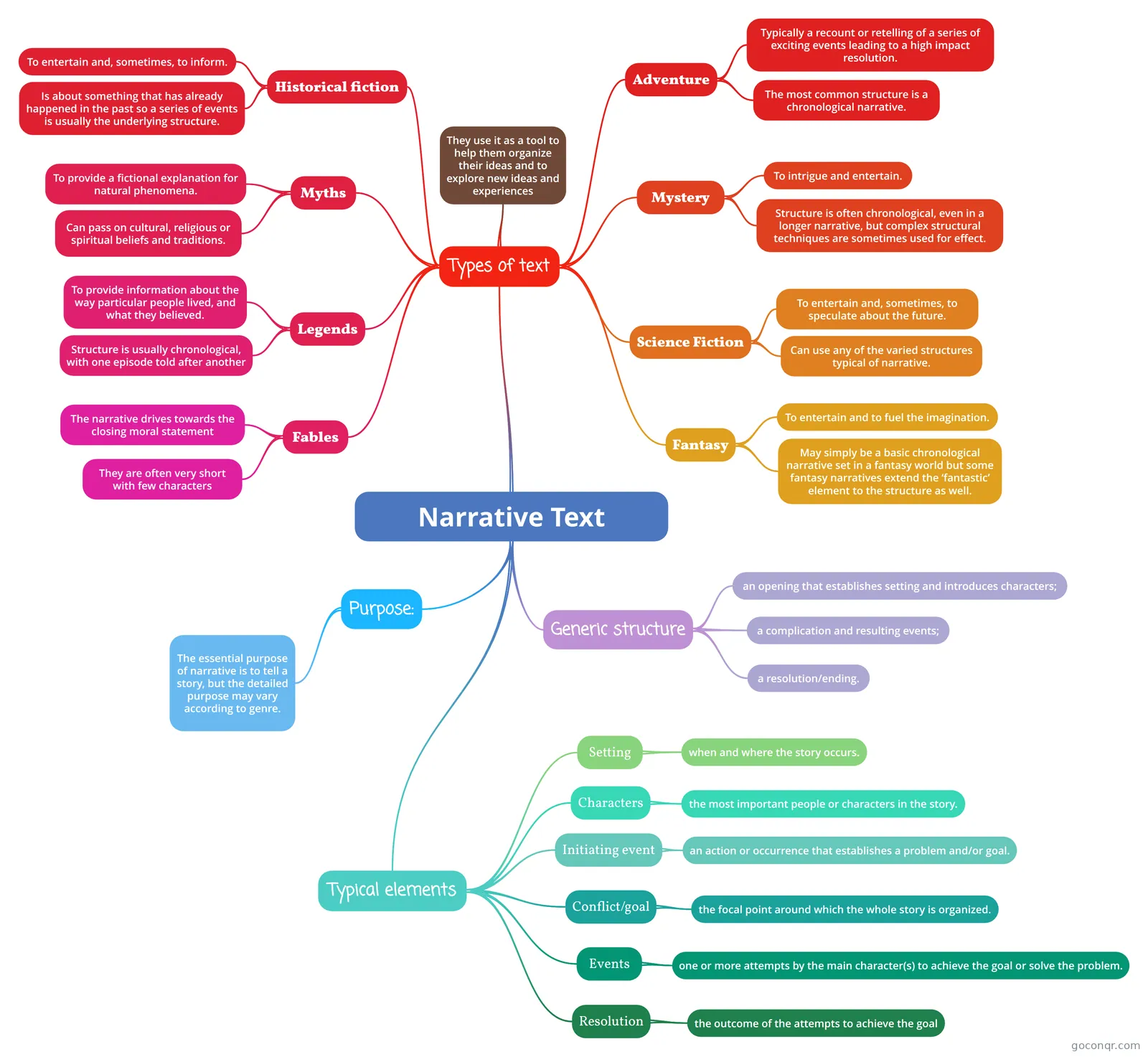 Narrative Text
-
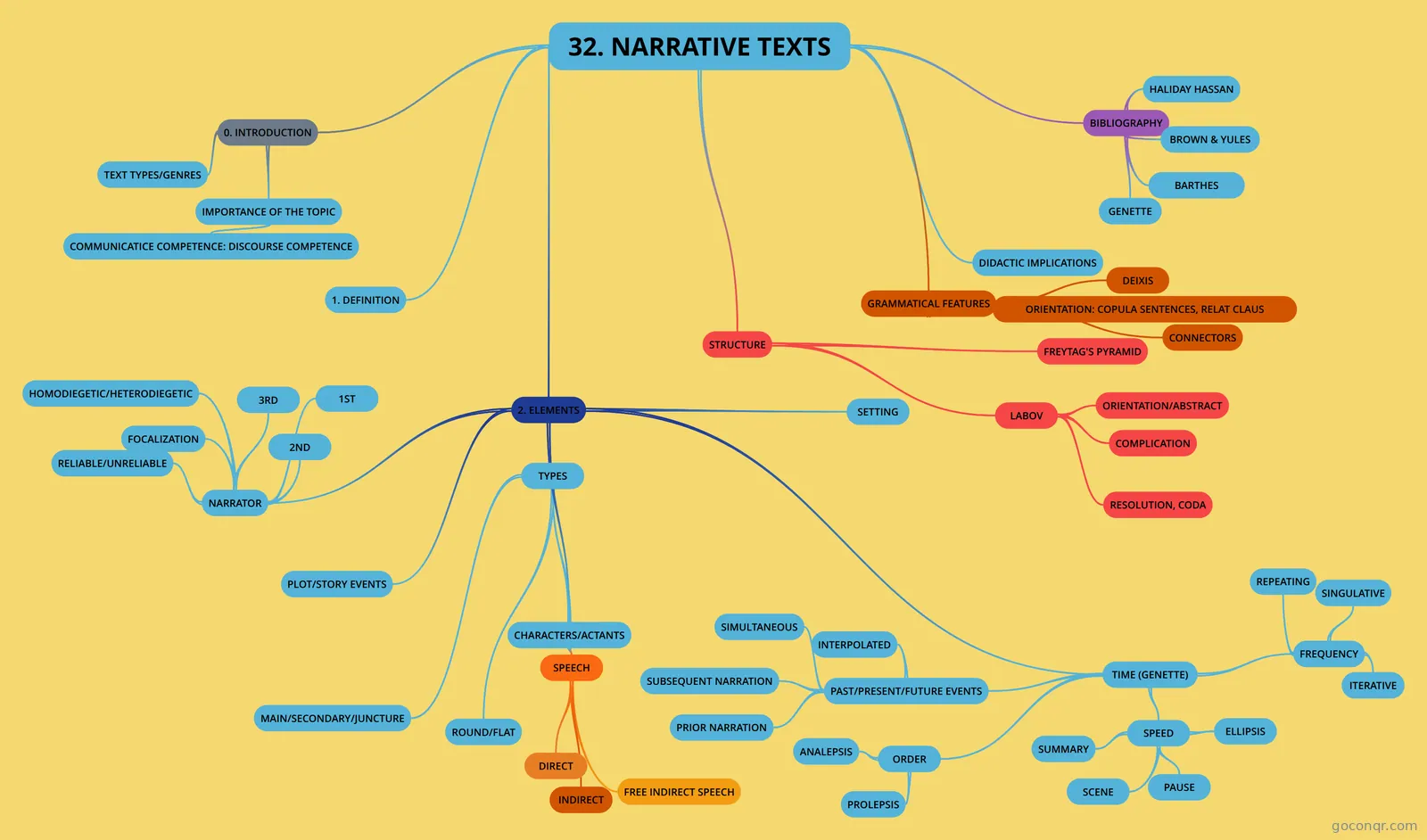 32. NARRATIVE TEXTS NARRATIVE TEXTS
-
The chronicle This is a mind map about Chronicles
-
IB paper 1 Text types
-
Topic 33. Descriptive texts
-
Text types
-
Text Types
-
main language frameworks
-
Text Types
-
TEMA 34: ARGUMENTATIVE TEXTS
-
Characteristics Of All Kinds Of Texts - Gama Menchaca Jose Antonio
-
TEMA 33: DESCRIPTIVE TEXTS
-
Text Types
-
Scientific Text
-
Text: Black Cockatoo Concept: Power of perspective
-
unit 32: Narrative text. Definition & characteristics
-
Text types
-
Kinds of texts
-
Text typology
-
Analysing Lanuage
-
Types of Texts
-
Linguistic devices
-
Text of types
-
TEXTS
-
English Language: Paper One
-
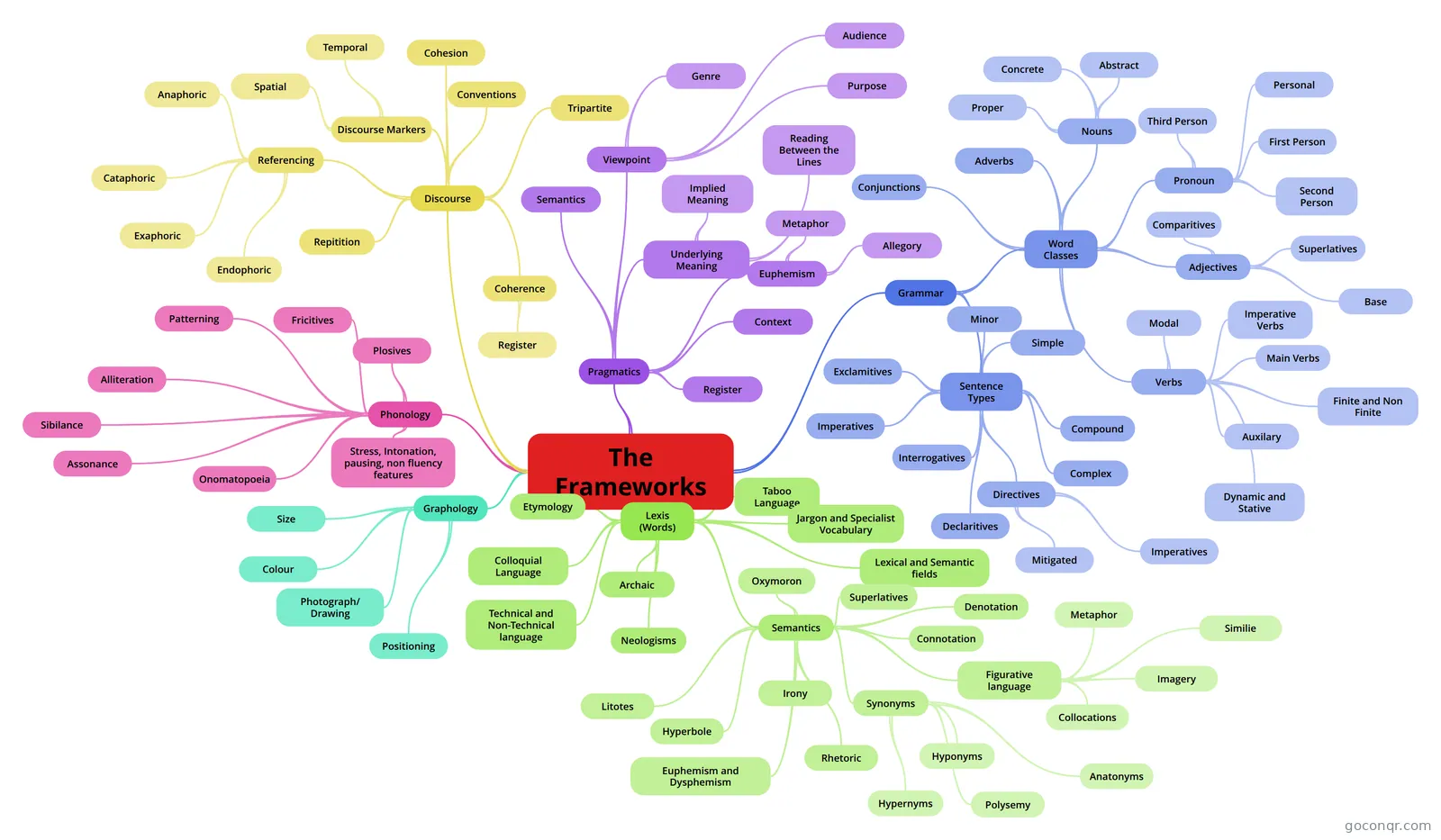 The Frameworks
-
KINDS OF TEXT
-
Enter text here
-
Narrative
-
Written Language_1
-
Narrative Text
-
Text Genres and Types
-
English Language Frameworks
-
English Language - Key Points
-
Cohesion
-
Text types
-
Argumentative and Descriptive Speech
-
Coherence
-
Text 23: Jonathan Crisp
-
Narrative and Descriptive Texts
More Text Types and Text Analysis resources
About text types and text analysis mind maps
GoConqr OriginalText Types and Text Analysis mind maps
Start with Grouping texts for a map of genre, context, audience and purpose. Its branches offer a way to organise the questions you might ask about a text. For a closer look at words, The Frameworks includes jargon, specialist vocabulary and lexical fields.
Other maps focus on particular forms. Narrative Text outlines purpose and structure, while Public Speeches brings together features such as repetition, contrast and sentence length. SOAPSTone maps elements including speaker, audience, purpose and tone.
Revising with maps
Follow one branch at a time, then try explaining how it relates to the rest of the map. Compare branches in different maps when you want to look at a topic from another angle. If you want to check your understanding, switch to a quiz on the unit page; flashcards can help you revisit terminology. Choose a map and follow a branch that interests you.
Frequently asked questions
Which mind map is a useful starting point?
Grouping texts is a useful starting point if you want an overview of how texts can be grouped. It brings together genre, context, audience and purpose in one map. You can then move to a map on a particular form, such as Narrative Text or Public Speeches.
Are these mind maps free to use?
Yes. Every mind map listed here is free to open and study, and you do not need an account. The resources were made by GoConqr users. A free account also lets you save quiz scores and make your own quizzes, mind maps, flashcards and notes.
Do the maps include material for IB study?
Yes. IB paper 1 Text types includes articles and considers context, audience and purpose. Most resources on this page are at secondary level, so school students and teachers can look through the maps for material that fits the topic they are studying or teaching.