
The European Union and European Integration
31 resources created by 27 users
This Political science page on GoConqr gathers community-made mind maps, flashcards, quizzes, notes and flowcharts on The European Union and European Integration, from EU institutions and the Lisbon Treaty to enlargement, Brexit and democratic deficit. It's built for school students, university students and professional candidates revising a topic, plus teachers after ready-made material. There are over 300 resources here, including more than 200 mind maps and over 10 quizzes, pitched at secondary and university level. Pick a topic, try a quiz to find your gaps, then make your own maps.
Top The European Union and European Integration resources
-
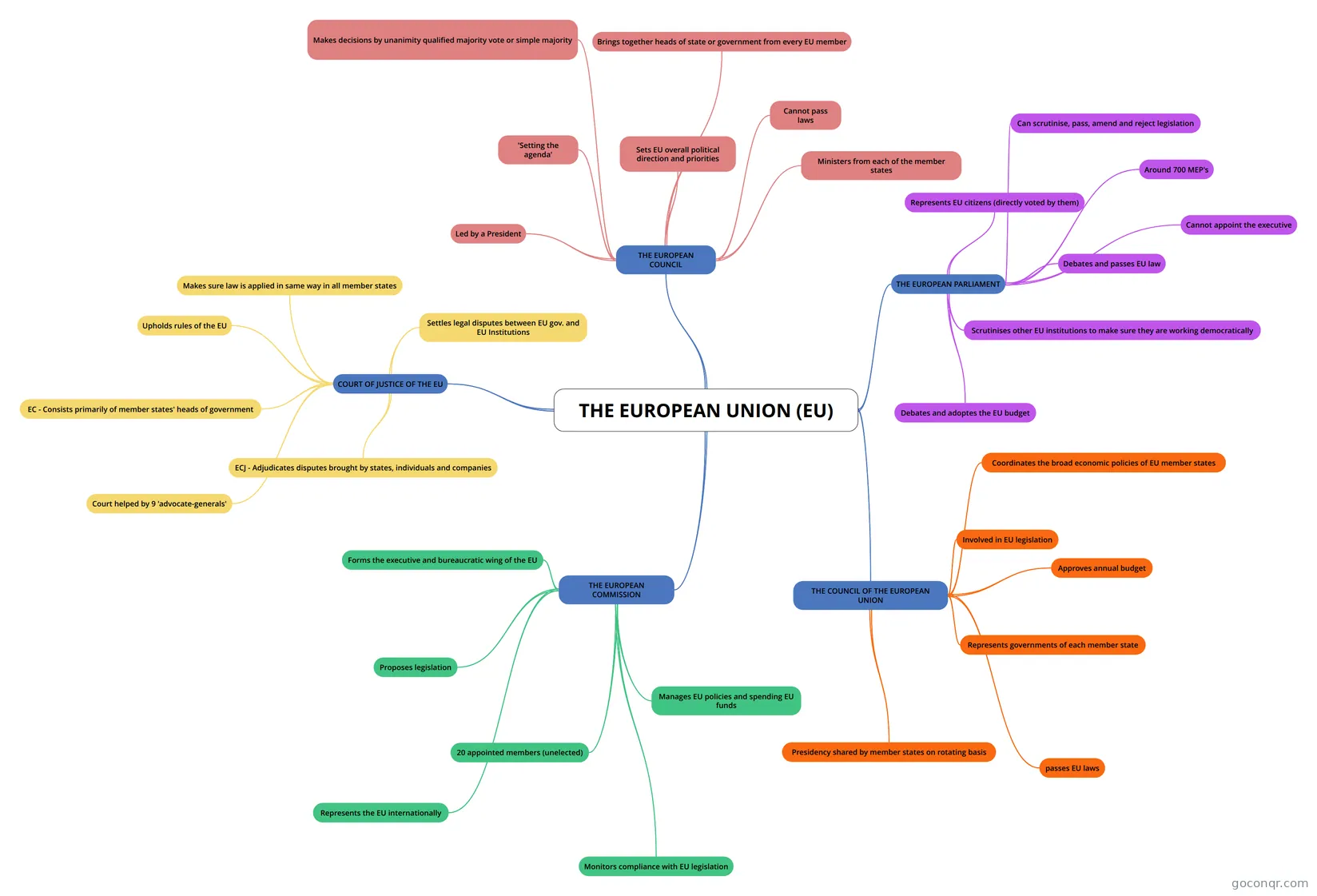
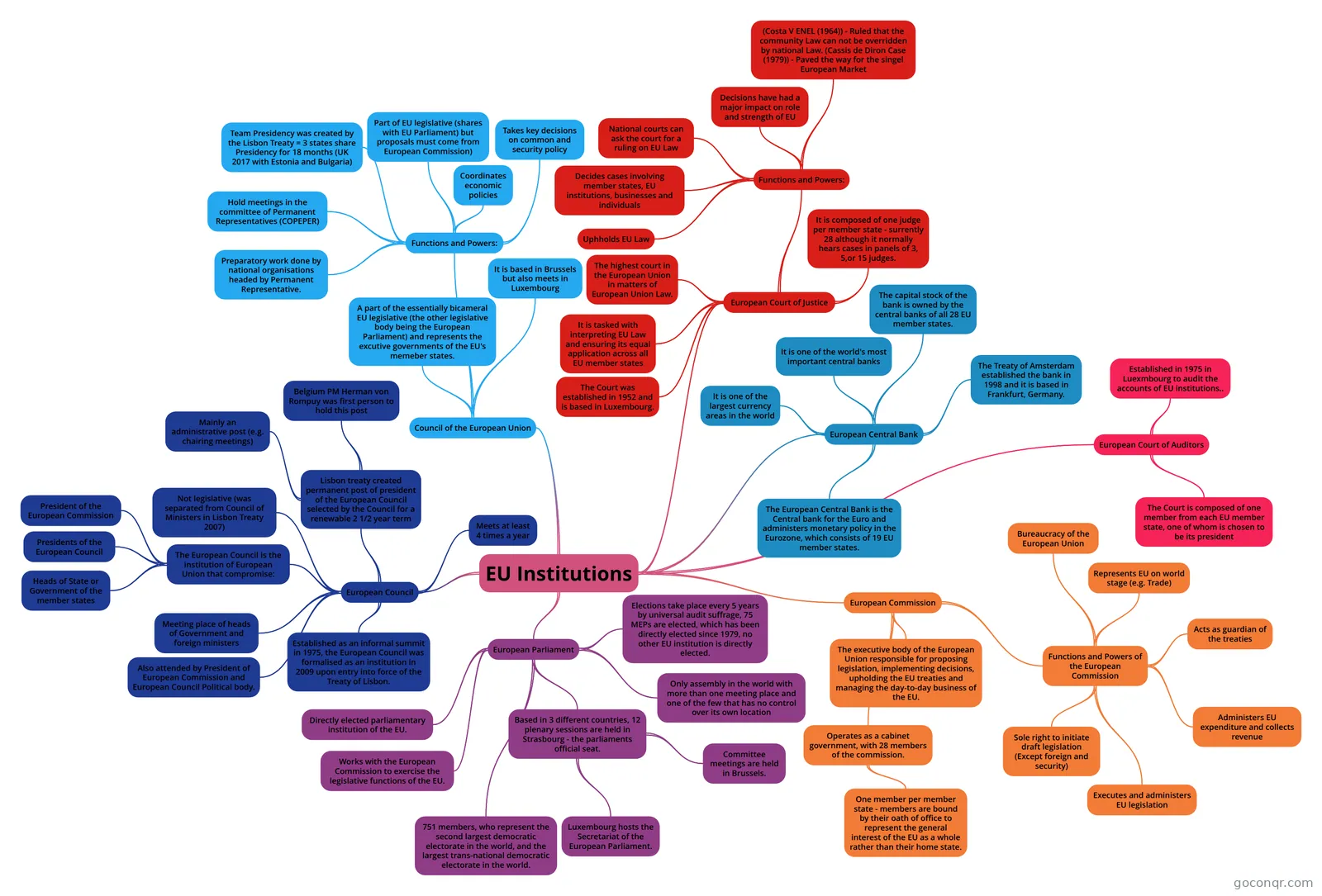 Mind map EU Institutions Mind map for EU Institutions
-
18 cardsIRELAND AND THE EUROPEAN UNION FORMATIVE ASSESSMENT METHOD OR REVISION METHODS FOR STUDENTS
-
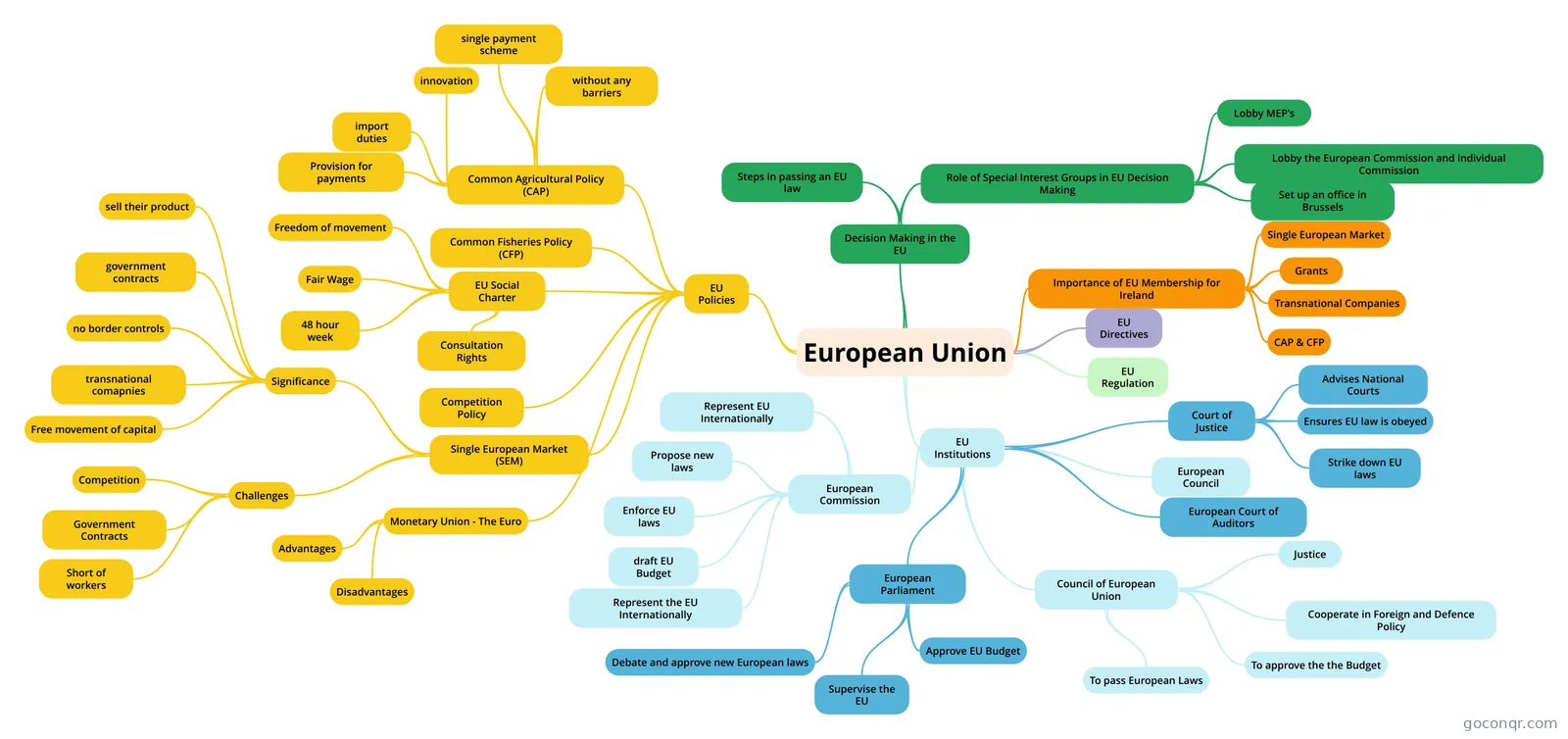
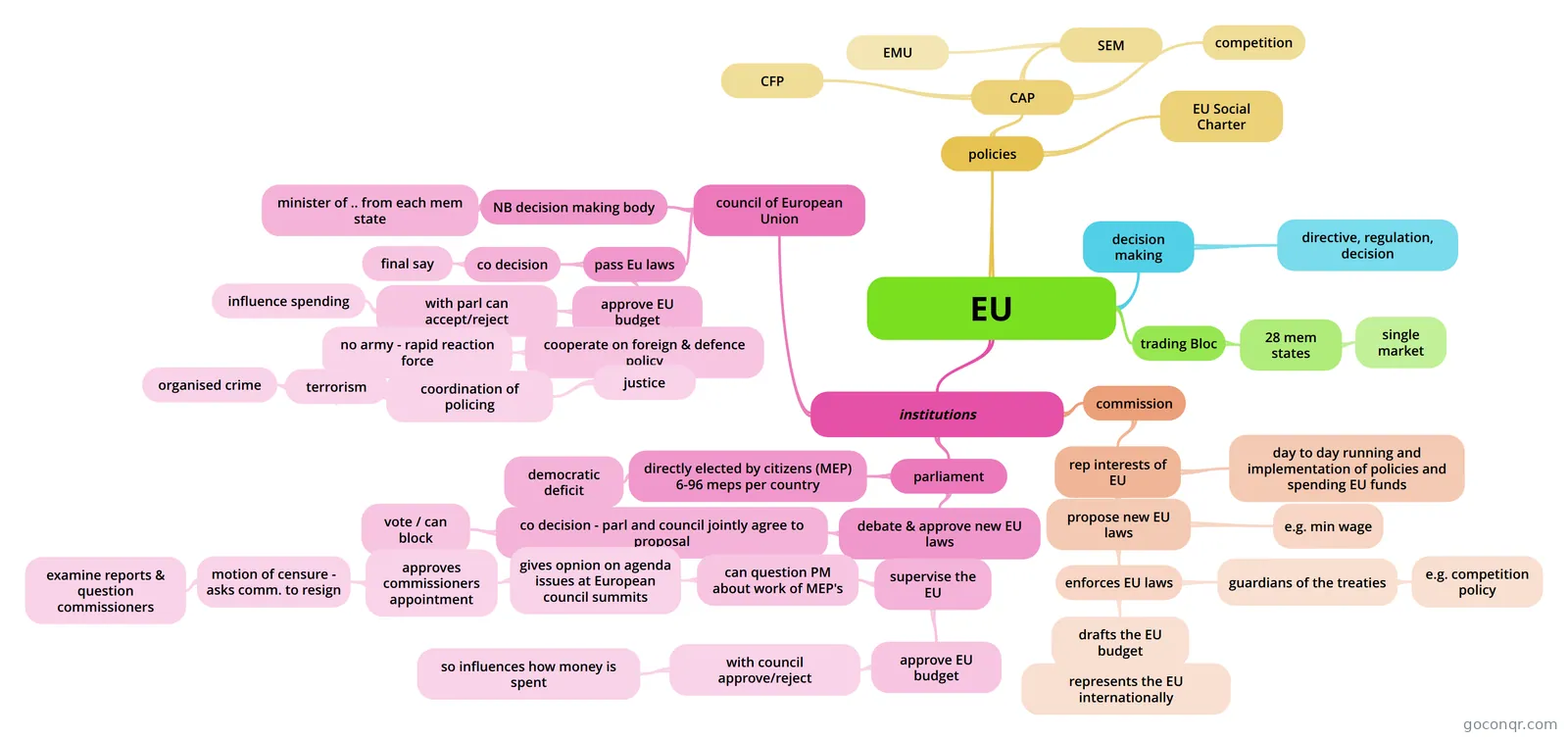
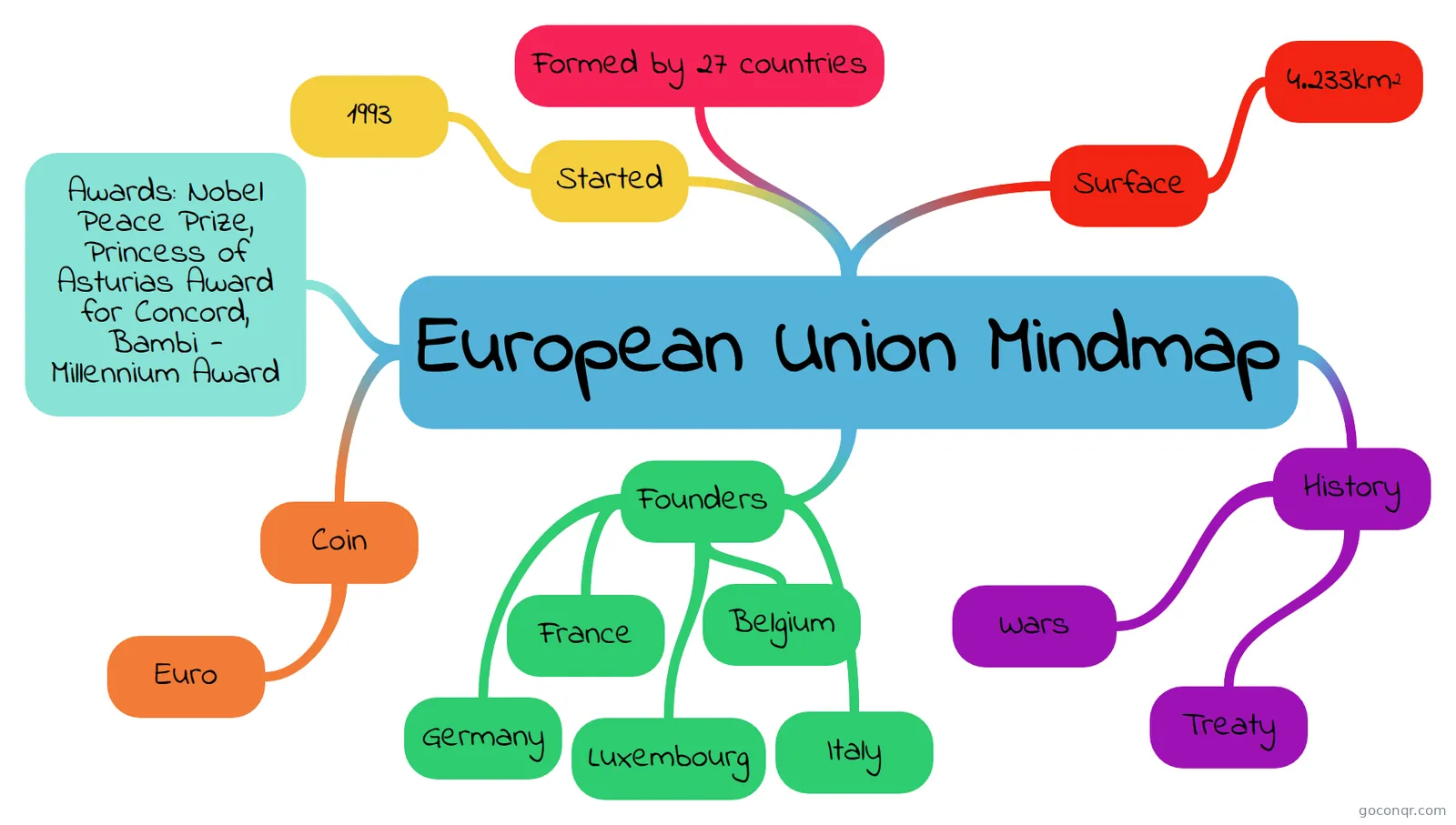 Mind map European Union Mindmap EU Mind Map Social Studies
-
14 questionsSMEI European Integration
-
60 cardsPolitics: Europe finals Reasons for European Cooperation After WWII (3)
-
37 questionsEU Institutions Quiz When was the EU formed?
-
25 cardsThe EU and Multilevel Governance - Definitions
-
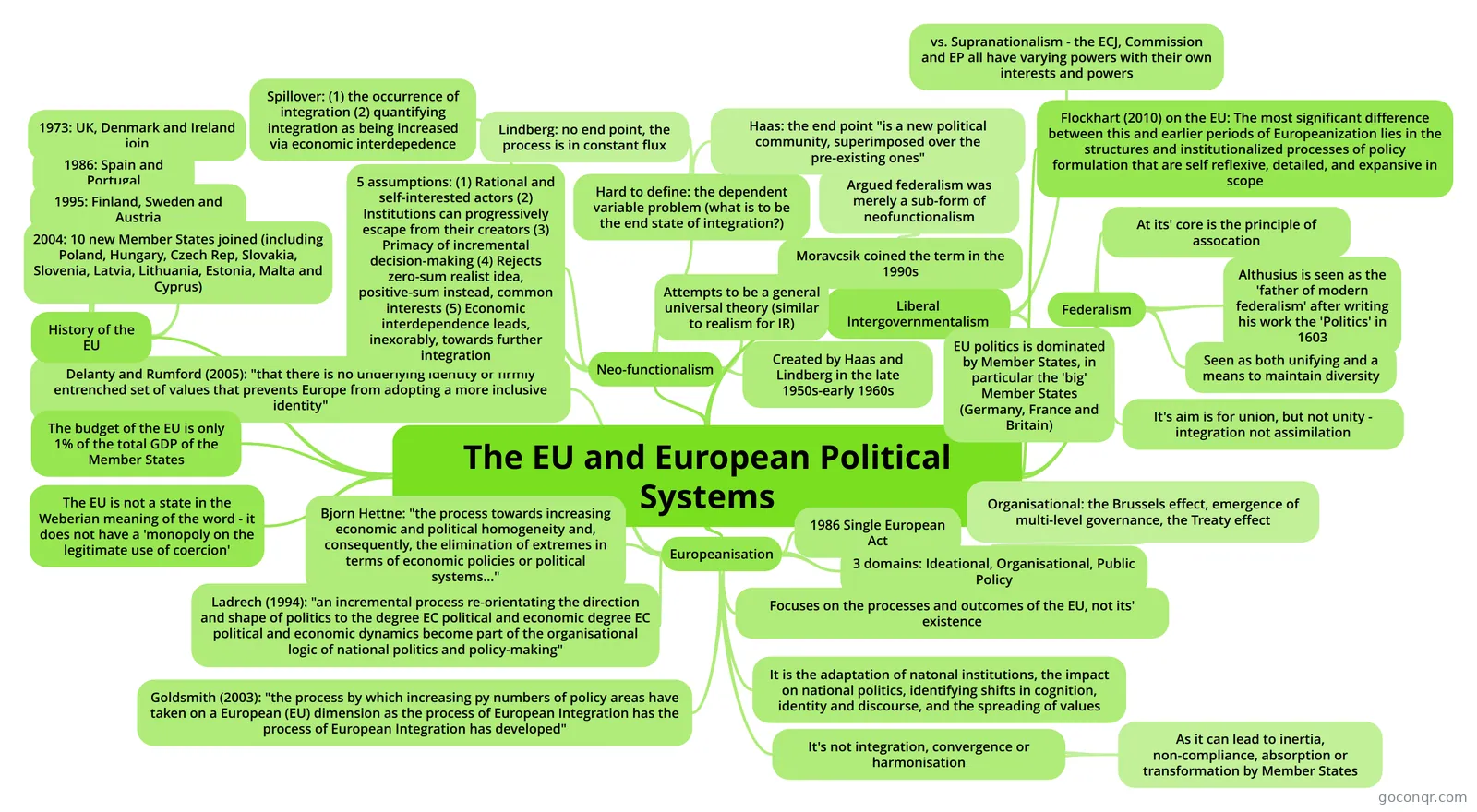 Mind map The EU and European Political Systems
Quizzes
-
14 questionsSMEI European Integration
-
37 questionsEU Institutions Quiz When was the EU formed?
-
15 questionsThe European Union What was the original aim of the EU?
-
10 questionsEuropean Union Quiz How many member states are in the European Union?
-
10 questionsInstitutions of the EU How many members are in the EU?
-
10 questions10 Questions about european union Which year was EU founded?
Mind maps
See all 15 mind maps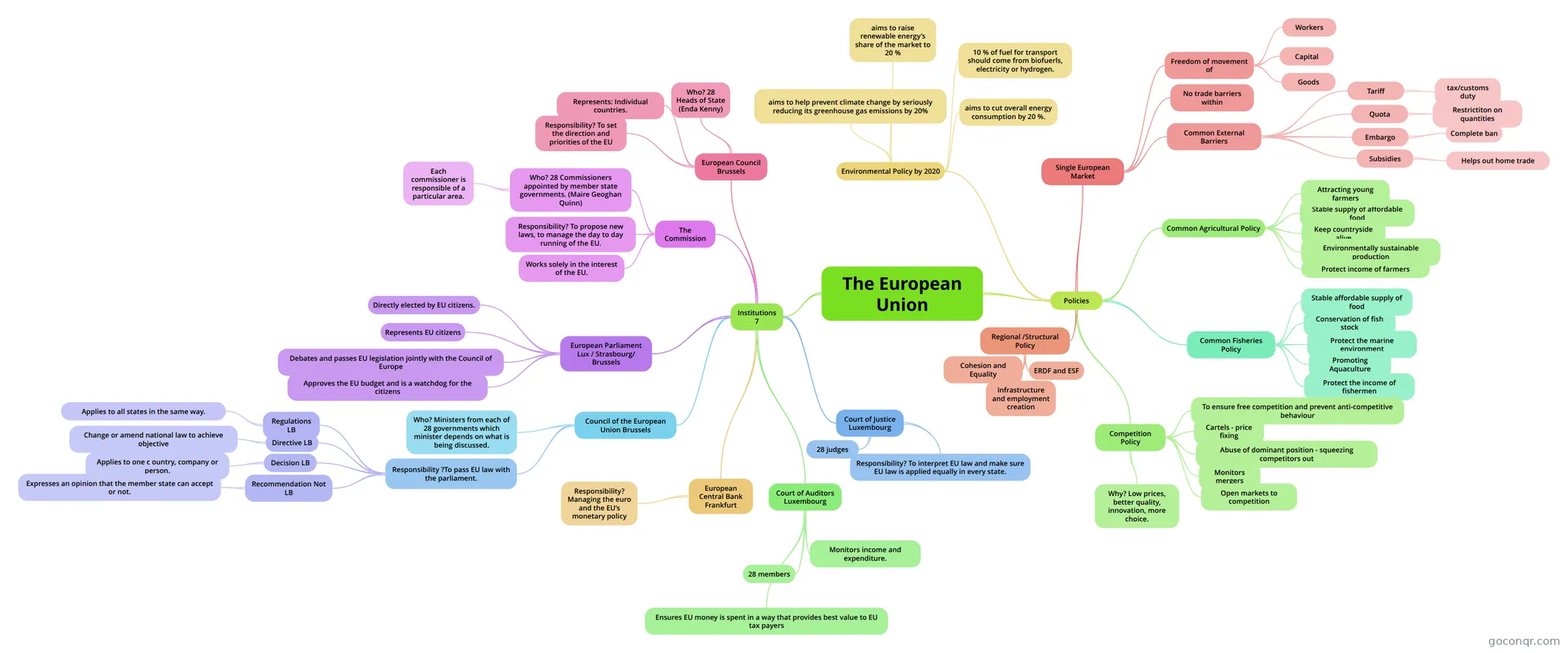
Flashcards
-
18 cardsIRELAND AND THE EUROPEAN UNION FORMATIVE ASSESSMENT METHOD OR REVISION METHODS FOR STUDENTS
-
60 cardsPolitics: Europe finals Reasons for European Cooperation After WWII (3)
-
25 cardsThe EU and Multilevel Governance - Definitions
-
24 cardsEu institutions How much member states?
-
25 cardsInstitutions of the EU This body is composed of representatives from regional and local authorities within the member states.
-
7 cardsEU What is the legislative triangle in the EU?
Notes
-
European integration and politics: history, analysis Chronological Overview Council of Europe founded 1949 OEEC - set up 1948 in order to administer Marshall's plan Benelux founded in 1944 in exile to form a customs union - upgraded to an economic union 1958 West...
-
International Institutions - The EU and Democratic Deficit Christophe Crombez - 'The Democratic Deficit in the European Union' Intake of new members complicated policy-making Tightening of the qualified majority requirements in the Council and the increases in the numbers of ...
-
International Institutions - European Integration (EU) Mark A. Pollack - 'International Relations Theory and European Integration'Relaunch of the integration process in the 1980s and 1990sREALIST Emphasis on material power and the resilience of the state Few realist schol...
Slides
More Political science topics
About The European Union and European Integration
GoConqr OriginalWhat the resources cover
The unit is built mostly around mind maps. The EU Institutions map lays out the European Parliament, European Commission, European Council, Council of the European Union, European Court of Justice, European Central Bank and European Court of Auditors. The lisbon treaty map covers changes such as the longer term for the president of the European Council and the new High Representative for foreign and security policy.
Theory and context
Several resources deal with why integration happens. The flashcards on the European model of integration define realism, federalism, functionalism, neofunctionalism and intergovernmentalism. There is also a mind map called Theories that underpin the EU integration process, and a deck called Different Theories of EU Integration. The notes European integration and politics: history, analysis add a chronological overview, starting with postwar bodies such as the OEEC and the Council of Europe.
Where to start
- Read European integration and politics: history, analysis for the timeline.
- Work through the EU Institutions mind map.
- Use EU Definitions to learn terms such as veto, subsidiary and supranational.
- Move on to enlargement, Brexit, Scepticism and democratic deficit.
Using quizzes and maps together
Read a map first, then test yourself. Try EU Institutions Quiz after the institutions map, Theories and Theorists after the theory decks, and Enlargement after the enlargement map. Any question you miss tells you which map to reopen. For A-level Politics revision, the topics on democratic deficit and populist parties give you debate material to practise with.
Where it fits
This unit sits in the Global Governance and Political Economy strand of Political science. It pairs well with the wider material on international institutions in that strand. Choose one resource, work through it, then make your own flashcards from what you found hardest.
Frequently asked questions
Which resource should I open first?
Start with the EU Institutions mind map for a quick overview of the main bodies. If you prefer a timeline, the notes European integration and politics: history, analysis give a chronological overview and the main theoretical approaches. Then check yourself with the EU Institutions Quiz.
What do the mind maps cover?
There are over 200 of them. They cover the institutions, the Lisbon Treaty, enlargement, interest groups, foreign policy, democratic deficit, scepticism and Brexit-related topics such as the future of the EU and its relationship with the UK. Some focus on single theorists or articles.
Are the resources free to use?
Yes. Every resource on this page is free to open, study and take, with no account needed. They were made by GoConqr users, not by GoConqr itself, so it is worth checking a few resources on the same topic and comparing them.
Which levels and exams do they suit?
The resources are mostly secondary and university level, so they suit school students, university students and professional candidates. Some mention A-level Politics. Teachers can also use the maps, slide sets and quizzes as ready-made classroom material.
Can I test myself on theories?
Yes. The quiz called Theories and Theorists checks your knowledge of the main thinkers and approaches. For extra practice, the flashcards on different theories of EU integration define concepts such as federalism, functionalism and intergovernmentalism, and they can be used before or after the quiz.
What if I can't find the topic I need?
Try a nearby resource first, such as the EU glossary notes or the Euro jargon flashcards. If a gap remains, a free account lets you make your own mind maps, flashcards, quizzes and notes, and save your quiz scores as you go.