
Sin título
Diapositivas del conjunto (8)
-
Audience Theories & my products
- - Maslow's Hierarchy of Needs
- - The Uses and Gratifications Theory
- - Encoding/ decoding model
- - Two Step Flow Effect
- - Rubicam and Young's 4C's
-
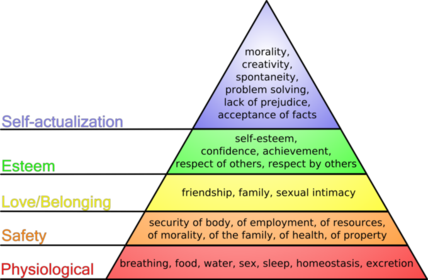
- One way that my audience research reveals that I have met the needs of my audience is through providing 'love and belonging' for example, through promoting competitions on my website such as 'free holidays' which encourages people to feel as though they can get involved with the institution and feel as though they are engaged with society, therefore, supporting the audience in unifying with society. Additionally, another way the product promotes 'love and belonging' is through bringing people together of a similar age group as people in my audience research believed that it was age appropriate, therefore it encourages social solidarity among my target audience as they can come together and feel involved with individuals of a similar age group. Additionally, this can lead to a boost in self-esteem which again makes the reader feel a sense of importance. In my survey, people voted that my product appears 'inspirational' and this means that 'self-actualization' can take place as it allows the audience to explore their creatity skills and experiment with their own look, encouraging individuals to become independent. Additionally, in my interview with two teenage girls they agreed with the notion that the models appear natural and realistic, therefore it promotes a 'lack of prejudice' which encourages young women to accept their own look.
-
Uses and Gratifications Theory
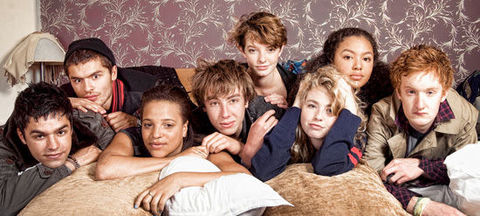
- Pie de imagen: Late teen target audience
- The Uses and Gratifications Theory explains that individuals will read media content to be educated, escape from reality, for entertainment, for personal identity and for social solidarity. From the response from my target audience 'Shannon' an interviewee said that in her spare time she likes to go 'clubbing' and 'shopping' and the fact that my magazine and website explore features on night life such as 'Seasonal cocktails at the orange tree' and fashion such as 'top trends of the season' it means that Shannon is assured that she will be entertained, thus, telling me that the features are catered to the target audience. In addition, she said that because the product is Leicester focused, this is a reason that she would purchase it, perhaps building personal identity through a sense of pride of her regional identity, therefore, making her feel important to be from Leicester. Additionally, to make the regional product improved and more beneficial in the future I would perhaps offer free club tickets to a Leicester club such as 'Republic' which would be appealing and accessible to people in Leicester. This ticket offers 'escapism' as a night out will distract my target audience from the stresses of academic work, therefore, fulfilling this need will encourage people to repurchase the product to gain future benefits that make them feel valued, building their personal identity.
-
Uses and Gratifications Theory
- Another way that the product has reached the needs of the Uses and Gratifications Theory is through educating the reader as in my survey, 90% of the audience voted that it is evidently a regional magazine which demonstrates that the product is informative and clear which will create greater awareness of the product and also their is an 'about us' page on the website which gives the reader an insight into what the product is, making it more memorable due to having wider knowledge. In addition, the fact that the product is obviously Leicester related allows social solidarity to take place as the community will come together to share their mutual interests on popular culture, therefore, through being able to relate to people in the region, it will create a sense of unification. Also, linking to the competitions this not only creates social solidarity through creating involvement but it also provides 'escapism' as a 'luxury holiday' ( promoted on the website) is an opportunity for the reader to retreat and relax, therefore, the product is related with calamity, meaning it will be popular for students who suffer from stress due to the burden of exams.
- Additionally, in my interview with two teenage girls they agreed with the notion that the models appear natural and realistic, therefore it promotes a 'lack of prejudice' which encourages young women to accept their own look which is important when building personal identity to make them feel more valued.
-
- This theory focuses around the idea that audiences vary in their response to media messages due to being influenced by their social position, gender, age, ethnicity, occupation, experience and beliefs. However, in my interview with two teenagers, it was revealed that the product was 'varied in features' and this demonstrates that the content of the product has been 'encoded' by the audience as it demonstrates 'preferred reading' due to providing a variety of different content which will essentially prevent boredom, therefore understanding that my institution promotes differentiation. In addition, another way that my product has had a 'preferred reading' response is through the colour scheme as in my interview 'Sian' commented that this was something that attracted her to reading the product, thus, making it a unique selling point to the consumer, therefore, this piece of audience research tells me that my products are sellable.

-
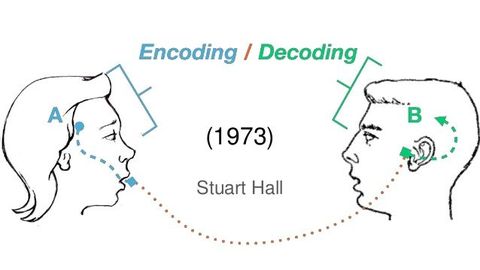
- However, there were times that my audience research suggested that they had a 'negotiated' response to reading the product which is when the consumer agrees with the dominant ideas and values that are expressed however disagree with some aspects. For example, although in my interviews 'Sian' and 'Alice' liked the majority of the magazine through complimenting on the colour scheme and relatability of the model, they said that the website and magazine needed to include more beauty features and this is perhaps because they have a greater interest in the beauty industry opposed to the fashion industry, therefore,
- it implies that in the future, I need to create greater diversity so that it feels as though it attracts a broader range of individuals which will invite a mass target audience. However, there was also some content that was opposed by the audience and therefore 'decoded' which is on my survey when an individual felt as though the billboard had 'too much writing'. However, I think this will be possible when the magazine is more established because at the moment, it is hard to cut down the typography because the magazine is new and therefore needs to be informative to make it more memorable and recognisable.
-
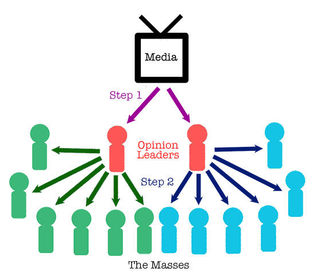
- The two step flow model is the ideology that we are influenced to watch or consume media products through being influenced by an opinion leader, for example, if a celebrity will say that a beauty product 'transforms your look' the audience will follow this through believing the celebrity, thus, implying the media can be manipulative. However, during my interview with 'Shannon' she revealed that she would 'recommend it to a friend' which suggests that the two-step flow effect can take place because people will share it with their friends and as 'word of mouth' is the most effective form of marketing it means that it can encourage other individuals to purchase the product. However, this can also work in reverse and encourage individuals not to read the product, for example, one audience member commented that that the 'typography on the magazine' needs to be neater. This indicates that the individual will hope for a change or progress in the future therefore if this is not fulfilled, the audience will feel under valued and neglected, thus, they may begin to boycott the product which would tarnish the reputation of it.
-
- This theory explains that there are 4 types of 'cross culture characteristics' which influence people to purchase a product and this includes:
- - MAINSTREAMERS
- - ACHIEVERS
Información
- Descripción
- AS - Level Media Studies Diapositivas sobre Sin título, creado por Chloe Cotterill el 17/03/2017.
- Creado por
- Chloe Cotterill
- Visitas
- 4
- Historial
-
- Creado por Chloe Cotterill · 16 mar 2017
- Copiado por Chloe Cotterill · 16 mar 2017
- Copiado por Chloe Cotterill · 17 mar 2017
- Valoración