
Flashcards
Fish
Cards in this deck (54)
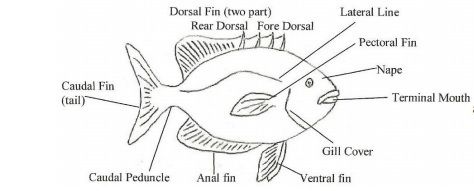
- 1What is the Caudal fin of a fishthe tail fin.Can be forked with two lobes, notched or have a straight border. The border is
the edge running along the end of the fin, and the margins are the upper and lower edges of the fin. - 2What is the dorsal fin of a fishthe fin along the back. Can be continuous or two part, with a fore-dorsal (usually spiny, with
membranes between each dorsal spine) and a rear dorsal (normally soft-looking and flexible). - 3What is the Anal fin of a fishthe fin running along the underside of the body, from below the caudal fin, towards the ventral
fins. - 4What is the Ventral fina pair of fins on the front underside of the belly.
- 5What is the Pectoral finone on either side, just behind the gill cover.
- 6—
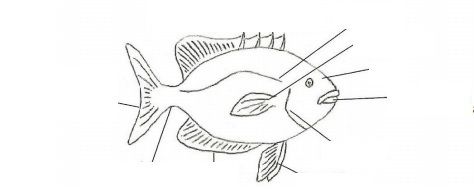
- 7What is the Caudal Pedunclethe region where the caudal fin attaches to the body.The thinnest part of the fish.
- 8What is the Gill Coverbehind the cheek, a plate of hard scales that covers the gills which can be opened, or
flattened against the body. The area in front of this is the head, and behind is the body. - 9What is the Napethe forehead.
- 10What is the Lateral linea line, especially obvious in silver fish, which extends from the top of the gill cover to the
upper region of the caudal peduncle. - 11—
- 12—Angelfish
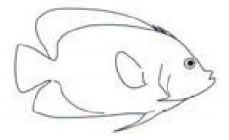
- 13—Angelfish
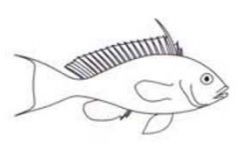
- 14—Anthias
- 15—Butterfly fish
- 16—Butterfly fish
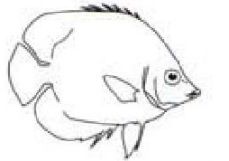
- 17—Cardinal fish
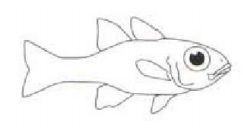
- 18—Damselfish
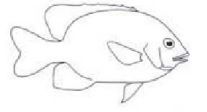
- 19—Filefish
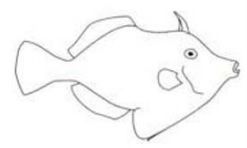
- 20—Fusiliers
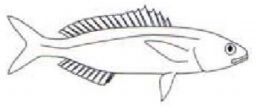
- 21—Goatfish
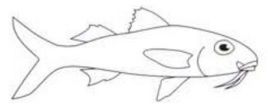
- 22—Emperorfish
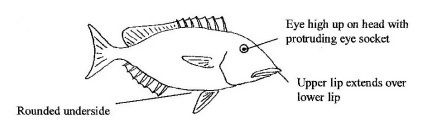
- 23—Rabbitfish
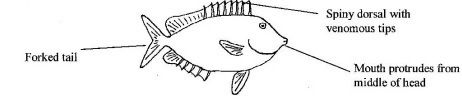
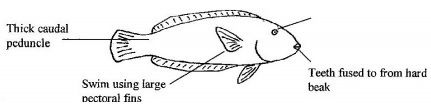
- 24—Parrotfish
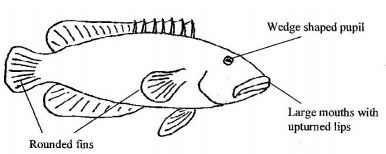
- 25—Grouper
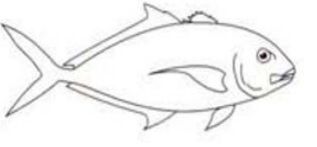
- 26—Jacks and Trevallies
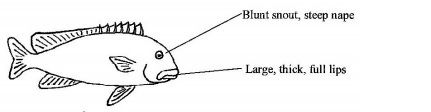
- 27—Sweetlips
- 28—Surgeon fish
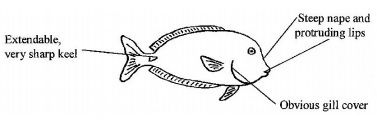
- 29—Snapperfish
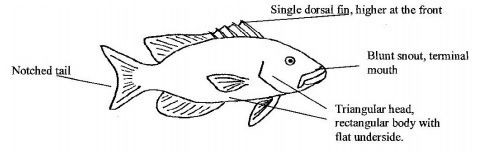
- 30—Triggerfish
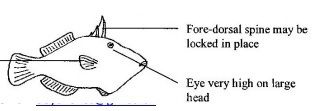
- 31—Wrasse
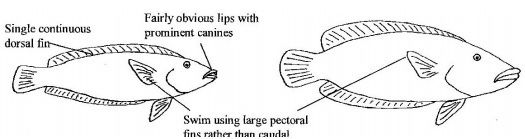
- 32—Unicorn fish
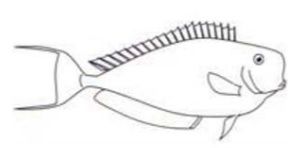
- 33—Triggerfish
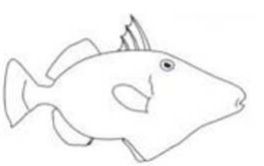
- 34What fish is the genus ChaetodonButterfly fish
(Research all) - 35What fish is the genus Forcipiger spp.Butterfly fish
(Big) Longnosed - 36What fish is the genus Heniochus spp.Butterfly fish
Longfin Bannerfish - 37What fish is the genus Pomacanthus spp.Angelfish
Semicircle
Emperor - 38What fish is the genus Apolemichthys spp.Angelfish
Three Spot - 39What fish is the genus Pygoplites spp.Angelfish
Regal - 40What fish genus is Plectroplomus spp.Grouper
Saddleback
African Coral Cod - 41What fish genus is Aethaloperca spp.Grouper
Redmouth - 42What fish is the genus Anyperodon spp.Grouper
Slender - 43What fish species is EpinephelusGrouper
- 44What fish is the genus Cephalophilis spp.Grouper
Coral Hind
Tomato
Peacock
Flagtail - 45What fish is the genus Variola spp.Grouper
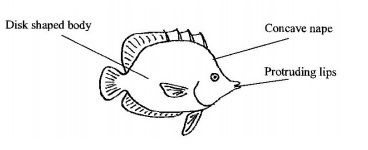
- 46What is the anatomy of a butterfly fishSmall (generally about 15cm/6ins long) and disc shaped, Butterflyfish are a common sight on the reef. They show distinctive markings which are virtually all a variation of black, yellow and white patterns. Their lips protrude from the front of their faces. The entire nape is concave and conclusively distinguishes them from Angelfish.
- 47What is the behaviour of Butterfly fishNormally found in pairs as they find life partners when they reach adulthood. They tend to ‘flutter’ around the reef eating algae and other marine flora. Occasionally they shoal, particularly the Bannerfish Butterflyfish (Heniochus spp.).
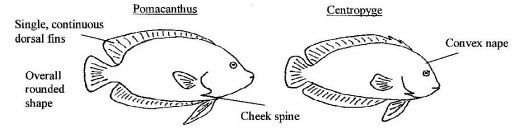
- 48What is the anatomy of the angelfishThe maingenera in the Angelfish family is Pomacanthus. Pomacanthus spp.are medium sized fish, around thirty centimetres long when mature, and display bright colours and spectacular patterns. All Angelfish have a cheek spine extending across the gill cover towards the rear of the fish, a single continuous dorsal fin and convex napes, useful for distinguishing them from Butterflyfish.
- 49What is the behaviour of an angelfishAngelfish are generally solitary or found in pairs, and behave in a similar manner to Butterflyfish, swimming over the reef eating algae off the substrate. If a diver gets too close they will hide, which makes them difficult to monitor.
- 50What is the anatomy of a surgeon fishSurgeonfish are easily recognisable by their extremely sharp keel which sticks horizontally out of either side of their caudal peduncle. This extended involuntarily when their caudal peduncle brushes against anything, and is sharp as a surgeon’s knife, which is the origin of the name. They are fairly round, thin fish with steep napes leading to a small pointed mouth and very obvious, rounded gill cover.
- 51What is the behaviour of a surgeonfishUsually found in loose aggregations swimming across the reef eating algae off the substrate and often in the same group as intermediate phase Parrotfish. They swim using their pectoral fins and their caudal fin
- 52What fish genus is Scaridae spp.Parrotfish
Swarthy
Bicolour
Bullethead - 53What is the anatomy of a parrotfishParrotfish are very common and may be confused with Wrasse, which also swim using their pectorals rather than their caudal fin. They are generally cigar-shaped and change colour as they age, making them difficult to identify to species level. They are unique in having fused teeth that form a hard beak which they use to bite off lumps of coral on which they feed. This is the easiest way to distinguish them from Wrasse –which have lips. They range in size from tiny juveniles to huge Bumphead Parrotfish which can grow over 1.3m/4ft.
- 54What is the anatomy of WrasseVery similar looking to Parrotfish, Wrasse can be distinguished by having lips, rather than beaks. Wrasse come in a huge variety of shapes, sizes and colours. For this reason not all Wrasse species are monitored individually, only the Cheilinus spp., however a sound knowledge of their subfamilies is important. They all have sharp canines, a single, continuous dorsal fin, relatively thick lips and a thick caudal peduncle.
Information
- Description
- Flashcards on Fish, created by Ryan Wembridge on 03/08/2018.
- Created by
- Ryan Wembridge
- Views
- 0
- Rating