
Flashcards
Chapter 3: The human brain
Cards in this deck (54)
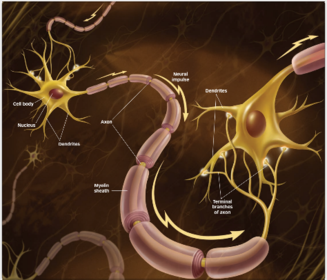
- 1NeuronThe main cell of the brain. Cells in the nervous system that communicate with one another to perform information-processing tasks. Over a trillion of them
- 2Structure of Neuron
- 3Cell Body (Soma)The largest component of the neuron that coordinates info-processing tasks and keeps the cell alive. Does protein synthesis, energy production, and metabolism. Contains the nucleus.
- 4DendritesReceive information from other neurons and relay it to the cell body.
- 5AxonCarries info to other neurons, muscles, and glands. Can be up to a meter long.
- 6Myelin SheathAn insulating layer of fatty material (glial cells). This makes axons transport much faster and efficient (MS results from not having enough).
- 7Glial CellsHelper nervous system cells (50 trillion). They make up the myelin sheath, digest dead neurons, and support neurons.
- 8SynapseThe region between the axon of one neuron and the dendrites or cell body of another. Many neurons have thousands of synaptic junctions.
- 9Sensory NeuronsReceive external world info and convey the info to the spinal cord and brain. Sensitive dendrites for light and sound.
- 10Motor NeuronsCarry signals from the spinal cord to the muscles to move. Super long axons.
- 11InterneuronsConnect all the neurons (sens. motor. and inter.) May carry info from sensory neurons to nervous system or nervous system to motor neurons etc. Perform in small circuits to locate things, recognize faces etc.
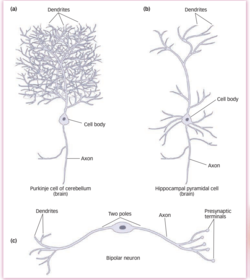
- 12Specializing of Neurons by location
- 13Electrochemical Action: conduction vs transmissionConduction is the electrical movement along one neuron where as transmission is the passage across a synapse.
- 14Resting potentialThe difference in electrical charge between inside and outside a neuron
- 15Action PotentialSo, before the action potential there is high levels of K+ ions and negative protein ions. There is lots of Cl- and Na+ outside the cell. So before the action potential, K+ is free while the others are not. So some of the K+ flows out giving a -70mV charge. When excited, the K+ channels close and Na+ flood in creating a positive charge. After this, the active pump gets Na+ out and puts K+ back in (refractory period). Note there is a threshold to overcome for an action potential. Also there is an overshoot where too much K+ is in the cell.
- 16Terminal ButtonsKnob-Like structures from the axon that contain neurotransmitter vesicles
- 17Nodes of Ranvier/Saltatory ConductionThese are the parts of axon that don't have myelin. Saltatory jumps from myelin to myelin
- 18NeurotransmittersChemicals that transmit information across the synapse to a receiving neuron’s dendrites.
- 19ReceptorsParts of cell membrane that receive neurotransmitters and either prevent or create electrical signals.
- 20AcetylcholineNT involved in lots, motor control. Also involved in waking and sleeping, dreaming and memory. Alzheimers deals with the degeneration of this neurotrans.
- 21DopamineMotor Behavior, motivation, pleasure, and emotional arousal. Drug abuse deals with this. Too much can cause Schiz. too little Parkinson.
- 22Glutamate/GABAMajor excitatory NT of the brain, enhances neuron firing and transmissions between neurons. Can cause seizures. GABA is the major inhibitory neurotransmitter.
- 23Norepinephrine and SerotoninThese two influence mood and arousal. Norepinephrine is involved in heightened awareness and alertness to dangers in the env. Serotonin is for sleeping and eating behavior, aggressiveness.
- 24Agonists/AntagonistsAgonists increase action of a neurotransmitter, antagonists hurt. Can block re uptake or inhibitors, bind to site to increase production
- 25EndorphinsRunner's high. Chemicals that act with pain and emotion pathways.
- 26Nervous system breakdown
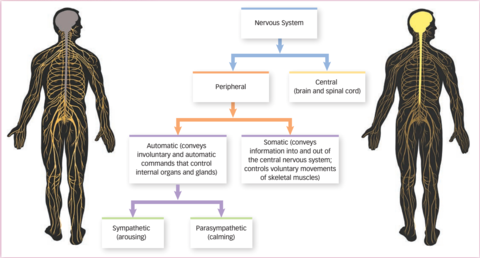
- 27Central vs. PeripheralSo CNS is simply the brain and spinal chord. Takes info from the outside world and processes it. Commands skeletal and muscular. The peripheral connects the CNS to the muscular and CNS.
- 28Automatic vs SomaticSomatic (reaching for coffee) control. Automatic is like sweating or glands.
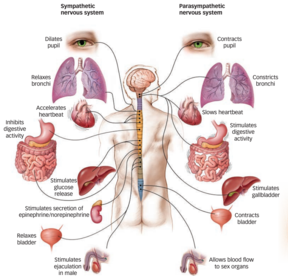
- 29Sympathetic vs Parasympathetic (within automatic)Sympathetic is for fight, parasympathetic is just for relaxed.
- 30Spinal reflexesSimple pathways in the nervous system that generate rapid reflexes (hot stove)
- 31Forebrain, hind, and mid locations
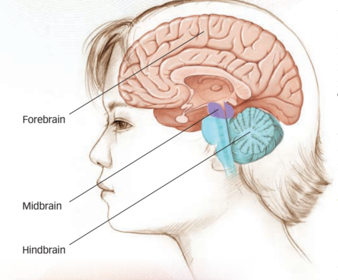
- 32HindbrainSpinal chord is continuous with the hindbrain. It coordinates info coming in and out of the spinal cord. Involved in respiration, alertness, and motor skills.
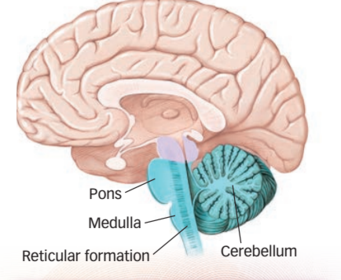
- 33Parts of the hindbrainMedulla: An extension of the spinal cord, regulates heart rate, respiration, and circulation.
Reticular Formation: A part of the medulla, small cluster of neurons that regulate awakeness.
Cerebellum: Largest part of the hindbrain, controls fine motor skills (bike riding)
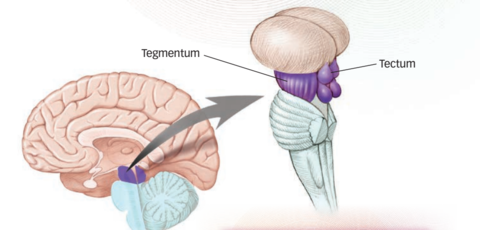
Pons: sends info from hindbrain to rest of brain. - 34Midbrain StructuresTectum: Orients organism in an environment.
Tegmentum: Involved in movement and arousal and sensory stimuli - 35Hindbrain Locations
- 36Midbrain Locations
- 37ForebrainControls complex cognitive and sensory info, learning etc.
- 38Cerebral CortexOutermost layer of the brain, divided in to two sections.
- 39Sub cortical structuresAreas under the cerebral cortex near the center of the brain.
- 40Parts of the forebrain
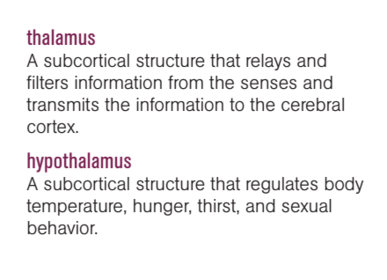
- 41Parts of forebrain continued
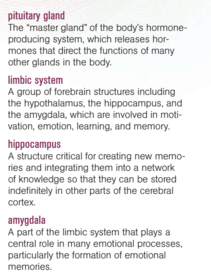
- 42Basal GangliaSub cortical structure. Directs intentional movements.
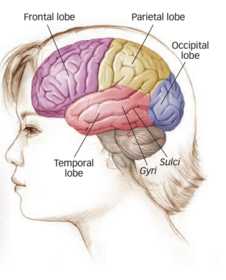
- 43Cerebral Cortex Locations
- 44CommissuresAllow parallel contact between cortexs, largest is corpus callosum.
- 45Occipital LobeVisual info goes from thalmus to the occipital lobe, involved in comprehension.
- 46Parietal LobeProcessing information about touch. Has the somatosensory cortex represents skin areas of the contralateral sides. Homunculus is distorted to represent real estate taken up by this beast.
Parallel to this is the motor cortex which has similar land real estate composition. - 47Temporal LobeResponsible for hearing and language. Primary auditory cortex similar to the other ones just mentioned.
- 48Frontal LobeMovement, abstract thinking, memory, judgement etc.
- 49Association areasIn the cerebral cortex areas of neurons that help provide sense and meaning to info.
- 50Mirror neuronsActivated when other animals do same activity etc.
- 51EpigeniticsEnvironmental influences on genes.
- 52Epigenetic marksChanging DNA mods with turning dna off and on (methylation and histone modification)
- 53Types of brain visual toolsEEGs: record electrical activity in the brain (signals amplified)
CT scan: Uses Xrays to image the brain
Transcraniel magnetic stimulation: temporarily causes lesions on the brain - 54—
Information
- Description
- Psychology Flashcards on Chapter 3: The human brain, created by Austin Mills on 08/10/2016.
- Created by
- Austin Mills
- Views
- 12
- Rating