
Biopsychology and the Nervous System
351 resources created by 272 users
This Biopsychology and the Nervous System page on GoConqr gathers community-made mind maps, quizzes, flashcards, slides and notes, from neurons and synaptic transmission to split-brain research and localisation of function. It's built for university students and professional candidates, school students, and teachers after ready-made material. There are over 2,500 resources here, including more than 290 quizzes, more than 1,200 mind maps and over 800 flashcard decks, made by over 1,700 contributors. Pick a topic, try a quiz to find your gaps, then make your own revision sets.
Top Biopsychology and the Nervous System resources
-
200 questionsHPS202 exam revision Which of the following best describes DNA?
-
50 cardsNeuroscience Presentation 1 - Psy 343 Final What is behavioural neuroscience?
-
Mind map Biopsychology A01
-
51 cardsNeurons and Neurotransmitters Definitions of types of neurons, and neurotransmitters. Definitions of the parts of neurons, and how they w...
-
15 cardsSplit Brain Research, Biopsychology Split-Brain Research into Hemispheric Lateralisation
-
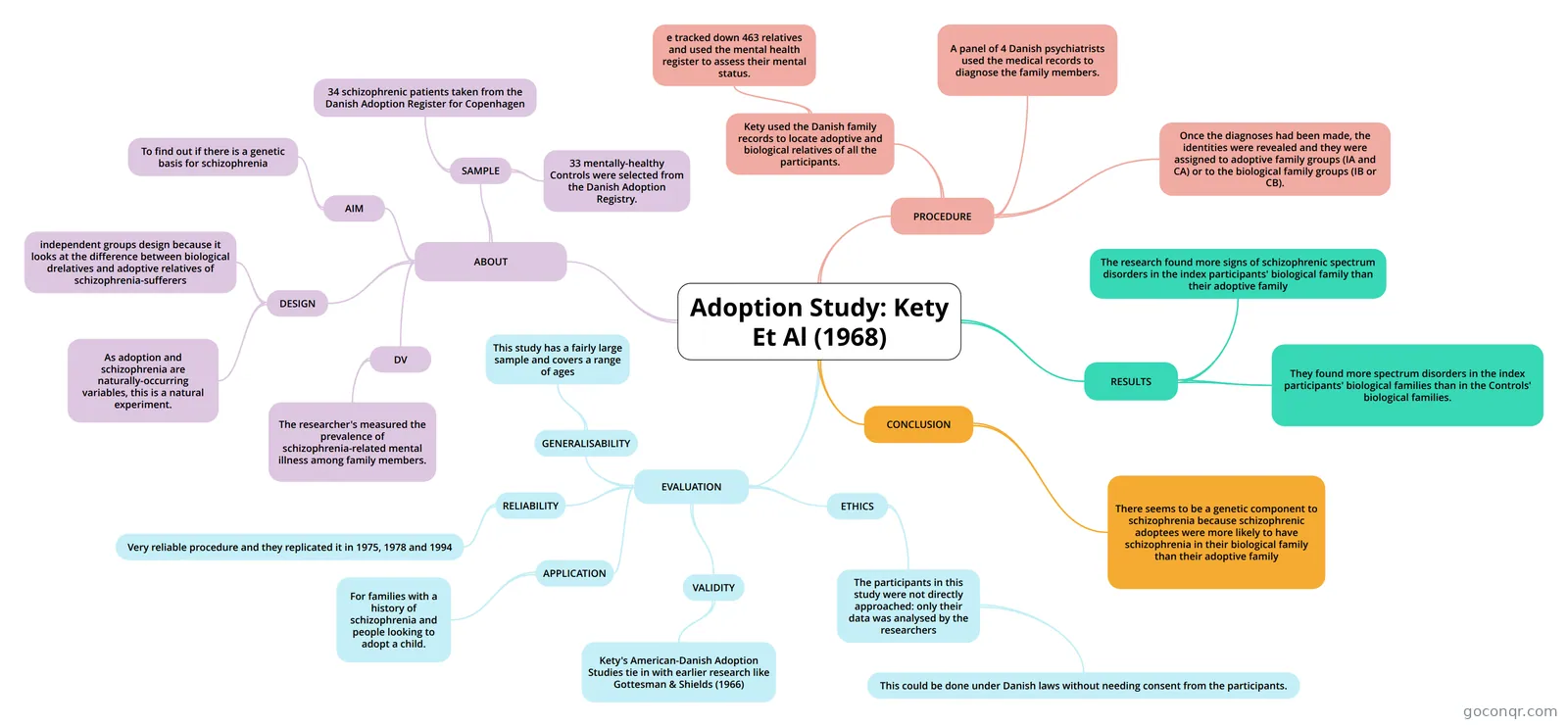 Mind map Adoption Study: Kety Et Al (1968) Edexcel A Level Psychology: Biological Psychology
-
86 questionsBiological psychology Which two things make up the central nervous system?
-
67 questionsBiopsychology- Quiz (A2) AQA A Level Psychology: Biopsychology- This resource was created based on material in the textbook, and is ...
Quizzes
See all 58 quizzes-
200 questionsHPS202 exam revision Which of the following best describes DNA?
-
86 questionsBiological psychology Which two things make up the central nervous system?
-
67 questionsBiopsychology- Quiz (A2) AQA A Level Psychology: Biopsychology- This resource was created based on material in the textbook, and is ...
-
62 questionsChapter 3 - part 1: The Anatomy of the Nervous System Which cells in the nervous system do most of the work of receiving, integrating, and transmitting information?
-
29 questionsChapter 3 - part 8: The Evolutionary Bases of Behaviour Which of the following statements about Charles Darwin and the theory of evolution is NOT accurate?
-
31 questionsNeuroscience- systems The axons of certain neurons are covered by a layer of fatty tissue that helps speed neural transmission. T...
-
35 questionsUnit Two Review- Chapter 2
-
13 questionsPSC 1 - Chapter 3 Homework Identify parts of neuron.
Mind maps
See all 127 mind maps-
Biopsychology A01
-
Adoption Study: Kety Et Al (1968) Edexcel A Level Psychology: Biological Psychology
-
Unit 1 Psychology AOS 1: How does the brain function? Mindmap of VCE Psychology Unit AOS 1: How does the brain function?
-
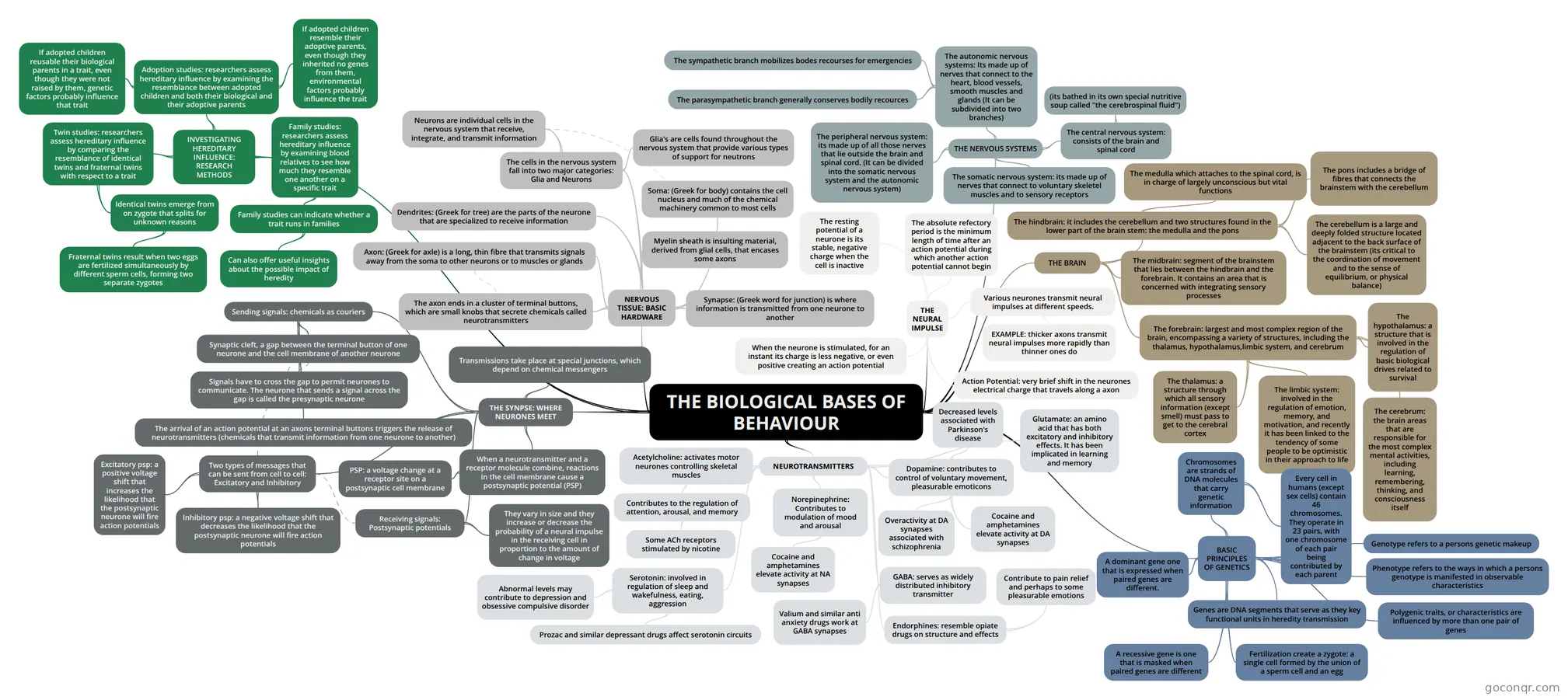 THE BIOLOGICAL BASES OF BEHAVIOUR My concept map for chapter 3
-
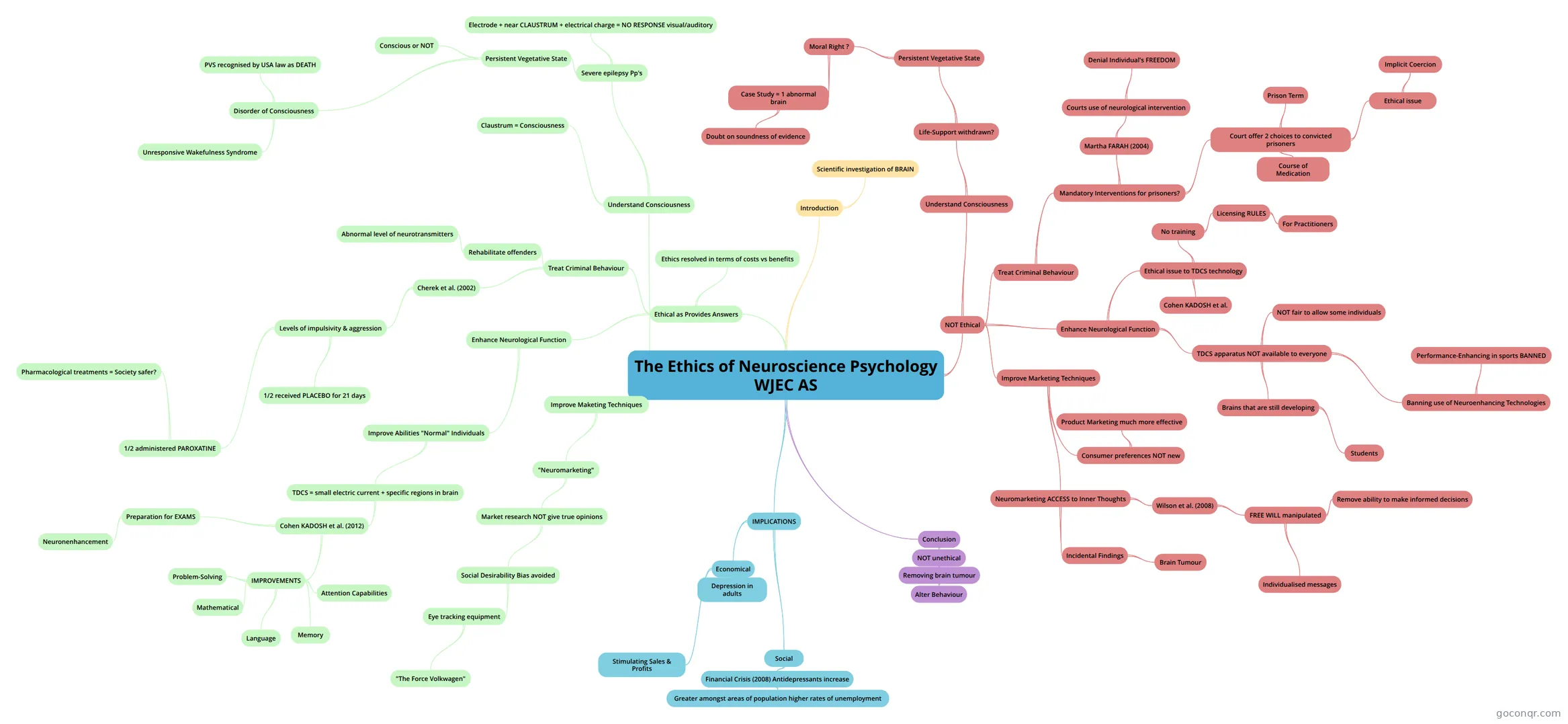 The Ethics of Neuroscience Psychology WJEC AS Contemporary Debate on NEW specifications to Psychology WJEC AS. Developed in detail all process to answer ...
-
 Physiological Psychology- Maguire et al. (2000)
-
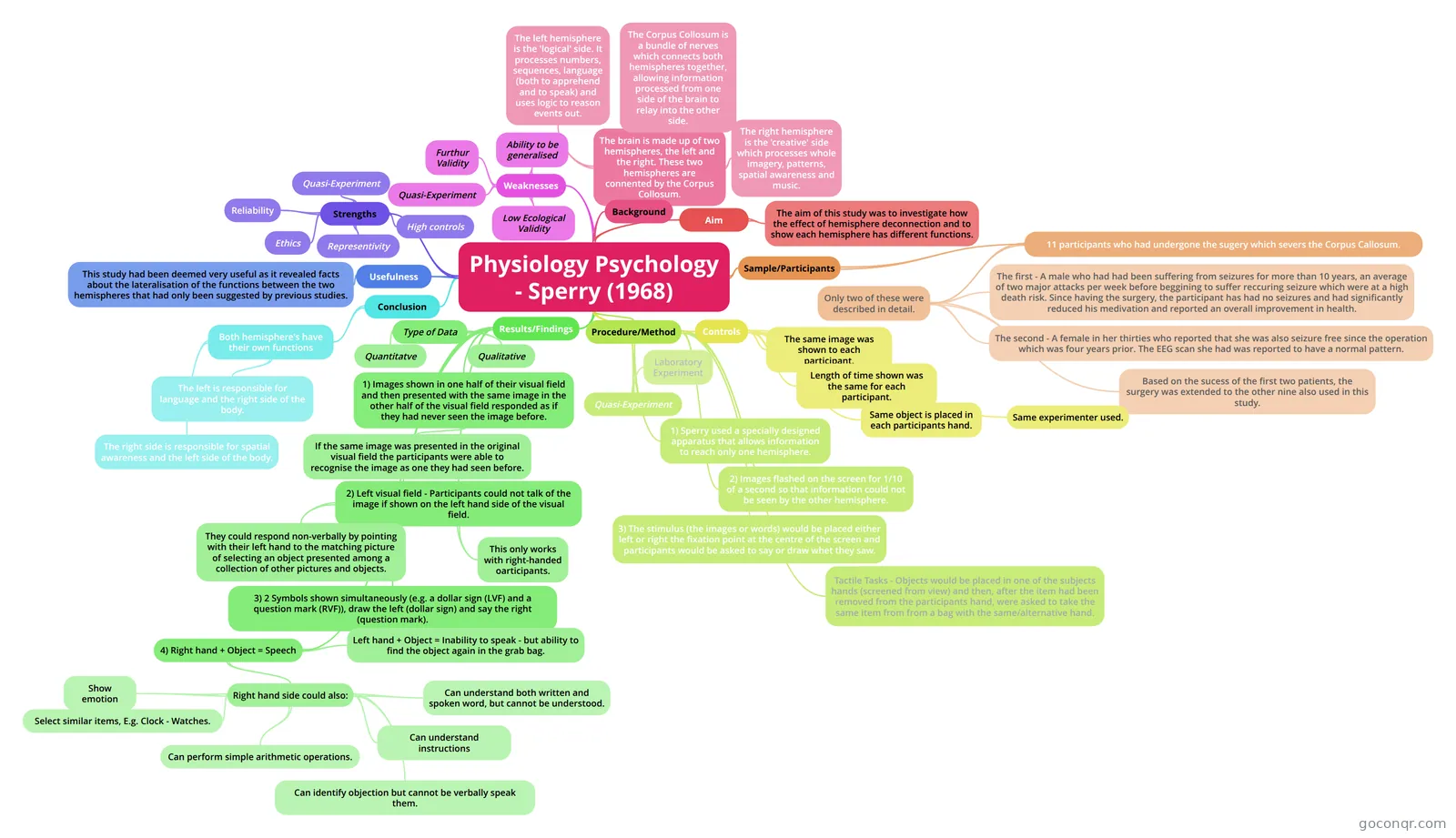 Physiology Psychology - Sperry (1968)
-
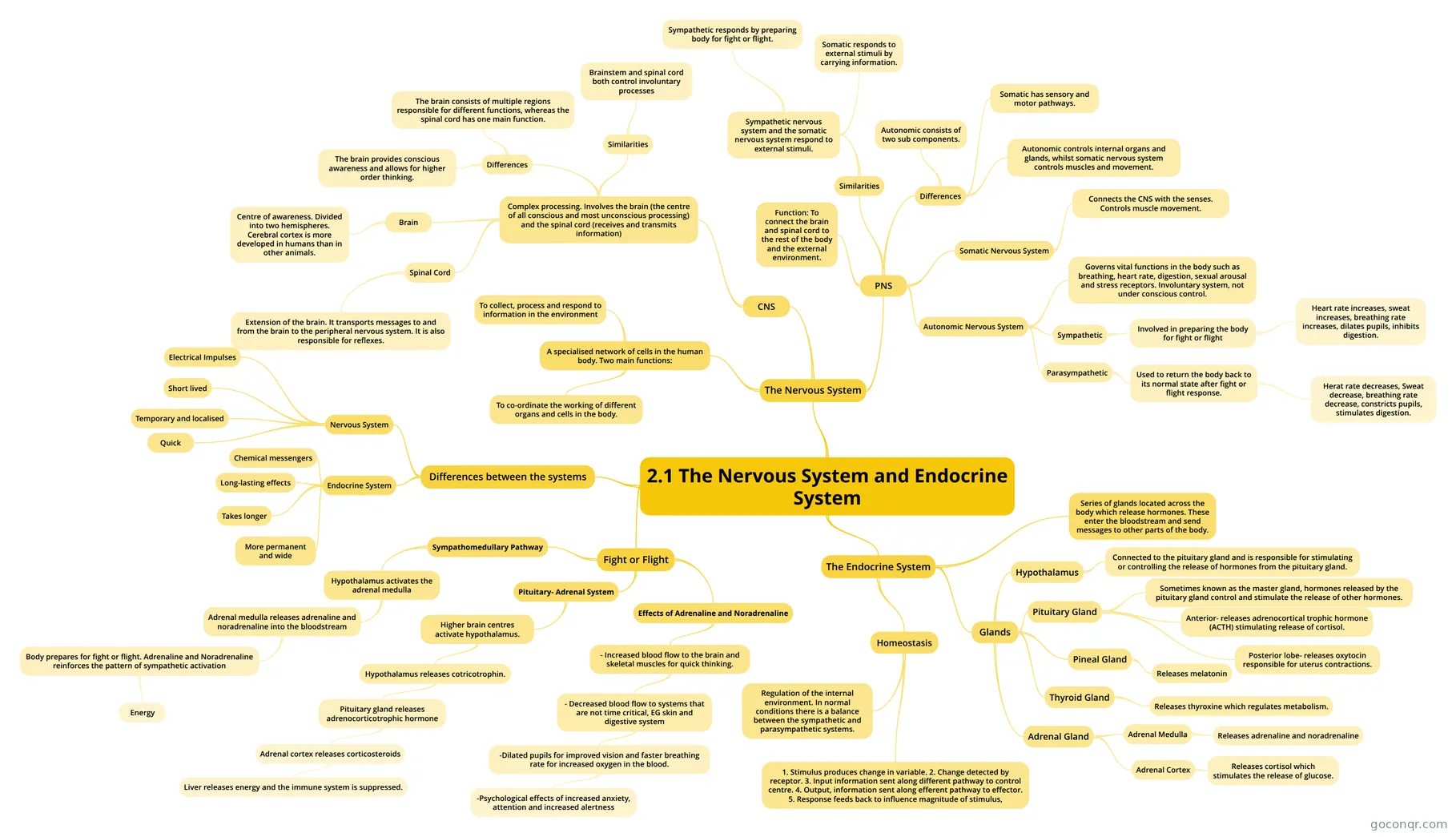 2.1 The Nervous System and Endocrine System aqa a level psychology biopsychology
Flashcards
See all 140 flashcards-
50 cardsNeuroscience Presentation 1 - Psy 343 Final What is behavioural neuroscience?
-
51 cardsNeurons and Neurotransmitters Definitions of types of neurons, and neurotransmitters. Definitions of the parts of neurons, and how they w...
-
15 cardsSplit Brain Research, Biopsychology Split-Brain Research into Hemispheric Lateralisation
-
97 cardsPsychology Chapter 3 (set 1 of 2) A review of the key terms from chapter 3, Psyc 260
-
20 cardsBiopyschology - Studies All the studies needed for AQA Psychology, biopsychology.
-
19 cardsIb Psychology Biological Level Of Analysis
-
77 cardsUnit 1 -Psych Flashcards for my psych 101 final
-
24 cardsIntro to Psychology ch. 3
Flowcharts
Notes
-
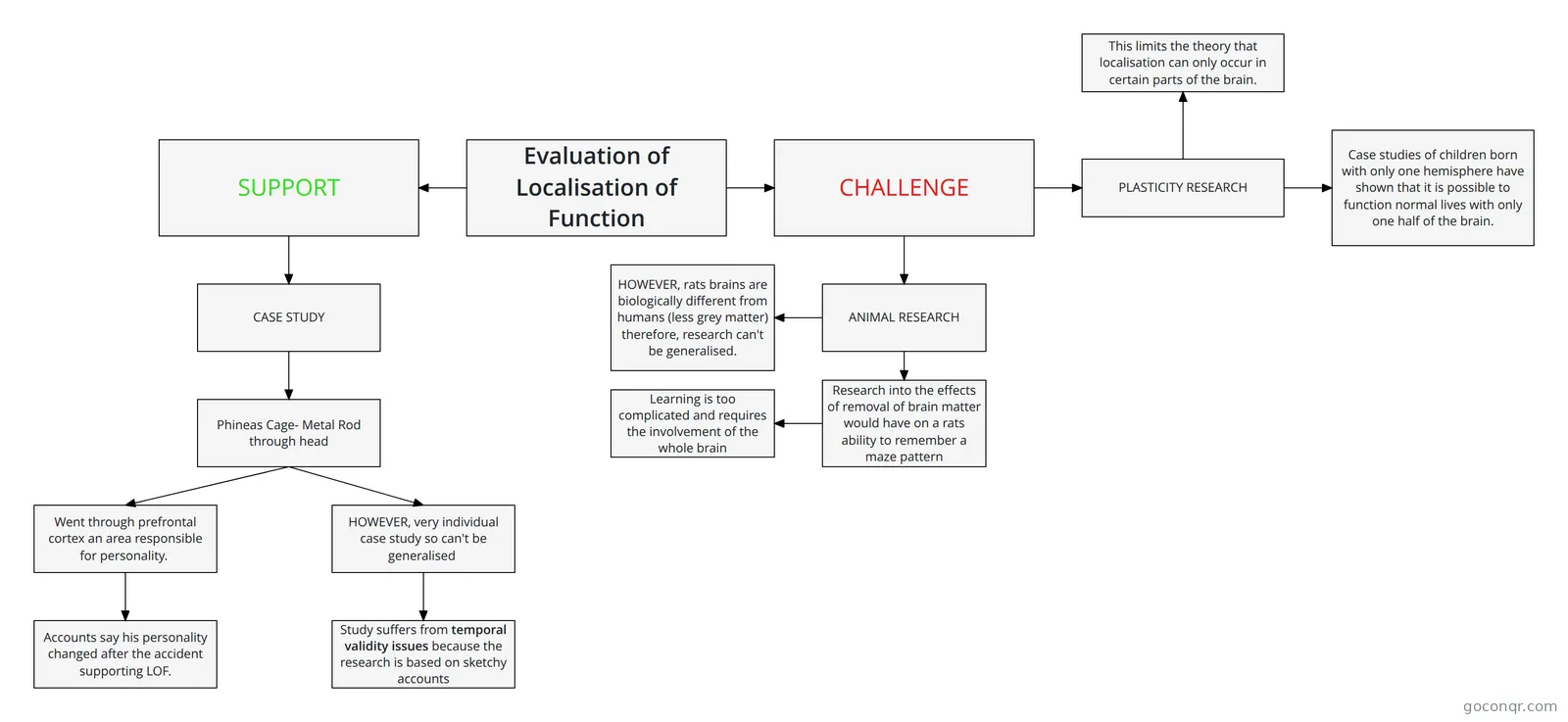
Martinez and Kesner (1991) AIM:- determine the role of the neurotransmitter acetylcholine on memory. METHODS:- Rats were trained to go through a maze and get to the end where they received food- After rats were able to do this, he injected: 1st...
-
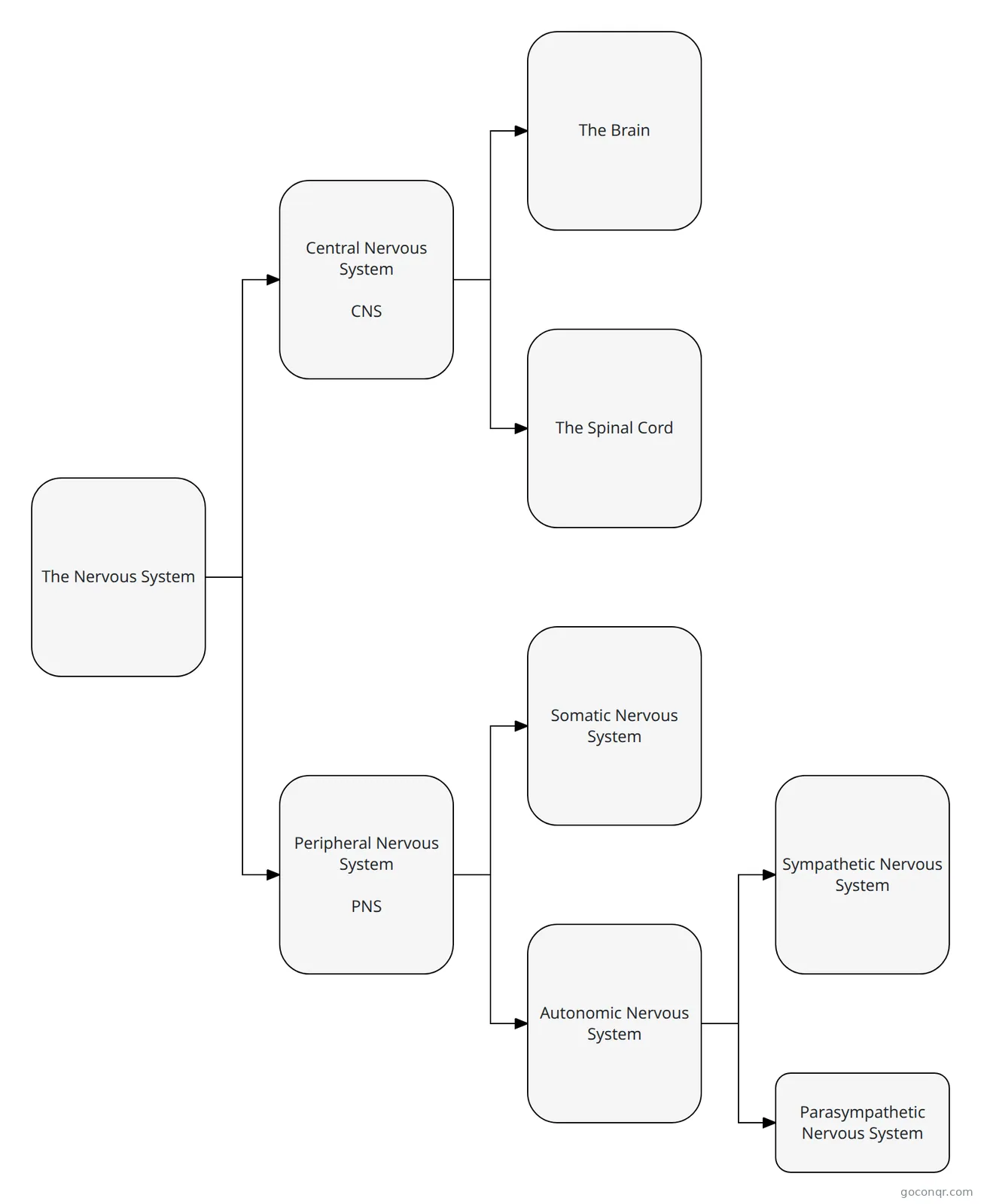
Biopsychology Divisions of the nervous system Central nervous system includes the brain and spinal chord Peripheral nervous system includes all nerve tissue outside the CNS Brain- maintains life and is involved in higher functions ...
-
Biological approach Neurons and synaptic transmission-neurons send and receive nerve impulses (electrical information) from other neurons or others cells-Sensory neurons carry information from the senses to the central nervous system-Mot...
-
Unit 3: Study Questions Describe the structure and functions of the glia cells and neurons. (pp. 86-87) Describe the various parts of the neuron, and explain their functions. (pp. 87-88) What is a neural impulse? Describe what happens when a...
-
biological approach (cont.) We inherit 50% of our genes from our parents. If you inherit a Y chromosome from your father the baby will be male and if a X chromosome is inherited then the baby will be female. for the first few weeks of prenatal d...
-
Physiological Psychological Overview - Causes of brain damage - Neuropsychological diseases and animal models - Neuroplastic responses to brain damage Causes of Brain Damage - Brain Tumors - Cerebrovascular disorders - cell de...
-
Biopsychology Kalat Chapters 6 & 8 Cortex in the brain Prefrontal Cortex - active during a delay before a movement Premotor Cortex - active before a movement Inferior Temporal Cortex - complex shapes Posterior Inferior Temporal Cortex - colors and brig...
-
The Nervous System - created from Mind Map CNS (Central Nervous System) The Brain The spinal cord The central Nervous system is made up of the brain and spinal cord. Receptor nerves transmit information via the spinal cord to the brain.Instruction from the bra...
Slides
See all 16 slidesMore Psychology topics
About Biopsychology and the Nervous System
GoConqr OriginalWhat the resources cover
The page brings together material on how the nervous system works and how the brain is organised. Many resources look at neurons, neurotransmitters and synaptic transmission. The flashcard deck Neurons and Neurotransmitters asks how neurons communicate and what the central and peripheral nervous systems each contain.
Others cover hemispheric lateralisation and split-brain research, with several resources on Sperry (1968). You will also find studies such as Maguire et al. (2000), Raine et al. (1997) and the adoption study by Kety et al. (1968), plus brain scans, hormones and drugs.
Where to start
Begin with an overview. The mind maps The Nervous System and Biopsychology set out how the central nervous system passes messages to and from the brain. Then move to one topic at a time:
- Neurons and synaptic transmission.
- Localisation of function and lateralisation.
- Key studies, such as Sperry and Raine.
- Scans, plasticity and biological rhythms.
Using quizzes and maps together
Read a mind map first, then test yourself. The quiz Synaptic Transmission pairs well with the mind map of the same name. Try the quiz without looking, note what you missed, then go back to the map for those branches. Flashcards suit key terms, such as the Biopsychology- AS Level Key Terms Revision Cards.
The resources mention exams including A-level Psychology, AP Psychology, IB Psychology, GCSE Psychology, AQA, OCR and WJEC, so school students can look for sets that match their course. University students will find chapter quizzes and course notes. Teachers can pick ready-made sets to share with a class.
Where this unit sits
This unit belongs to the Biological Psychology strand of Psychology. It focuses on the nervous system and brain, so use it alongside your own course notes.
Open a quiz now, or choose a mind map and build your own flashcards from it.
Frequently asked questions
Which resource should I open first?
Start with the mind maps The Nervous System or Biopsychology for an overview. They show how the central and peripheral nervous systems fit together. After that, choose a topic such as synaptic transmission and try the matching quiz to see what you remember.
What do the mind maps cover?
There are over 1,200 mind maps. They cover neurons, synaptic transmission, neurotransmitters, lateralisation, localisation of function, PET and MRI scans, and studies such as Sperry, Maguire et al. and Raine et al. Some also look at genetic factors and aggression.
Are the resources free to use?
Yes. Every resource on this page is free to open, study and take, with no account needed. A free account also saves your quiz scores and lets you make your own quizzes, mind maps, flashcards and notes.
Which exams and levels do these suit?
The listed resources mention A-level Psychology, AP Psychology, IB Psychology, GCSE Psychology, and AQA, OCR and WJEC courses. About half are aimed at school students and half at university students, so check each title for your course.
Who made these resources?
They were made by GoConqr users, not by GoConqr itself. Over 1,700 contributors have added quizzes, maps, flashcards and notes, so styles and depth vary. Compare a few on the same topic and use the ones that suit you.
What if my topic is missing?
Try a related title first. Drugs, hormones, EEG, plasticity and biological rhythms all have their own resources. If you still cannot find what you need, you can make your own map or flashcards and use them for revision.