
Mind map
Classification
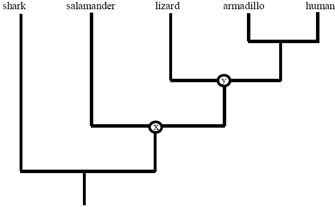
Map content
Classification
Phylogenetic Classificaion
- Reflecting evolutionary relateness
- Phylogenetic tree
- Diagram showing evolutionary descent
- Living organisms at the top of the branches
- Ancestral species in the branches & trunks
- Branch points represent common ancestors
- The further up you go, the further up in time
- Species in the branches are extinct
- The further up you go, the further up in time
- Branch points represent common ancestors
- Ancestral species in the branches & trunks
- Living organisms at the top of the branches
- Diagram showing evolutionary descent
Classification is hierarchal
- Hierarchal= A system of ranking in which small groups are components of larger groups
- Moving down the Hierarchy organisms in a taxon are more closely related
- Each grouping in a system is called a Taxon
- Taxon = Any group within a system of classification
- Taxa are discrete
- I.e They can only belong in 1 taxon & no other
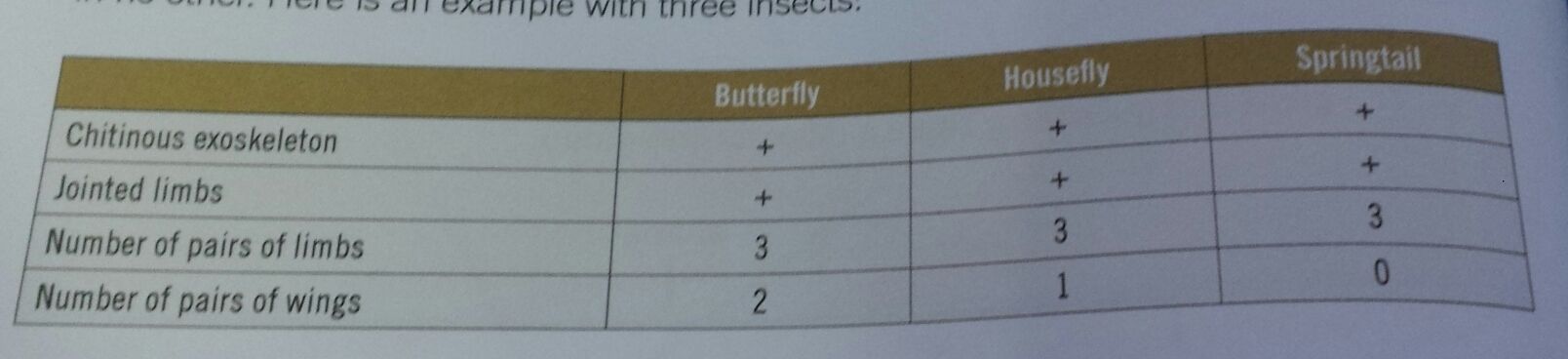
- E.g This picture
- Exoskeleton & jointed limbs are the same
- As well as the same No. of limbs
- But have different No. of wings, which places them in different taxa
- As well as the same No. of limbs
- Exoskeleton & jointed limbs are the same
- Taxa are discrete
- Taxon = Any group within a system of classification
- Each grouping in a system is called a Taxon
- Moving down the Hierarchy organisms in a taxon are more closely related
- Hierarchy of biological classification
- Domain
- Kingdom
- Phylum
- Class
- Order
- Family
- Genus
- Species
- Genus
- Family
- Order
- Class
- Phylum
- Kingdom
- Domain
- Hierarchal= A system of ranking in which small groups are components of larger groups
Purpose of a classification system
- Lets us infer evolutionary relationships
- E.g if 2 organisms are very similar we put them in the same taxon
- We infer that they are closely related
- E.g if 2 organisms are very similar we put them in the same taxon
- Easier for communication
- E.g it's easier to say 'Bird' than 'vertebrate egg-laying biped with feathers & beak'
- When describing the health of an ecosystem/rate of extinction
- It is more useful to refer to families than species
- Lets us infer evolutionary relationships
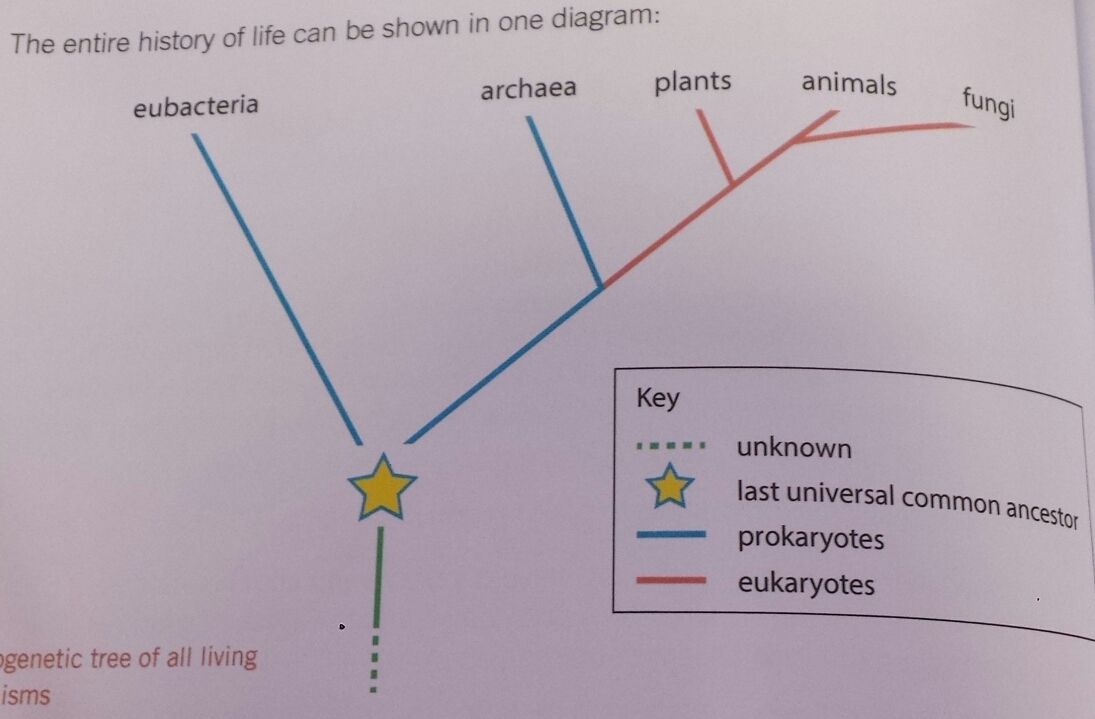
The 3 domain system
- The largest taxon
- Defined on basis of DNA & rRNA sequences
- Domains
- Eubacteria
- Normal Bacteria
- Archaea
- Extreme Bacteria
- Eukaryota
- Animals, Plants, Fungi, Protoctista
- Eubacteria
- Domains
- Defined on basis of DNA & rRNA sequences
- The largest taxon
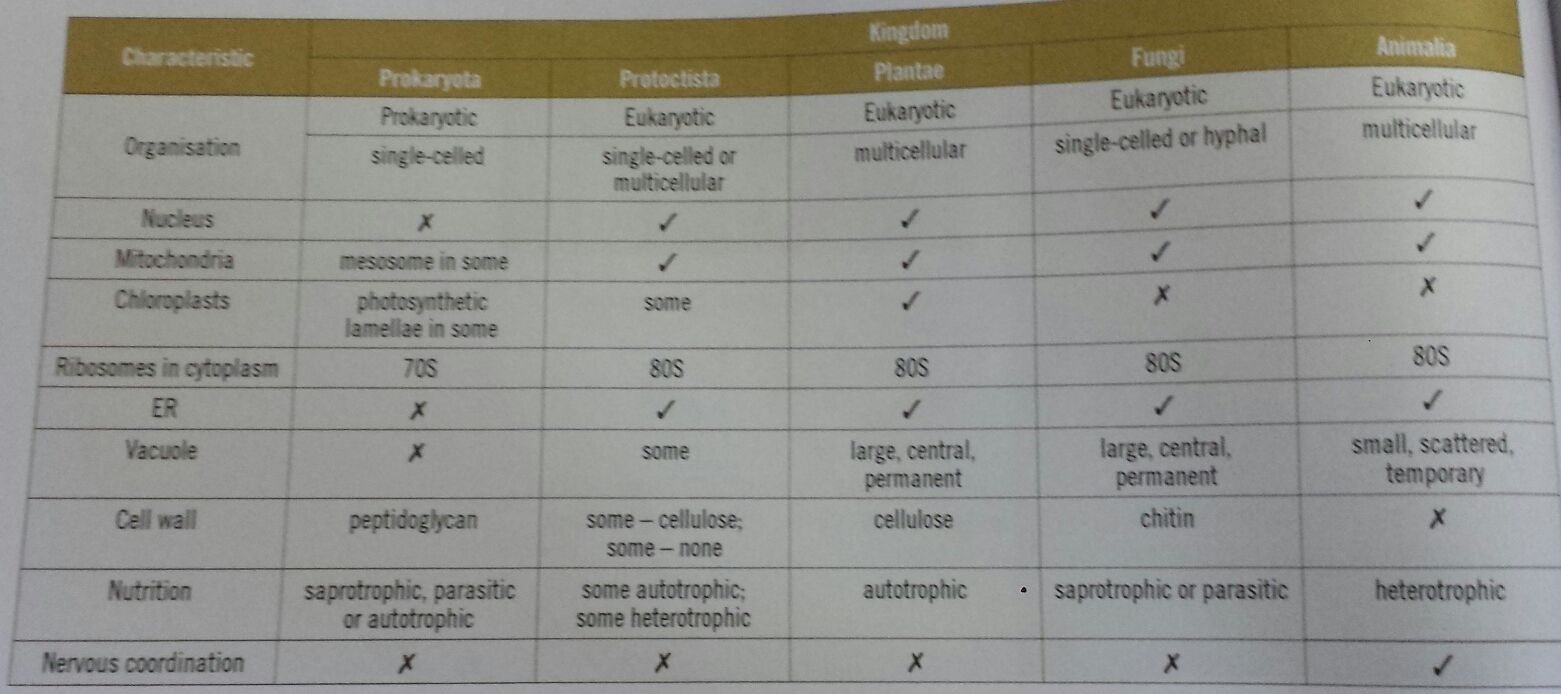
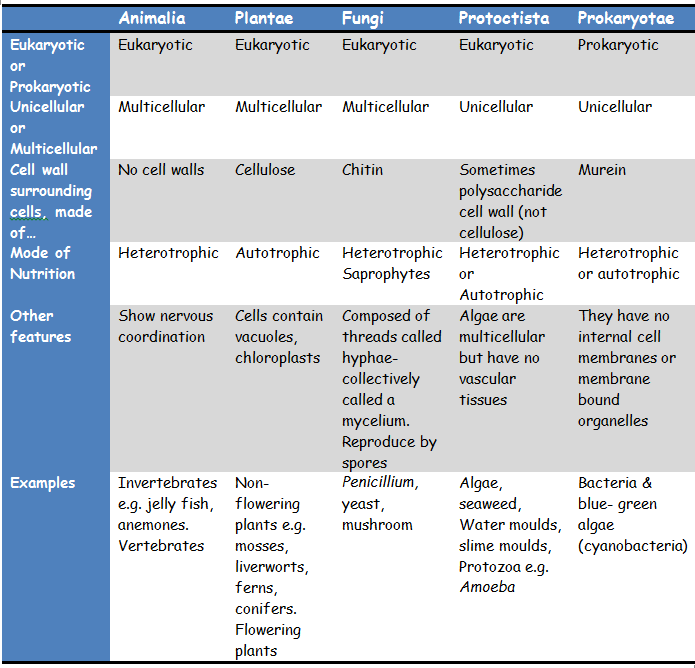
The 5 Kingdom System
- Prokaryotes
- Prokaryota
- Eukaryotes
- Animalia
- Plantae
- Fungi
- Protoctista
- Prokaryotes
Species
- A group of organisms that can interbreed to produce fertile offspring
Relatedness of organisms
- Theory of evolution suggests that all species have a common ancestor
- Assessing relatedness w/physical features
- When looking at how closely-related 2 species are
- Biologists look for homologous structures
- Homologous Structures
- Similar structure of component to perform a different function
- May have similar developmental origin
- E.g Pentadactyl Limb
- Limb w/5 digits
- But adapted for different functions
- Divergent Evolution
- Where a common ancestral structure has evolved & performs different functions
- Analogous strucutures
- Have corresponding function & similar shape
- But different origin
- Have corresponding function & similar shape
- Limb w/5 digits
- Similar structure of component to perform a different function
- Homologous Structures
- Biologists look for homologous structures
- When looking at how closely-related 2 species are
- Assessing relatedness w/genetic evidence
- DNA sequences
- During course of evolution species undergo changes in their DNA base sequences
- Which eventually accumulate until organisms become different species
- The more closely related a species the more similarity in their DNA sequences
- DNA analysis confirms/ corrects evolutionary relationships
- The more closely related a species the more similarity in their DNA sequences
- Which eventually accumulate until organisms become different species
- During course of evolution species undergo changes in their DNA base sequences
- DNA hybridisation
- Comparing DNA base sequences of 2 species
- To work out how closely related 2 species are:
- 1) DNA is extracted & fragmented
- Fragments are mixed together
- Complementary base sequences hybridise
- This gives a percentage
- Complementary base sequences hybridise
- Fragments are mixed together
- 1) DNA is extracted & fragmented
- To work out how closely related 2 species are:
- Comparing DNA base sequences of 2 species
- Amino acid sequences
- Sequence of amino acids are determined by the sequence of DNA
- The degree of similarity in the amino acid sequence of same proteins reflects how closely related they are
- Sequence of amino acids are determined by the sequence of DNA
- Immunology
- Proteins of different species can be compared using immunological techniques
- If antigens of one species is mixed w/specific antibodies of another
- The antigens & antibodies make a precipitate
- The closer the evolutionary relationship the more precipitate is made
- The antigens & antibodies make a precipitate
- If antigens of one species is mixed w/specific antibodies of another
- Proteins of different species can be compared using immunological techniques
- DNA sequences
The species concept
- The Morphological definition
- If 2 organisms look very similar they are likely to be of the same species
- Morphology = The literal shape/form of the organism
- If 2 organisms look very similar they are likely to be of the same species
- The Reproductive definition
- If 2 organisms are of the same species
- They can interbreed to produce fertile offspring
- If 2 organisms are of the same species
- The Morphological definition
The Binomial System
- Naming system given to organisms of all species
- Made up of Genus name & Species name
- The names are unambiguous & can be understood worldwide
- Regardless of language spoken
- How to use the binomial system
- Genus name is 1st & 1st letter is capital
- Species name is 2nd & all lowercase
- Both name written in italics & underlined
- Species name is 2nd & all lowercase
- Genus name is 1st & 1st letter is capital
- Naming system given to organisms of all species
Images and files in the map
Information
- Description
- User has deleted their subject information Mind Map on Classification, created by Deleted user on 26/02/2017.
- Created by
- Deleted user
- Views
- 28
- History
-
- Created by Shehzeb basharat · Apr 25, 2016
- Copied by Ashley Lewis · Feb 26, 2017
- Rating