
Notes
Migration
Content of the notes (1)
Page 1
MIGRATION
Requirements:
-Discuss the causes, processes, patterns and results of recent migratory flows
-Assess the consequences of economic migratory flows in LDCs and DCs
Recent = up to 40 years
Types of Migration
Voluntary and Involuntary migration
Voluntary migration:
-involves personal choice
Examples include employment opportunities, better climates (especially for retirees), personal relationships or social amenities
Involuntary migration:
Forced migration and impelled migration
E.g.s:
-Religious persecution: Christians being pushed out from Kano area in N.Nigeria by Muslims (majority)
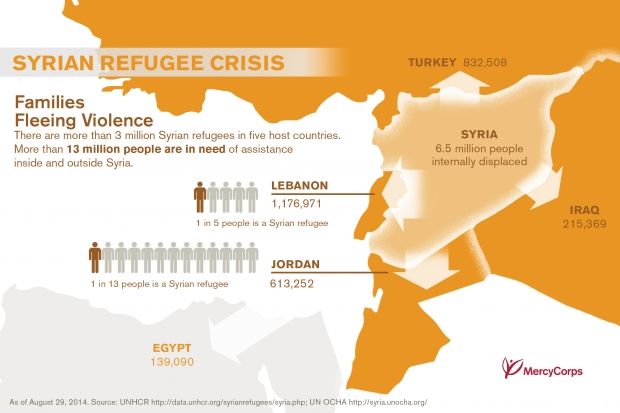
-Wars that create refugees: Syrian conflict has displaced 3 million international refugees to neighbouring countries Turkey, Lebanon, Jordan and Iraq. (Also European countries such as Germany and Sweden)
-Racial discrimination: 60,000 Asians forced of Uganda by Idi Amin in the 1970s
-Famine: Irish potato famine 1841-1850: more than 1.3 million emigrated overseas.
-Natural disasters: e.g. eruption of Mount Soufriere in 1990s
Internal and International Migration
Temporary and permanent migration
-Temporary: can be classified as seasonal (employment, agricultural work) or periodic (holiday travel)
-Permanent: motivated by search for employment, retirement location, etc
Migration is a movement that usually refers to a permanent or temporary change in home. It includes movement between countries and within a country. (Waugh)
*note that natural increase of a country does NOT include migration. However, migrants do contribute to natural increase.
Net migration:
Difference between immigration and emigration
Major International Migration Patterns
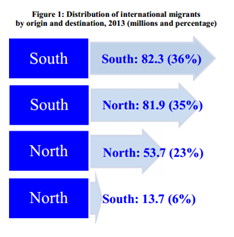
South-south migration is as common as South-North migration
Growing percentage of migrants migrate from North-South
Majority of international migrants originate in the South (71%) but have to take into account that population in the South is much larger than the North
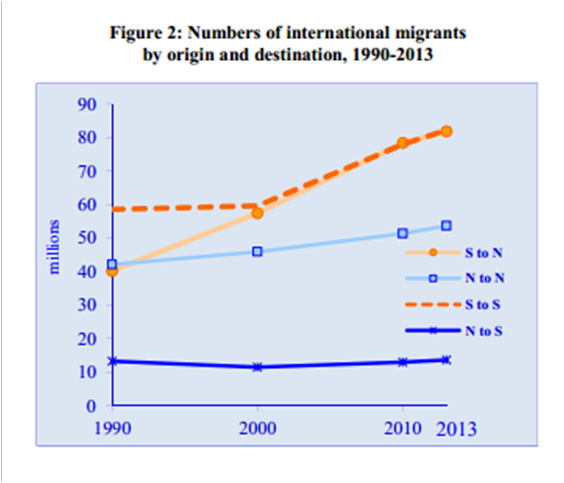
main driver of global migration trends
from 1990-2013, South-North migration doubled
South-North Migration
Prominent Migration Flows 2013
South-North
-Mexico to America is the world's largest corridor of international migration. In 2013 US hosted 13 mil migrants from Mexico
-Turkey - Germany and Algeria (former French colony) - France
-China, Philippines and India to US
South-South
-Ukraine to Russian Federation (bilateral flow)
-Bangladesh to Bhutan
-Afghanistan to Pakistan and Iran
North-South
-US to Mexico and South Africa
-Germany to Turkey
-Portugal to Brazil
-Italy to Argentina
North-North
-Germany to the US
-UK to Australia
-Canada, Korea and UK to the US
Afghanistan - Pakistan and Iran
Southern Asia (India) to oil-producing countries in Western Asia (India - UAE 2.9mil, India - Saudi Arabia 1.8mil)
South-South context, informal movements are likely to be more common and unrecorded
Causes of Migration
Top five remittance corridors
South-North migration:
-US > Mexico
-UAE > India
-US > China
-US > Philippines
(US is the top remittance-sending country)
North-North:
-France > Belgium
-France >Spain (vice-versa)
-US >Germany
Australia>UK
South-South:
-India Bangladesh
-Malaysia > Indonesia
-Russia Ukraine
North-South:
-Turkey > Germany
-Argentina > Spain
-Mexico > USA
-Belarus > Poland
-Kazakhstan > Germany
PULL FACTORS
Economic Opportunity
-growing demand for skilled labour in emerging economies in the South
emerging African and Latin American economies
BRICS countries: Brazil, Russia, India, China, South Africa
Incomes in sending and host country converge:
2001 study initially estimated 335,000 to move west each year but numbers are expected to drop below 150,000 after 10 years as incomes converge
North-South Migration
in the South
PUSH FACTORS
Economic
-Financial and economic crisis in the North
2008 Financial Crisis
-1/2 of 1.3 million East Europeans returned home from Britain by end 2008 due to unemployment
-Sharp drop in immigrant flow to America, figures in 2008 were 1/2 of that in 2000
Reasons for return migration to North:
-e.g. Polish currency strengthened against the pound
-Government in Spain offered lump-sum advances of unemployment benefits to encourage migrant workers to return home
Expansion of Global Companies
-Part of the offshoring process of many manufacturing and service activities
China is fast becoming the leading destination for international placements
Other BRIC economies also increasing in popularity
Return Migration
-In response to financial crisis
-Increased levels of return in several countries experiencing strong growth e.g. Brazil, China
Retirement Migration
In search of warmer climates and cheaper living
America and Canada > Mexico, Latin America, Carribean
Europe > Bulgaria, Romania and Turkey (around the black sea)
Europe > Southern Europe, Mediterranean
Colonial ties; movement of British to South Africa
Asia:
Thailand, Malaysia and Philippines as emerging retirement locations.
South-North Migration
Migration Policies
Japan:
-Long cherished ethnic homogeneity
-Koreans composed the largest group (607,000), followed by Chinese (488,000), Brazilians (287,000), and Filipinos (199,000).
-Well over 90 percent of resident foreigners came from either Asia (74 percent) or South America (18 percent)
-Perception that migrants contribute to rising crime rate and deterioration of public security
-Ageing population (and population decline in 2005) are causing labour shortages and fiscal burdens.
-Business community called for relaxation of foreign labour controls
cultural foundations, social fabric and national identity
Italy:
-Liberal policy towards immigrants mostly from Italy's ex-colonies in North Africa in the 1970s
-Under pressure to tighten immigration policies to ensure
that illegal immigrants will not be able to travel throughout the EU once
internal border controls are abolished
Tackling illegal immigrants:
-1990: introduced visa requirements for visitors from the Maghreb and Turkey
-2008: criminalised unauthorized entry into Italy, discriminatory sentencing
for illegals, draconian penalties on Italians who provide accommodation to
migrants without papers
France:
-Many immigrants are Muslims - highest Muslim minority in European countries
-Countries of origin mainly from Algeria, Morocco, Tunisia and Mali
-Marseille has been a model for successful integration of immigrants, but racial tensions have been rising these few years
-Introduced a stricter French language test in 2012, which reduced the no. of acquisitions of citizenship.
Internal Migration
US
highest internal migration rates in the world.
Other advanced economies e.g. New Zealand, Finland and Norway
Syria - Syrian conflict
Malawi - environmental factors causing internal displacement e.g. floods in 2012 displaced thousands
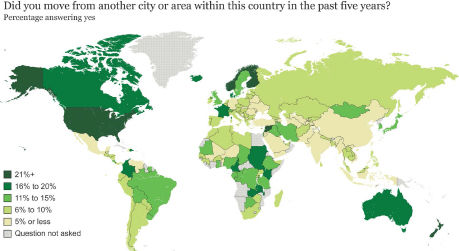
The demographics of global internal migration:
-Young (15-29) and Educated more likely to internally migrate
China:
increased demand for labor in the urban areas
due to growing investment in the manufacturing sector within the developed regions, such as Beijing, Shanghai, and Guangzhou
and an aging population and lower fertility rates in these cities.
mistreatment and discontent amongst rural-urban migrant workers as they are denied legal residence in a city
mid-1980s, Hukou System — a system to record and control internal migration and which hindered rural-to-urban movements
— loosened in response to the demands of both the market and rural residents wishing to seek greater economic opportunity in cities.
Intervening obstacles
Capital (illegal immigrants from Mali bribe drivers and policemen to aid their crossing)
Government regulation laws
Language, religion
Political differences
Misinformation
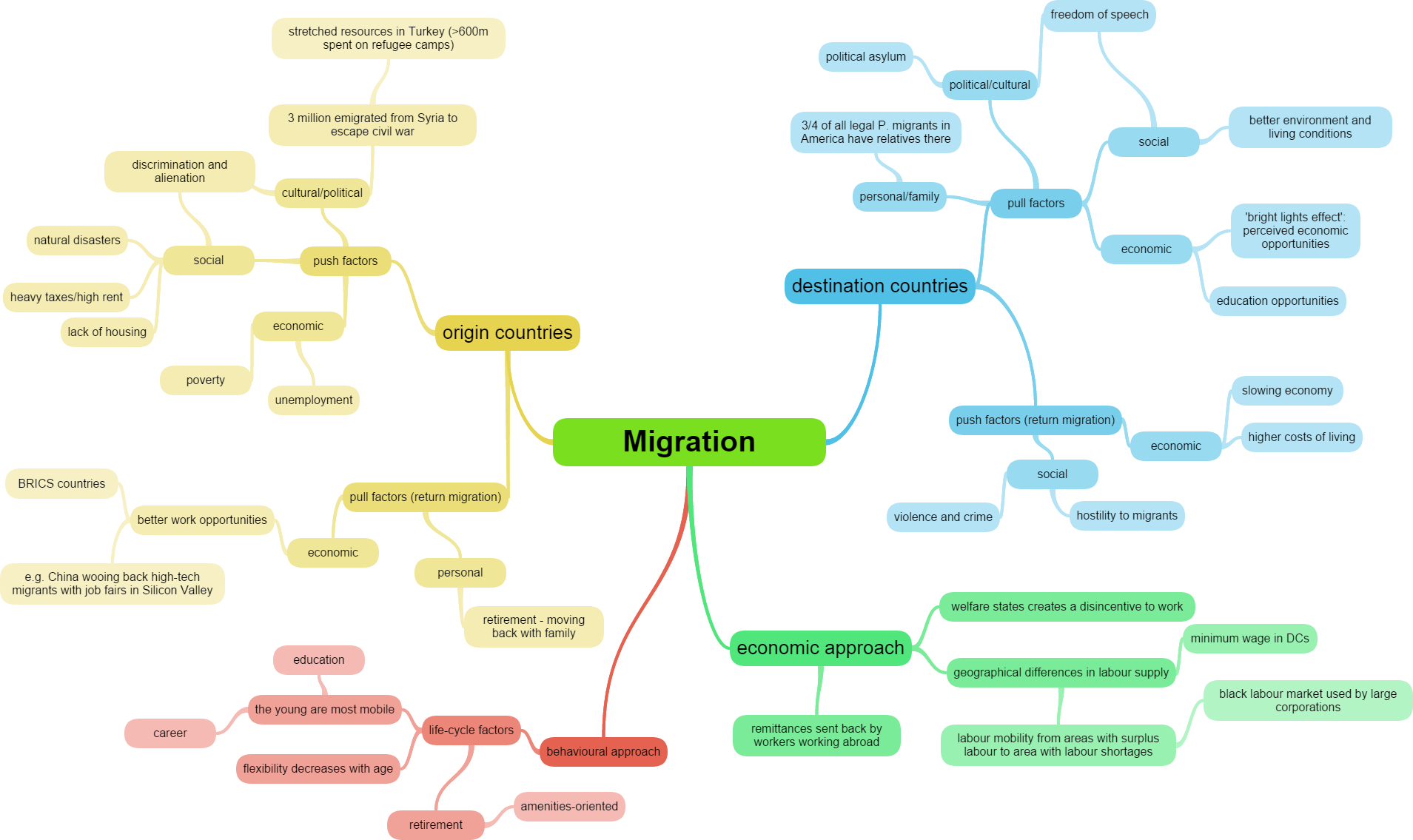
Impact of Labour Migration
Labour Migration
people seeking work on a global scale (international division of labour)
increased mobility in the future
Trends in Labour Migration
-Greater attention given to highly-skilled professionals.
-Increasing proportion of women in international migration
-Labour migration policies increasingly employer-driven
-Clandestine movement and employment of unskilled or semi-skilled labour migrants continue to rise BUT dwindling acceptance rate of these migrants
Led by Australia and Canada. DCs redesigning policies to attract highly skilled immigrants
anti-immigration policies tackling illegal immigration
Attracting skilled migrants
-Britain allows highly-skilled immigrants to enter the country without a job offer
-Germany and Netherlands institute fast-track visas and "green card" systems to attract highly-skilled migrants
-Indonesia, Singapore
-2000 Germany introduced 20,000 visas for information-technology staff
Globalisation:
-Creates linkages and connections to MEDC's labour markets
-Globalisation of trade --> global movement of people
(Chinese labourers in Australia's blue-collar industry)
Types of migration
Migration patterns
push-pull factors
migration policies
migration issues
Information
- Description
- Note on Migration, created by joy peh on 11/09/2014.
- Created by
- joy peh · Sep 2014
- Updated
- Feb 19, 2016
- Views
- 44
- Rating