
Population
267 resources created by 215 users
This Population page on GoConqr gathers community-made mind maps, flashcards, quizzes and notes on population change, the Demographic Transition Model, ageing and youthful populations, and national policies such as China's One Child Policy. It's built for school students revising the topic and teachers after ready-made material. There are over 2,200 resources here, including more than 70 quizzes, over 1,500 mind maps and more than 480 flashcards, mostly at secondary level. Pick a mind map to get started, then test yourself with a quiz.
Top Population resources
-
111 cardsIB Geography Topic 1 Populations in Transition (SL) 1.1 At what rate is the global population growing and what does this mean?
-
77 cardsGeography multi choice flashcards
-
Mind map Geography - Population Note: Not complete
-
21 cardsPopulation pyramids and DTM What is the Demographic Transition Model?
-
 Mind map Singapore's Population Policies Chapter 2: Singapore's Population Policies
-
15 questionsAPHG UNIT 2 POPULATION Despite a failing fertility rate, the population of a country with a large percentage of young people conti...
-
Mind map Population Case Study - Youthful Population in Uganda
-
Mind map Demographic Transition Model (DTM)
Quizzes
See all 20 quizzes-
15 questionsAPHG UNIT 2 POPULATION Despite a failing fertility rate, the population of a country with a large percentage of young people conti...
-
2 questionsAdvantages and Disadvantages of the DTM What are the advantages of the DTM ?
-
14 questionsTransmigration in Indonesia What does transmigration cause?
-
18 questionsThe Gambia
-
172 questionsAPHG Midterm Review Which one of the following is considered a pull factor in regard to migration?
-
29 questionsPopulation - Whole Unit Quiz Why is population growing rapidly?
-
33 questionsCh 2 Test ap human geo chapter 2 test
-
16 questions10 Population and the environment 10 Population and the environment topic revision quiz
Mind maps
See all 130 mind maps-
Geography - Population Note: Not complete
-
Singapore's Population Policies Chapter 2: Singapore's Population Policies
-
Population Case Study - Youthful Population in Uganda
-
Demographic Transition Model (DTM)
-
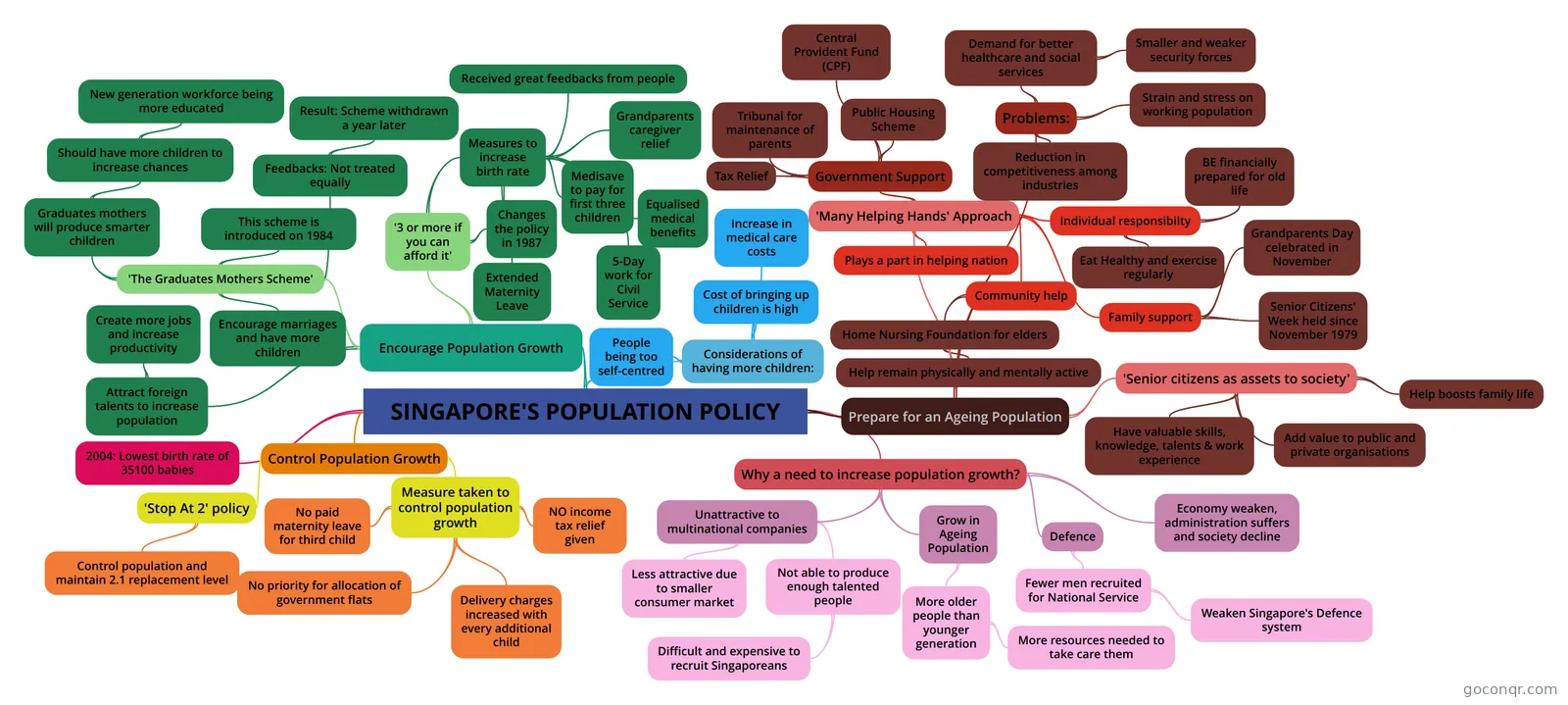 SINGAPORE'S POPULATION POLICY
-
China ~ Antinatalism China's antinatalism mind-map (case study)
-
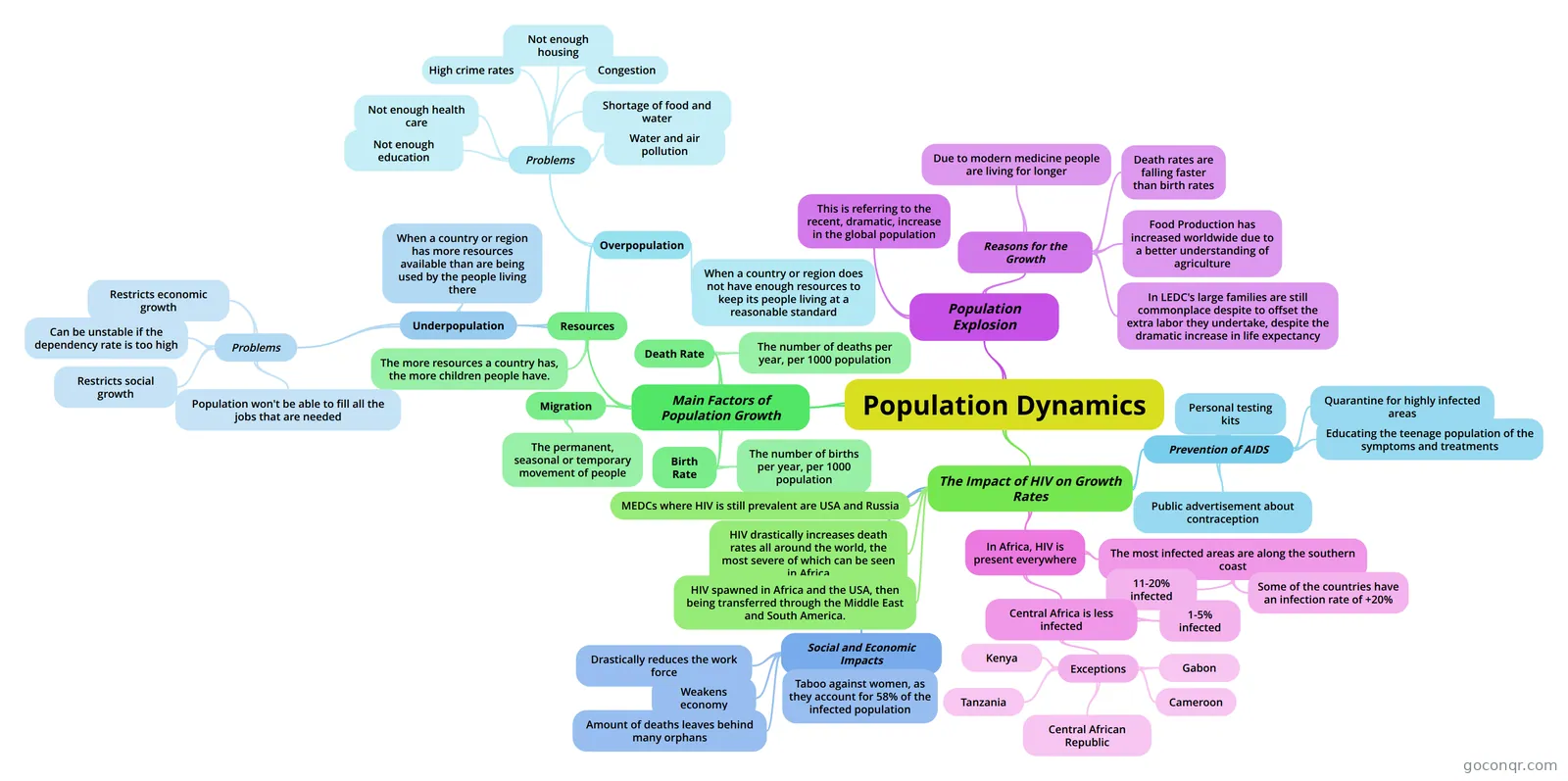 Population Dynamics
-
Population Dynamics
Flashcards
See all 85 flashcards-
111 cardsIB Geography Topic 1 Populations in Transition (SL) 1.1 At what rate is the global population growing and what does this mean?
-
77 cardsGeography multi choice flashcards
-
21 cardsPopulation pyramids and DTM What is the Demographic Transition Model?
-
31 cardsPopulation flashcards
-
26 cardsVocabulary - Migration A characteristic spread from one place to another. This section shows how and why people migrate.
-
8 cardsPopulation Key Terms For AQA exam board-Population Change
-
5 cardsPro-natalist policy for France (code de la famille) Pro Natalist Policy
-
70 cardsAQA Geography Population All you need to know for AQA A Geography Population unit. Good luck =)
Flowcharts
-
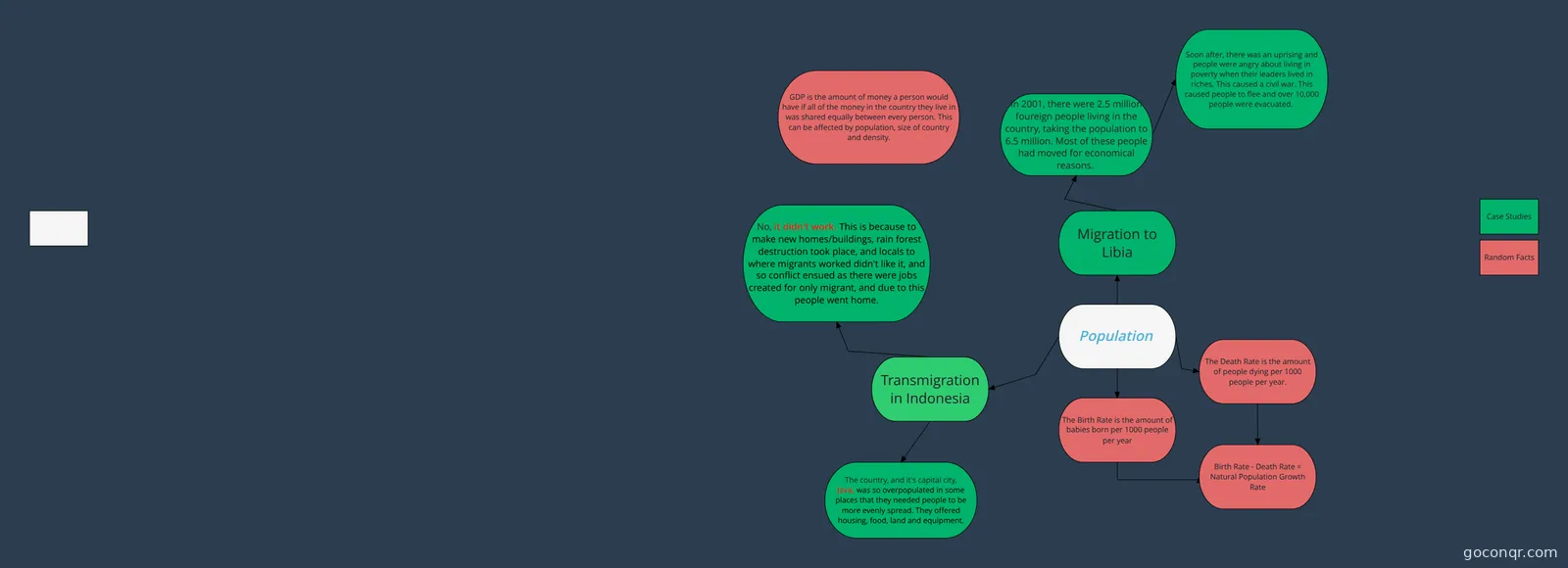 Geography, Paper 1, Question 1; Population Mind map for Question 1 of paper 1, Population. Straight from a text book, just less bulky and easier to un...
-
Population Distribution and Density (Ireland) Key Definitions and Introductory Paragraph (page 3 of notes) need to also be included before discussing cas...
Notes
See all 24 notes-
Thailand population control case study
-
Thomas Malthus Theory Thomas Malthus theory on population Thomas Robert Malthus was born in 1766. In 1788, he became a member of the clergy and earned his master’s degree in 1791. When he was 32, he published his first paper on how agricul...
-
Demographic Transition Model THE DEMOGRAPHIC TRANSITION MODEL! (OR THE DTM) A demographic transition model is a graph that shows population change over time! To the left,...
-
Populations in Transition Explain population trends and patterns in births (Crude Birth Rate), natural increase and mortality (Crude Death Rate, infant and child mortality rates), fertility and life expectancy in contrasting regions of the wor...
-
Comprehensive essay on the one child policy!! China’s one child policyIntro: China is one of the fastest developing countries in the world, and it has the highest population, followed by India. They have approximately 1.4 billion people living there today, but in...
-
Population Growth Population growth How did growing population come to exist? Population growth has been the Earth’s problem for a long time. It is making issues like food supply, energy resources, and water quality. Since people face ...
-
Population population case studies and about populationinternational migration (Poland to the UK)Poland joined the EU in 2004. the EU law was that people who lived in Poland could migrate to the UK meaning that they could work a...
-
Changing times, changing needs. A case study of Singpore's population policy 1. Graduate Mother's Scheme Introduced in 1984 to encourage marriages among graduates and also to encourage graduates to have more children to ensure a more educated workforce in the future.Education level of the pare...
Slides
More Geography topics
About Population
GoConqr OriginalWhat the resources cover
The unit follows the main ideas of population geography. Population Change explains natural change, birth rate and death rate, and notes that for a population to increase, births must exceed deaths. Population Dynamics looks at the population explosion and why people are living for longer. The slide set Population growth and structure covers world population growth and the two things that affect it.
Models and case studies
The Demographic Transition Model has several versions, including a mind map, a set of notes and a quiz on its advantages and disadvantages. Case studies run through the page:
- Japan's ageing population, and France's solution to an ageing population
- Youthful populations, such as the Uganda case study mind map
- Population control in Thailand, in a set of case study notes
- Anti- and pro-natalist policies, including China's One Child Policy
- Singapore's and Kerala's population policies
Where to start
- Begin with the mind maps called Population Change and The Demographic Transition Model to get the key vocabulary.
- Move to the case studies once the model makes sense.
- Use flashcard decks such as Population Key Terms to learn definitions.
- Finish with a quiz such as Population - Whole Unit Quiz.
Using quizzes and maps together
Read a map first, then take a quiz on the same idea. Where you lose marks, go back to the map or notes. Some quizzes are written for specific courses, such as APHG Unit 2 Population, so choose the ones that match your exam board. The listed resources mention GCSE, A-level, IB, IGCSE and AP Human Geography.
Where this unit sits
This unit belongs to the strand Population, Settlement and Cities in Geography. Pick one case study today and see how much you can recall.
Frequently asked questions
Which resource should I open first?
Start with the Population Change mind map. It sets out natural change, birth rate and death rate in a few nodes. Then open The Demographic Transition Model mind map, which builds on those ideas, before trying a quiz to see what has stuck.
What do the mind maps cover?
They cover population change, population dynamics, the Demographic Transition Model, population pyramids and ageing populations. Others look at case studies, including Japan, Uganda, Singapore, Kerala and China's One Child Policy, so you can link each idea to a real place.
Which exams do the resources suit?
The listed resources mention GCSE Geography, AQA GCSE Geography, IGCSE Geography, A-level Geography, AQA AS Geography, WJEC AS Geography, IB Geography and AP Human Geography. Most material is at secondary level, so check that a resource matches your course before relying on it.
Are the resources free to use?
Yes. Every resource listed here is free to open, study and take, with no account needed. They were made by GoConqr users, not by GoConqr itself, so it is worth comparing them with your own class notes.
Are there case studies on the page?
Yes. You will find case study resources on Thailand's population control, youthful populations in Uganda and The Gambia, ageing in Japan and France, and population policies in China, Singapore and Kerala. Some are mind maps, others are notes or flashcard decks.
What if I can't find what I need?
Try a different format for the same topic, as many ideas appear as a map, a note and a flashcard deck. A free account also lets you make your own quizzes, mind maps, flashcards and notes to fill any gap.