
Notes
Chapter 1 & 2
Content of the notes (4)
Page 1
What is psychology?
It is the scientific study of how we think, feel and act.
It can help us understand how individuals behave in a groups.
On larger scales it can be applied to society as a whole.
Psychology is a science and is based on a scientific attitude and scientific methods.
Scientific method
-Identifying a question or problem to investigate
-Developing the exact research question or hypothesis (testable prediction)
-Choosing research design - deciding how we will gather the data (evidence)
-Gathering data
-Examining evidence
-Coming to conclusions based on evidence
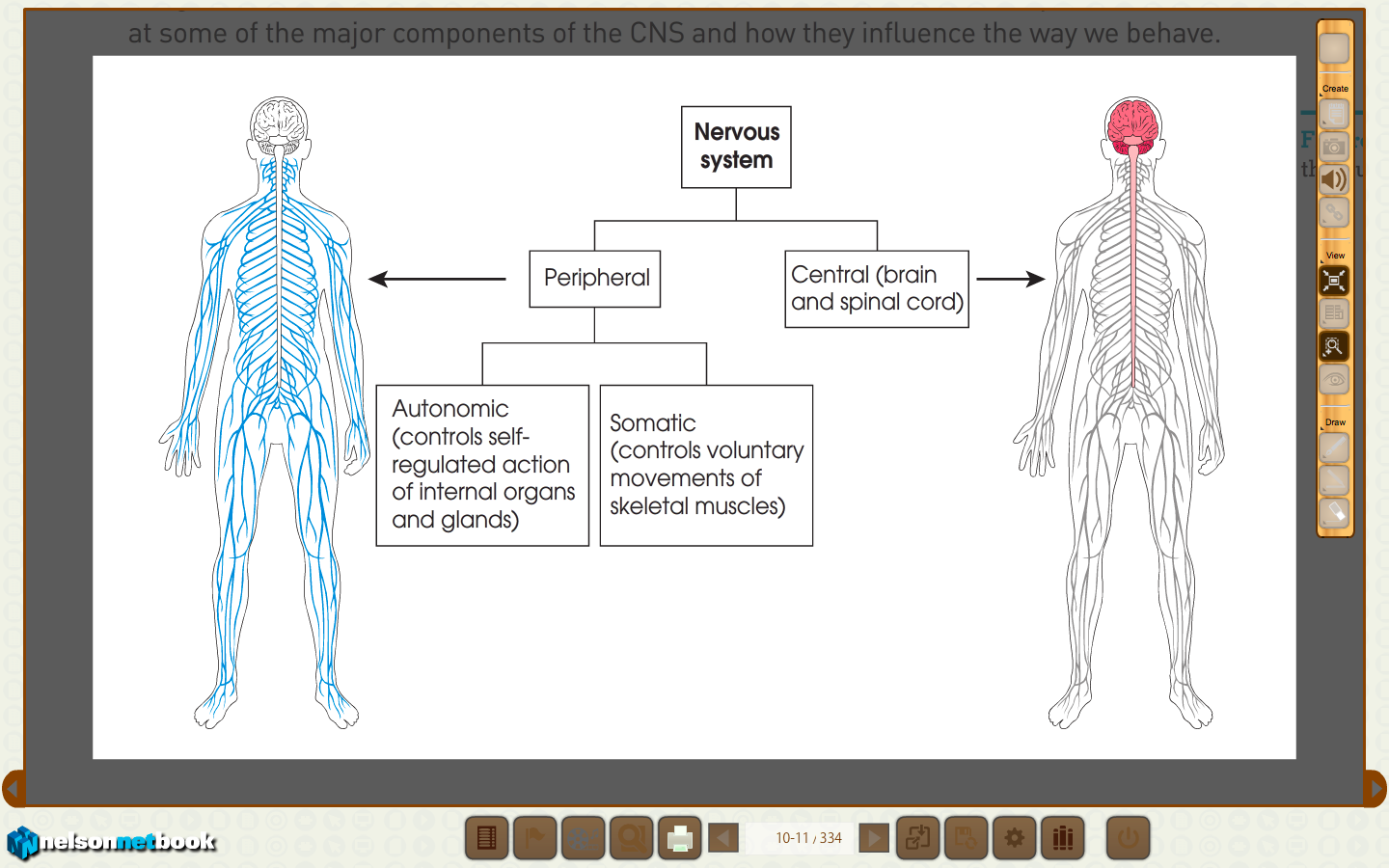
The nervous system
Two main sections:
*The central nervous system (CNS)
- brain
- spinal cord
*Peripheral nervous system (PNS)
- all other nerves
Built of nerve cells called neurons.
Page 2
The brain and its parts
Three main physical parts of the brain:
-The hindbrain
-The midbrain
-The forebrain
The hindbrain
- located at base, near back of skull
- made up of brainstem and cerebellum
- brainstem controls vital activities that we have no control of; heart rate, breathing, sleeping, reflex actions
- cerebellum coordinates voluntary movements
- if damaged you may walk like a drunk
The midbrain
- located on top of brainstem under cerebral hemisphere
- receives messages for hearing, seeing, tasting ad touching and sends the, to higher brain regions where they will be dealt with
- receives messages and sends them to the cerebellum
The forebrain
- largest part of the brain
- think, feel and behave
- outer layer = cerebral cortex
- cortex has two halves/hemispheres separated by a groove
Hemispheres
- joined by thick band of fibres called the corpus callosum
- allow messages to be sent from one hemisphere to the other
* left hemisphere gets sensory information from right side of body
-controls right side
- controls verbal function
- speaking, reading, writing, understanding language
-reason or analyse or interpret information
* right hemisphere gets sensory information from left side of body
- controls left side
- non-verbal activities
-drawing, jigsaw puzzles, appreciating works of art
- following maps, recognising faces and finding way through a maze
The cerebral cortex
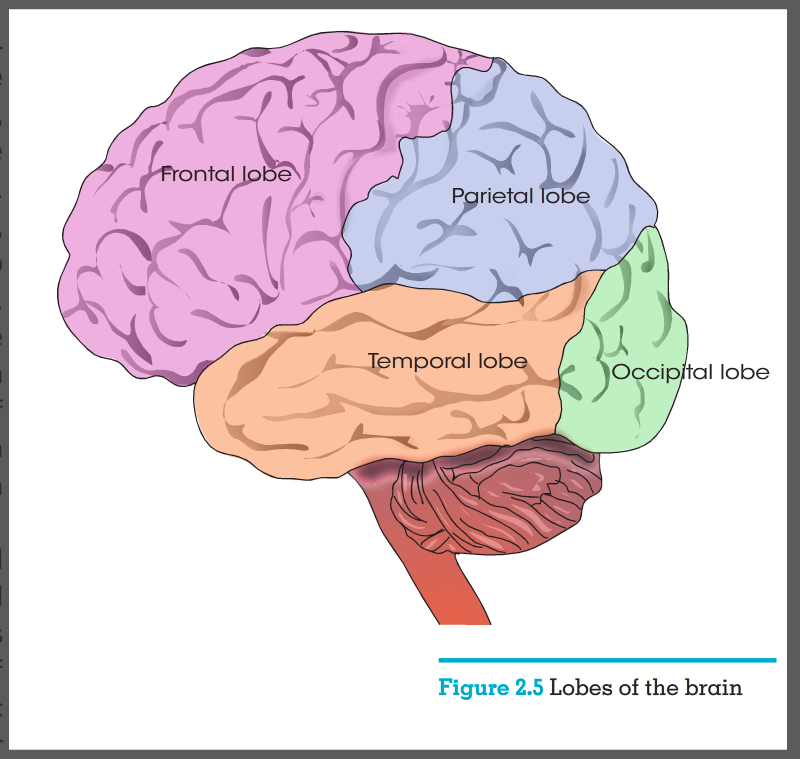
Can be subdivided into lobes:
-Frontal lobe
-Temporal lobe
-Occipital lobe
-Pariental lobe
The frontal lobe
- higher mental ability and the control of movement
- located at front of cortex
- if damaged - personality change, capacity for reasoning, problem solving reduced
The temporal lobe
- speech and hearing
- located on either side of cortex
- if damaged - language ability
The occipital lobe
- vision or seeing
- located at the back of brain
- if damaged - affects vision
The parental lobe
- bodily sensations (temperature, touch, etc.)
- located on top of cortex
- if damaged - reduction in bodily feelings
Rest of the brain is called the association cortex
- assists with language and other mental abilities
- damage can lead to problems with language; odd pronunciation or slurred speech
Page 3
Structure of the neuron
-Brain is made up of billions of nerve cells (neurons) and trillions of synapses that are connectors between these cells.
-They enable messages to be transmitted from one neuron to another.
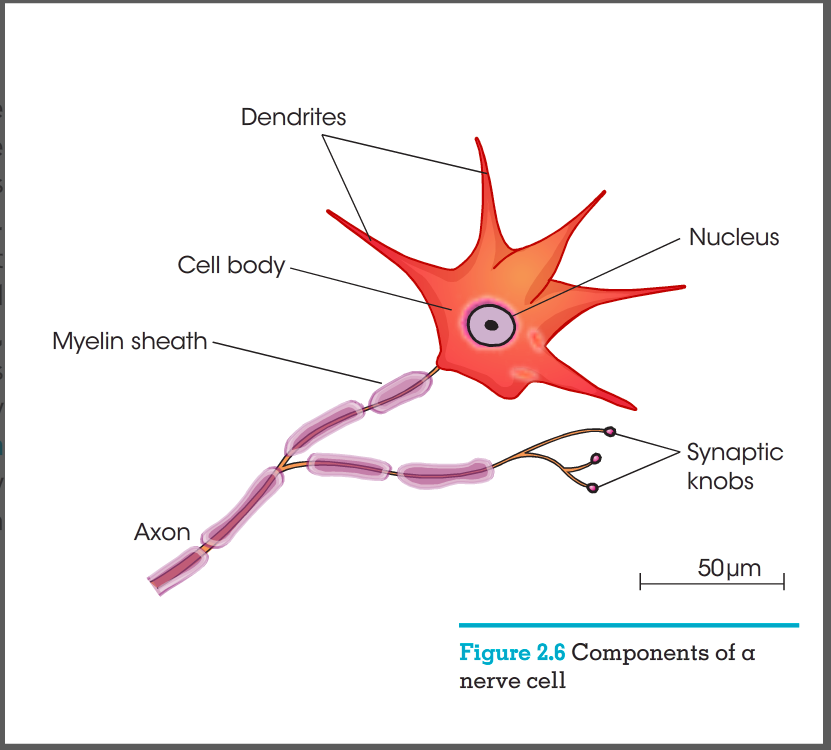
Different types of neurons have common features:
- a cell body
- dendrites
- an axon
Cell body
- contains the nucleus
- controls the maintenance and metabolic functions of the cell
- growth and/or repair is provided by mitochondria
Dendrites
- the fine branches from the cell body
- receive incoming information from other neurones and transmit it to the cell body
Axons
- transmit information from cell body
- to other neurons or to cells in glands and muscles
- in motor and sensory neurons the axon is surrounded by myelin sheath
- it protects axon and assist with speed transmission of nerve impulses
Page 4
External recording techniques
The EEG or electroencephalograph is used to investigate the whole brain.
- measures brain waves or electrical activity
- brain waves can vary in frequency and amplitude or intensity
Brain images
The CT (computerised tomography) or CAT (computerised axial tomography) scan is a type of X-ray that involves sending a series of narrow beams through the head. CT scans help in the aid to detect tumours, strokes and other injuries. It can also detect wether areas have shrunk due to Alzheimers disease.
MRI (magnetic resonance imaging) uses strong magnetic field, radio frequency pulses and computers to create an image of the brain. Aids in the detection of tumours and other abnormalities.
fMRI is a more recent for of MRI, the f stands for functional. It is used to measure activity in the brain when neurons consuming oxygen.
PET (position emission tomography) scans show which areas of the brain are using more energy or consuming more glucose.
Physical activity
-Halving the risk of heart attacks
-Adding two years to your life
-More energetic, tired less
-Less depressed
-Strengthens the heart, increasing blood flow and lowering blood pressure and the blood pressure reaction to stress
-Increases the production of mood boosting neurotransmitters such as noradrenaline, serotonin and the endorphins
-Higher levels of physical self concept - we feel better about our bodies, better sleep and a sense of accomplishment
Drug effects
*Depressants - or 'downers;, calm the activity of the nervous system and slow body functions
*Stimulants - or 'uppers', excite the nervous system and arouse body functions
*Hallucinogens - change our perceptions and give us sensory images without input from the senses
Information
- Description
- Western Australian Certificate of Education (WACE) Psychology (Units 1&2) Note on Chapter 1 & 2, created by Rhiannon Young on 30/05/2016.
- Created by
- Rhiannon Young
- Views
- 23
- Rating