
Population Change
Slides in this set (10)
-
Introduction to Population Change
- This section is all about population change. It involves how it is changing, why it is changing, the problems that it comes with and how people are trying tot reduce the the problems that it causes.
-
Exam Questions for Population Change
- Page 117
- 1
- a) 6 cities contained 500,000 people or more
- b) The population grew by another 3 million people and they spread out to more areas in the region.
- 4 new settlements
- c) Socially, rapid population growth means there would be limits on resources and increased risks of famine. Secondly, there may be an increase in conflict between different people or increases in crime. Economically, more people would be paying taxes.
- Social: Services like healthcare and education would not be able to cope. Children have to work to support large families. There are not enough houses for everyone.
- Economic: Not enough jobs for the number of people/increase in unemployment. Increased poverty.
- d) Indonesia transmigration policy involves them moving people from the densely populated island of java to less densely populated areas such as Sumatra. This policy has not been sustainable because it has not slowed down the rapid growth of the population.
- Population still not evenly distributed and conflict between the natives and the new people moving there. It only reduces the impacts of population growth.
-
Exam Questions for Population Change
- Page 123
- 1
- a) People that move from on country to another for work.
- The movement of people into an area
- b)(i) The UK does not have a limit to the amount of polish immigrants it would have. There are job opportunities.
- (ii) Not many good/ well paid jobs in Poland. There is a limit in other counties.
- Push factors make you want to move from where you are.
- Pull factors are things that attract you to a person's destination.
- i) high unemployment and low wages
- ii) Unlimited number allowed and more work available
- c) One would be that conflict between people there and the new migrants. Secondly, more people will be paying taxes towards the services.
- Competition for jobs.
- 2
- Case study - Refugee migration- Africa it the EU
-
Summary Question on Population Change
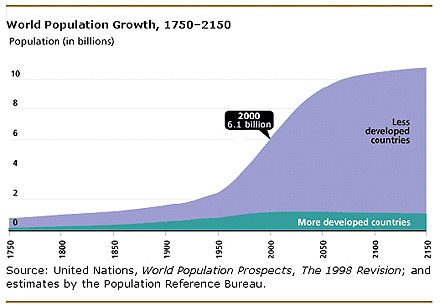
- 1) Birth rate and death rate effect population size of the world.
- 2) Natural increase happens with the death rate is lower than the birth rate
- 3) Exponential growth means that is it growing faster and faster.
- 4) *It steadily decreases. Stays steady and high.
- 5) It stays constant
- 6) Poorer countries are more likely to be in the early stages of the DTM
- 7) Pyramids that show the amount of people in each age group per million people.
- 8) So children can look after their families when they get older
- 9) * If there are more jobs available then less babies would be born because people would be focusing on their careers.
- 10) There would be a narrow base and wide upper, top part/ more older people that younger people
- 11) *Government would have to develop schemes to control it make polices that focus on young people like education. Don't have to focus on pensions.
- 12)* Using things in a way that is sufficient for everyone without jeopardizing it for future generations
- 13) Birth control programmes
- 14) A population were there are more elderly dependents than young dependents
- 15) Low birth rate and medical advances
- 16) Encourage immigration as most immigrants from Poland are 34 and under (80%) and they would pay taxes towards services and towards peoples pensions
- 17) Moving from one country to another
- 18)
- When a person leaves an area it is called emigration.
- 19) Person who flees to a foreign country or power to escape danger or persecution
-
Introduction to Changing Urban Environments
- This topic focuses on the growth of urbanization and the problems that arise from is. It also focuses on how we can resolve those problems.
-
Exam Questions for Urbanisation
- Page 130
- 1
- a) yes there is because you can see that the majority of Hindu speakers are situated in watertown (24 people) compared to trumpetville and sprougtington which only have 8 and 7. This suggests that different ethnic groups are split into different areas and are not mixed together.
- b) one reason is because the same ethnic group are usually restricted to the same are for the same reason whether that be financial or cultural. Sometimes there are things in the area that support there cultural beliefs that they cannot find close to people of their ethnic group in other areas. people prefer to live near people of the same ethnic background or religion.
- c) they could help them to access information about services in the area such as healthcare and education as this will mean they would have the same opportunities as everyone around them. Provide leaflets and posters in a variety of languages; provide interpreters in hospitals and police stations; improve communication; make sure there are suitable services.
- 2
- a) 45
- b) the more car owners the more traffic accidents in 1990 there were 45 accidents and 7000 car owners in 2005 there were 90 accidents and 20,000 car owners. It is more likely that traffic incidents will happen
-
Exam Questions on Urbanisation
- Page 137
- 1b
- a)(i)-(ii) in the revision guide
- b) it releases a lot of gas and particulates like carbon dioxide and soot which go in the air and cause global dimming and global warming.
- c)(i) environmentally, it contributes to global warming and the increase in temperature melts the ice caps.
- (ii) use carbon credits.
- 2
-
Summary Questions of Changing Urban
- 1) the growth of urban areas such as cities.
- 2) richer countries
- 3) when people from rural areas moving to urban areas
- 4) people wanting to find jobs that pay well.
- 5) central business district
- 6) a) CBD is used for...commercial things like shops and offices and it is where transport routes meet b) the suburbs are used for housing
- 7) land use has changed as a lot of shopping centres are built out of town; new housing is built on brownfield sites in the inner city; inner city tower blocks have been closed down and replaced with housing estates.
- 8) ethnic segregation and traffic congestion. also: run down of CBDs and shortage of good quality housing
- 9) for the ethnic segregation they make leaflets or posters with a variety of languages for different people. secondly the tailor services to peoples cultural needs like same sex doctors
- 10) Liverpool dockland development
- 11) more accidents, more air pollution that damages health and buildings more sound pollution more traffic jams and congestion
- 12) jobs that do not benefit the economy through the use of taking taxes through wages not monitored or taxed by the government
- 13) they are funded by the government and improve temporary accommodation
- 14) a)the Favela-Barrio Project b) environmental: made roads wider to let things, especially emergency services through Social: give adults classes to improve their literacy to get better jobs Economic: they let people apply to legally own their property.
- 15) the roads are too narrow can't afford to dispose waste; it is a very big problem
- 16) effects of water pollution are it kills fish which disrupts food chains; could poison humans that eat the fish; can spread disease
- 17) bulid sewage treatment plants and pass laws
- 18) a city that uses resources now without jeopardizing it for the future generations
- 19) land fill is unsustainable and so by recycling nothing goes to waste.
- 20) it stop people from having to use green spaces for buildings and others can use it in the future.
-
- 1
- a) tourism on a very large scale
- b) much of the population gets its money from working for tourism organisations because it creates jobs.
- c) tourists may litter the beaches which will ruin the habitats of the wildlife and disrupt food chains
- d) Thailand is located in the Indian Ocean. The environmental impacts of the mass tourism there is that a lot of litter is left on the beach during events such as the moon party.
-
- 1) because tourism generates a lot of money
- 2) the scenery and activities such as mountain biking or skiing
- 3) they create jobs for people...
- 4)GBP
- 5) development, stagnation, decline/improvement...
- 6) a)Blackpool b) the coast c) have areas where they cannot go on the beach d) no
- 7) positive: creates a lot of jobs; makes more money and boost economy negative: destroys habitats; more pollution from traffic and more litter.
- 8) 1. separate areas so that tourists don't go there 2.
Information
- Description
- GCSE Human Geography Slide Set on Population Change, created by Abbie Adewole on 30/05/2017.
- Created by
- Abbie Adewole
- Views
- 0
- Rating