
Flashcards
Cell Biology
Cards in this deck (29)
- 1What are the functions of the plasma membrane of a cell?Physical isolation - separates cytoplasm from extracellular fluid.
Regulation - controls entry of ions and nutrients, release of secretions and waste
Sensitivity - contains receptors that allow it to respond to other molecules
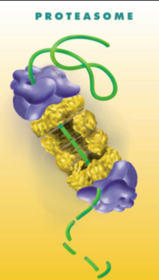
Structure - stability of cell - 2ProteasomeProteasomes are organelles that contain proteolytic enzymes (proteases). They remove damaged, denatured or abnormal proteins from the cytoplasm.
- 3The Endoplasmic ReticulumThe Endoplasmic Reticulum is a network of intracellular membranes, continuous with the nuclear envelope. Folds polypeptides into new proteins.
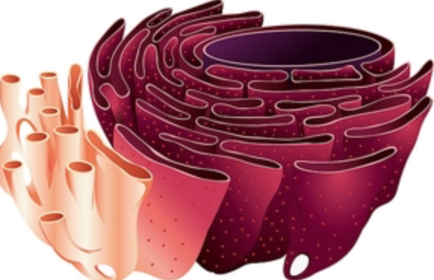
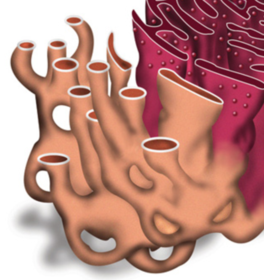
- 4Smooth Endoplasmic Reticulum (SER)The SER has no ribosomes. It is involved in synthesis of lipids and phospholipids, steroid hormones (oestrogen and androgens), metabolism of carbohydrates, and detoxification of natural metabolism products and of alcohol and drugs.
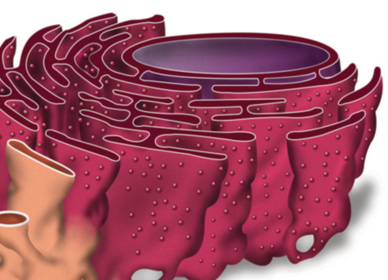
- 5Rough Endoplasmic Reticulum (RER)RER contains ribosomes. Here, newly synthesised proteins are modified, packaged, and exported to the Golgi Apparatus. Ribosomes synthesise proteins based on instructions by RNA.
- 6Golgi BodyThe Golgi Body reeves proteins or glycoproteins from the ER. It modifies and packages them to be secretions for release from the cell. It also packages essential organelles, lysosomes, for use within the cytoplasm.
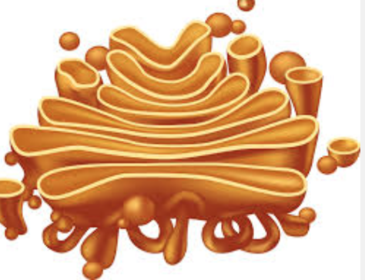
- 7LysosomeLysosomes are membrane bound organelles filled with digestive enzymes that break down large molecules. Formed by the Golgi Body, lysosomes remove damaged organelles, destroy bacteria and cleanup the cell. Waste = exocytosis, anything usable is reabsorbed into cytosol.
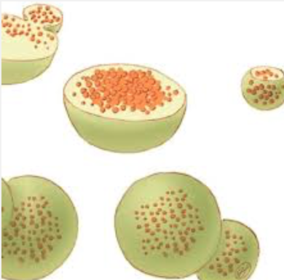
- 8PeroxisomeEnzymes for Peroxisomes are produced at free ribosomes and transported by carrier proteins. Peroxisomes absorb and break down fatty acids and other organic compounds. This produces hydrogen peroxide, then broken down by catalase into oxygen and water.
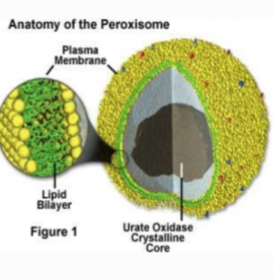
- 9MitochondriaMitochondria are double membrane bound, contain their own DNA (mtDNA) and ribosomes in their matrix. They produce energy; metabolic enzymes in the matrix catalyse reactions that release carbon dioxide and additional energy for cell function. Makes ATP (adenosine triphosphate)
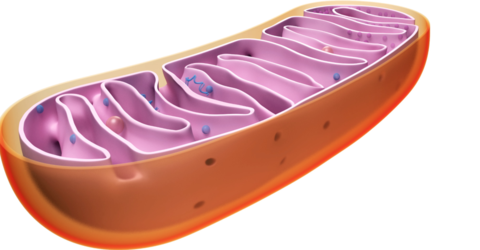
- 10Plasma Membrane phospholipid bilayer)hydrophobic tails
phosphor heads
receptors
protein channels
pores
enzymes
and more!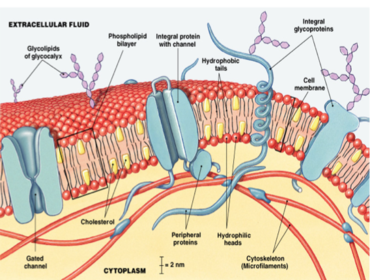
- 11HomeostasisAll body systems working to ensure a stable internal environment, in response to changes inside and outside the body.
*Ensuring our body functions within a normal range* - 12Intrinsic Regulation (Autoregulation)Automatic response in a cell, tissue or organ, to some environmental change.
- 13Extrinsic RegulationResponses controlled by the nervous system or endocrine system
- 14What are the three components required for homeostasis?Receptor
Control Centre
Effector - 15What does the "receptor" do in homeostasis?Receptor receives the message/stimulus detecting change
- 16What does the "control centre" do in homeostasis?The Control Centre processes the signal and sends out instructions to the Effector.
- 17What does the "effector" do in homeostasis?The Effector carries out instructions from the Control Centre, and enacts a response relating to the original stimuli to bring the body to homeostasis.
- 18Negative FeedbackThe Effector negates or stops the stimulus, bringing body to homeostasis.
- 19Positive FeedbackThe Effector increases the stimulus to bring the body outside of normal range temporarily. An example of this is in blood clotting following a cut.
- 20Contents of a cellThe cell contains a cytoplasm which is filled with cytosol and organelles, as well as the nucleus.
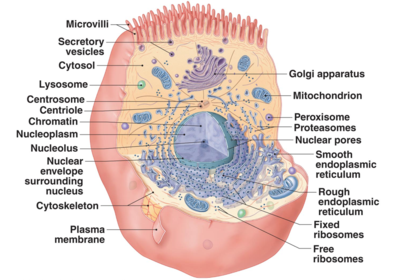
- 21The NucleusThe nucleus determines the cell's structure and function based on the RNA it contains.
The nucleolus that sits within the nucleus, makes ribosomes.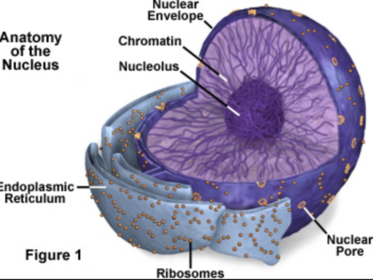
- 22DNA Nitrogenous BasesNitrogenous bases are:
Adenine
Thymine (DNA)
Guanine
Cytosine
Uracil (RNA)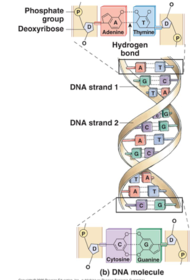
- 23DNA Nitrogenous Bases Complimentary StrandsAdenine - Thymine
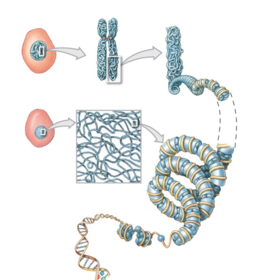
Guanine - Cytosine - 24DNA / ChromosomesIn dividing cells, DNA is tightly coiled around histones to form chromosomes.
- 25What are the three types of RNA involved in protein synthesis?Messenger RNA (mRNA)
Transfer RNA (tRNA)
Ribosomal RNA (rRNA)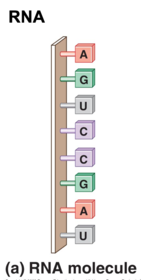
- 26Microvillimicrovilli increase the surface area of the cell for increased absorption of extracellular materials; mostly found in the digestive system

- 27CiliaCilia are small hair like projections that move in a wave like motion to help move gunk out of your lungs etc
- 28Protein SynthesisGene Activation,
Transcription,
Translation,
Processing,
Folding - 29—