
Mind map
Evaluation
Map content
Evaluation
Evaluation setup
- We would want our model to perform well on future data, without training It’s not very useful to be able to predict instance(i) is class(i) It’s easy to be perfect on training data Does not mean you will do well on future data
- Generalization
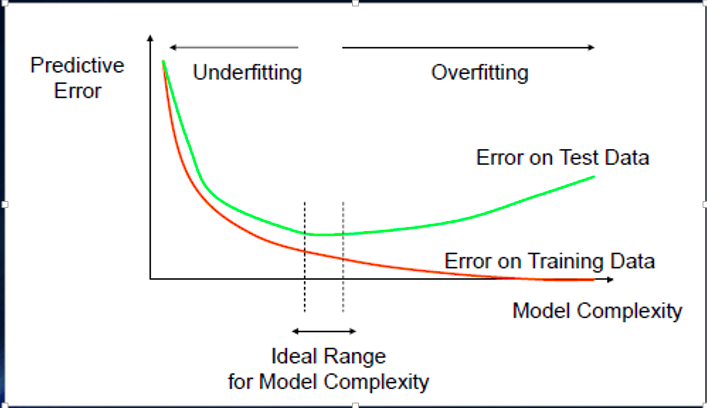
- How do we minimize future error? Avoiding over-fitting and under-fittin
- Over-fitting
- When our model can predict the training data perfectly (with few mistakes) but does not perform well on unseen future data
- The model thinks that all the data (including noise data) is important and correct
- too complex (too specific)
- low bias (approximation error) but high variance
- Under-fitting
- When our model cannot capture the underlying trend of the data Training is def. bad, but not sure about test
- The generated model is too simple (too general)
- shows low variance but high bias (approximation error)
- Estimating Error
- To know whether our learnt model under-fits, over-fits or is just right
- Test data
- Set aside part of the training data Ensure that each class is represented with approximately equal proportions in both training and test data
- Train
- Train our model without using any of the test data
- Calculate
- Calculate our models performance when tested on the test data
- If the performance of our model does not decline when we test it on the test data The model is just right Generally, simple models outperform complex models
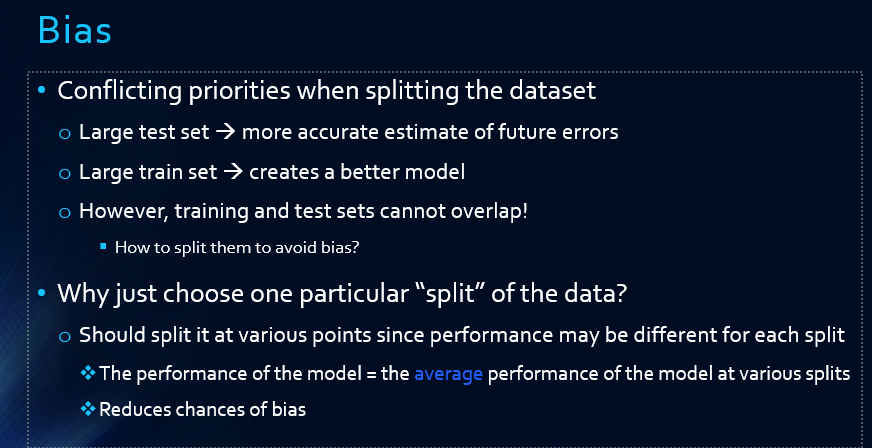
- Bias
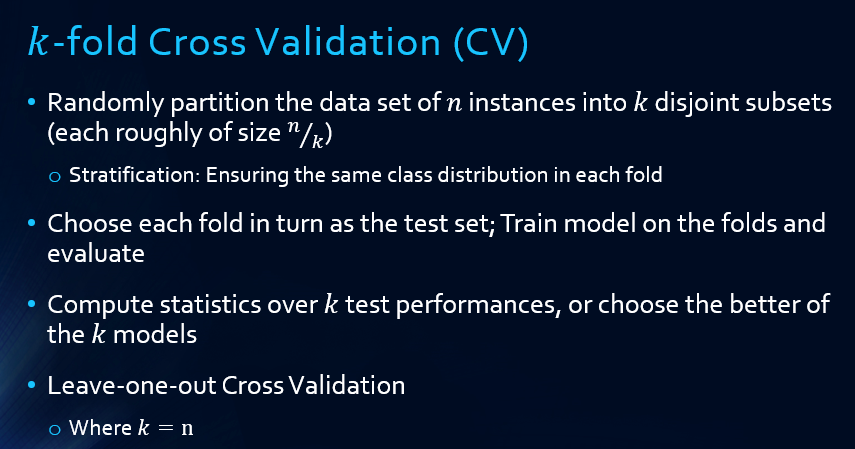
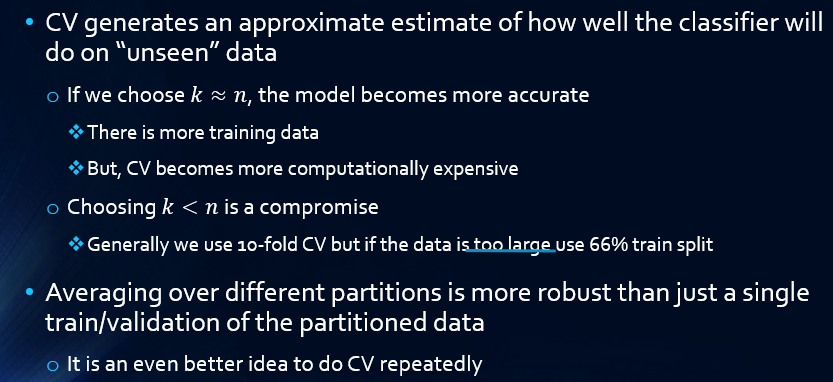
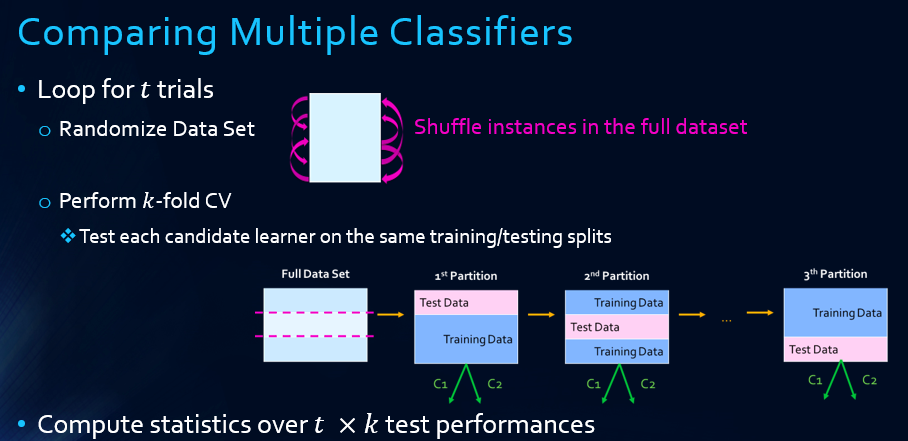
- Cross Validation
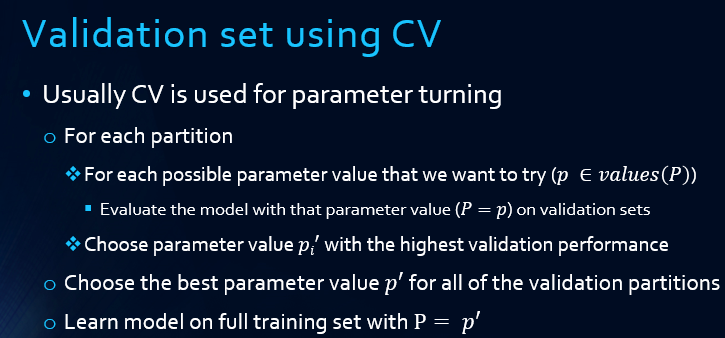
- Parameter Tuning
- Each dataset needs different levels of flexibility
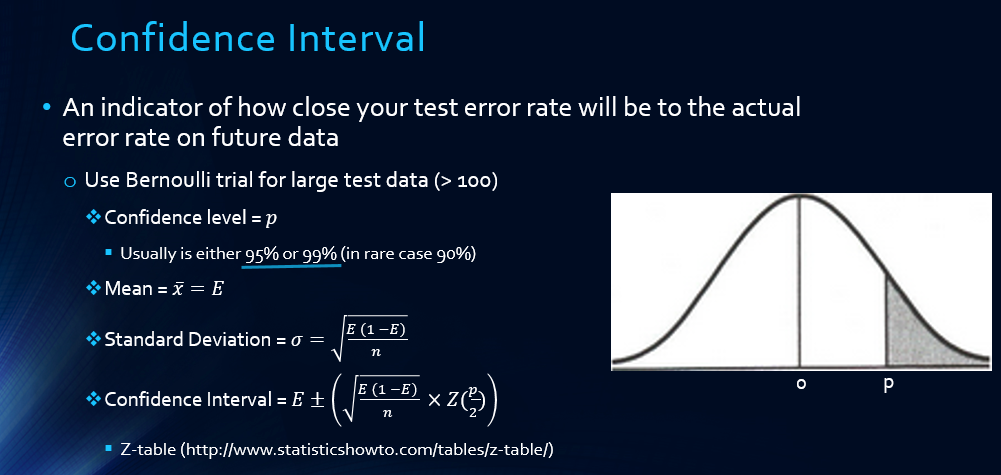
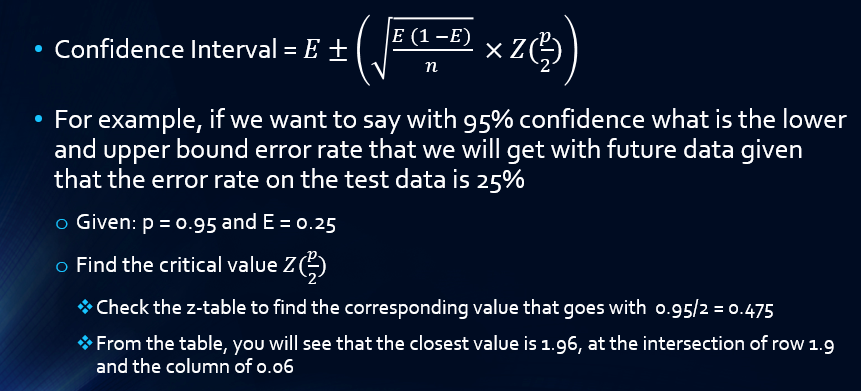
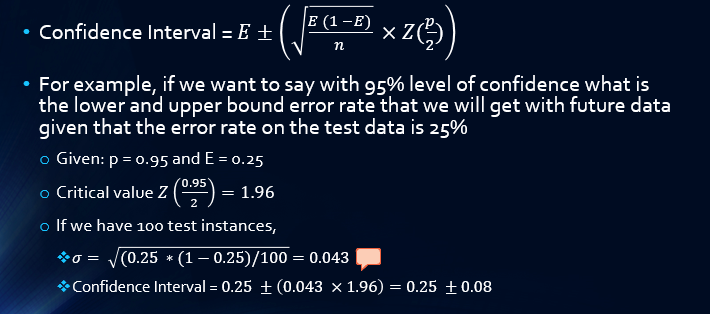
Confidence Interval
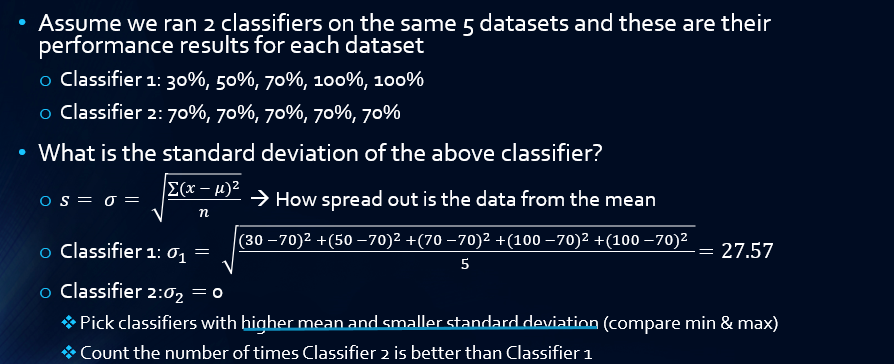
Standard Deviation
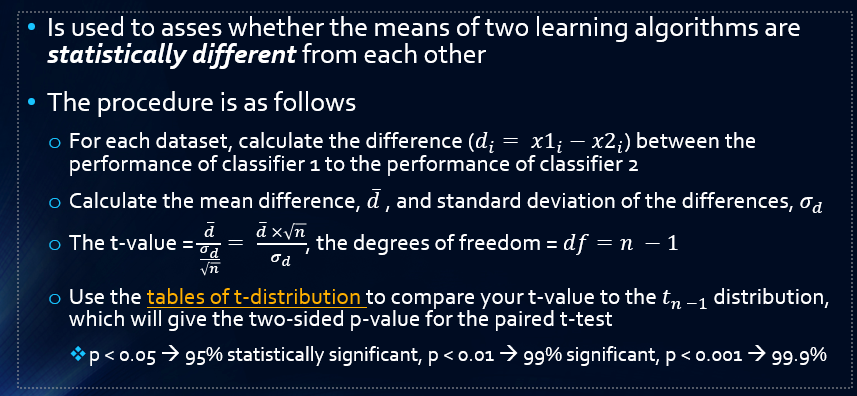
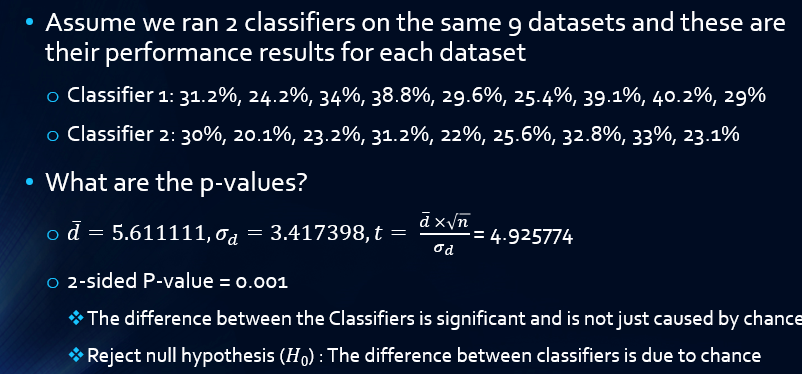
Paired T Test
Images and files in the map
Information
- Description
- Graduate diploma Graduate Diploma in Computing (Data Mining) Mind Map on Evaluation, created by Freda Fung on 21/09/2016.
- Created by
- Freda Fung
- Views
- 1
- Rating