
Mind map
The Conservatives and the Post-war Consensus
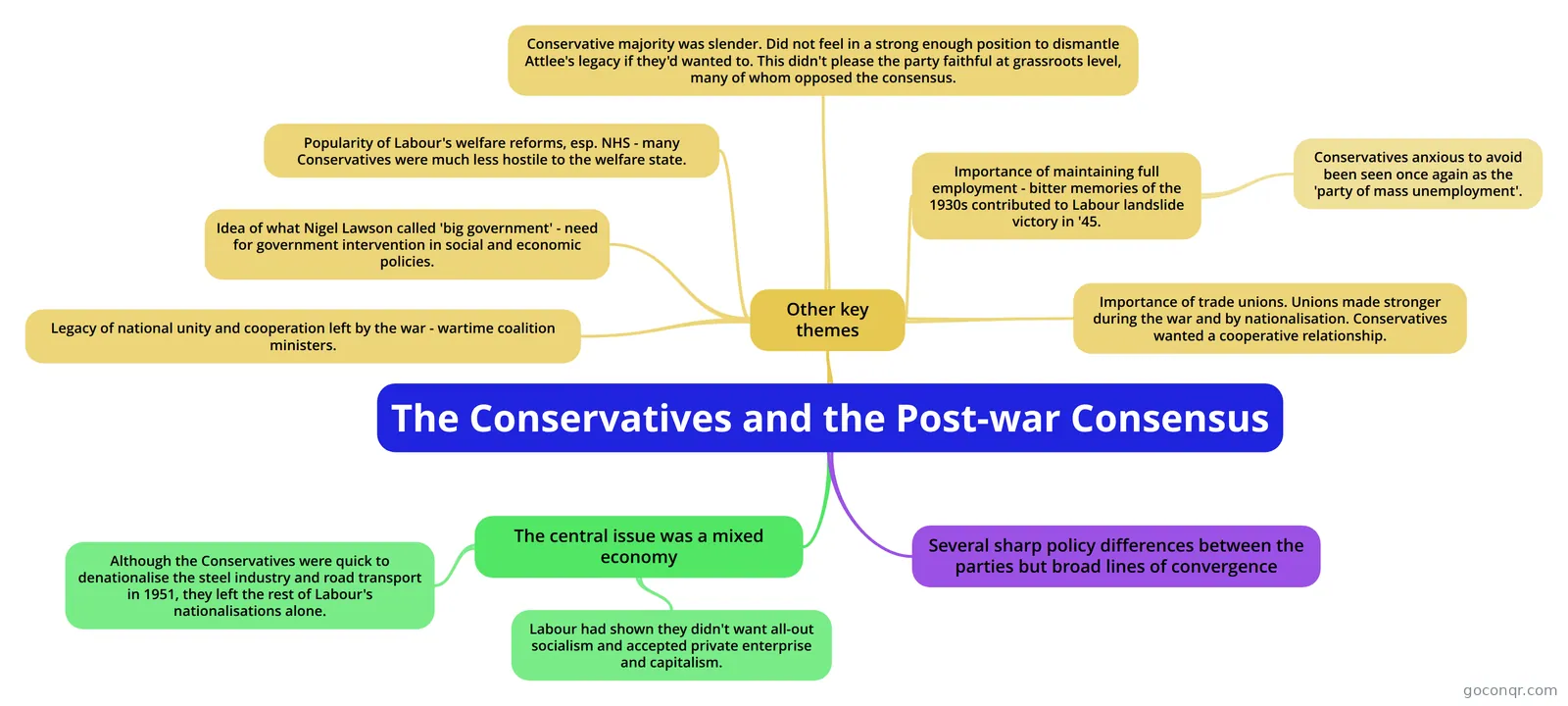
Mind map: The Conservatives and the post-war consensus
Map content
The Conservatives and the Post-war Consensus
Several sharp policy differences between the parties but broad lines of convergence
The central issue was a mixed economy
- Labour had shown they didn't want all-out socialism and accepted private enterprise and capitalism.
- Although the Conservatives were quick to denationalise the steel industry and road transport in 1951, they left the rest of Labour's nationalisations alone.
Other key themes
- Legacy of national unity and cooperation left by the war - wartime coalition ministers.
- Idea of what Nigel Lawson called 'big government' - need for government intervention in social and economic policies.
- Importance of maintaining full employment - bitter memories of the 1930s contributed to Labour landslide victory in '45.
- Conservatives anxious to avoid been seen once again as the 'party of mass unemployment'.
- Importance of trade unions. Unions made stronger during the war and by nationalisation. Conservatives wanted a cooperative relationship.
- Popularity of Labour's welfare reforms, esp. NHS - many Conservatives were much less hostile to the welfare state.
- Conservative majority was slender. Did not feel in a strong enough position to dismantle Attlee's legacy if they'd wanted to. This didn't please the party faithful at grassroots level, many of whom opposed the consensus.
Information
- Description
- A Levels History ('A closer look' notes) Mind Map on The Conservatives and the Post-war Consensus, created by lizzie.lambrou on 25/03/2014.
- Created by
- lizzie.lambrou
- Views
- 100
- Tags
- Rating