
Mind map
Cognitive Development
Map content
Cognitive Development
Milestones
- Infancy
- Piaget’s Development
- With Physical movement the infant is able to organize and coordinate sensations
- This theory is about children and how they actively construct their understanding of the world and go through four stages of cognitive development (Piaget, 1936).
- The Stages
- Sensorimotor Stages
- Preoperational Stage
- Concrete Operational Stag
- Formal Operational Stage
- The Stages
- The stage will last from birth to the age of two.
- Information Processing
- They can form concepts
- Four ways babies learn process information
- Conditioning
- This indicates the the retention of information
- Condition a baby do something like a press button, and then pressing that button will light up a toy. The baby now is using its experience and being conditions to know that pressing that button will light up the toy
- Concept Formation and Categorization
- Babies begin to classified studd in categories (Mandler and McDonough, 1993)
- “The human shows remarkable degree of learning power and complexity in what is being learned and in the way it is represented” (Mandler, 2004)
- Habituation
- Is used to tell if a baby remembers something (Cohen & Cashon, 2003)
- When infants hear the same sound and over and over, they get bored stop listening
- Imitation and Memory
- Infants have imitative abilities because they can copy someone’s face expression (Meltzoff, 1999).
- Conditioning
- Recall the past consciously
- Infant Intelligence
- Infant can find a hidden toy
- Visual attention to stimuli
- Be able to follow commands
- Relation with toys
- Piaget’s Development
- Adolescence
- Piaget’s Development
- Skills are biologically secondary skills
- Assimilation occurs
- Information Processing
- Better processing decisions making
- Activities that teen engages shape their brain
- Brain goes under complex change
- Education
- More stressful
- Student excel in different areas
- Innovative curriculum is developed
- Learn more social responsibility
- Piaget’s Development
- Middle/Late Childhood
- Piaget’s Development
- Concrete thought involves conversations and classifications
- Child ability to classify things
- Children do mentally what they have done physically
- Information Processing
- Easier for them to remember related items
- Have inflated opinion of their memory
- Better long term memory
- Intelligence
- Children learn in different ways
- Music help with intelligence
- Piaget’s Development
- Early Childhood
- Piaget’s Development
- Function substage
- Stages is where child begins level of thought
- Intuitive substage
- Preoperational thinking
- Vygotsky’s Theory
- Changing support to fit learners performance level
- Language is important
- Task that is hard to do alone, can be done with the help of the caregiver
- Information Processing
- Short term is better
- Children are lead to false memories
- Capable of learning problem solving
- Attention is influenced by feature of the task
- Piaget’s Development
- Adulthood
- Cognitive Stages
- Piaget believed that an adult and adolescent think in the same way
- Adult increase their knowledge in understanding, of physics and financ
- Individuals consolidate their formal operational thinking
- They switch from acquiring knowledge to applying it
- Adult do not think in formal operational ways (keating, 1990)
- They have multiple perspectives
- Young adult are more quantitatively advanced in their thinking
- They begin to plan intellectual problems in adolescence
- Creativity
- The magnitude of decline if often slight
- Time of great creativity
- Cognitive Stages
- Late Adulthood
- Information Processing
- Perceptual speed begins declining in early adulthood continues decline after that (Schaie, 1994)
- Decline in reaction time
- More time needed to learn new information (Park, 2001)
- Long term memory is less reliable
- The amount of information that can be used is limited
- Csikszentmihalyi discovery creative people experience a flow, he thinks everyone can do this
- Take charge of your schedule
- Have a goal everyday
- Be surprised by something new everyday
- Memory decline
- Creative contributions are completed by age fifty
- Verbal memory peaked in the fifties (Schaie, 1994)
- Intelligence
- At this age they reach their peak functioning cognitive skills (Shaie, 2005)
- Declines in memory
- Crystallized intelligence: information and verbal skills increase
- Fluid intelligence: ability to reason begin to decline (Schaie, 1994)
- Word fluency and perceptual speed linked to neuropsychologists
- Some abilities begin to decline in middle age while others increase (Horn & Donaldson, 1980)
- Information Processing
- Infancy
Theories
- 4 ways that children learn
- Imitative
- Learns skills and behaviour by watching others
- Directed
- Is taught skills and behaviour either formally or informally
- Is taught skills and behaviour either formally or informally
- Is taught skills and behaviour either formally or informally
- Incidental
- Learns in unplanned way
- By observing and understanding the results of accidental actions
- Like putting their hand on something hot teaches them not to touch it again because it hurts
- Trial and Error
- Tries several solutions to a problem to find what works
- Imitative
- Theorist
- Piaget
- Swiss Psychologist
- In his theory, there four stages of cognitive development
- Sensorimotor (0-2 years)
- They know what something is even if it is not around
- Child can only do stuff related to sensory and motor skills
- Preoperational (2-7 years)
- Although they have trouble, they begin to understand language
- Begin roleplay: start using everyday objects and imagine it as something else
- Concrete Operational (7-11 years)
- Develop Logical skills
- Aware of actions
- Develop Logical skills
- Formal Operational (12+ years)
- Begin develop to more logic skills rather then doing trial and error
- reasoning , logical and planning skills become one
- Sensorimotor (0-2 years)
- He interested in how children think
- Scheme: mental framework of a child interactions (Piaget)
- Assimilation
- Have more information of knowledge they already know
- They know what shapes are, know some name of shapes, they may name a rectangle a square
- Disequilibrium
- They are confused, they gain interests
- Equilibration
- Drives the learning process
- They realize it's not a square
- Accommodation
- Adjust the new information in their old information
- They know it is a rectangle now
- Assimilation
- Born on August 9 1896, died on September 16 1980
- Vygotsky
- Sociocultural Theory
- Infants are born with basic intellectual development like memory
- Start to build skills
- Social contact is needed for learning
- Develops based on interactions with other
- Become active in interactions
- Sociocultural Theory
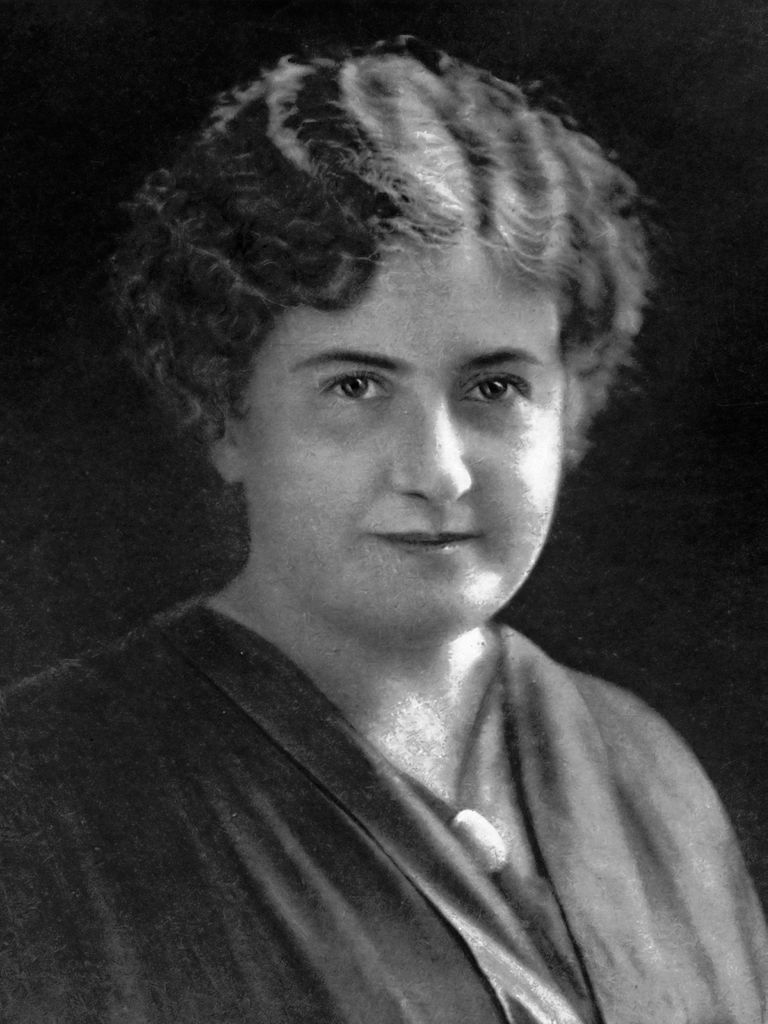
- Montesssori
- Born on august 31st 1870 and died May 6 1952
- First female doctor in italy
- Developed a way to understand cognitive development
- 1. Absorbent Mind
- 2. Later Childhood (6-12 years old)
- 3. Transformation
- 4.Adulthood (18-24 years olds)
- Everything they learned from the past years and what they loved learning the most they that into a career
- Child focus on their place in society
- Puberty: they need emotional support
- Adolescence: have attitude, they must have parents/teachers encourage them with new ideas
- 4.Adulthood (18-24 years olds)
- Focus on culture, group instinct and moral (Montessori, 1909)
- Child’s reasoning begins to develop
- They know difference between right and wrong
- 3. Transformation
- Unconscious Absorbent (0-3 years old)
- Child start to learn senses
- They can’t influenced by adults
- Conscious Mind
- Have a sense of touch
- Child is now starting to build personality
- 2. Later Childhood (6-12 years old)
- 1. Absorbent Mind
- Founder of the Montessori method of education
- Child centered educational approach of observations of children
- A classroom where kids do age appropriate activities
- Montessori Method
- Child works at own pace
- Grouping encourages children to teacher and help each other
- Child choose their own work
- Environment and method encourage self discipline
- Teacher has an unobtrusive role in the classroom
- Do not let a child continue to do something they do not want to
- Gardner
- He had a impact on education
- Teachers started recognizing the different types of intelligences and taught bette
- He believed we had nine different intelligences
- Existential: To question life and death
- Naturalist: Sensitivity to natural world
- Musical/Rhythmic : Using music to think
- Logical/Mathematical: To understand principles of the causal system
- Verbal/Linguistic: To be able express what you are thinking
- Interpersonal : To understand others
- Bodily/Kinesthetic: Using your body to solve problem
- Intrapersonal : Understanding yourself
- Visual/Spatial: Be present internally in your mind
- Born July 11th 1943
- He had a impact on education
- Piaget
- 4 ways that children learn
Impact of Environment/Factors Affecting Cognitive Development:
- Healthy Baby, Healthy Brain
- Health Builds brains
- Physical Activity
- Good body create healthy brain
- Develops muscles
- Toddlers need 3 hours of physical activity everyday
- Be active with your baby
- Give babies breaks to move around in long car rides
- Nutrition
- Breast milk has the nutrition your baby needs
- Homemade baby is better
- The longer you breastfeed (0-2 years) more benefits for you and your baby
- Physical Activity
- Start Early
- Prenatal Health
- Make sure to have important nutrients
- Iron
- Vitamin C
- Calcium
- Eating good decreases the chance of birth defects
- Start eating healthy before pregnancy
- Baby brain start to form from conception
- Make sure to have important nutrients
- Role as Parent
- Babies are born basic brain functions
- Parents are the most important connections to baby
- With every interaction, the babies brain is developing
- Ages and Stages
- Babies learns best from parents
- Learn how about ti have feel safe in relationships
- Learn early to build a good foundations
- Harder to learn skills, later on
- Prenatal Health
- Playing Builds Brain
- Playing With Senses
- They use all their senses to make connections in the brain
- Babies have more connections than they need
- If connection are not used they will disappear
- Everyday Play
- Take time interact with baby
- Simple everyday things can help
- Bath time
- Dinner
- Bed time
- Language
- Language is important, speak to your unborn child
- As they grow talk often, encouraging reaction to things with answer, ex. If they point to something respon with the of object
- Games with stacking thing are good way to start
- Important to develop math skills at early age
- Well reading books ask your kids questions
- Playing With Senses
- Love Builds Brain
- Attachment and Relationships
- Secure relationship begins to develop before birth
- By talking to baby in womb
- Rubbing stomach
- Show your baby you care by holding them when they’re scared to give them confidence to explore and learning
- Once born, comfort/hold when upset or tired
- Baby feel insecure without caregiver around and that causes stress (Victor Wittenberg, 2018). Secure attachment lowers stress levels
- Baby needs to know how people are towards to them, then come to think about engaging with others
- Secure attachment is important for healthy development, in order to explore the words
- The way you relate your baby, will be how they relate to others
- Secure relationship begins to develop before birth
- Listening to your baby
- By following your babies leads it allows them to learn
- If you don’t let your baby lead you, it causes the baby stress (Victor Wittenberg, 2018)
- When you pay attention to what the baby is doing you are recognizing your baby has a mind
- To “listen” to your baby watch their posture, hands and eye movements
- Let your baby lead you to things they show interests in
- Helping your Child Cope
- Technology is important, but if you don’t put it away when with a child, it shortchanges them
- Child learns from your behaviour
- Set clear expectations
- Self regulation to modetre our systems so we don’t go to extremes , when that happens it’s hard to function
- Children are ready to learn when they are calm and focused, it is important to teach child to adjust their emotions (Healthy Baby Healthy Brain, 2018)
- Self regulation is important to a child
- Self Regulation develops when adults responded santivity to a child
- Parents can help toddlers obverse their surroundings, by listening and problem solve , teach the toddler to remain calm
- Parents should spend less time texting and tv, focus attention to child
- Attachment and Relationships
- Baby's words Matter
- Routines
- Babies function best with set routine
- Routines relax the babies which allows them to learn better
- Indoors and Outdoors
- To develop healthy babies need the freedom to explore
- Make it safe for them to explore
- Since babies organs are still developing keep them away from dangerous stuff
- Lead based paints
- Cleaning products
- Air freshners
- Play outside everyday
- Social skills are important to develop, so bring to parks
- Stress
- Stress can affect development in the long term
- Reducing stress
- Control your emotions
- Find ways disagree peacefully
- Remove baby from an situations that may cause stress
- Causes of stress to a baby
- Violence
- Parents being sick
- Fighting parents
- Routines
- Health Builds brains
- Technology
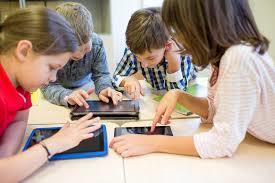
- Technology enhances literacy development, language acquisition, provide access to more information infomation, support learning, motivate students and enhance their self esteem.
- Technology and Content Area Learning
- Positive effects of technology (Kinzer, 1997), on learning
- It improved students gathering and writing skills
- Technology and Reading Comprehension
- Technology enhances all aspects of literacy learning
- Technology and Language Acquisition
- It could enhanced through presentations (Zhao, 2005)
- Children who use technology to learn language learn it faster (Zhao, 2005)
- Through chatroom
- Technology and Improved Test Scores
- Students became dependent learners
- Technology helps with math skills (Boster, 2004)
- Student did better in math when they were allowed to use digital video
- Technology and Self Esteem
- Technology improved school attendance. (Sivin-Kachala & Bialo, 2000)
- Have positive impact on self esteem
- Impact student feelings of being responsible for their own learning
- Technology and Learner Motivation
- Student are given a opinion on their assignment it motivates them (Harvey, 2002)
- When the student research online it encourages to be interested in what the are learning.
- Breastfeeding
- Babies who are breastfed have developed key parts of the brain, vs babies who were not breastfed did not develop this
- The parts that were developed were associated with language, emotional function, cognition
- Breasting Feeding leads to better cognitive development in adolescents and adults
- MRI were used to compare the different groups of babies
- Babies who are breastfed have developed key parts of the brain, vs babies who were not breastfed did not develop this
- Healthy Baby, Healthy Brain
Applications to “real life”:
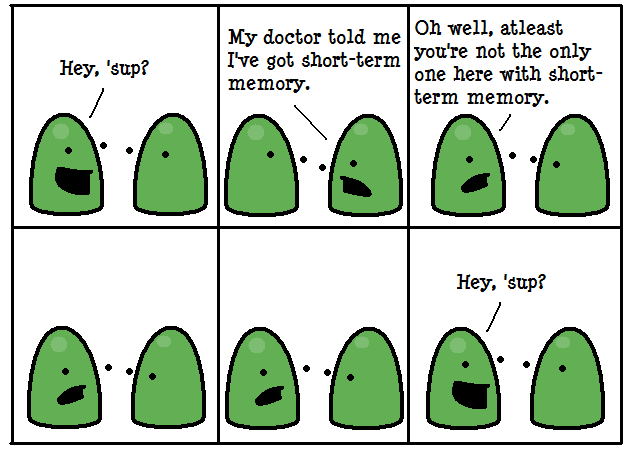
- Memories
- Begins with encoding, then to storage and retrieval
- On an unconscious level you will retrieve your memories, when you remember or think about something
- Ways to improve memory
- Balanced Diet
- Working Out
- Sleeping Pattern
- Challenging your brain
- Three different memories
- Episodic Memory: personal events
- Procedural Memory: how to do something
- Semantic Memory: factual information
- Encoding
- To properly encode a memory you have to be paying attention
- This happens when information is first processed and categorized
- Retrieval
- Storage
- Memories are created then are stored
- Memories are stored in three ways
- Senony Stage
- Short Term
- Memory is remember for a few seconds
- Not processed any further
- Long Term
- First goes through short term
- First goes through short term
- Begins with encoding, then to storage and retrieval
- Language Accqustion
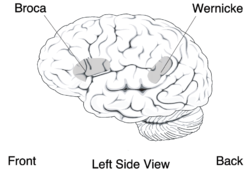
- Broca Area:
- Pronounce words
- Associated with production of language outputs
- Connected bu bundles of nerve fibers and called arcuate
- Wernicke Area
- They connect with neural loop that is involved in understanding and in producing language
- Associated with processing of words that are heard
- Recognizes words being said to you
- Theories
- Nativist Theory
- Children are born prone to or inclined to learn a language (Chomsky)
- Environmentalist Hypothesis Behaviourist perspective
- Language is learned with interactions with other, especially when parents talk (Skinner, 1968)
- Critical Period Hypothesis (Lenneberg, 1967)
- Must early learn language in early development
- Before 2 language can not be learned because brain is not developed
- After puberty, brain plasticity is lost, so it's hard to learn language
- Nativist Theory
- Broca Area:
- Impact Of Language
- Impact of Technology and Internet
- Texting is a form of talking
- Technology has changed the english language forever
- Email changed the way we write letters
- Huge difference the way we write
- All caps means yelling
- Speaking Multiple Languages
- Brains are wired differently
- Bilingual children are better at executive processing
- Planning thoughts
- Paying attention
- Better at switch tasks
- Impact of Technology and Internet
- Memories
Images and files in the map


















Information
- Description
- 12th grade Human Developemt Mind Map on Cognitive Development, created by Inderpreet Brar - Sandalwood Heights SS (2442) on 13/12/2018.
- Views
- 6
- Rating