
Mind map
Collapse of the Tsarist Regime
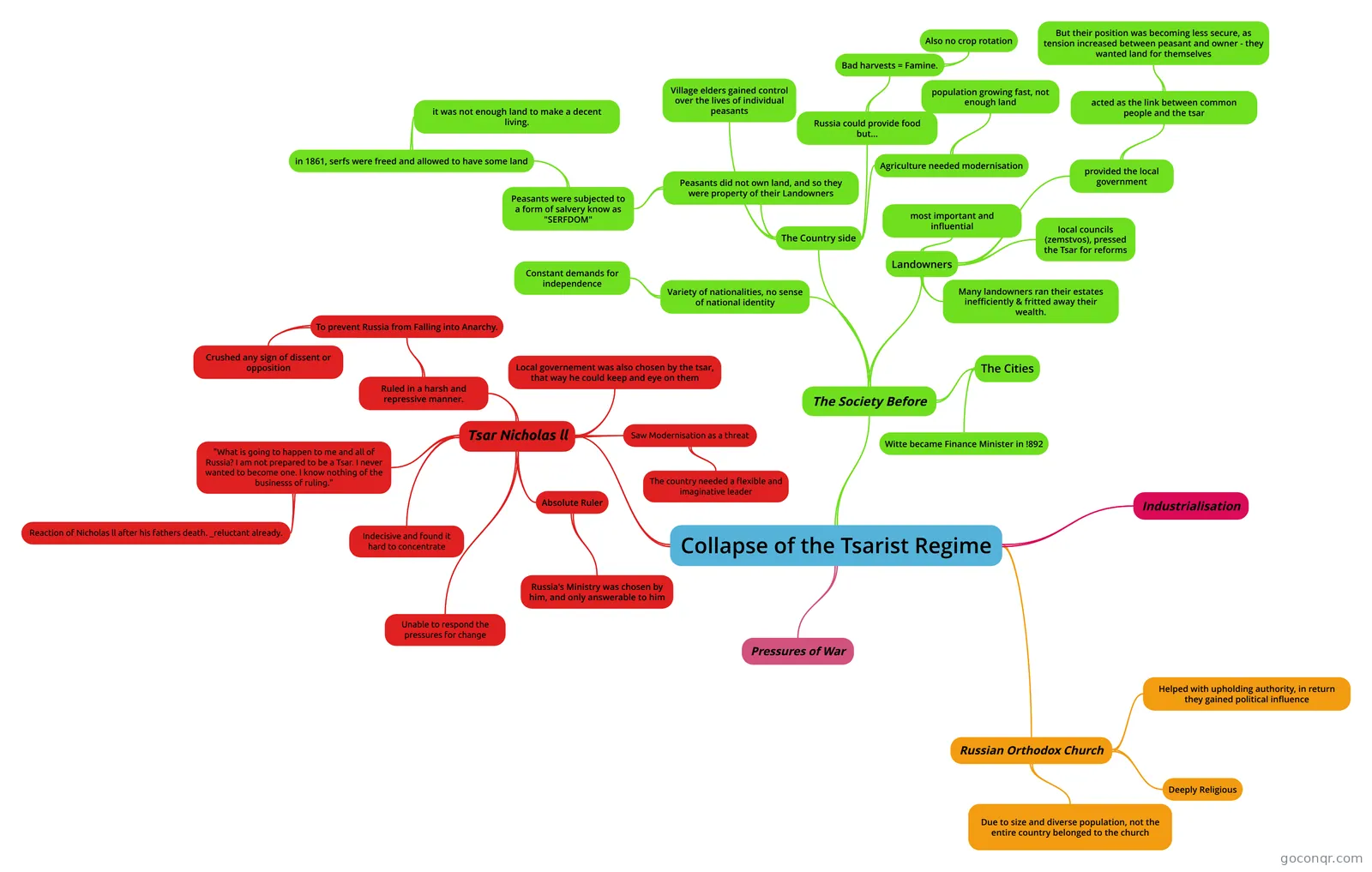
Mind map: Collapse of the Tsarist Regime
Map content
Collapse of the Tsarist Regime
Pressures of War
Industrialisation
The Society Before
- Variety of nationalities, no sense of national identity
- Constant demands for independence
- The Country side
- Peasants did not own land, and so they were property of their Landowners
- Peasants were subjected to a form of salvery know as "SERFDOM"
- in 1861, serfs were freed and allowed to have some land
- it was not enough land to make a decent living.
- in 1861, serfs were freed and allowed to have some land
- Peasants were subjected to a form of salvery know as "SERFDOM"
- Village elders gained control over the lives of individual peasants
- Russia could provide food but...
- Bad harvests = Famine.
- Also no crop rotation
- Bad harvests = Famine.
- Agriculture needed modernisation
- population growing fast, not enough land
- Peasants did not own land, and so they were property of their Landowners
- Landowners
- most important and influential
- provided the local government
- acted as the link between common people and the tsar
- But their position was becoming less secure, as tension increased between peasant and owner - they wanted land for themselves
- acted as the link between common people and the tsar
- Many landowners ran their estates inefficiently & fritted away their wealth.
- local councils (zemstvos), pressed the Tsar for reforms
- The Cities
- Witte became Finance Minister in !892
- Variety of nationalities, no sense of national identity
Tsar Nicholas ll
- Absolute Ruler
- Russia's Ministry was chosen by him, and only answerable to him
- Local governement was also chosen by the tsar, that way he could keep and eye on them
- Ruled in a harsh and repressive manner.
- To prevent Russia from Falling into Anarchy.
- Crushed any sign of dissent or opposition
- To prevent Russia from Falling into Anarchy.
- "What is going to happen to me and all of Russia? I am not prepared to be a Tsar. I never wanted to become one. I know nothing of the businesss of ruling."
- Reaction of Nicholas ll after his fathers death. _reluctant already.
- Indecisive and found it hard to concentrate
- Unable to respond the pressures for change
- Saw Modernisation as a threat
- The country needed a flexible and imaginative leader
- Absolute Ruler
Russian Orthodox Church
- Deeply Religious
- Helped with upholding authority, in return they gained political influence
- Due to size and diverse population, not the entire country belonged to the church
Information
- Description
- purely from the notes I got from my teacher.. Tsar Nicholas the second and events leading up to it
- Created by
- jennawena
- Views
- 31
- Tags
- Rating