
Mind map
Proteins
Map content
Proteins
4 levels of protein structure
- 3D Structures
- Reason for folding
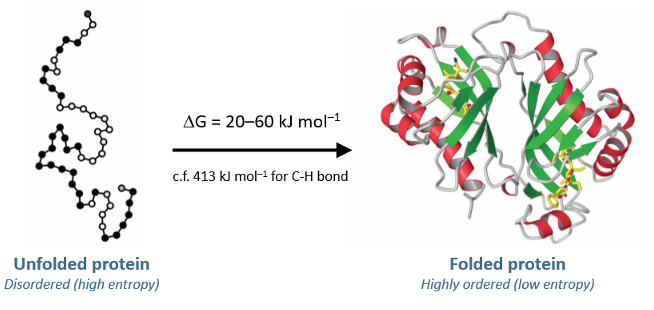
- Increase in Gibbs
- Folded protein are only marginally more stable than unfolded form. Although unfolded = high entropy, the increase in enthalpy (in folded protein) due to the many weak, noncovalent interactions, dominatie
- 2nd Law thermodynamics - burial of hydrophobic residues
- Entropy of solvent INCREASES, thus outweighing the decreased entropy of protein
- Unfolded protein: H2O forms hydration spheres around hydrophobic sidechains
- Fold proteins: hydrophobic residues become buried in interior part of protein, so hydration spheres no longer needed.
- Entropy of solvent INCREASES, thus outweighing the decreased entropy of protein
- Increase in Gibbs
- How proteins fold
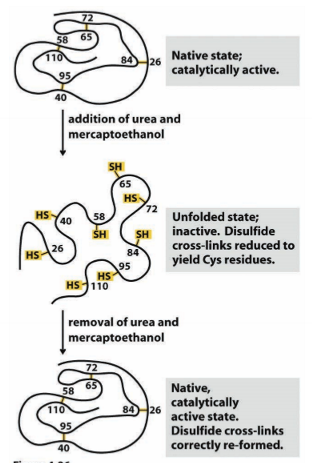
- Afinsen Paradigm
- The 3D structure of a protein is entirely determined by its amino acid sequence
- Afinsen Paradigm
- Reason for folding
- Secondary Structure
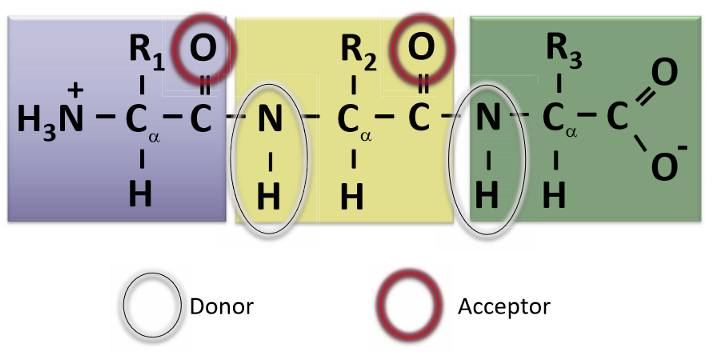
- Most stable protein folds = maximised hydrogen bond formation
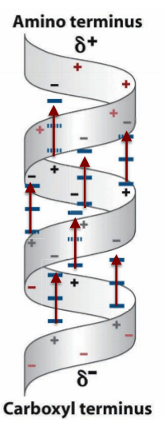
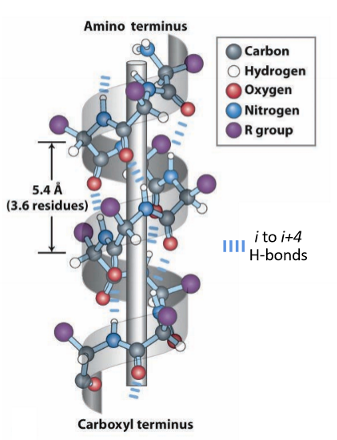
- Alpha Helices
- Polypeptide backbone folded so that the C=O group of residue i is hydrogen bonded to NH group of residue i+4
- L-amino acids: Right handed helices favoured
- a helices do not have hollow centres
- Have dipoles
- Beta Sheets
- Driven by interstrand H-bonds
- Parallel B Sheets
- Diagonal bonds, evenly spaced
- Antiparallel B sheets
- Straight H bonds, unevenly spaced
- Side chains alternate above and below
- Pleated
- Less tolerant of large side chains than a helices
- B sheet can have mix parallel and anti
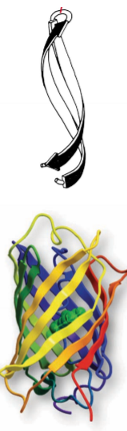
- Beta barrel
- Hydrogen Bonding
- Alpha Helices
- Most stable protein folds = maximised hydrogen bond formation
- Primary Structure
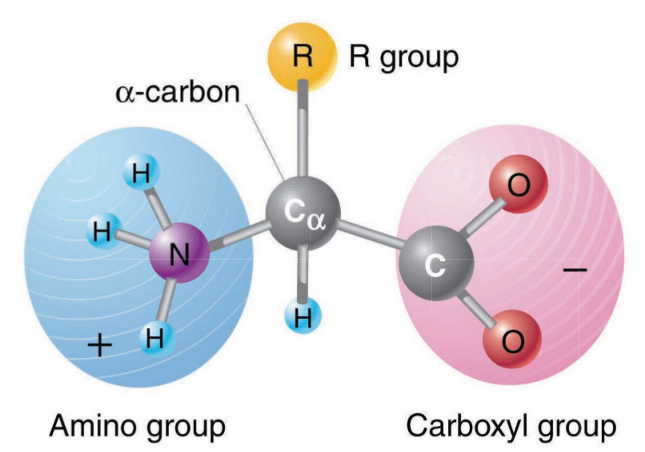
- Amino Acids
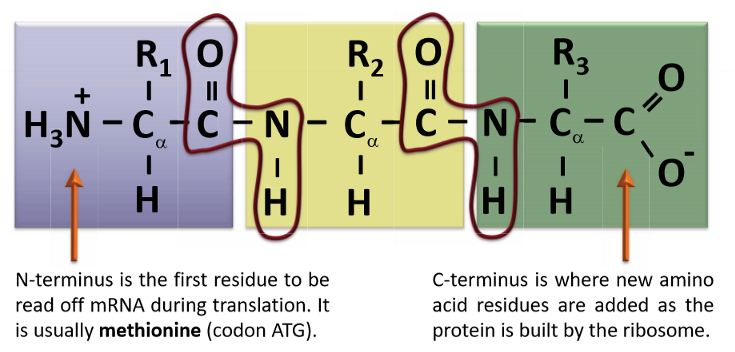
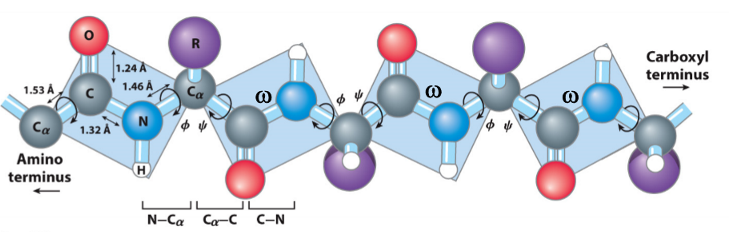
- Peptide Bonds
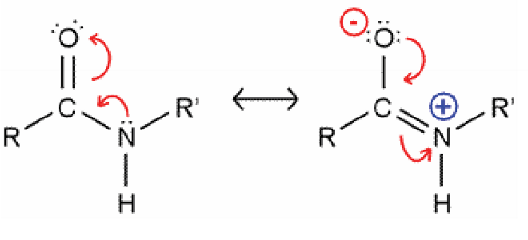
- Peptide bond Resonance
- Peptide bond length is closer to double bond than single.
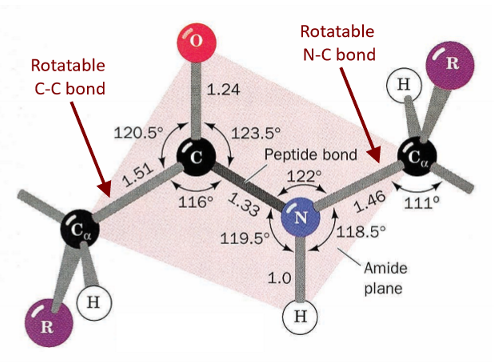
- Peptide bond: inflexible and planar Backbone bonds can rotate freely
- Peptide bond length is closer to double bond than single.
- Peptide bond Resonance
- Describing protein structure
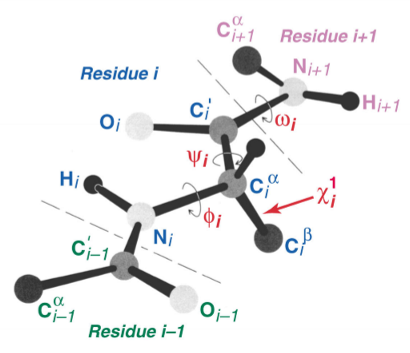
- Backbone conformation described by: ωφψ Side chain: Χ
- x,y,z coordinates for atoms
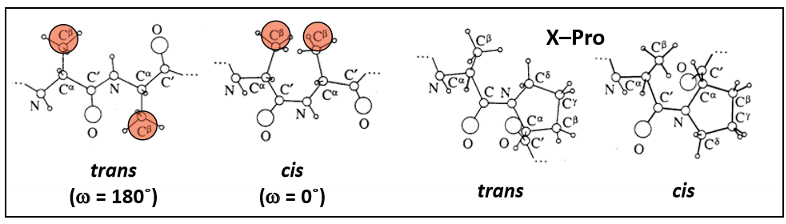
- Restriction on conformation in space
- Trans, more stable than cis (accept X-Pro)
- Ramachandran Principle
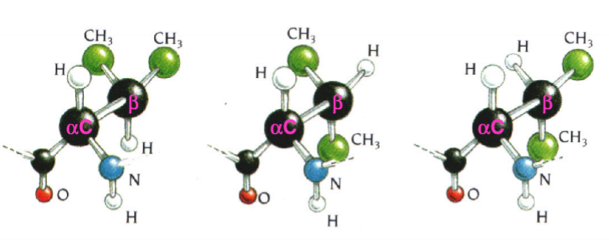
- Most sidechains adopt 1/3 staggered conformations
- 3D Structures
Representation Protein Structure
- Richardson Representations
- a helices ribbons/cylinders B strands arrows (N->C) other: string
- CPK Models
- Each atom represented as sphere with radius ~ to atom's VDW radius
- Molecular surface Representions
- Solvent-accessible surface
- Solvent-excluded surface / Connelly surface
- Visualise crevices and bumps. Also, charge distribution (colours)
- Wireframe
- Connecting bonds
- Ball and stick
- Bonds = tubes atoms = ball smaller than vDW r
- aC trace
- Virtual bonds between aC
- Backbone trace
- aC, N, Carbonyl joined by actual bonds
- Divergent stereoviews
- Richardson Representations
Domains
- Conserved protein sequence/tertiary structure than can function independently of the rest of protein chain
- Intradomain interactions > interdomain
Images and files in the map
Information
- Description
- Mind Map on Proteins, created by Treble Clef on 29/03/2021.
- Created by
- Treble Clef
- Views
- 0
- Rating