
Baking Principles and Bread Making
12 resources created by 12 users
This Baking Principles and Bread Making page on GoConqr gathers community-made mind maps, flashcards, quizzes and notes on raising agents, yeast breads, quick breads, cakes, cookies and mixing methods. It's built for school students revising a topic, university students and professional candidates filling gaps, and teachers after ready-made material. There are over 120 resources here, including more than 90 mind maps, 7 quizzes and 8 flashcard decks, made by over 100 contributors. Pick a map to start, then test yourself with a quiz.
Top Baking Principles and Bread Making resources
-
55 cardsChapter 28-Quick Breads Sodium bicarbonate, an alkaline compound that releases carbon dioxide gas when combined with an acid and mo...
-
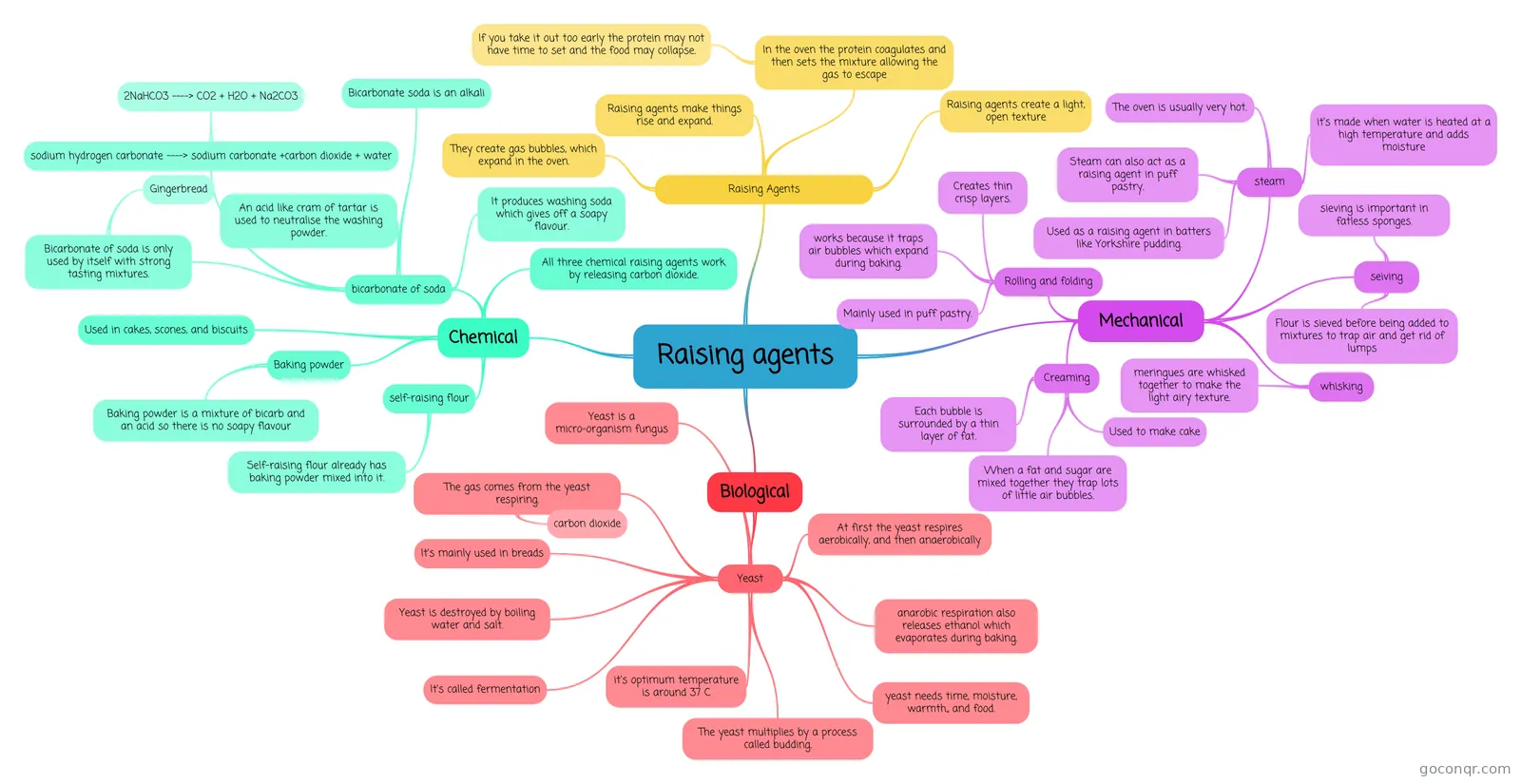 Mind map Raising agents
-
Mind map Bakery analytical design
-
6 cardsbaking ingredients baking brownies ingredients flashcards
-
60 cardsIntro To Professional Baking Review Famous Pastry Chefs From the Past
-
 Mind map Preparation of cakes, breads, cookies and pastries By Class A Group 6
-
 Mind map L15 preparation of cakes, breads, cookies, pastries by group6
-
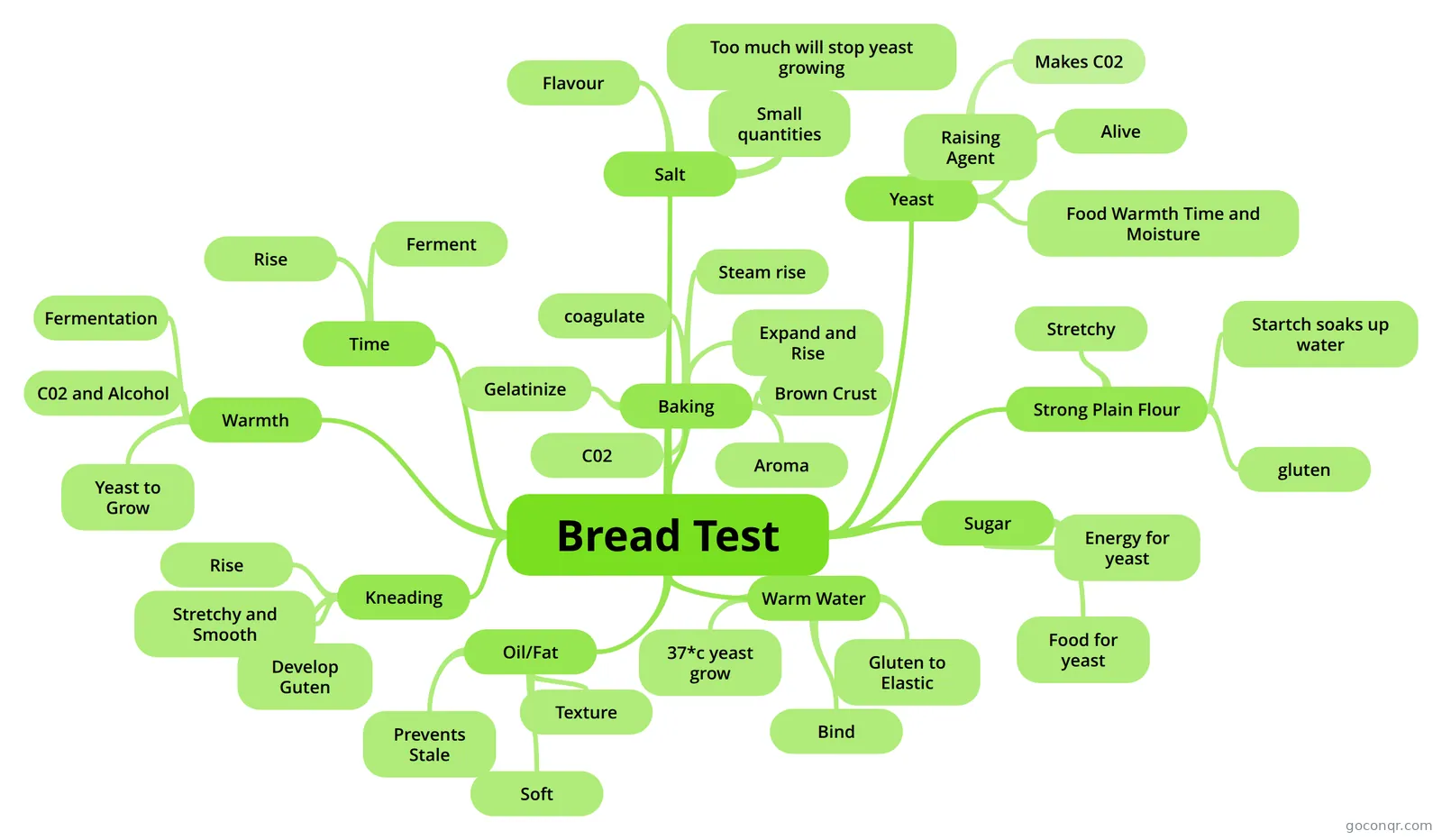 Mind map Bread Test
Mind maps
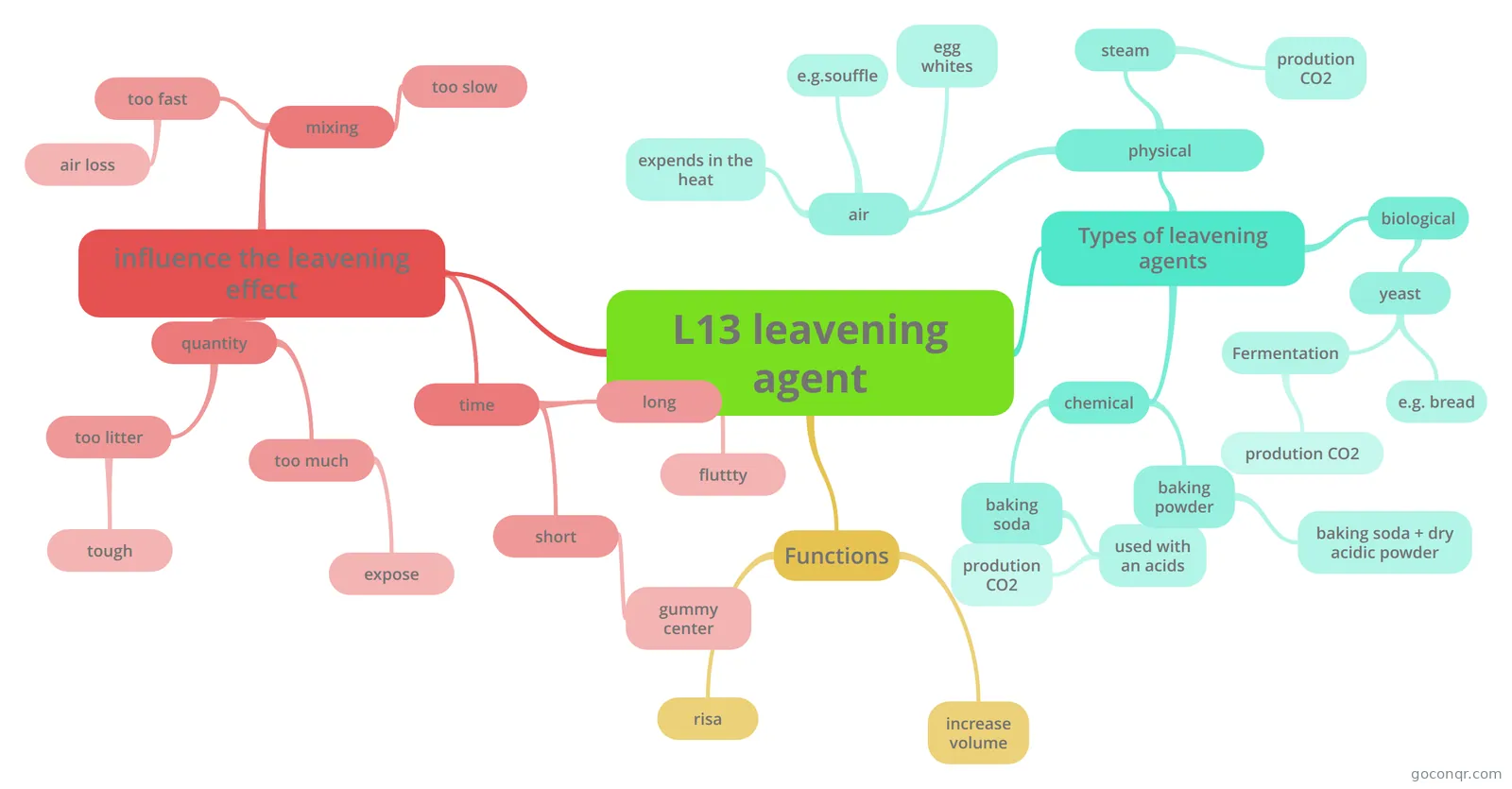
Flashcards
Notes
-
Bread How To Make Bread: 1. Place strong white flour, salt and sugar in a bowl and mix2. Rub in margarine3. Add yeast - mix4. Crush Vitamin C tablet into water water, and add to mixing bowl to give a soft dough5. Put d...
-
Baking Quiz Name the two different fractions of gluten and describe their properties. Explain how gluten is formed. Explain the role that eggs play in baked goods. Explain the how the hygroscopic nature of sugar has an effect on ...
-
2 TYPES OF BISCUITS. CHOCOLATE CHIP COOKIES 100g softened butter 100g soft brown sugar 150g self raising flour 50g chocolate chips METHOD1.Preheat the oven to 170°C/160°C fan/Gas 3.2.Beat the butter and sugar together until soft...
More Cooking and gastronomy topics
About Baking Principles and Bread Making
GoConqr OriginalWhat this unit covers
The unit sits in the Baking and Pastry strand of Cooking and gastronomy. It is mostly mind maps, with a handful of quizzes, flashcard decks and notes. Together they follow the path from ingredients and raising agents to finished breads, cakes and biscuits.
Where to start
Begin with the Raising agents mind map. It splits raising into mechanical, chemical and biological methods, and touches on sieving, whisking, baking powder, self-raising flour, bicarbonate of soda, yeast and steam. Next, open the Bread Test map, which covers yeast, salt, strong plain flour and gluten.
Then look at Baked Products, which sorts batters from doughs by how much liquid they hold. The Preparation of cakes, breads, cookies and pastries map adds common problems, such as a cake that caves in or a bake that is too dry.
Bread and quick breads
- Read the Bread note for a step-by-step method, from mixing flour, salt and sugar to adding yeast.
- Open the Yeast Breads and Quick Breads mind maps to compare the two approaches.
- Use the flashcard deck on quick breads to learn terms such as sodium bicarbonate, which releases carbon dioxide when it meets an acid and moisture.
Using quizzes with maps
Read a map first, then try a quiz without looking. The Practice QUICK BREAD questions quiz fits after the quick bread maps. Advanced Yeast Breads Final Exam Prep suits a later pass over yeast work. Any question you miss tells you which map to reopen.
The Intro To Professional Baking Review flashcards cover kitchen roles, such as the boulanger and the confiseur, which helps if you are working towards a professional qualification.
Make it your own
Pick one map, work through it, then try a quiz. When you spot a gap, build your own flashcards or notes to fill it.
Frequently asked questions
Which resource should I open first?
Start with the Raising agents mind map. It sets out mechanical, chemical and biological raising, including yeast, steam, baking powder and bicarbonate of soda. Once that makes sense, the Bread Test map and the Yeast Breads maps are easy to follow, because they build on the same ideas.
Are there quizzes on this page?
Yes, there are 7 quizzes. They include Advanced Yeast Breads Final Exam Prep, Practice QUICK BREAD questions, and a general Baking Quiz. Use them after reading a map to see which parts of the topic you still need to revisit.
What do the mind maps cover?
Most of the page is mind maps, over 90 of them. Topics include raising agents, mixing methods, yeast breads, quick breads, cakes and icings, cookies, flours, meals and starches, artisan breads and the effects of cooking on baked products.
Are the resources free to use?
Yes. Every resource listed here is free to open, study and take, with no account needed. A free account also saves your quiz scores and lets you make your own quizzes, mind maps, flashcards and notes.
Who made these resources?
They were made by GoConqr users, not by GoConqr itself. Over 100 contributors have added maps, flashcards, quizzes and notes, so styles and depth vary. Compare a few on the same topic to find the one that suits you.
Who is this page for?
School students revising baking topics will find most here, and university students and professional candidates can use it to fill gaps. Teachers can pick ready-made maps, flashcards and quizzes for lessons. If a topic is missing, you can make your own.