
Cooking Methods and Techniques
43 resources created by 38 users
This Cooking Methods and Techniques page on GoConqr gathers community-made mind maps, flashcards, notes and a quiz on dry heat and moist heat cooking, microwave use, cooking terms and cuts. It's built for school students revising a topic, university students and professional candidates filling gaps, and teachers after ready-made material. There are over 460 resources here, including more than 420 mind maps and over 20 flashcard decks, mostly at secondary and professional level. Pick a map, then build your own flashcards.
Top Cooking Methods and Techniques resources
-
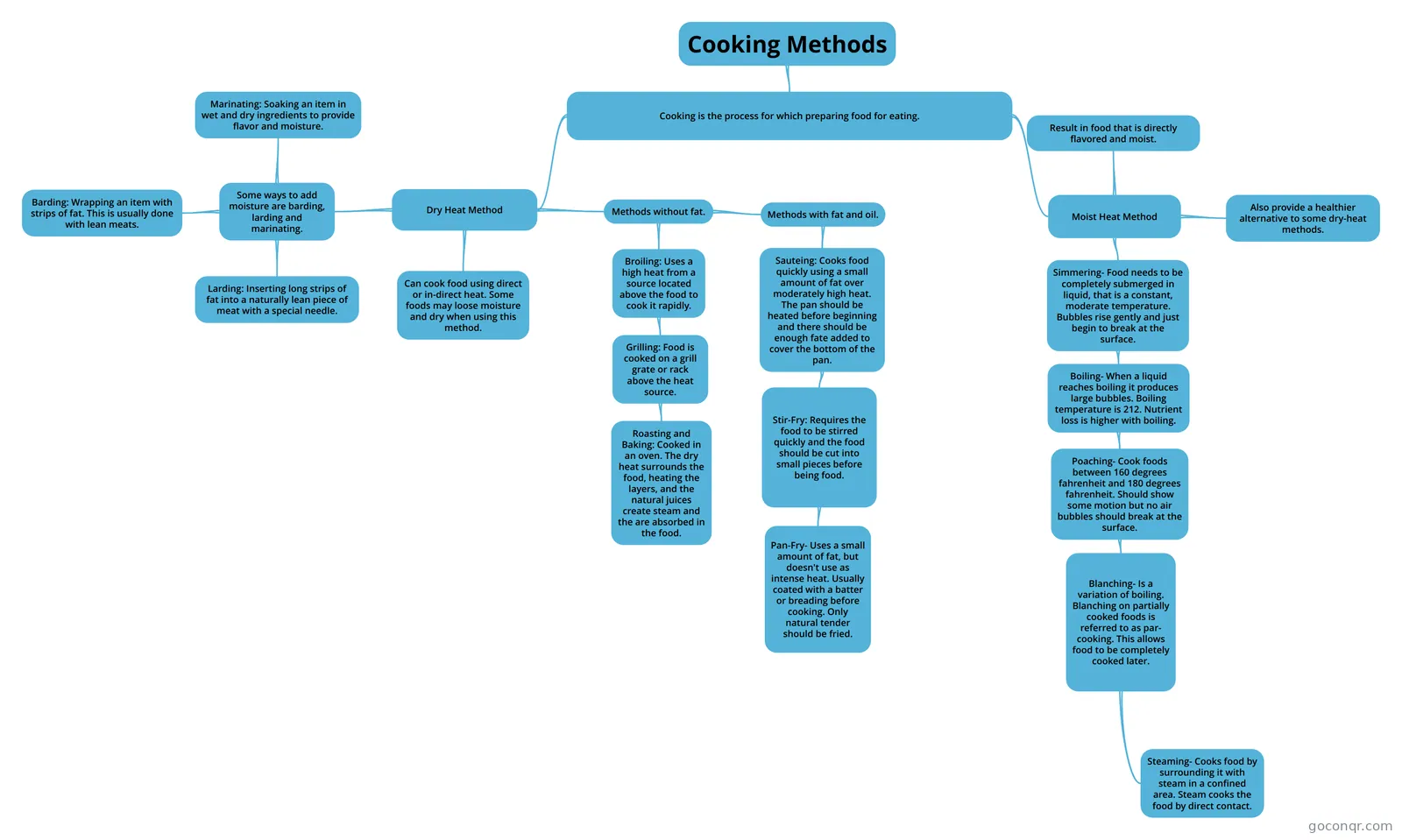 Mind map Cooking Methods This mind map will help you learn and hopefully help you know different cooking methods to use in cooking.
-
27 cardsCooking Terms Grade 9 human ecology cooking terms
-
19 cardsCooking keywords LOL
-
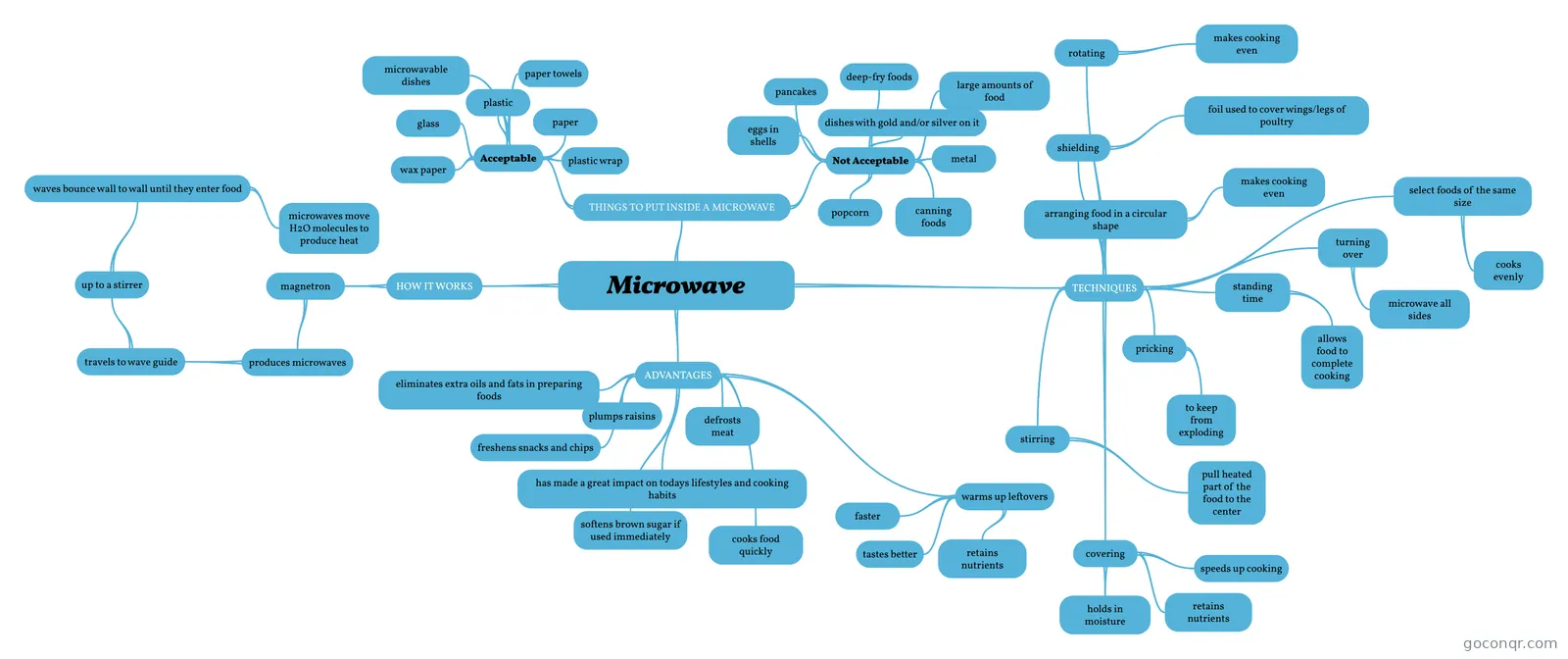 Mind map Microwave microwave mind map - hannah valdez
-
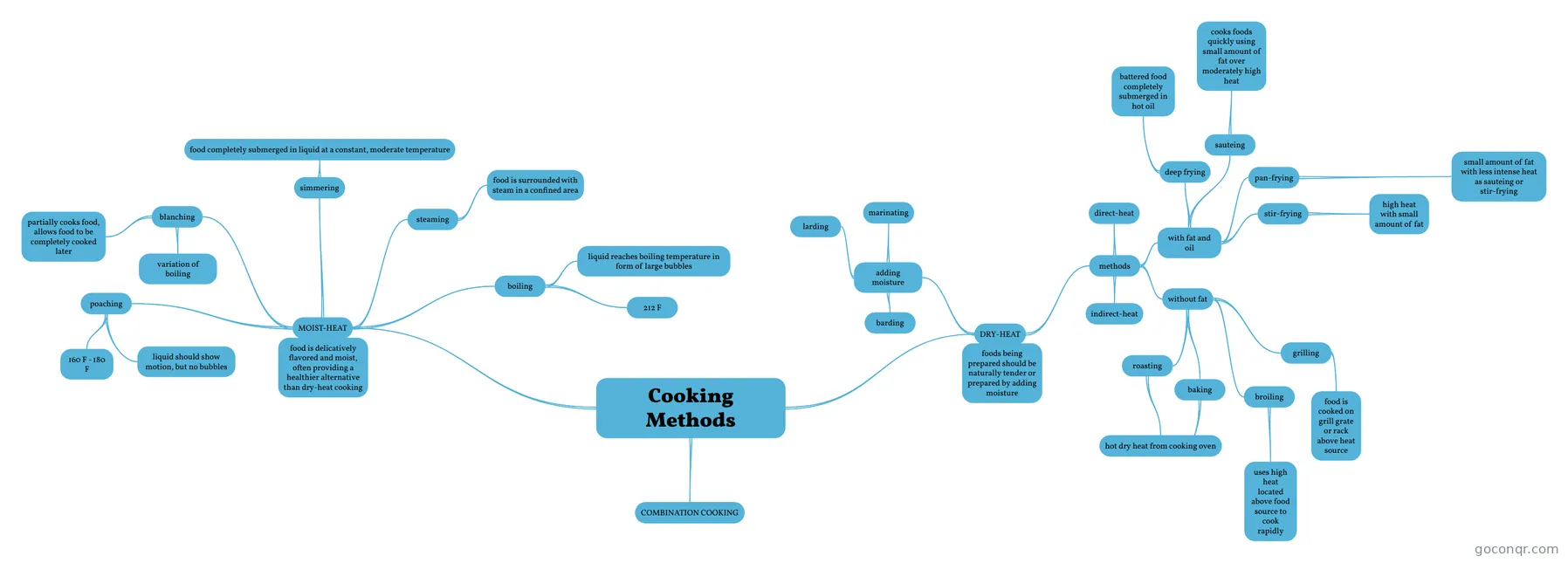 Mind map Cooking Methods Hannah Valdez / Healthy Cooking / 4th Period
-
44 cardsCooking Terms and Abbreviations Flash cards to memorize definition of terms, abbreviations used in recipes and definitions for the three ty...
-
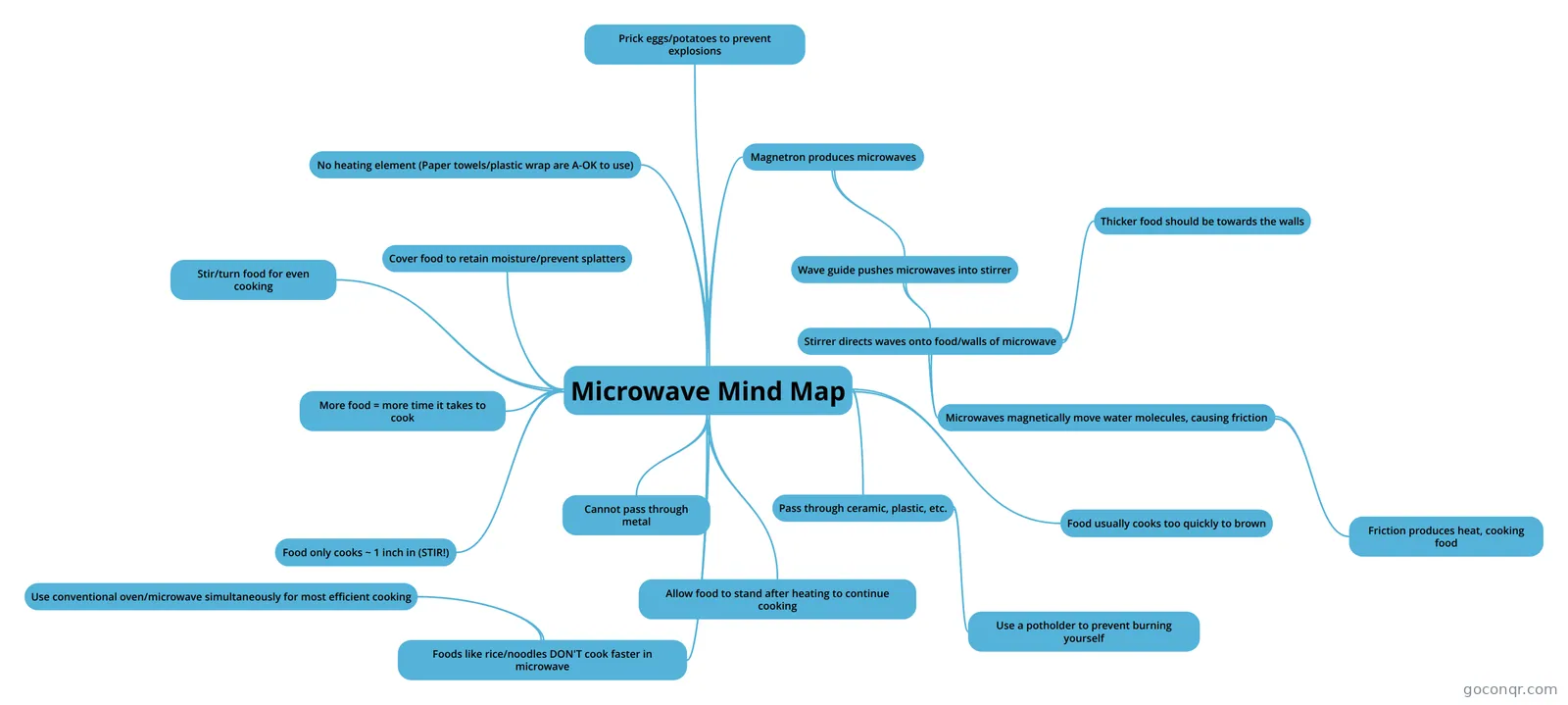 Mind map Microwave Mind Map MInd map
-
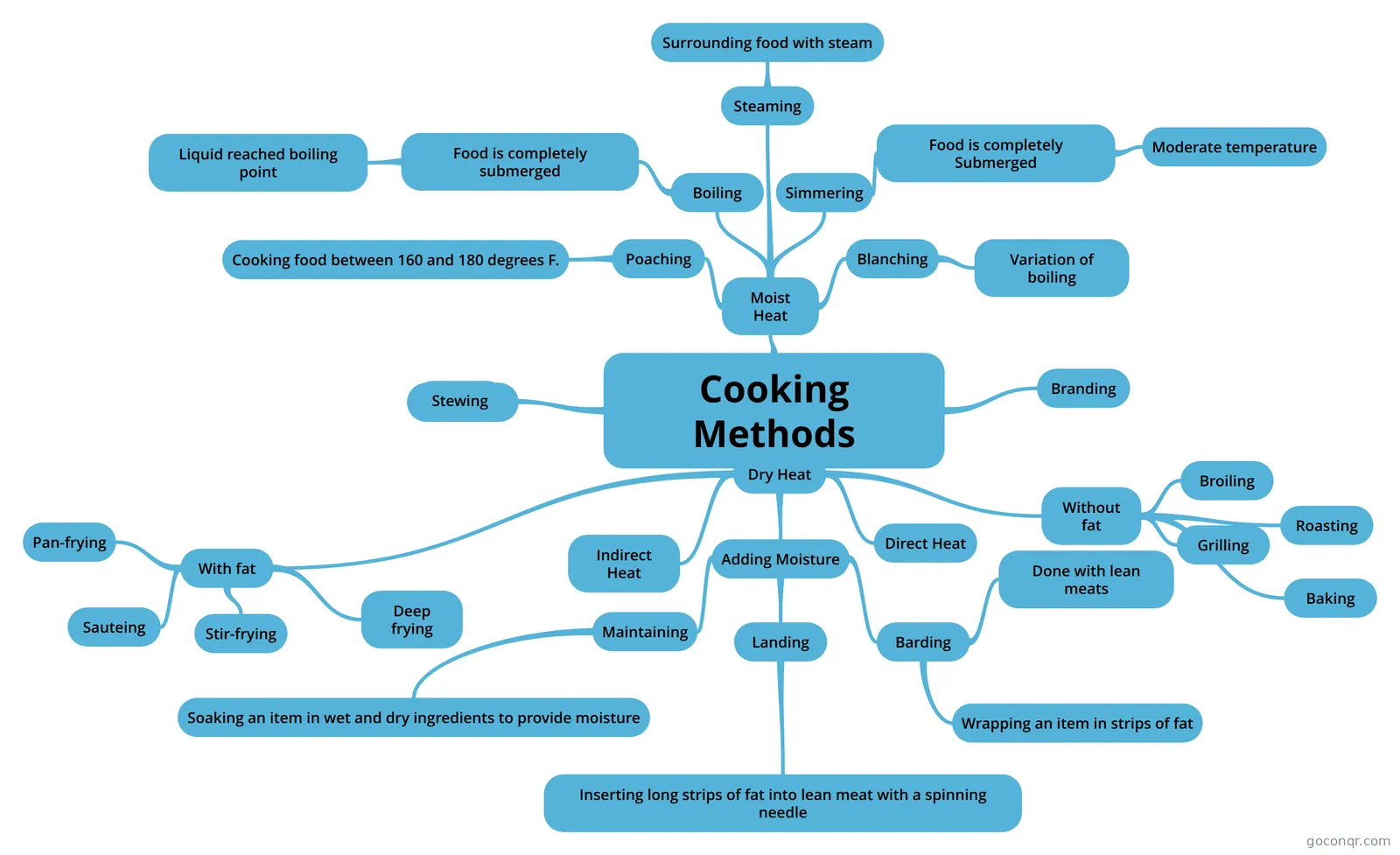 Mind map Cooking Methods Notes
Mind maps
See all 37 mind maps-
Cooking Methods This mind map will help you learn and hopefully help you know different cooking methods to use in cooking.
-
Microwave microwave mind map - hannah valdez
-
Cooking Methods Hannah Valdez / Healthy Cooking / 4th Period
-
Microwave Mind Map MInd map
-
Cooking Methods Notes
-
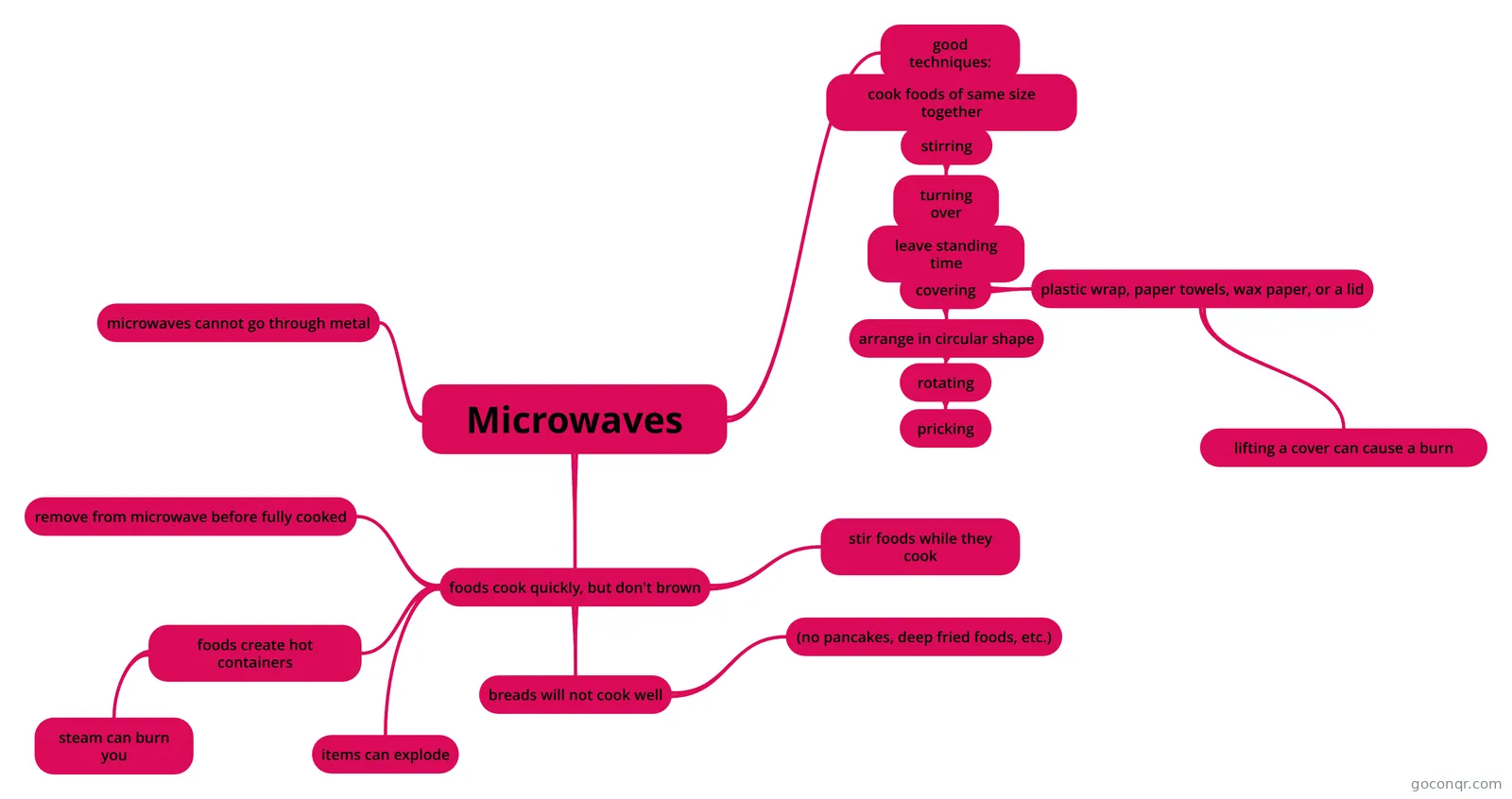 Microwaves 10/19/15
-
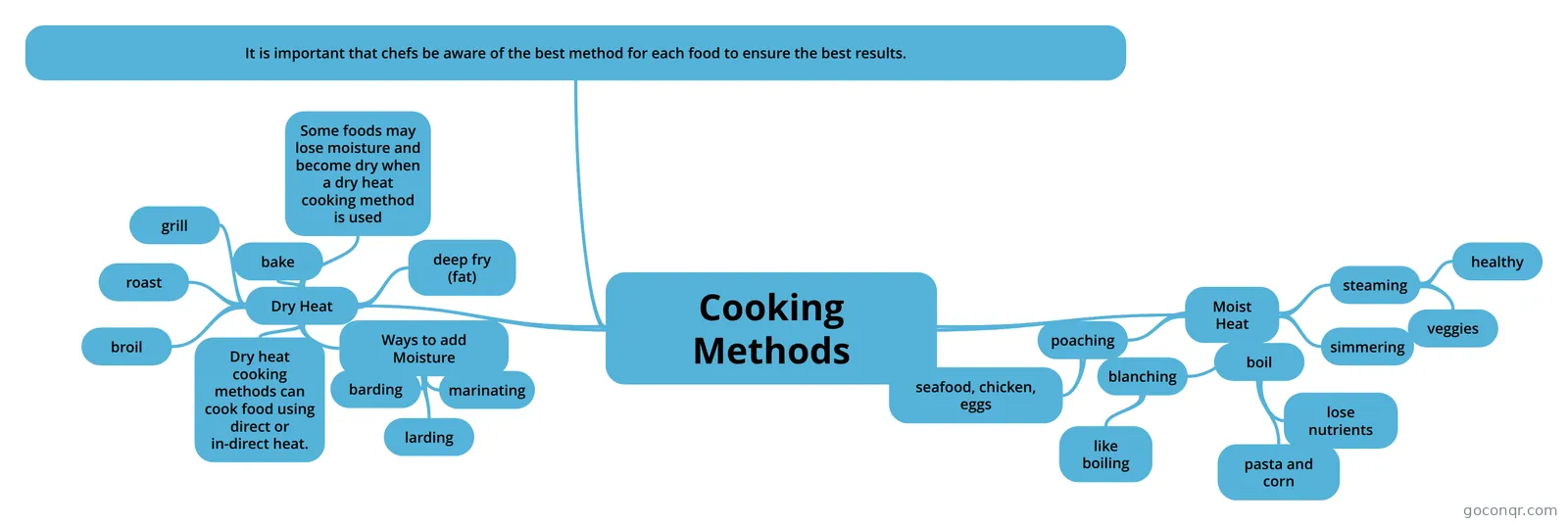 Cooking Methods cooking methods
-
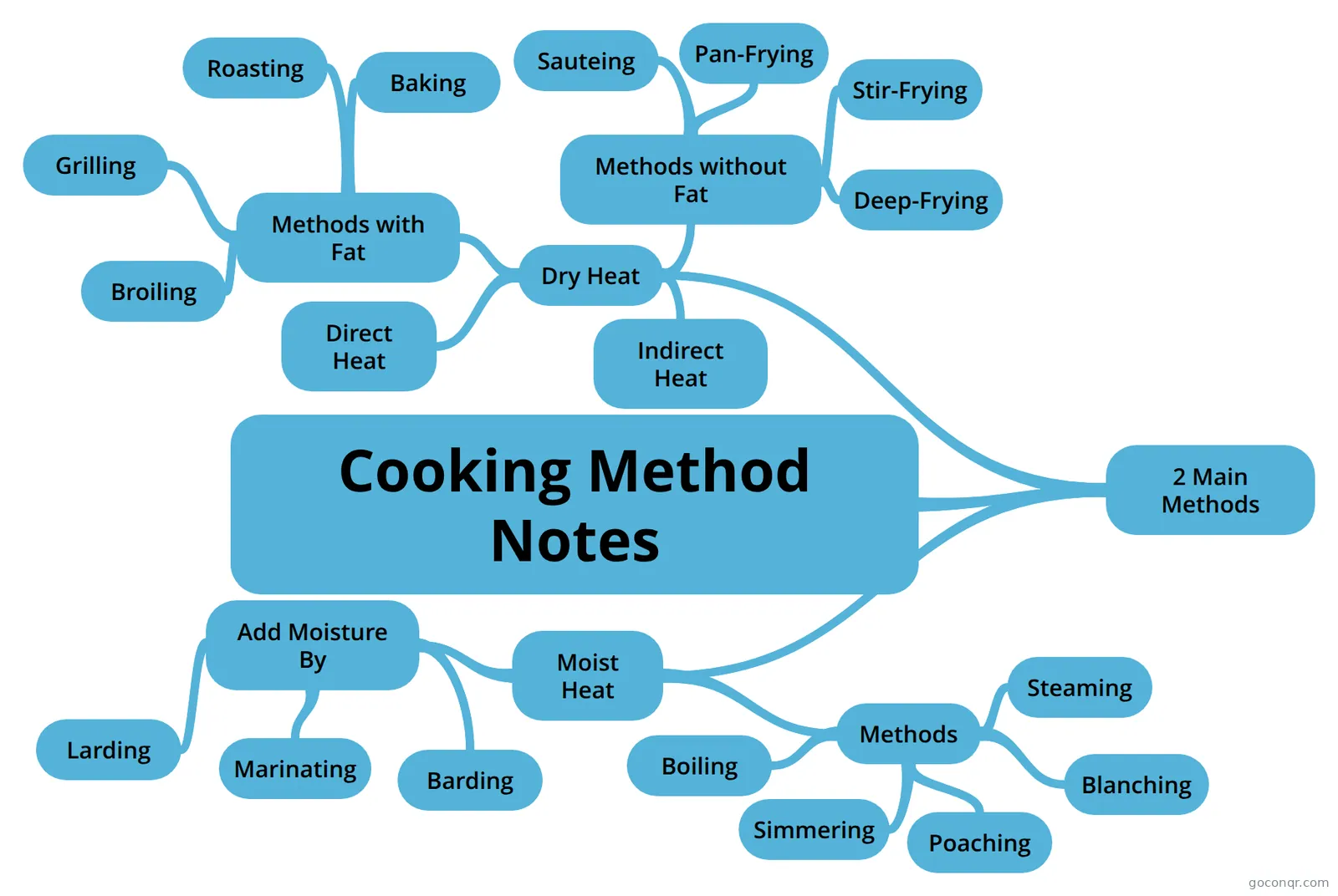 Cooking Method Notes cooking method notes
Flashcards
-
27 cardsCooking Terms Grade 9 human ecology cooking terms
-
19 cardsCooking keywords LOL
-
44 cardsCooking Terms and Abbreviations Flash cards to memorize definition of terms, abbreviations used in recipes and definitions for the three ty...
-
22 cardsChapter 2 Cooking
-
3 cardsGrilling Grilling is food cooked by radiated heat from above and below.
-
7 cardsHospitality Precise Cutting French cooking terms to cut food =)
More Cooking and gastronomy topics
About Cooking Methods and Techniques
GoConqr OriginalWhat this page covers
The unit sits in the Cooking Skills and Techniques strand of Cooking and gastronomy. Most of what you will find is mind maps, with a good set of flashcard decks, a few notes and one quiz. Over 400 maps are here, so there are many takes on the same core ideas.
Cooking methods
The many maps called Cooking Methods split cooking into dry heat, moist heat and combination cooking. The excerpts mention direct and indirect heat, adding moisture, stewing and barding, which means wrapping an item in strips of fat, often for lean meats. One map notes that some foods lose moisture and dry out under dry heat. Another says foods cooked by moist methods should be naturally tender or have moisture added.
Microwaves
Microwave maps are a big cluster here. The Microwave map lists advantages, techniques and what can go inside, with metal and dishes trimmed in gold or silver marked as not acceptable. Microwave Mind Map explains how the magnetron makes waves that move water molecules, creating friction and heat. Microwaves adds practical points: food cooks quickly but does not brown, and you should stir while it cooks.
Terms and cuts
The flashcard decks cover vocabulary. Cooking Terms includes sift, puree, baste, dredge, braising and simmering. Cooking keywords covers al dente, bain-marie, julienne, mise-en-place and roux. Cooking Terms and Abbreviations adds beat, fold in, knead and more. There are also decks on types of cuts and precise cutting.
A sensible order
- Open one Cooking Methods map to get the dry heat, moist heat and combination split.
- Move to a microwave map for a focused topic.
- Work through a terms deck until the vocabulary sticks.
- Take the quiz to see what you missed, then go back to the maps.
Ready to start? Choose a map, then make a set of flashcards of your own for the terms you find hardest.
Frequently asked questions
Where should I start on this page?
Start with one of the Cooking Methods mind maps. They set out dry heat, moist heat and combination cooking, which gives you a frame for everything else. After that, try the Cooking Terms flashcards for vocabulary and a microwave map if you need that topic.
What do the microwave mind maps cover?
They cover how a microwave works, from the magnetron producing waves to water molecules creating friction and heat. They also list safe and unsafe items, such as metal and gold-trimmed dishes, and tips like stirring food and remembering that microwaved food does not brown.
Which flashcard decks help with kitchen vocabulary?
Cooking Terms, Cooking keywords and Cooking Terms and Abbreviations are good places to begin. They include words such as baste, julienne, roux, mise-en-place, fold in and knead. There are also decks on types of cuts and precise cutting if knife skills are your focus.
Who are these resources suited to?
The mix is mostly secondary-level, with a good share at professional level. School students can use them to revise a topic, and university students and professional candidates to fill gaps. Teachers can pick out ready-made maps and decks to share with a class.
Are the resources free, and who made them?
Yes. Every resource listed here is free to open, study and take, with no account needed. They were made by GoConqr users rather than by GoConqr itself, so styles and detail vary from one map or deck to the next.
What if I can't find the topic I need?
Try a different title, since many maps share names such as Cooking Methods but differ in detail. If nothing fits, a free account lets you save quiz scores and make your own mind maps, flashcards and notes on the topic.