
Kitchen Appliances, Ovens and Microwaves
29 resources created by 29 users
This Kitchen Appliances, Ovens and Microwaves page on GoConqr gathers community-made mind maps, flashcards and notes, from how a magnetron heats food to which dishes are safe in a microwave and how convection ovens differ from conventional ones. It's built for school students revising a topic, university students and professional candidates filling gaps, and teachers after ready-made material. There are over 180 resources here, including more than 170 mind maps and 5 flashcard decks. Open a map, check what you remember, then make your own.
Top Kitchen Appliances, Ovens and Microwaves resources
-
 Mind map Microwave Oven Mind map note format
-
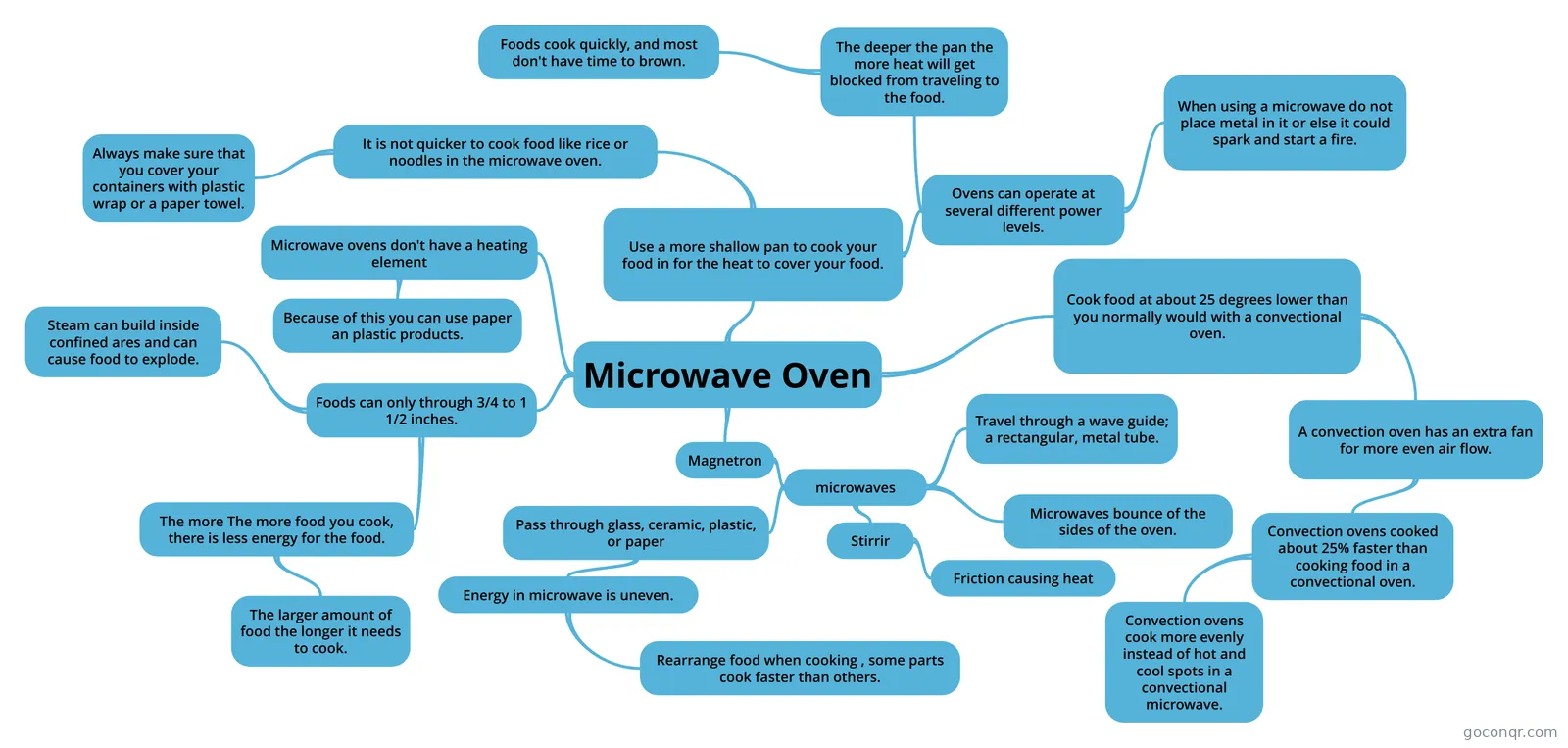 Mind map Microwave Oven Map of microwave notes
-
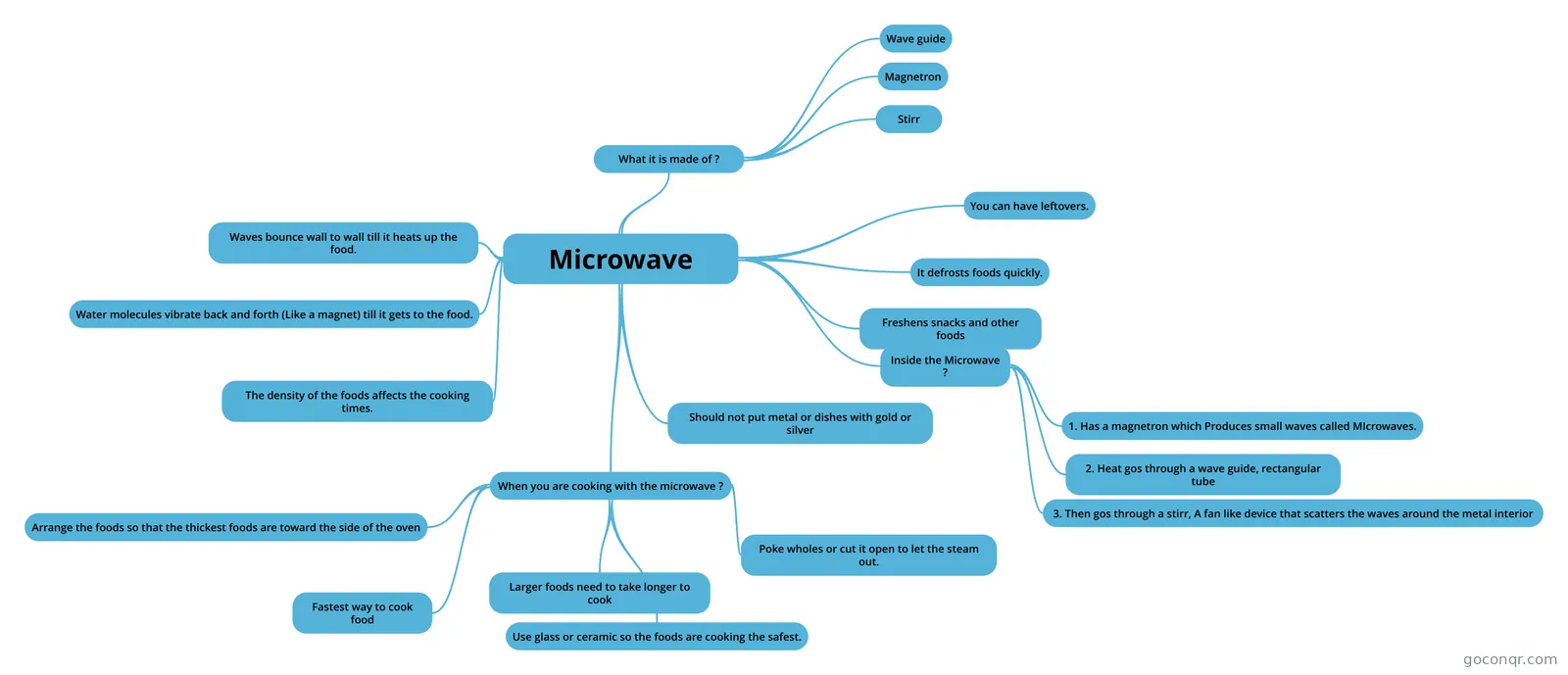 Mind map Microwave awesome
-
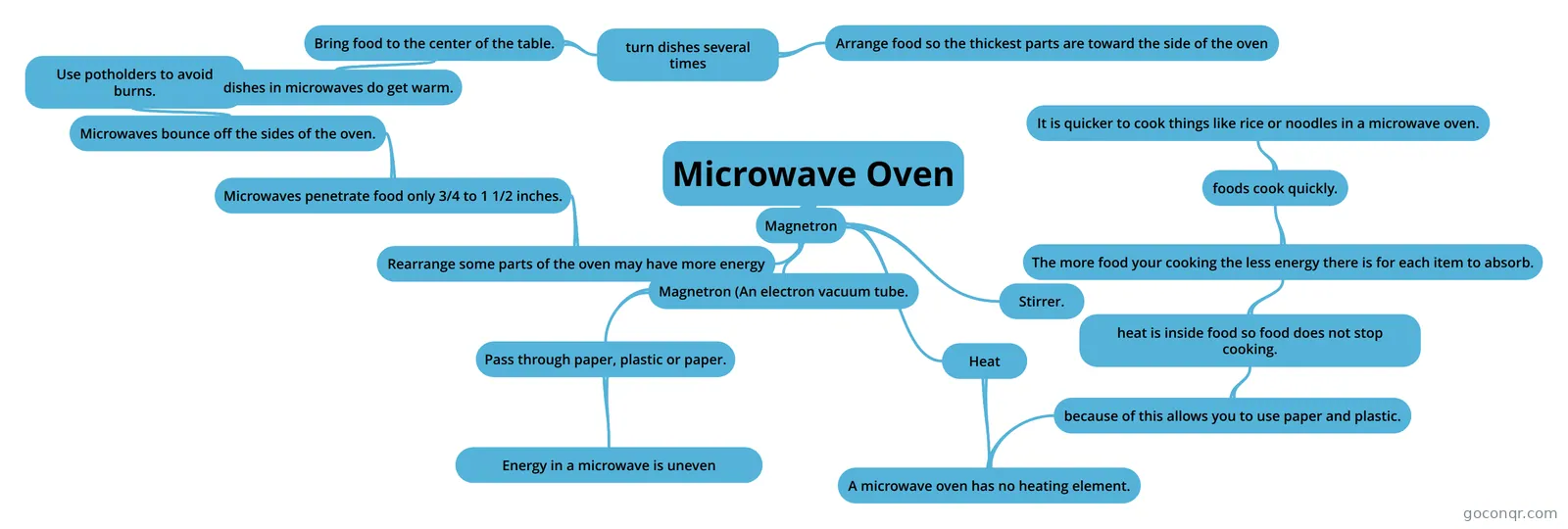 Mind map Microwave Oven mindmap about how to use a microwave oven
-
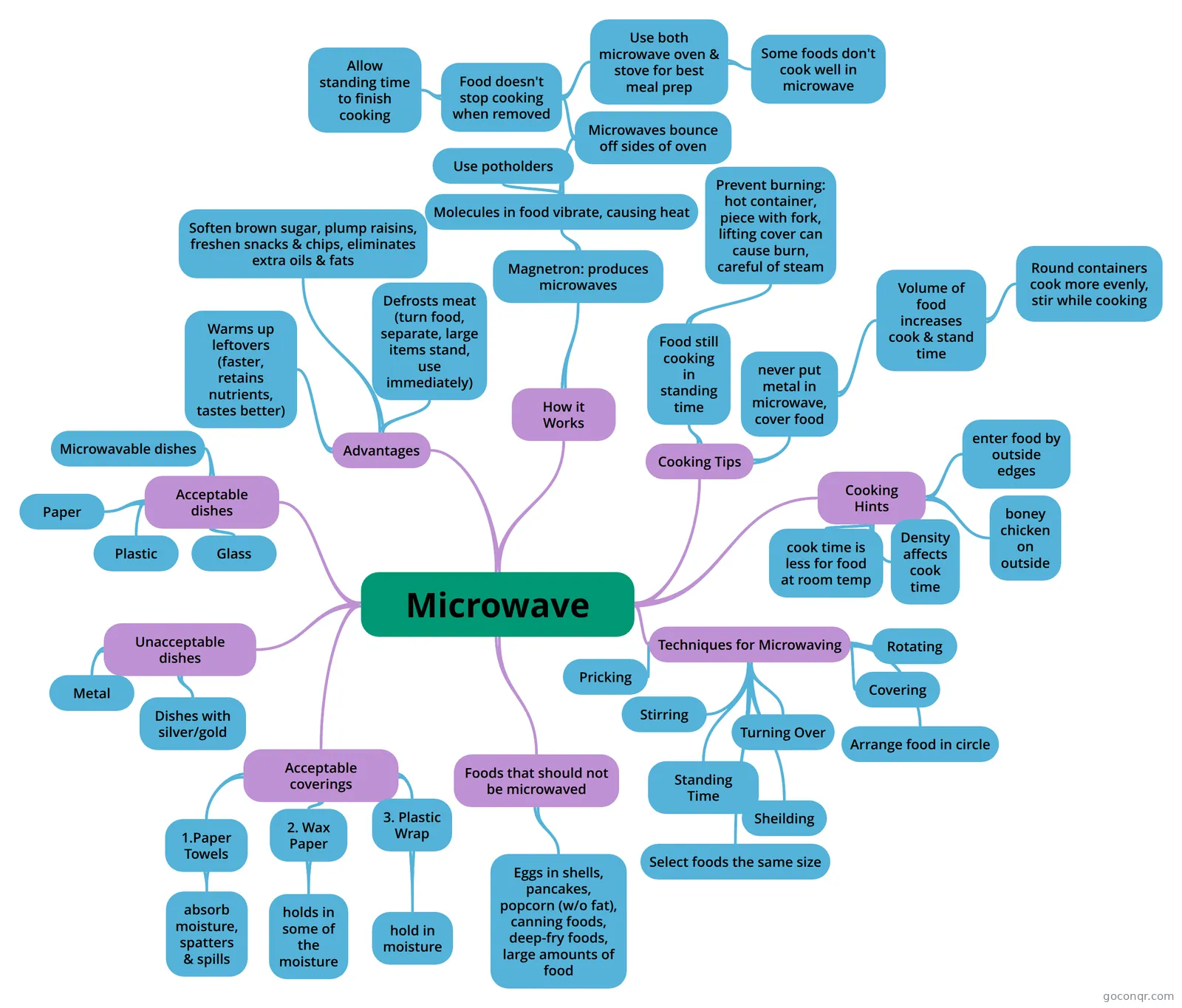 Mind map Microwave Cooking for Healthy Living Microwave Notes
-
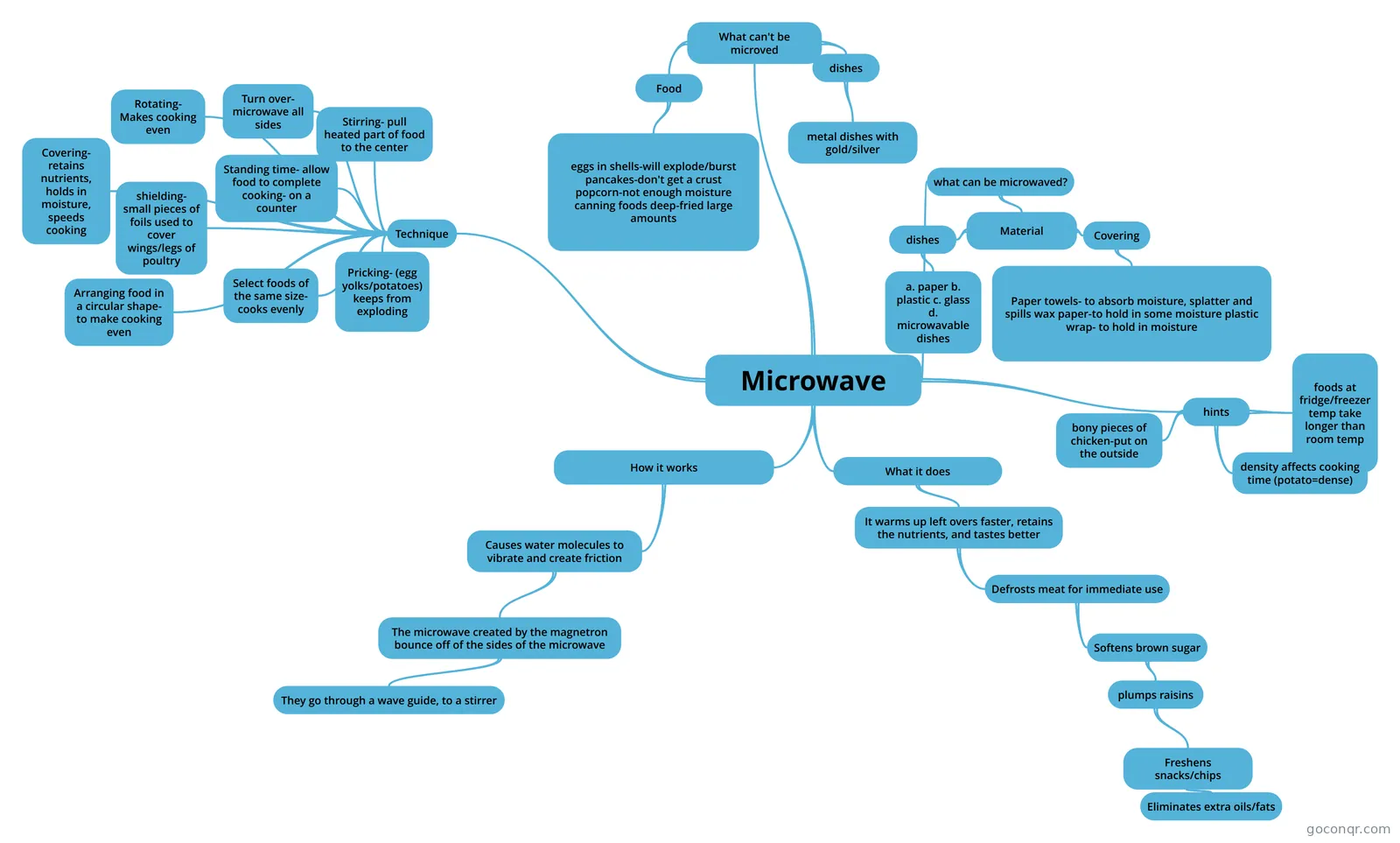 Mind map Microwave notes on the microwave
-
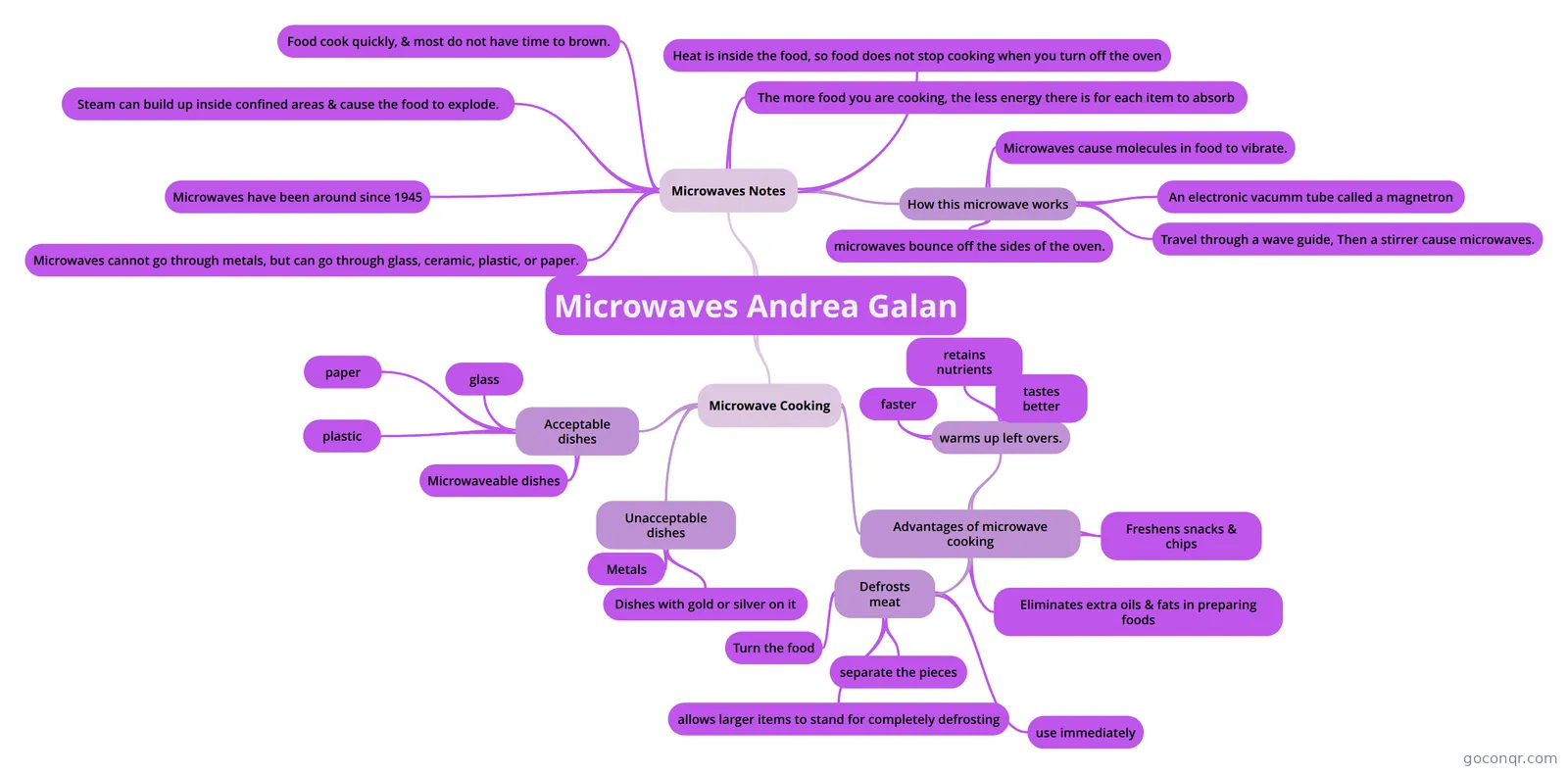 Mind map Microwaves Andrea Galan Microwave notes
-
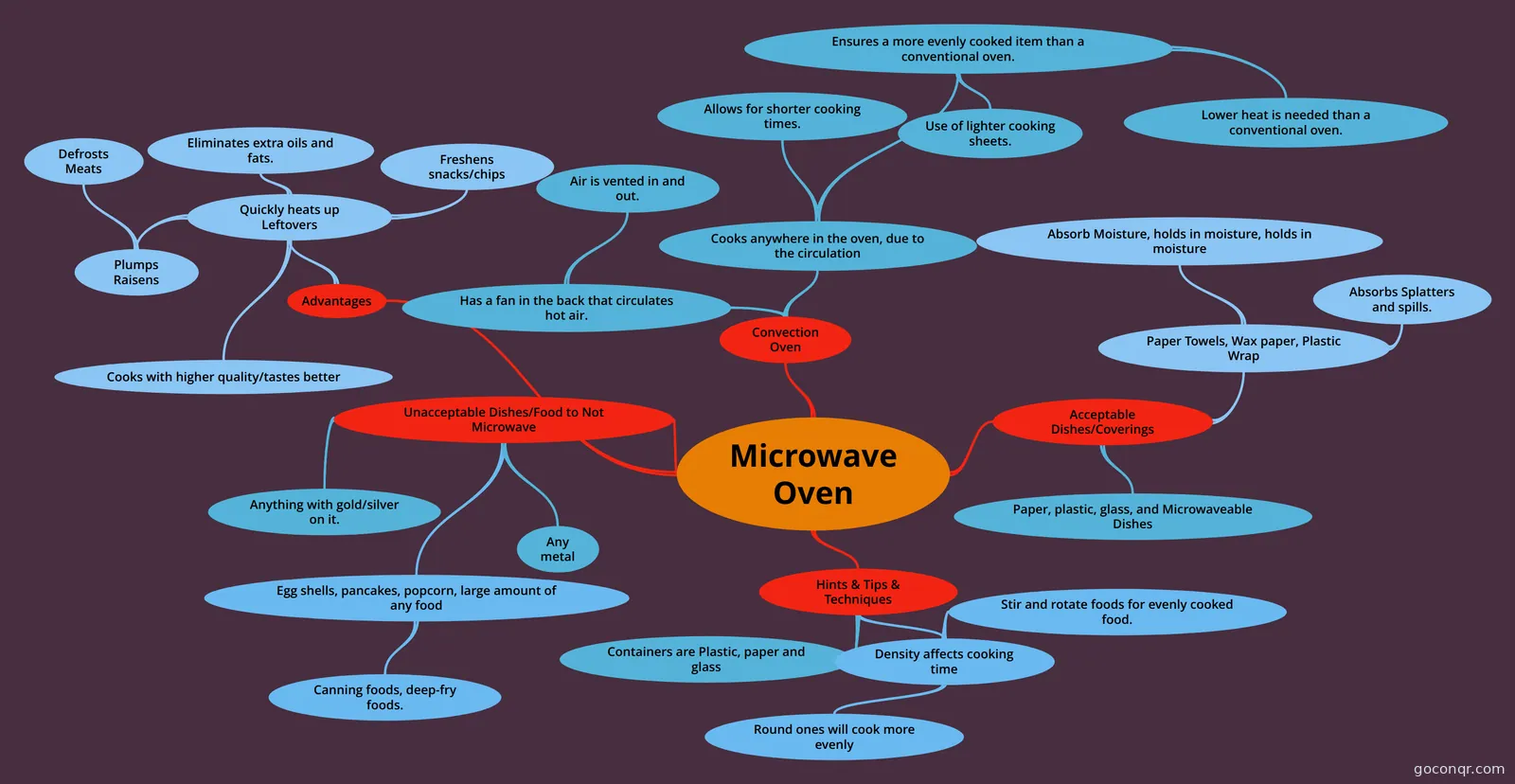 Mind map Microwave Oven Notes on Convenctional Ovens/Microwaves.
Mind maps
See all 28 mind maps-
Microwave Oven Mind map note format
-
Microwave Oven Map of microwave notes
-
Microwave awesome
-
Microwave Oven mindmap about how to use a microwave oven
-
Microwave Cooking for Healthy Living Microwave Notes
-
Microwave notes on the microwave
-
Microwaves Andrea Galan Microwave notes
-
Microwave Oven Notes on Convenctional Ovens/Microwaves.
Flashcards
More Cooking and gastronomy topics
About Kitchen Appliances, Ovens and Microwaves
GoConqr OriginalWhat the resources cover
Most of this unit is mind maps on microwave cooking. The maps explain that a magnetron produces microwaves, that a stirrer spreads the energy, and that water molecules vibrate and create friction, which heats the food. Several note that the energy is uneven, so food should be rearranged while cooking because some parts cook faster.
Dishes, coverings and foods to avoid
A second group of maps deals with practical safety. They list acceptable dishes such as paper, plastic, glass and microwaveable dishes, and unacceptable ones such as metal and dishes with gold or silver on them. Some also cover acceptable coverings, foods that should not be microwaved, cooking tips and techniques, and advantages such as warming leftovers and defrosting meat.
Ovens beyond the microwave
Many titles pair the microwave with other ovens, for example Microwave/Convection Oven, Types of Ovens and Oven Notes. Flashcard decks such as Rocio ovens and Taylor Rivera Culinary Terms help with vocabulary, and a few plain notes sit alongside the maps.
Where to start
- Begin with the first Microwave Oven map to understand how the appliance works.
- Move to Microwave Notes for advantages, defrosting steps and acceptable dishes.
- Read a Microwave/Convection Oven map to compare oven types.
- Finish with a flashcard deck to test the terms.
There are no quizzes on this page, so the flashcards are your quick check. After a map, close it and try to rebuild the main branches from memory, then compare.
Where it fits
This unit sits in the Kitchen Foundations strand of Cooking and gastronomy. Pick the map that matches what you need today, then add your own notes or cards to fill any gaps.
Frequently asked questions
Which resource should I open first?
Start with the Microwave Oven mind map that covers the magnetron, the stirrer and uneven energy. It explains how the appliance heats food. Then move to the Microwave Notes maps for advantages, defrosting and dish safety, before comparing oven types.
What do the mind maps cover?
They cover how a microwave works, including the magnetron, wave guide and stirrer, plus acceptable and unacceptable dishes, coverings, foods not to microwave, defrosting and cooking tips. Several also compare microwave, convection and conventional ovens.
Are there quizzes on this page?
No, this page has no quizzes. It offers mind maps, a handful of flashcard decks and a few notes. You can use the flashcards, such as Rocio ovens, to check terms, and test yourself by redrawing a map from memory.
Are the resources free to use?
Yes. Every resource listed here is free to open and study, with no account needed. They were made by GoConqr users, not by GoConqr itself. A free account also saves your progress and lets you make your own maps, flashcards and notes.
Who are these resources suited to?
They suit school students revising appliance basics, university students and professional candidates filling gaps in kitchen knowledge, and teachers wanting ready-made material. Most are at secondary level, with some professional-level and general ones.
What if I can't find the topic I need?
Check the oven-related maps, since many combine microwave, convection and conventional ovens in one resource. If a topic is still missing, you can build your own map or flashcard deck and keep it alongside the community ones.