
Organisational Behaviour and Culture
1,490 resources created by 1,093 users
This Organisational Behaviour and Culture page on GoConqr gathers community-made mind maps, flashcards, quizzes and notes, from motivation, power and politics to conflict, teams, change and organisational culture. It's built for university students and professional candidates revising a topic or filling gaps, and for teachers after ready-made material. There are over 1,400 resources here, including more than 70 quizzes, over 1,000 mind maps and more than 200 flashcard decks. Pick a topic, try a quiz to spot your gaps, then make your own set.
Select topic
- Types and Dimensions of Organisational Culture217
- Cultural Diversity and Hofstede's Dimensions23
- Individual Behaviour, Personality and Values19
- Attitudes, Emotions and Job Satisfaction22
- Motivation and Job Design46
- Perception and Decision Making19
- Groups and Teams49
- Organisational Communication17
- Leadership Theories and Styles32
- Power and Politics in Organisations24
- Conflict Management and Negotiation75
- Trust, Ethics and Citizenship Behaviour7
- Organisational Structure and Design20
- Organisational Change and Development33
- Organisational Learning and Innovation40
Top Organisational Behaviour and Culture resources
-
40 questionsMGT 360 Exam #2 Message recipients often hear what they want to hear when receiving messages, and interpret the neutral fac...
-
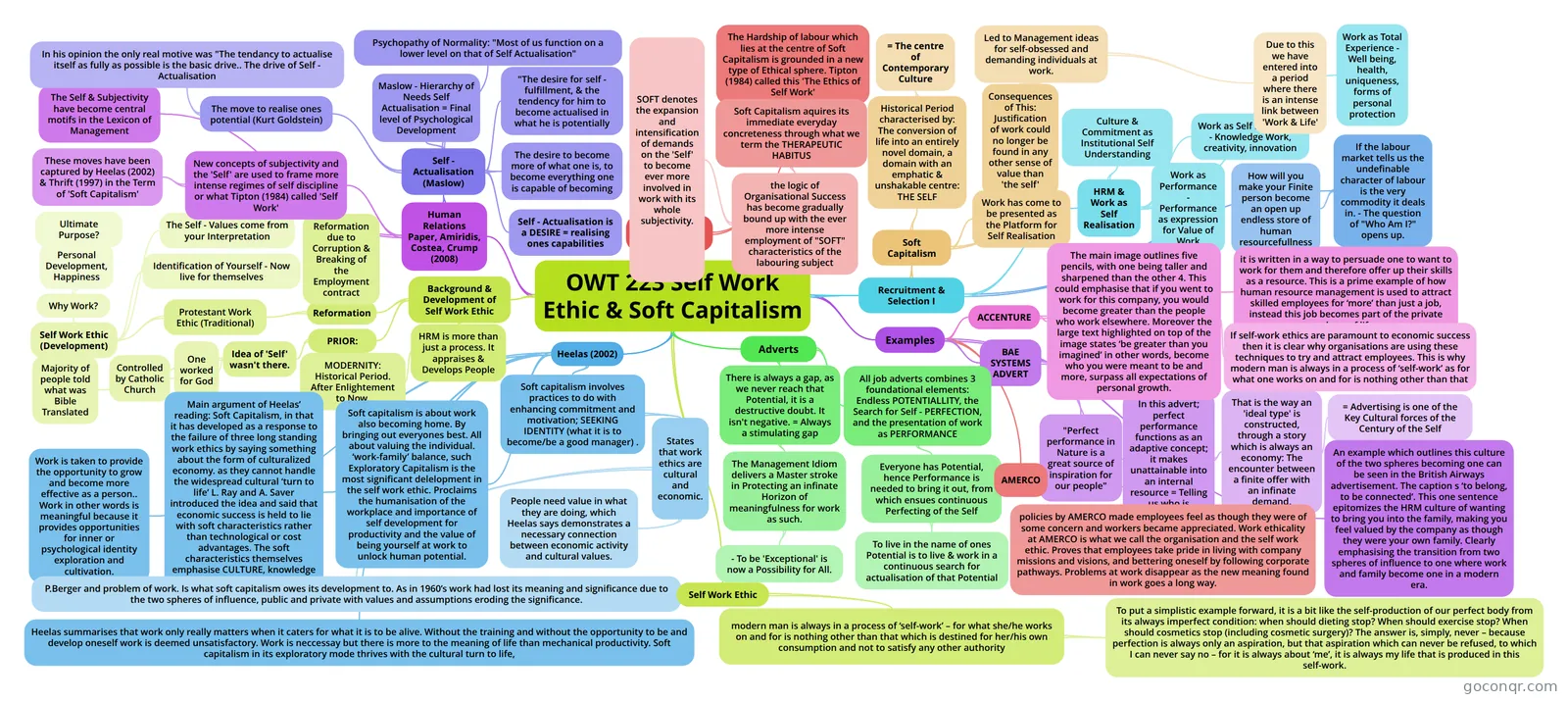 Mind map OWT 223 Self Work Ethic & Soft Capitalism
-
6 cardsG.Hofstede's cultural dimensions definitions. The resource will help you learn the original definitions of Hofstede's cultural dimensions.
-
Mind map CHAPTER 6 POWER & INFLUENCE TACTICS
-
43 cardsBA 352 Midterm Study Guide What is the definition of organizational behavior (OB)?
-
163 questionsPerformance in Organisations A Which of the following is a good networking strategy?
-
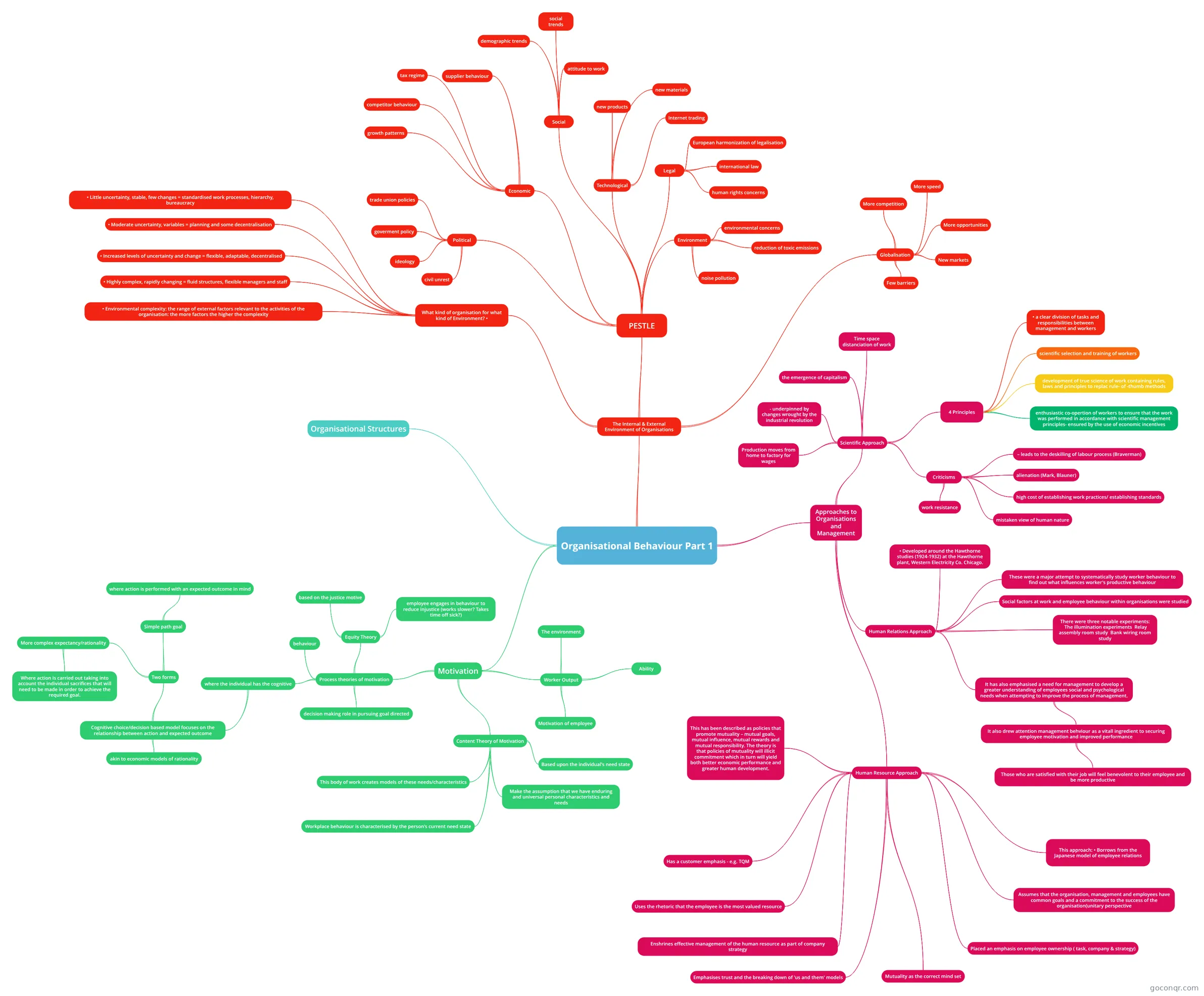 Mind map Organisational Behaviour Part 1 Internal and external, organisational structures, approaches to organisation and management, motivation
-
116 cardsOTCB Flashcards for OTCB final exam
Quizzes
See all 84 quizzes-
40 questionsMGT 360 Exam #2 Message recipients often hear what they want to hear when receiving messages, and interpret the neutral fac...
-
163 questionsPerformance in Organisations A Which of the following is a good networking strategy?
-
53 questionsManagement What is Stress?
-
14 questionsChapter 3 Quiz 60. Which of the following statements about perception is false?
-
12 questionsMGMT 331 Final Exam Review Define structural holes:
-
132 questionsGCM Organization A has decided it will place 70% of its workforce in production, 10% in managerial capacities, ...
-
19 questionsOrganization Behavior Management What do people feel and organization through? WHAT DOESN'T BELONG
-
10 questionsHistory Of Organizational Behavior What is Organizational Behavior?
Mind maps
See all 1,104 mind maps-
OWT 223 Self Work Ethic & Soft Capitalism
-
CHAPTER 6 POWER & INFLUENCE TACTICS
-
Organisational Behaviour Part 1 Internal and external, organisational structures, approaches to organisation and management, motivation
-
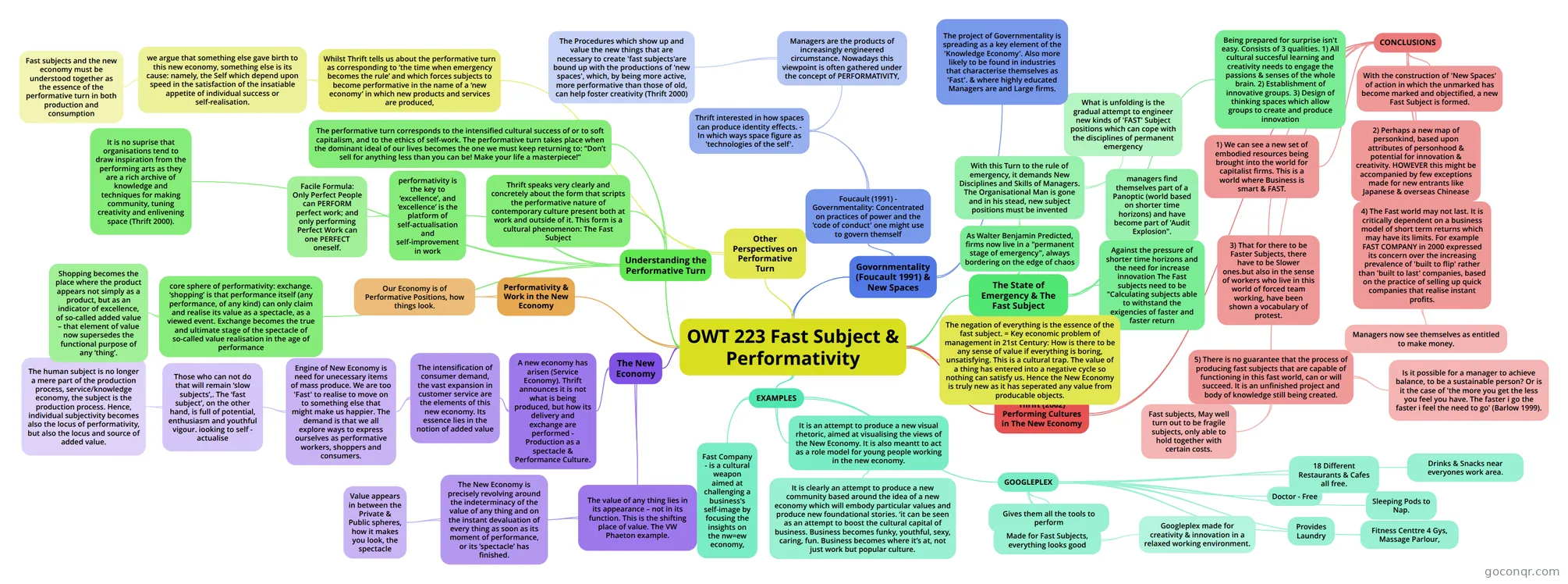 OWT 223 Fast Subject & Performativity
-
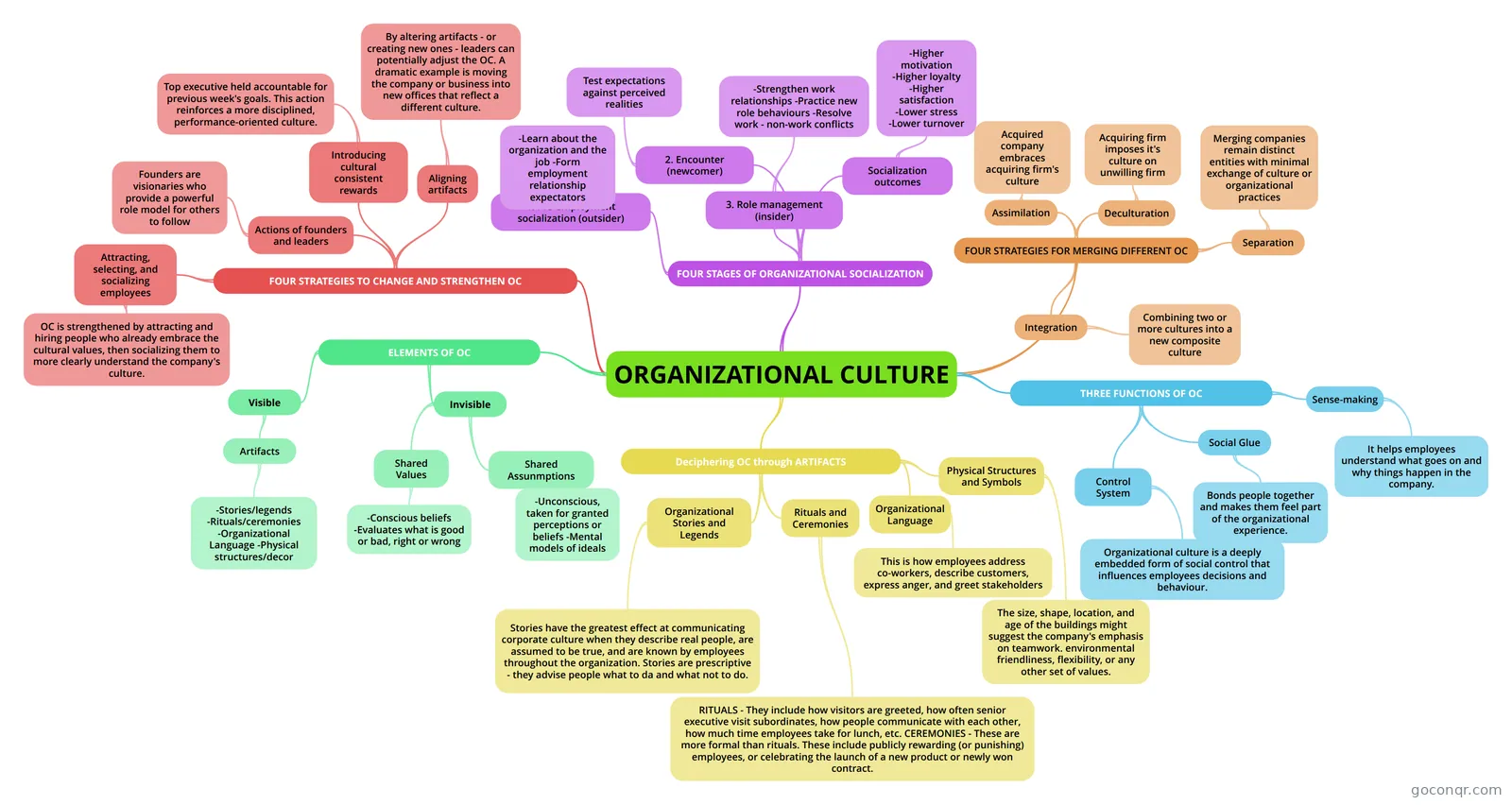 ORGANIZATIONAL CULTURE
-
MOTIVATION Motivation
-
 Organisations as Political Systems
-
 LEADERSHIP Unit 3: Step 4 - Review organizational behavior importance (Strategic - Management Cristian Poloche)
Flashcards
See all 227 flashcards-
6 cardsG.Hofstede's cultural dimensions definitions. The resource will help you learn the original definitions of Hofstede's cultural dimensions.
-
43 cardsBA 352 Midterm Study Guide What is the definition of organizational behavior (OB)?
-
116 cardsOTCB Flashcards for OTCB final exam
-
15 cardsCommunication What are Kotter (1995) thoughts on organisational change ?
-
14 cardsOB: SU2 What is Attitude?
-
59 cardsBusiness Exam Important concepts to know
-
20 cardsFoundational Perspectives in Leading and Managing Organizations CBS - Foundational Perspectives in Leading and Managing Organizations
-
16 cardsOB: SU 1 Why Interpersonal Skills is importance? (6 points)
Flowcharts
See all 31 flowchartsNotes
See all 39 notes-
Organisational Change Forces of Change Uncertain economic Conditions Globalization and fierce world competition Level of government intervention Political Interests Scarcity of Natural Resources New Tech and the information ...
-
Change Culture “...the underlying assumptions about the way work is performed”. “...what is acceptable and not acceptable”. “...what behaviour and actions are encouraged and discouraged”. “…managers who embrace value-based change in...
Topics in Organisational Behaviour and Culture
More Business administration and management (incl. project management) topics
About Organisational Behaviour and Culture
GoConqr OriginalWhat this unit covers
The resources here follow the usual run of an organisational behaviour course. Some look at the individual: motivation, attitudes and satisfaction, emotions and moods, personality and values. Others look at groups and the wider organisation: teams, conflict and negotiation, communication, decision making, structure and design, culture and change.
Culture has plenty of material of its own, including the mind maps Organisational Culture and Corporate Culture, and a flashcard deck on Hofstede's cultural dimensions, from power distance to indulgence.
Where to start
If the subject is new, begin with the mind map Organisational behaviour and the flashcard deck of the same name. Then open Motivation, which sets out intensity, direction and persistence, and the notes on organisational culture.
- Read a broad overview map first.
- Move to a topic map, such as the one on power and influence tactics.
- Test yourself with flashcards or a quiz.
Using maps and quizzes together
Mind maps are good for seeing how ideas connect. The map on power and influence tactics, for instance, links definitions of power, sources of power, influence tactics and organisational politics. Once you have read one, close it and take a quiz such as OB Final or Stress Management. Anything you get wrong tells you which map to reopen.
The notes on micropolitics in organisations pair well with the power maps, since they treat the organisation as a network of power relationships. The notes on organisational change list the forces behind change, such as globalisation and new technology.
Where it sits
This unit belongs to the People, Organisation and Leadership strand of Business administration and management (incl. project management). Nearly all the material is aimed at university level, with a smaller share written for professional candidates and for school-level study.
Teachers can use the decks and maps as ready-made starting points for a seminar or revision session. When you are ready, pick one topic, work through its map and quiz, and then build a set of your own.
Frequently asked questions
Which resource should I open first?
Start with the mind map called Organisational behaviour and the flashcard deck of the same name. They give a broad view of the unit. After that, move on to a topic such as Motivation, power and influence, or organisational culture, and test yourself with a quiz.
What do the mind maps cover?
There are over 1,000 mind maps. They cover motivation, attitudes, emotions, diversity, teams, conflict and negotiation, power and politics, structure, change and culture. Some follow textbook chapters, such as the ones on job design, job stress and teams in organisations.
Are the resources free to use?
Yes. Every resource listed here is free to open, study and take, with no account needed. They were made by GoConqr users, not by GoConqr. If you want to save quiz scores or make your own quizzes, maps, flashcards and notes, you can add a free account.
Is there material on cultural differences between countries?
Yes. The flashcard deck on Hofstede's cultural dimensions defines power distance, individualism versus collectivism, masculinity versus femininity, uncertainty avoidance, long-term orientation and indulgence. There are also maps and notes on organisational culture and diversity to read alongside it.
Who are these resources for?
Mostly university students and professional candidates, who can use them to revise topics and fill gaps. Teachers can also use them as ready-made material. Nearly all the listed resources are at university level, so check that a resource fits your course before relying on it.
What if I cannot find the topic I need?
Try a nearby topic first. Conflict, negotiation, communication, decision making and leadership each have their own decks or maps. If something is still missing, you can make your own mind map, flashcards or quiz on it and keep it alongside the community material.