
Narrative and Story Elements
453 resources created by 420 users
This Narrative and Story Elements page on GoConqr gathers community-made quizzes, mind maps, flashcards, notes, slide sets and flowcharts, from plot structure and conflict to characterisation and the hero's journey. It's built for school students revising a topic and teachers after ready-made material. There are over 400 resources here, including more than 10 quizzes, over 270 mind maps and more than 120 flashcard decks, with a strong focus on secondary level and links to GCSE and A-level English Literature. Pick a quiz, find your gaps, then build your own.
Top Narrative and Story Elements resources
-
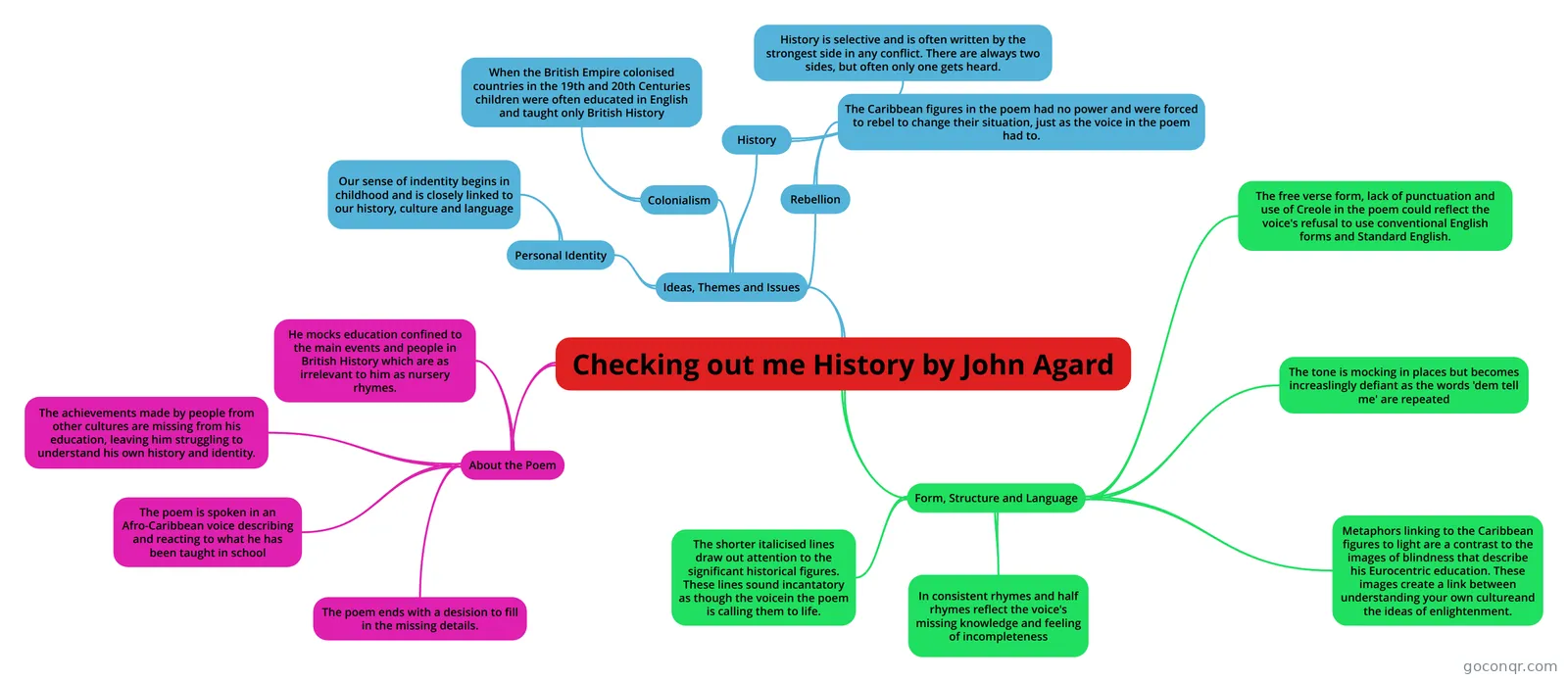 Mind map Checking out me History by John Agard This is information about the poem; Checking out me History by John Agrad from the Character and Voice clus...
-
8 questionsCharacters and Character Development Quiz Characters are the heart of the story.
-
7 cardsHero myths archetypes
-
8 questionsFiction Elements Quiz All the events that take place in a story from the beginning - middle - end is called the ...
-
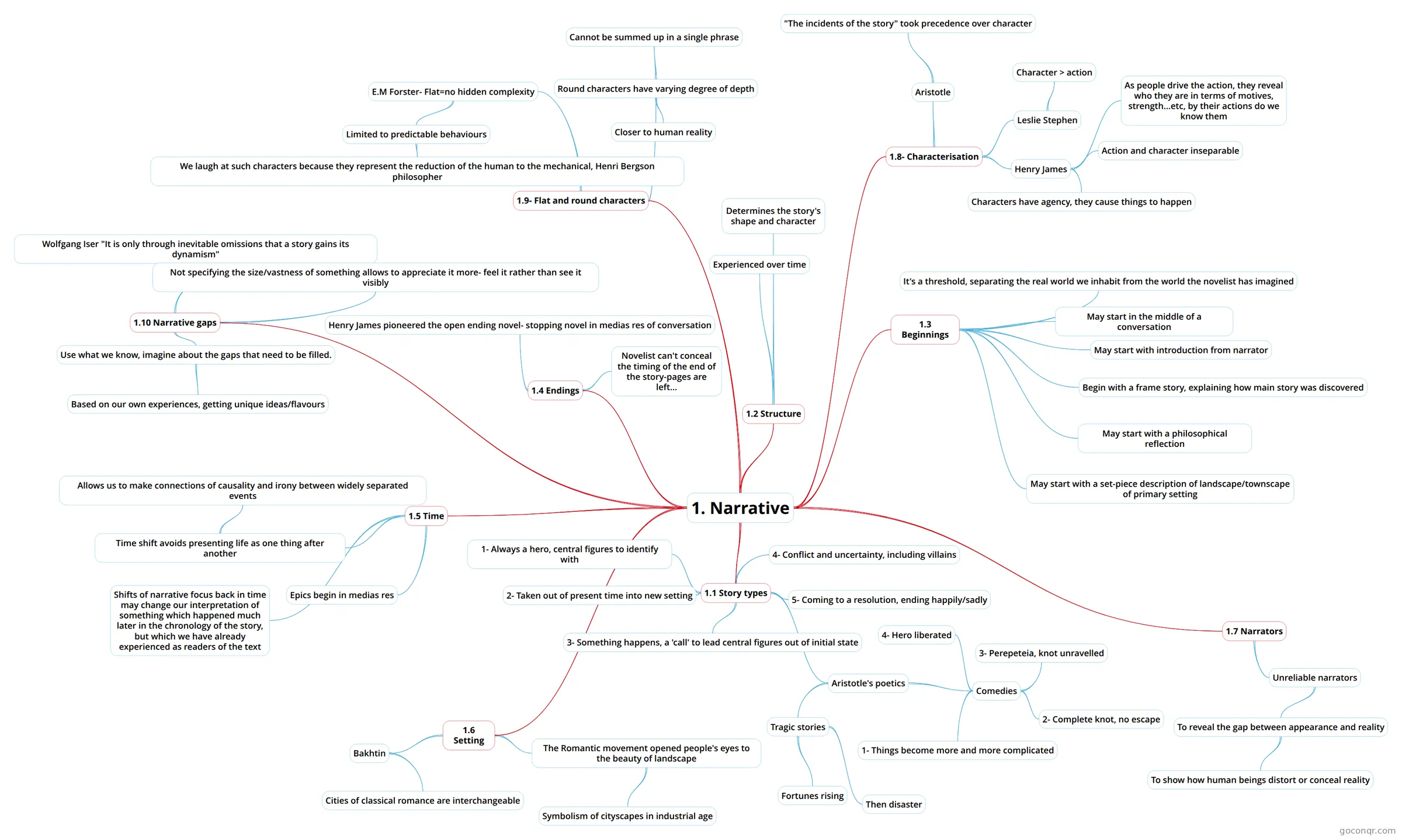 Mind map 1. Narrative
-
48 cardsLiterary Elements
-
Mind map Death
-
15 cardsAbout the Poem OZYMANDIAS The poem is about... Character... Voice...
Quizzes
See all 21 quizzes-
8 questionsCharacters and Character Development Quiz Characters are the heart of the story.
-
8 questionsFiction Elements Quiz All the events that take place in a story from the beginning - middle - end is called the ...
-
9 questionsStages and Archetypes What is the first stage of the initiation on the hero's journey?
-
25 questionsEnglish Study
-
28 questionsUntitled A conclusion related on the basis of evidence and reasoning
-
3 questionsStructure of story
-
10 questionsTheme Pre-Assessment Read the quotations below from Frances H. Burnett's The Secret Garden. Match each one with the theme or les...
-
7 questionsElements of Fiction What is a protagonist?
Mind maps
See all 281 mind maps-
Checking out me History by John Agard This is information about the poem; Checking out me History by John Agrad from the Character and Voice clus...
-
1. Narrative
-
Death
-
Miles Morales from Spider-Man into the Spiderverse
-
How husbands may rule -Fanny Fern Elements of fiction analysis
-
L.A. Final Study Practice (Grade 7)
-
Comrade Bilhardov
-
 Urban Poverty
Flashcards
See all 126 flashcards-
7 cardsHero myths archetypes
-
48 cardsLiterary Elements
-
15 cardsAbout the Poem OZYMANDIAS The poem is about... Character... Voice...
-
22 cardsheros journey Who created heros journey
-
29 cardsPoint of View The author is situated somewhere in order to view the action he is reporting on
-
33 cardsShort Story Vocab Words
-
12 cardsEnglish IIA Flashcards Climax (narrative arc)
-
27 cardsShort Story Review function of setting #1
Flowcharts
See all 10 flowcharts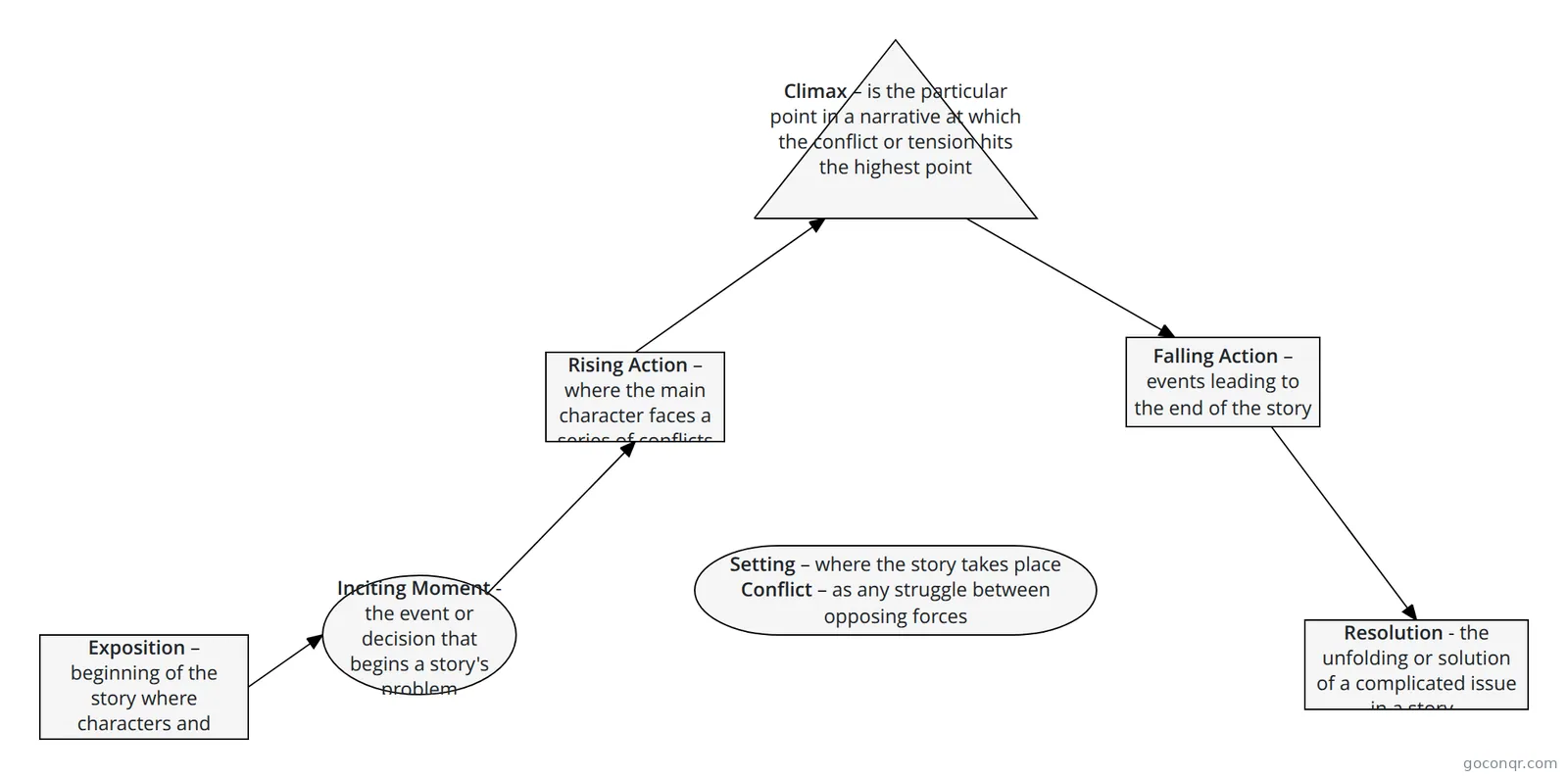
Notes
See all 11 notes-
English Quiz Grade 9 Points of View (POV) Perspective from which a story is told First Person Point of View: From the authors point of view Uses pronouns I, me and we Main character always tells the story Refers to themselves as...
-
ENGLISH MIDTERM Tone and Mood Words Tone - Author's tone towards their writing, the readers, the subject or characters. - A piece can have more than one tone. - Set by setting and word choice and details. Ex) sarcastic, humorous...
-
Plot 1) Introduction: Presents antecedent action (Action that happens before story even begins) Holds setting, Mood & Characters Provides context for story and characters 2) Initial Incident: Starting point of conflict Can...
-
English Key Terminology - created from Mind Map Freytag pyramid Key words First person narrative: The narrator is the protagonist
-
Narrative Elements Narrative Elements:What is Plot?Plot is the sequence of events/action in a novel, movie, picture book, etc.What is Conflict?Conflict is the problem in a novel, movie, picture book, etc.What is Setting?Setting is where...
-
Untitled ...
-
ELEMENTS OF A STORY - created from Mind Map Plot Setting Hero
-
Short Story/Plot Terms Quiz vocab words to knowtheme- the authors message in a storyconflict- the problem in a story between charactersinfer- to predict information based on educated guessesimagery- words that describe/appeal to your senses (tou...
Slides
Topics in Narrative and Story Elements
More Literature topics
About Narrative and Story Elements
GoConqr OriginalWhat this unit covers
The page lists material on the building blocks of stories. Flashcard decks such as Literary Elements run through plot, exposition, rising action, climax, falling action, resolution, setting, mood and the types of conflict. Other decks and mind maps look at characters, point of view, narrators and theme.
There are also resources on particular texts and poems, including a mind map on Checking out me History by John Agard and several on The Clown Punk, which connect the terms to set work.
Where to start
- Open the Short Story Conventions mind map for a quick overview of characters, setting, mood and plot.
- Work through the Literary Elements flashcards until the terms feel familiar.
- Take the Fiction Elements Quiz to see which terms are still shaky.
- Move on to the Characters and Character Development Quiz for a closer look at how characters change.
Using quizzes and maps together
Let the quiz tell you what to revisit. If a question on conflict trips you up, go back to the flashcards on internal and external conflict, then look at a plot mind map to see where that conflict sits in the story. Try the quiz again afterwards.
The hero's journey has its own set of mind maps, flowcharts and flashcard decks, including Hero myths archetypes, plus a quiz called Stages and Archetypes. Together they suit anyone comparing quest stories.
For teachers and exam classes
Teachers can pull quizzes, slide sets such as the plot structure slides, and flowcharts straight into lessons. The listed resources mention GCSE English Literature and A-level English Literature, so students can link the terms to the way they write about set texts. Because the resources were made by GoConqr users, it is worth checking that each one matches your own course.
Where it fits
This unit sits in the Foundations of Literary Study strand of Literature. It gives you the vocabulary that later reading and analysis build on.
Choose one resource that suits where you are now, and make a mind map or deck of your own as you go.
Frequently asked questions
Which resource should I open first?
The Short Story Conventions mind map is a good first stop because it maps characters, setting, mood and plot on one page. After that, try the Literary Elements flashcards for definitions, then the Fiction Elements Quiz to check what has stuck.
What do the mind maps cover?
They cover story elements such as plot, character and types of characters, plus the hero's journey and techniques for building mystery and suspense. Others focus on specific texts and poems, including Checking out me History by John Agard and The Clown Punk, so you can link the terms to examples.
Are the resources free to use?
Yes. Every resource listed here is free to open, study and take, with no account needed. They were made by GoConqr users rather than by GoConqr itself, so it helps to compare them with your own class notes. A free account saves your quiz scores and lets you make your own.
Which levels and exams do these suit?
Nearly all of the resources are at secondary level, so they suit school students and their teachers. The listed material mentions GCSE English Literature and A-level English Literature. Check each resource against your own course, since the content comes from the community.
Are there quizzes on characters and conflict?
Yes. The Characters and Character Development Quiz looks at why readers become invested in characters and how they develop. The page also lists Resolving Internal and External Conflicts, Character Quiz! and Theme Pre-Assessment, so you can test different elements one at a time.
What if I can't find the topic I need?
Try a nearby term, such as plot structure, narrator or point of view, since many resources use different titles for similar ideas. If nothing fits, you can build your own mind map, flashcards or notes on the topic, and tailor them to your own course.