
Oral Pathology
271 resources created by 122 users
This Oral Pathology page on GoConqr gathers community-made mind maps, flashcards, quizzes and notes, from white lesions and cysts to salivary gland tumours and oral squamous cell carcinoma. It's built for university students revising lesion by lesion, and for teachers after ready-made material. There are over 260 resources here, including more than 30 quizzes, over 110 mind maps and over 110 flashcards. Pick a topic, try a quiz to find your gaps, then build your own sets.
Select topic
- Diagnosis of Oral Lesions11
- Developmental Abnormalities of Teeth and Face24
- Dental Hard Tissue and Pulp Diseases5
- Oral Mucosal and Soft Tissue Lesions37
- Gingival and Oral Hyperplastic Lesions5
- Oral Infections9
- Oral and Jaw Cysts32
- Odontogenic Tumors18
- Oral Cancer and Other Neoplasms14
- Jaw Bone and Joint Diseases20
- Salivary Gland Diseases and Tumors5
Top Oral Pathology resources
-
Mind map Oral Lesions Differential DIagnosis
-
107 cardsDiseases of Gnathic bones and TMJ Idiopathic Osteosclerosis (Enostosis, dense bone island)
-
82 cardsInfectious Diseases of the Head & Neck Superficial fungal infections
-
Mind map Abnormalities of teeth (check RCS)
-
200 questionsPathology, Medical Condition , Medical Emergency, Nutrition What hypersensitivity reaction is characterized by target , iris or bull's eye lesion that consist of conce...
-
48 questionsNeoplasms Which tumor(s) is caused by HPV?
-
4 questionsOral Pathology Quiz #87 Case Number One. Fig. 1 Courtesy Drs. Petar Hinic and Jon Bartlett, Summit A 55-year-old healthy female com...
-
200 cardsOral Pathology - Lecture 1 & 2a So far...only Development and Congenital Diseases
Quizzes
See all 33 quizzes-
200 questionsPathology, Medical Condition , Medical Emergency, Nutrition What hypersensitivity reaction is characterized by target , iris or bull's eye lesion that consist of conce...
-
48 questionsNeoplasms Which tumor(s) is caused by HPV?
-
4 questionsOral Pathology Quiz #87 Case Number One. Fig. 1 Courtesy Drs. Petar Hinic and Jon Bartlett, Summit A 55-year-old healthy female com...
-
18 questionsDH oral pathology - Genetic tooth disorders What is the clinical onset for amelogenesis imperfecta
-
10 questionsOral Pathology Topic 1 - Epithelial changes What does the image show?
-
2 questionsOral pathology Which of the development defect of lips have blepharochalasis as a complication?
Mind maps
See all 114 mind maps
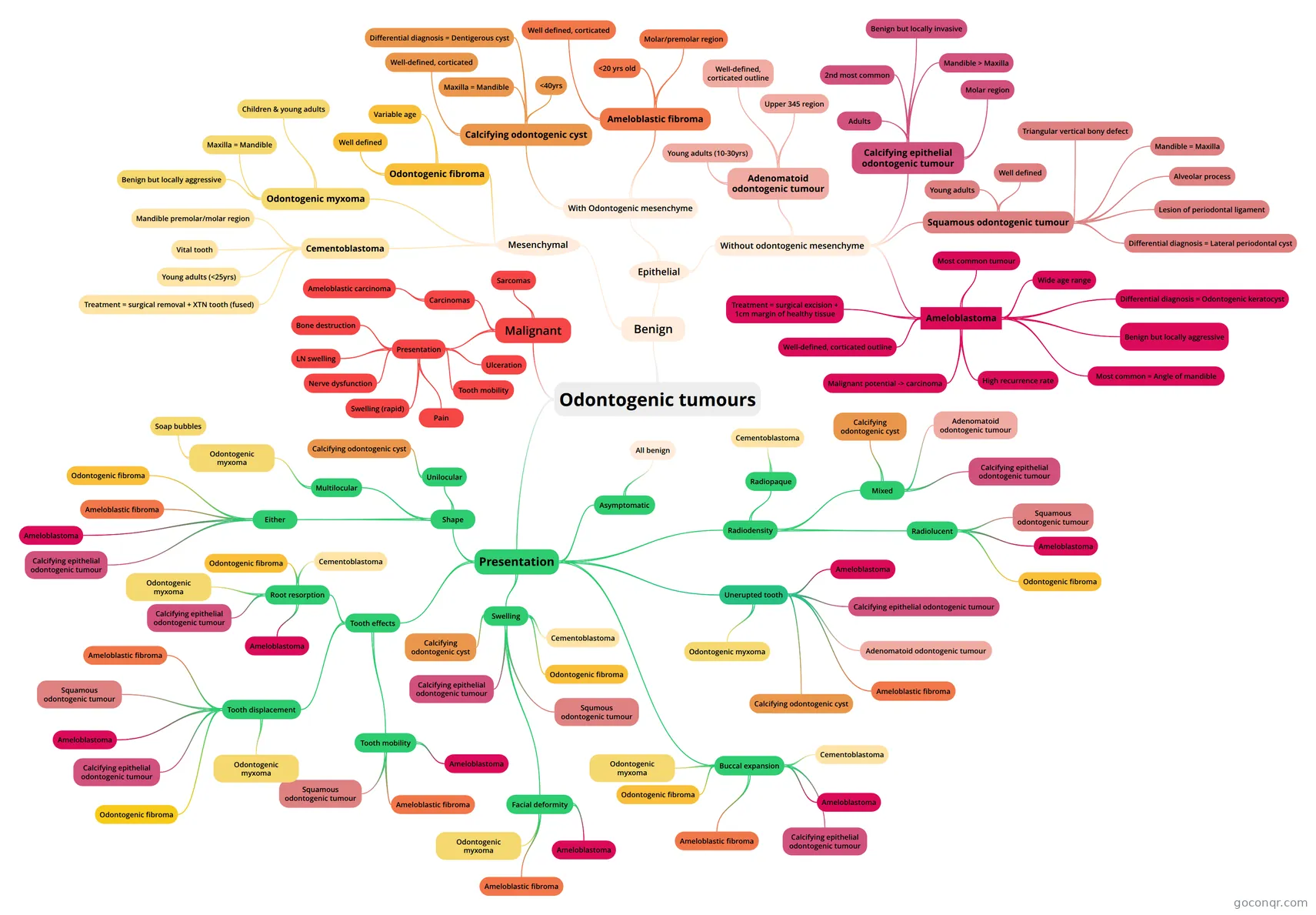
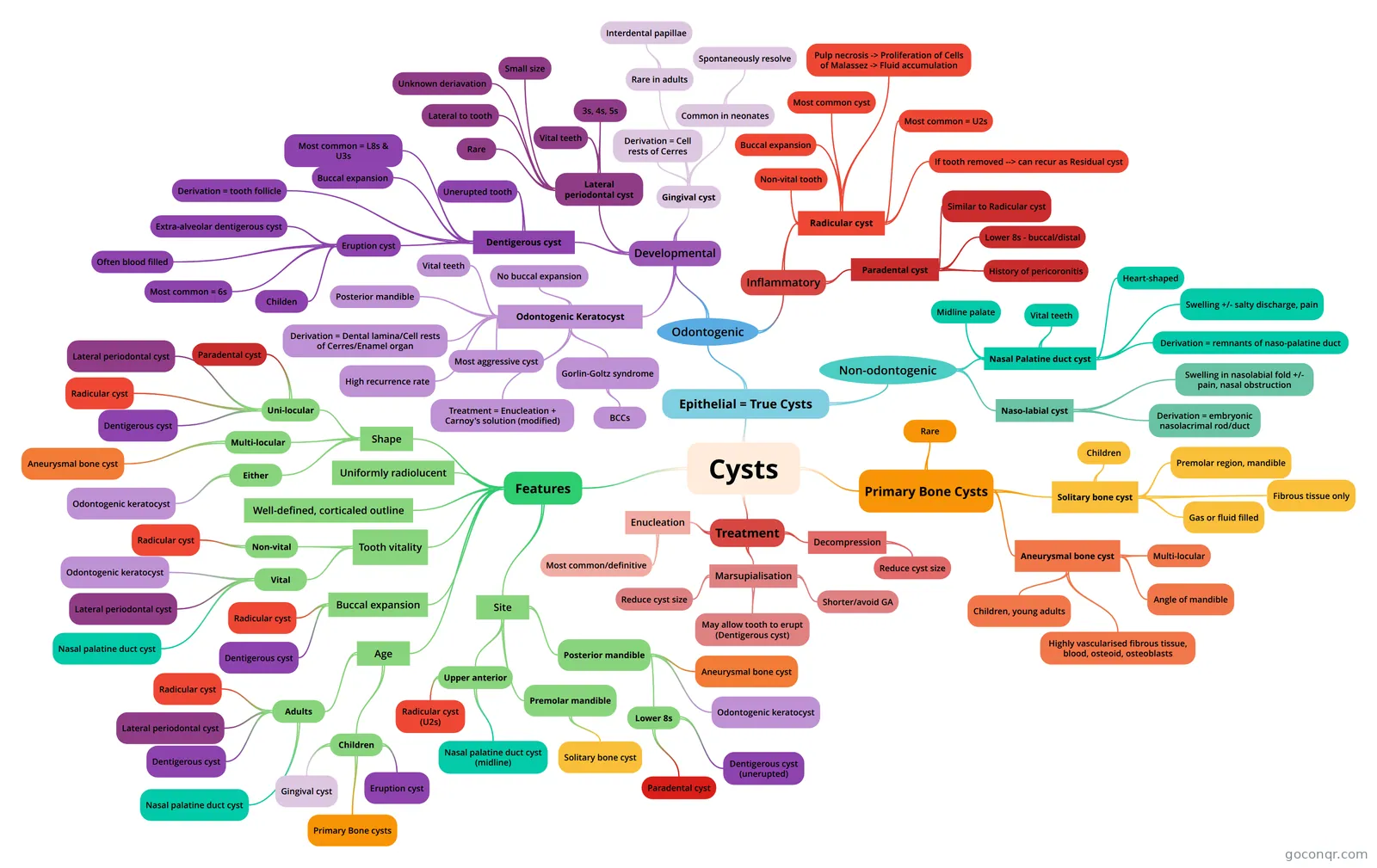

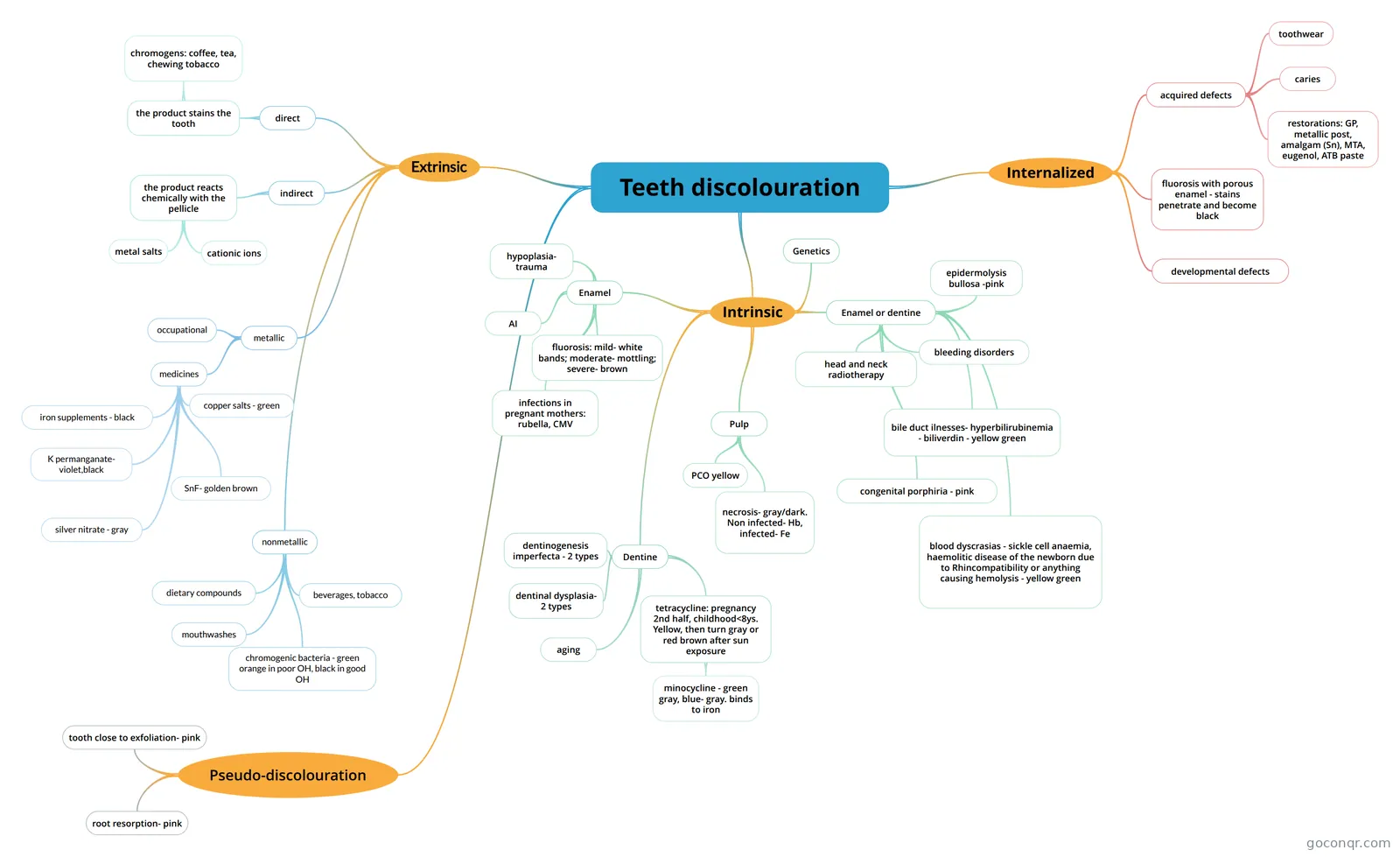
Flashcards
See all 119 flashcards-
107 cardsDiseases of Gnathic bones and TMJ Idiopathic Osteosclerosis (Enostosis, dense bone island)
-
82 cardsInfectious Diseases of the Head & Neck Superficial fungal infections
-
200 cardsOral Pathology - Lecture 1 & 2a So far...only Development and Congenital Diseases
-
49 cardsOral Pathology Exam 2 - Pigmented Lesions Lecture Packet Images
-
28 cardsOral Path Principles of Pathology What is Pathology/
-
19 cardsMorpho pat tot 1 sem2
-
8 cardsmid oral disease can be a sign for systemic disease (T/F)
Topics in Oral Pathology
More Dentistry topics
About Oral Pathology
GoConqr OriginalWhat the unit covers
The listed resources follow the usual order of an oral pathology course. Surface lesions come first. The mind map White Lesions branches from congenital causes such as White Sponge Nevus and Witkop's dyskeratosis to trauma and immuno-inflammatory causes. Oral Lesions Differential DIagnosis sorts problems into soft tissue enlargement, white, red and pigmented lesions.
Jaw and tooth topics follow. Cysts covers radicular cysts, classification, site, shape, size, radiodensity and effect on adjacent structures. Separate sets cover odontogenic cysts, odontogenic tumours, benign bone lesions and abnormalities of teeth. The salivary gland material includes mucocele and benign mixed tumour, the most common salivary neoplasm.
Where to start
- Open Oral Lesions Differential DIagnosis to see the whole field in one view.
- Move to White Lesions and Cysts, which are the most detailed maps.
- Use flashcard decks such as Developmental anomalies of teeth 2 and Infectious Diseases of the Head & Neck for definitions.
- Finish with the chapter quizzes, from Chapter 1 onwards.
Using maps and quizzes together
Read a map first and note the branches you cannot explain. Then take a related quiz. The cyst quiz asks, for example, what the connective tissue capsule of a radicular cyst contains, and which odontogenic cyst tends to recur. Wrong answers show which map branch to reread.
Flashcards suit short facts, such as what hypercementosis is and why it may cause problems. Teachers can use the maps and decks as ready-made handouts or revision starters, and the flowcharts on oral squamous cell carcinoma and relevant neoplasms suit a closing review.
Where it sits
This unit belongs to the strand Oral Pathology and Oral Medicine in Dentistry. Most of the material is at university level, with a small share of professional resources.
Choose one lesion group today, open its map and test yourself with a quiz.
Frequently asked questions
Which resource should I open first?
Start with the mind map Oral Lesions Differential DIagnosis. It lays out soft tissue enlargement, white, red and pigmented lesions, so you can see how the topics connect. Then go into White Lesions or Cysts for more detail before trying a quiz.
What do the cyst resources include?
There is a cyst quiz, the Cysts mind map, a classification of cysts map, and maps on odontogenic and non-odontogenic cysts. Flashcard decks include Path: Odontogenic Cysts and okc. Together they let you read, recall and test the same topic.
Are the resources free to use?
Yes. Every resource listed here is free to open, study and take, with no account needed. They were made by GoConqr users, not by GoConqr itself, so it is worth checking them against your own course notes.
Who are these resources for?
They mainly suit university students, since most of the material is at that level, with a small share of professional content. Teachers can also use the maps, decks and quizzes as ready-made material for revision sessions.
What do the salivary gland resources cover?
The Salivary Gland Pathology map covers mucocele, a rupture of a salivary gland duct that is not a true cyst. Salivary Gland Tumors covers benign mixed tumour, the most common one. There are also maps on diseases of salivary glands and a lecture deck.
What if I cannot find my topic?
Browse the related maps and decks on neighbouring topics, as many cover several subjects at once. If a gap remains, you can make your own quiz, mind map, flashcards or notes with a free account, which also saves your quiz scores.