
The Great Depression and the New Deal
33 resources created by 31 users
This History page on GoConqr gathers community-made mind maps, flashcards, quizzes, notes and slide sets on The Great Depression and the New Deal, from the 1929 stock market crash and the Dust Bowl to the alphabet agencies and the Second New Deal. It's built for school students revising a topic and teachers after ready-made material. There are over 380 resources here, including more than 20 quizzes and over 200 mind maps, with AP US History, GCSE History and A-level History mentioned along the way. Pick a starting point and test yourself.
Top The Great Depression and the New Deal resources
-
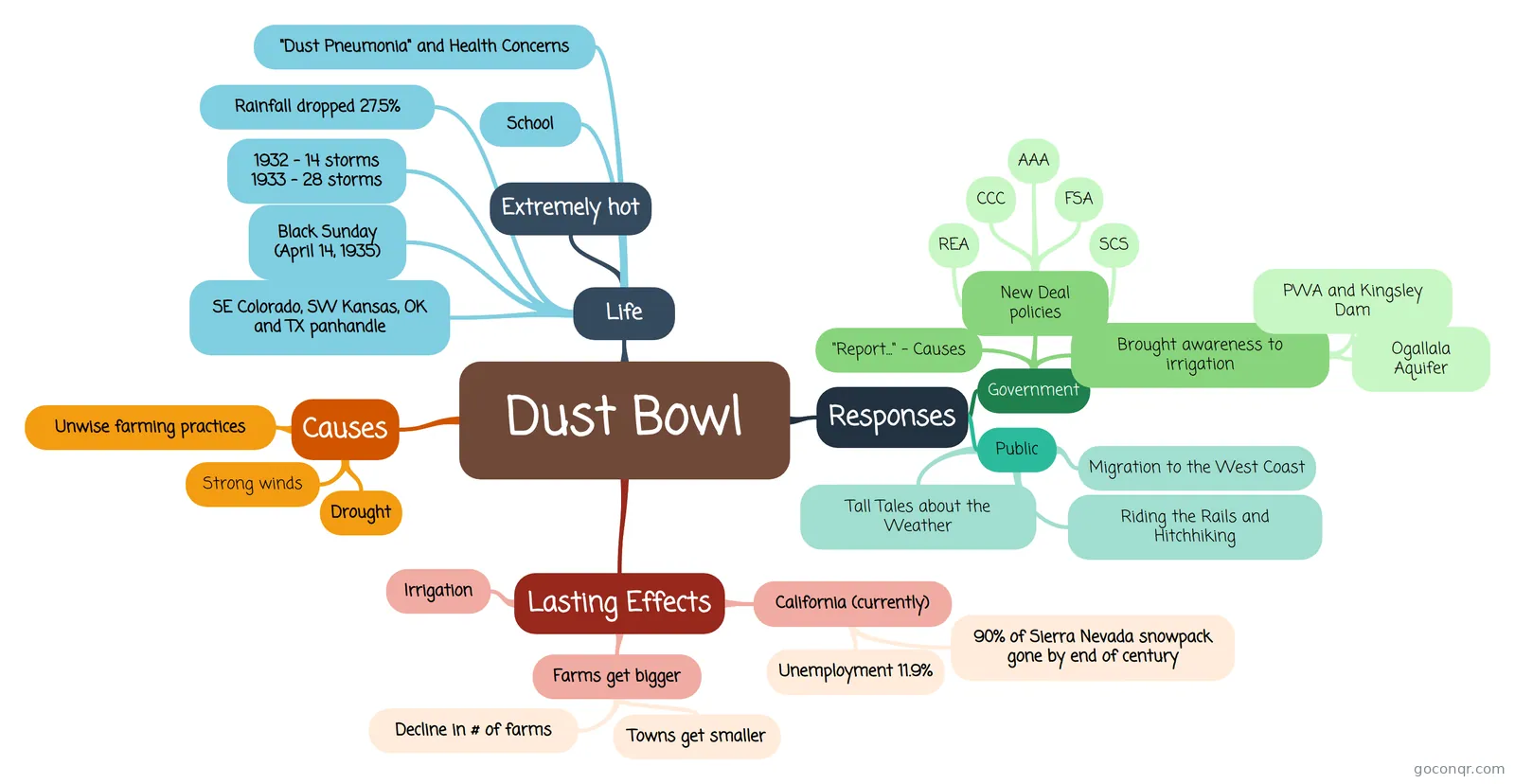 Mind map Dust Bowl Dust Bowl of the 1930s (and now)
-
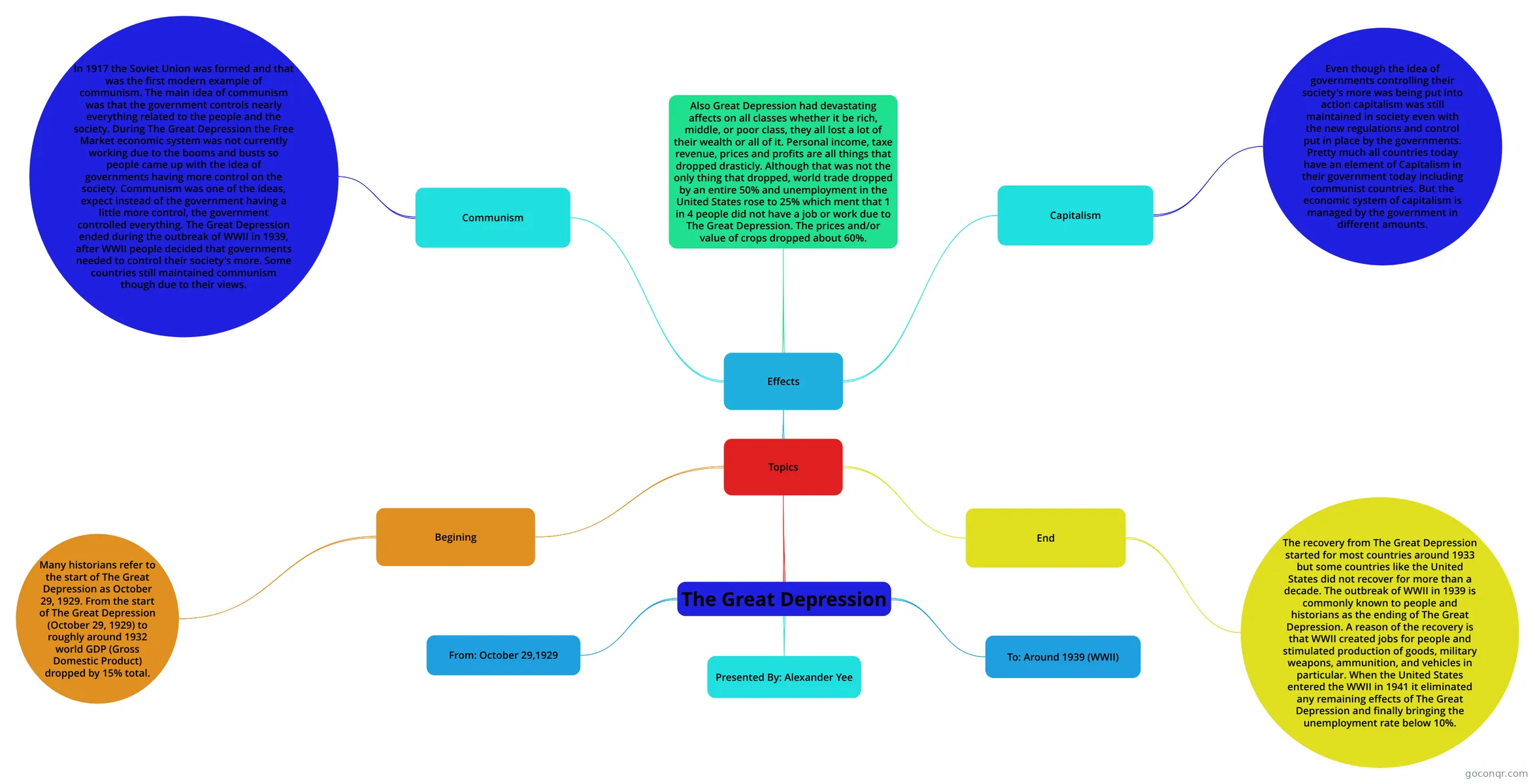 Mind map The Great Depression
-
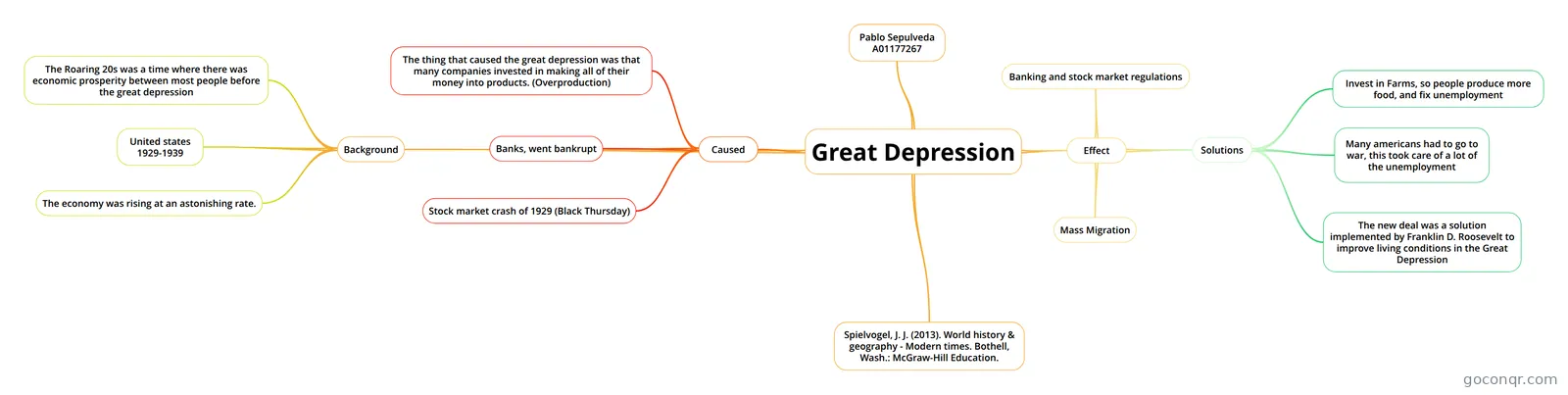 Mind map Great Depression The great Depression
-
20 questionsAmerican History: A Survey ch 25 (The Great Depression) review What does the term "Bull Market" refer to?
-
11 cardsTopic 9: Age of Catastrophes: The Great Depression What date was the Wall Street Crash in 1929?
-
17 cardsNew Deal Programs Flashcards consisting of 17 of FDR's new deal programs
-
23 cardsThe Great Depression programs What was the goal of WPA?
-
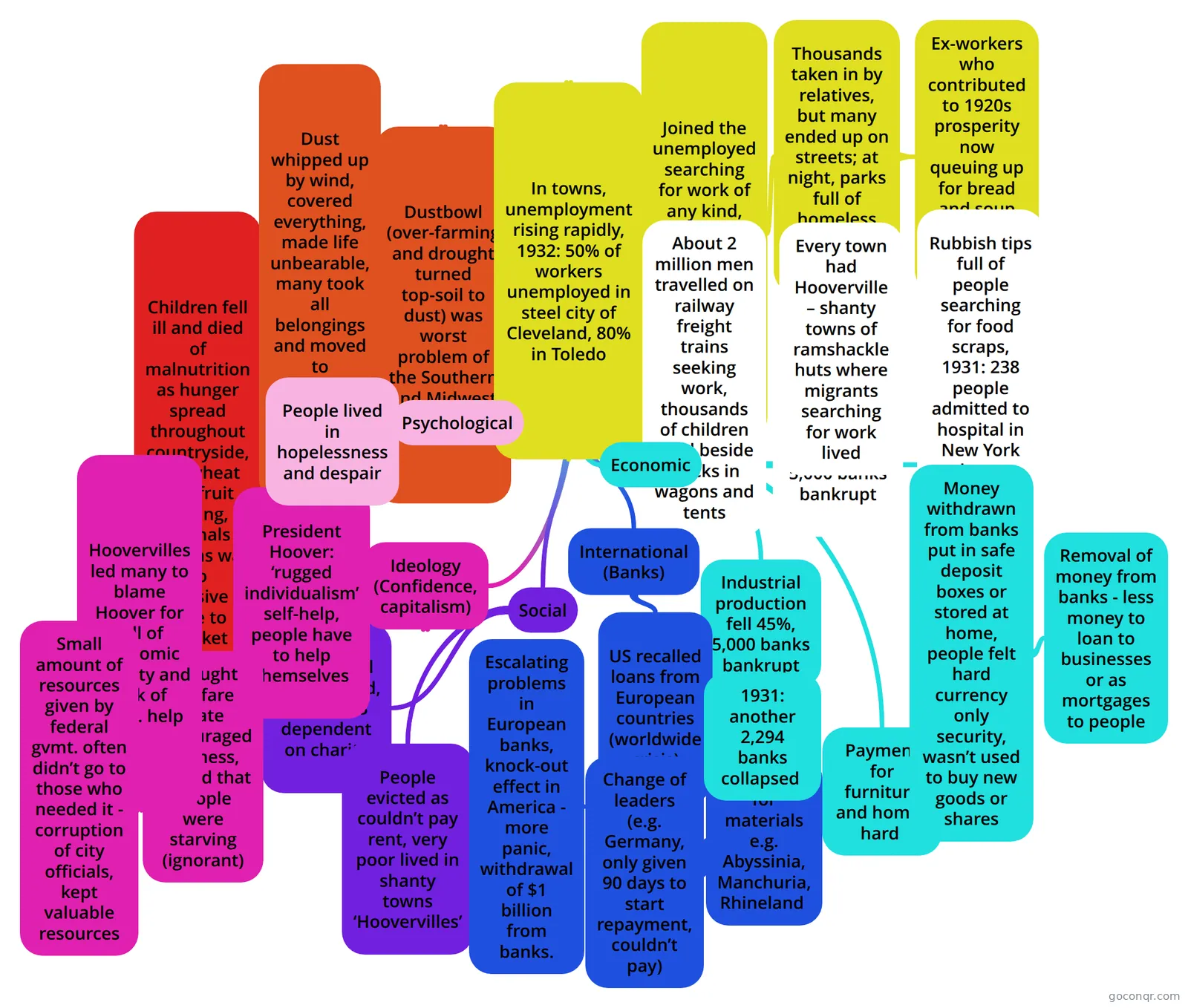 Mind map Wall Street Crash Consequences Continued Mind Map on Wall Street Consequences Continued, created by Chloe Vasconcelos on 15/11/2018.
Quizzes
Mind maps
See all 15 mind maps-
Dust Bowl Dust Bowl of the 1930s (and now)
-
The Great Depression
-
Great Depression The great Depression
-
Wall Street Crash Consequences Continued Mind Map on Wall Street Consequences Continued, created by Chloe Vasconcelos on 15/11/2018.
-
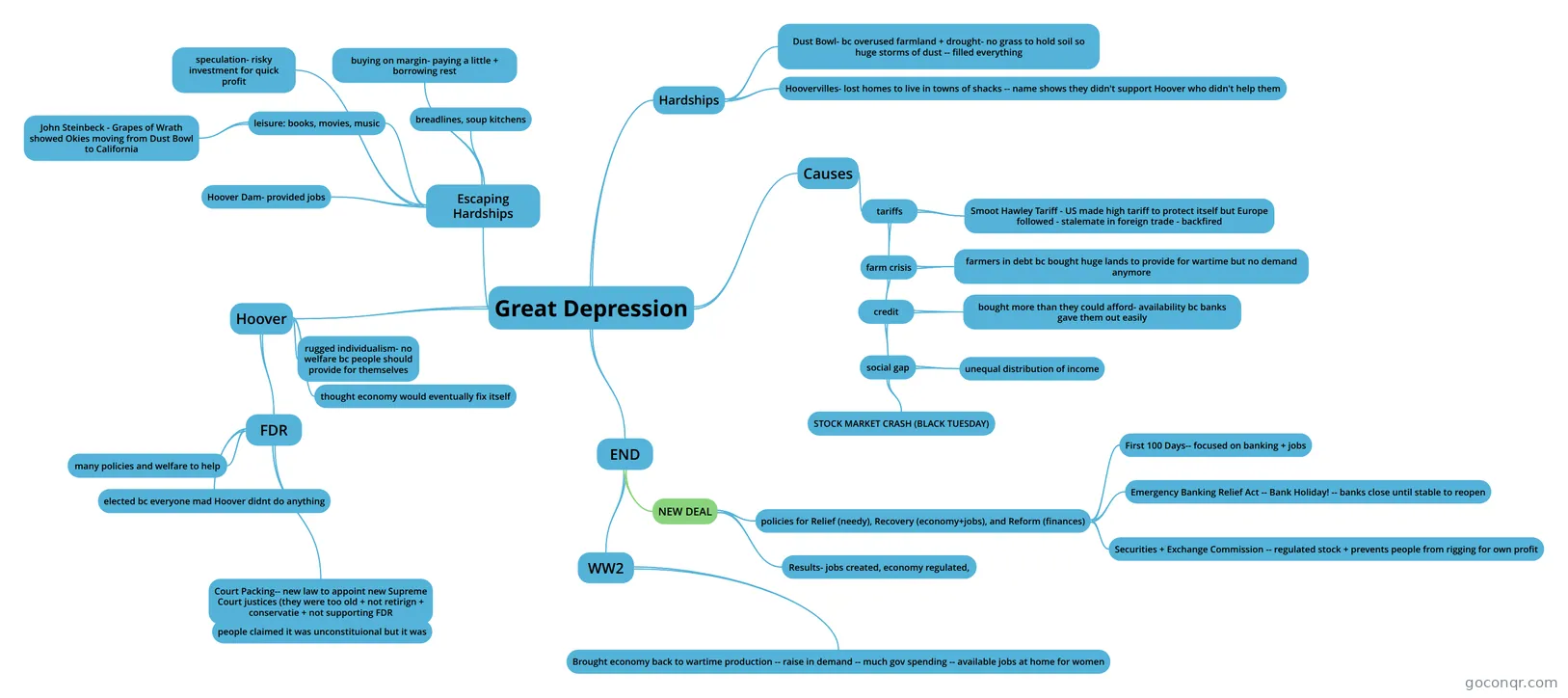 Great Depression
-
The Great Depression thing for school
-
Causes of the Depression
-
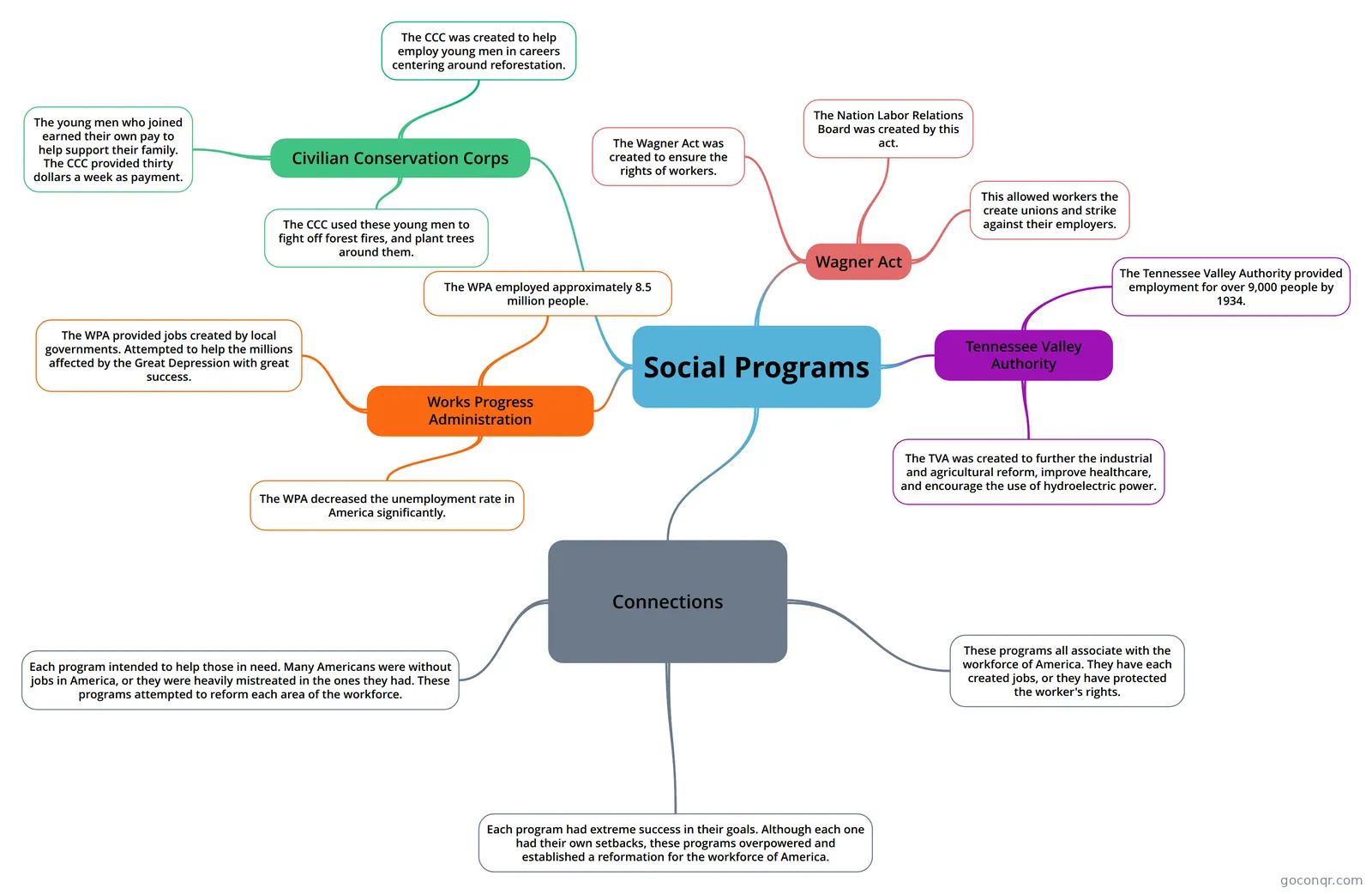 Social Programs This is a mind map of a few social programs created during or after the Great Depression.
Flashcards
-
11 cardsTopic 9: Age of Catastrophes: The Great Depression What date was the Wall Street Crash in 1929?
-
17 cardsNew Deal Programs Flashcards consisting of 17 of FDR's new deal programs
-
23 cardsThe Great Depression programs What was the goal of WPA?
-
14 cardsNew Deal Emergency Banking Relief Act
-
7 cardsThe Dust Bowl 1920's US Dust Bowl and the effect it had on the people.
-
13 cardsUNIT.5 1930's vocab Stock Market Crash
-
13 cards1930's Vocab Stock Market Crash
-
7 cardsGreat Depression flashcards Causes of the Great Depression include
Notes
-
Impact of The Great Depression
-
Causes of The Great Depression
-
Australia and the Great Depression - The Great Depression ended when World War 2 started- 32% of people in Australia were unemployed - Slump in the price of food- People were willing to work for much less money - Many people lost their houses because t...
-
Great Depression & the New Deal
-
UCOR 2000 Final essay q 1 1. Describe and analyze the experience of the Great Depression between the industrial nations and the primary producing nations. What parts of the world were most affected and what parts were least affected? What woul...
Slides
More History topics
About The Great Depression and the New Deal
GoConqr OriginalWhat the resources cover
The unit follows the story from boom to bust to recovery. Several mind maps deal with causes, and they list the Stock Market Crash of 1929, agricultural deflation in the 1920s, speculation and bad banking practices. The slide set Chapter 30: The Great Depression looks at the shaky stock market, buying on margin and the bank crises. Other resources look at human impact, including the mind map on the effect of the depression on African Americans and the notes on poverty during the Great Depression.
Where to start
Begin with the mind map The Great Depression, which frames the period from 29 October 1929 to around 1939. Then open Dust Bowl, which covers causes, responses and lasting effects, including Black Sunday on 14 April 1935. The flashcards on The Dust Bowl add the drought and dry-land farming background.
The New Deal
Once the causes are clear, move to the responses. Hoover in the Great Depression and the quiz on Hoover's acts show what came first. Helping Farmers In the First New Deal explains the Agricultural Adjustment Administration of May 1933. Glass-Steagall Banking Act, June 1933 and Works Progress Administration cover banking and work programmes. The Second New Deal- continued and Key Features Of The Second New Deal come next. The Alphabet agencies flashcards help you learn the names.
Using maps and quizzes together
- Read a mind map and try to explain each branch aloud.
- Go through a flashcard deck to fix the key terms.
- Take a quiz such as Alphabet Agencies of the First New Deal and note what you missed.
- Return to the map for those gaps.
Some resources are chapter-based or from other countries, such as the notes on Australia and the Great Depression and the flashcards on the impact on Britain and France, which are useful for comparison.
Where it fits
This unit sits in the The Americas strand of History. Choose one map and one quiz today, then make your own flashcards from what you find hardest.
Frequently asked questions
Which resource should I open first?
Start with the mind map The Great Depression. It sets out the period from October 1929 to around 1939 and breaks it into topics. After that, open the Dust Bowl mind map, then move on to the New Deal maps once the causes make sense.
What do the mind maps cover?
There are over 200 of them. They cover causes such as the 1929 crash and bad banking, the Dust Bowl, Hoover's response, the First and Second New Deal, farm help, the Works Progress Administration and the effects on African Americans.
Which quizzes can I use to test myself?
Try Alphabet Agencies of the First New Deal, Hoover's Acts (Response to the Depression) or the quiz on Chapter 30: The Great Depression. There are also New Deal review quizzes and several practice tests, so you can check each stage as you go.
Are the resources free, and who made them?
Yes. Every resource here is free to open, study and take, with no account needed. They were made by GoConqr users, not by GoConqr itself. A free account also saves your quiz scores and lets you create your own quizzes, maps, flashcards and notes.
Which exams do these resources suit?
Most resources are at secondary level. Some mention AP US History, GCSE History or A-level History. Check each resource's title and content to see whether it matches your course, since the material was written by different users.
What if I can't find the topic I need?
Look at related resources first, such as chapter-based notes and vocabulary decks, which often cover a topic under a different name. Some resources also look beyond the USA, including Australia, Britain and France, which can help with comparison.