
The Periodic Table mind maps
1,250 mind maps by 1,023 users · Page 1 of 32
The Periodic Table mind maps page on GoConqr gathers user-made maps covering groups, periodic trends and the table’s history. It is for school students revising these topics and teachers looking for ready-made material. There are over 1,200 mind maps, mostly at school level, with resources mentioning GCSE and A-level Chemistry. Choose a map to start revising.
Mind maps
-
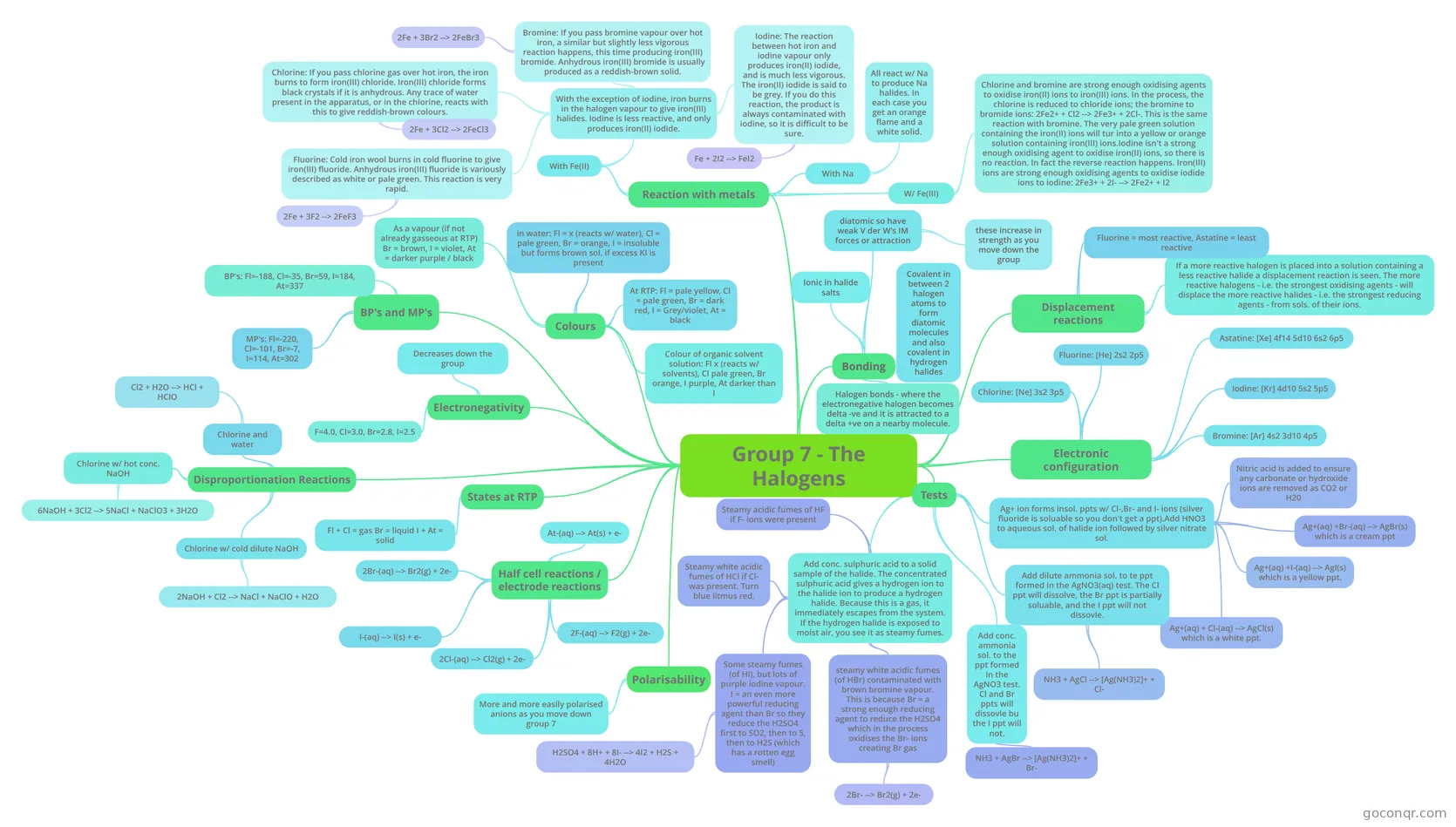 Group 7 - The Halogens Everything there is to now about halogens
-
Periodicity Summary mind map of all the important aspects of the Periodicity in IB Chemistry; both Standard Level and H...
-
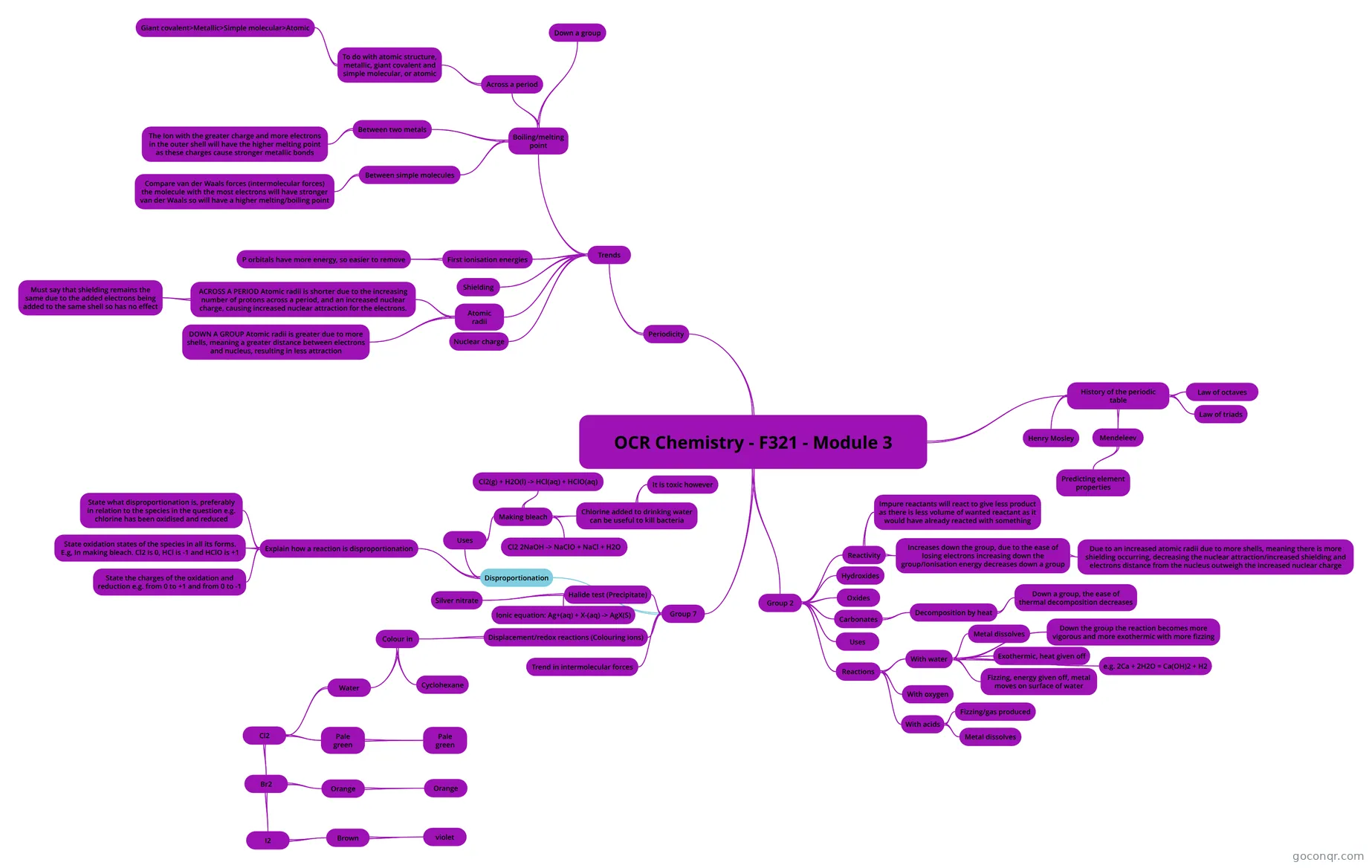 OCR Chemistry - F321 - Module 3
-
OCR 21st Century C4
-
The periodic table and its development
-
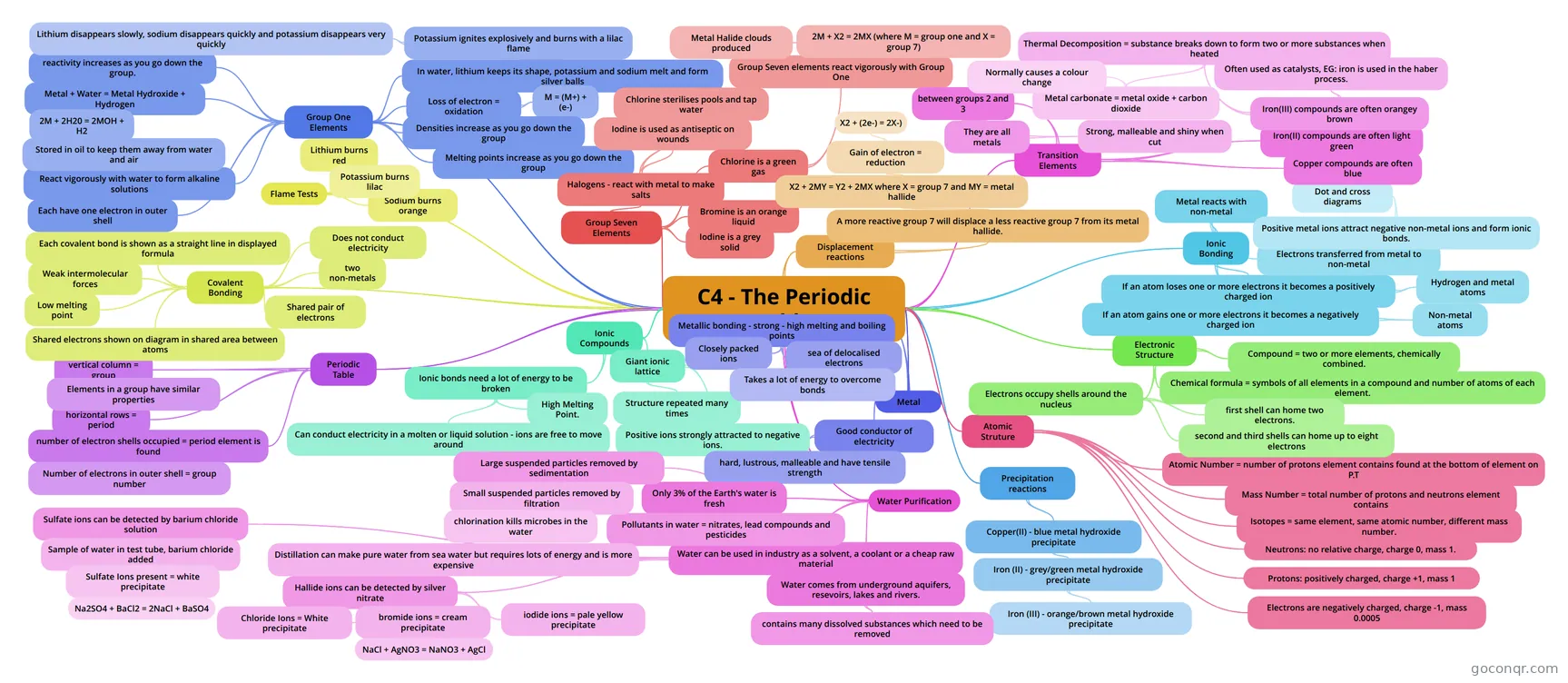 C4 - The Periodic Table
-
science revision yr 8 revision for the periodic table
-
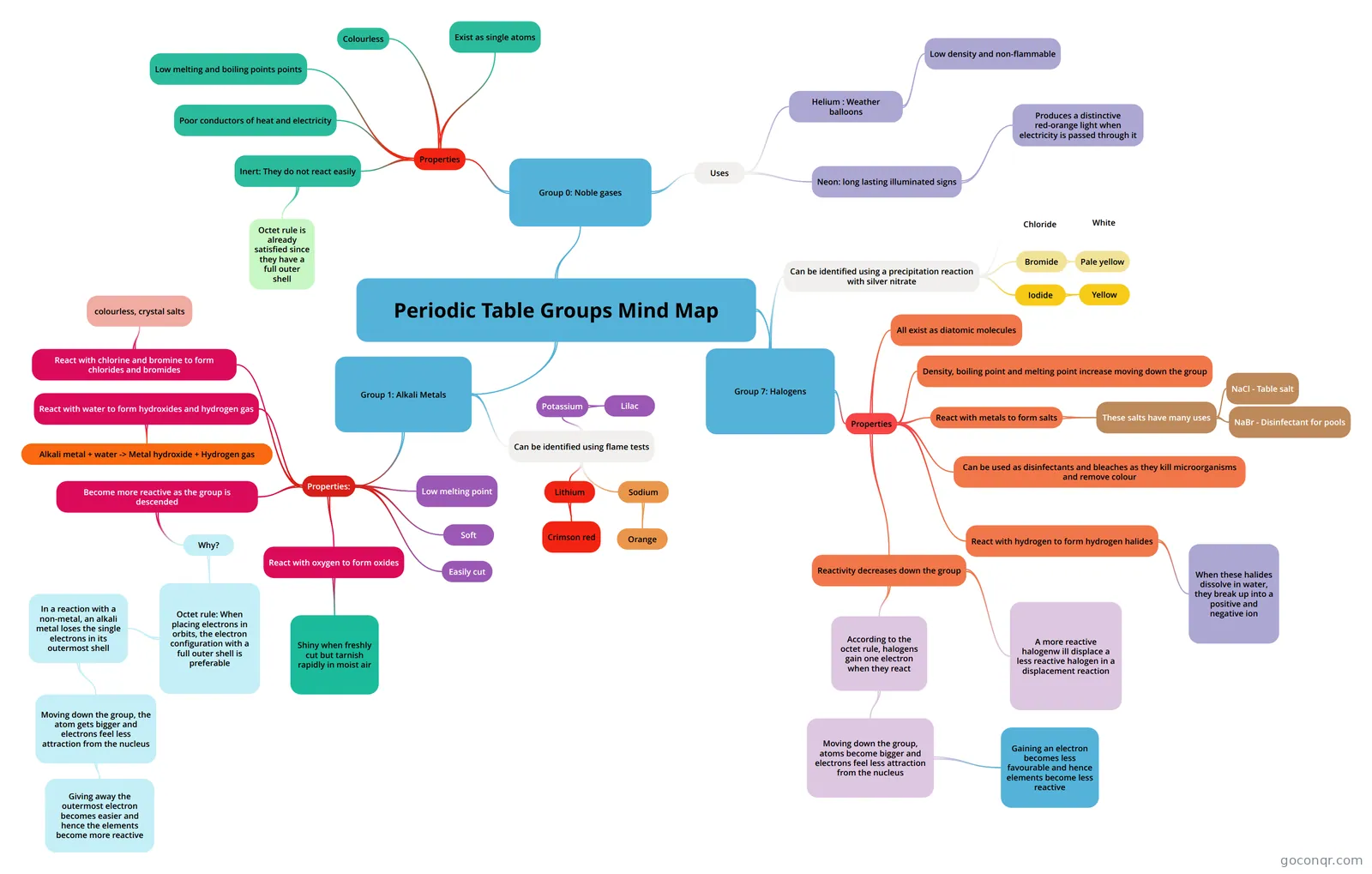 Periodic Table Groups Mind Map We begin our learning series on the Periodic Table with this overview mind map which presents Groups 0,1 an...
-
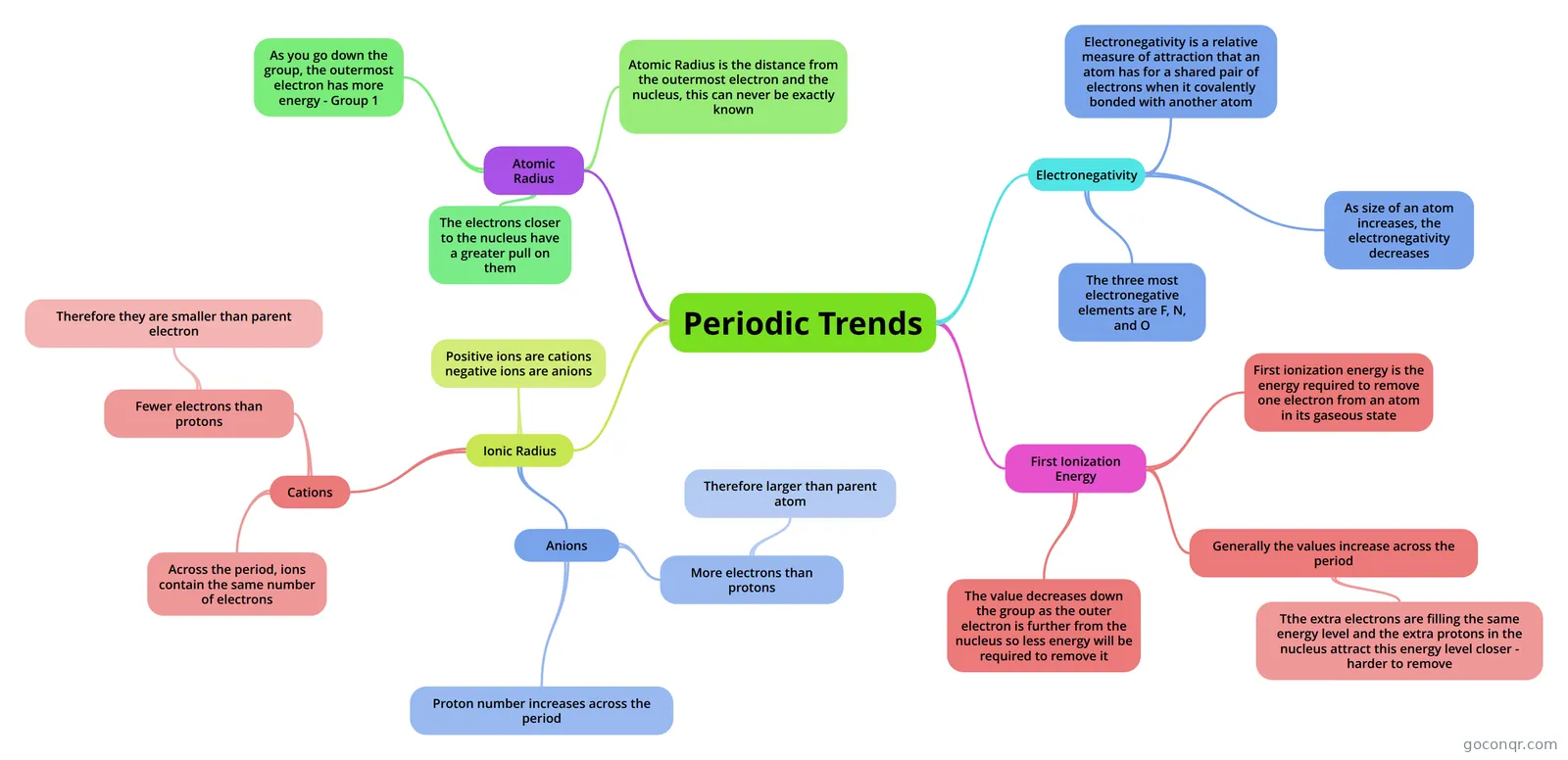 Periodic Trends
-
History of the Periodic Table
-
Periodic trends
-
The Halogens
-
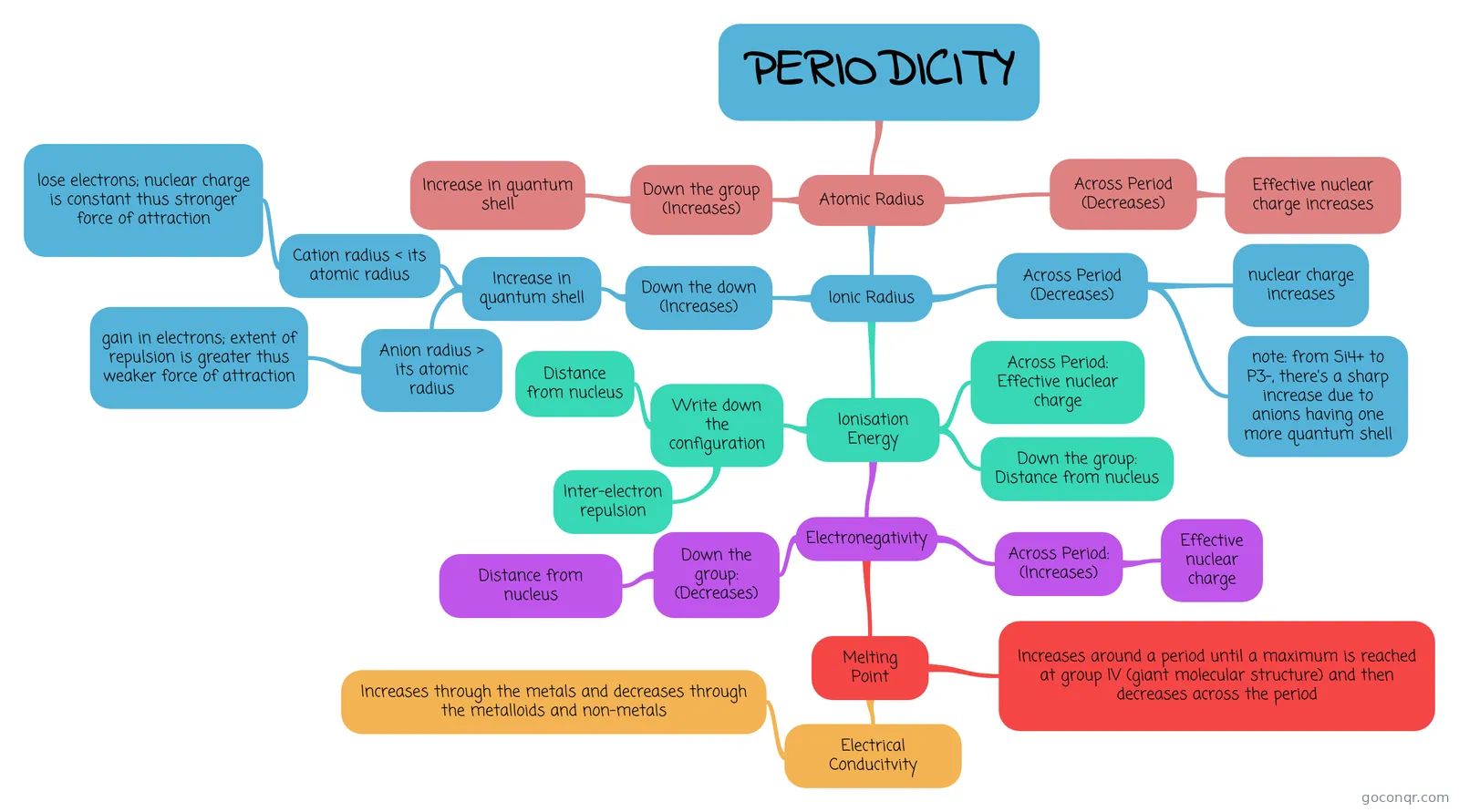 PERIODICITY periodicity : atomic and physical properties
-
Group 1 - Alkali Metals
-
Periodic Trends Map of Periodic Trends
-
Group 1 - Alkali metals a mind map of properties of group 1 on the periodic table
-
Group 7 and Group 2 elements and ions.
-
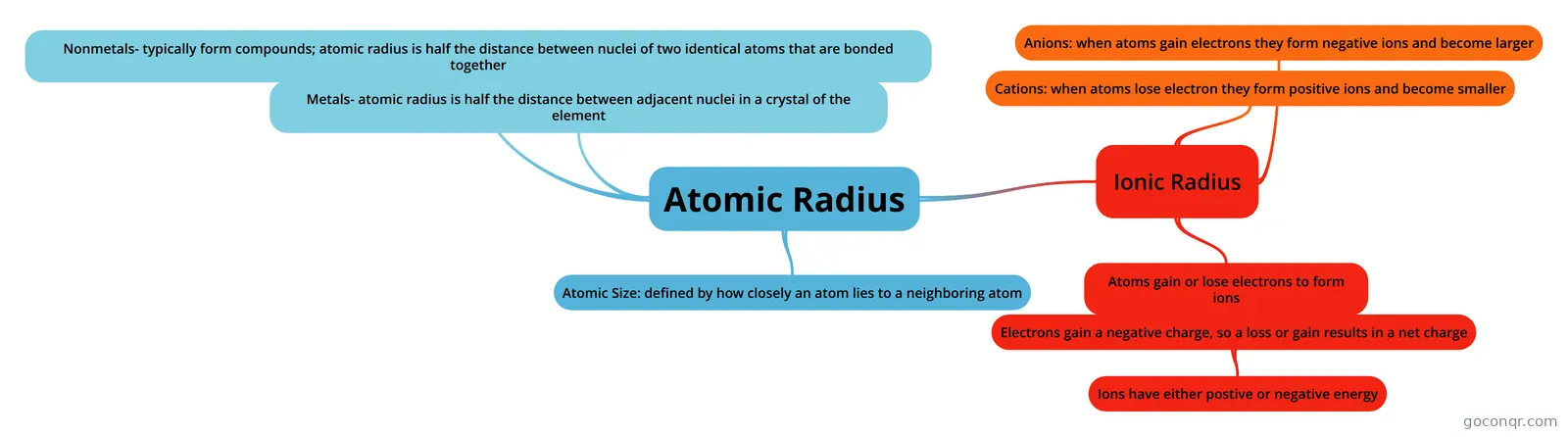 Atomic Radius Notes on atomic radius and ions
-
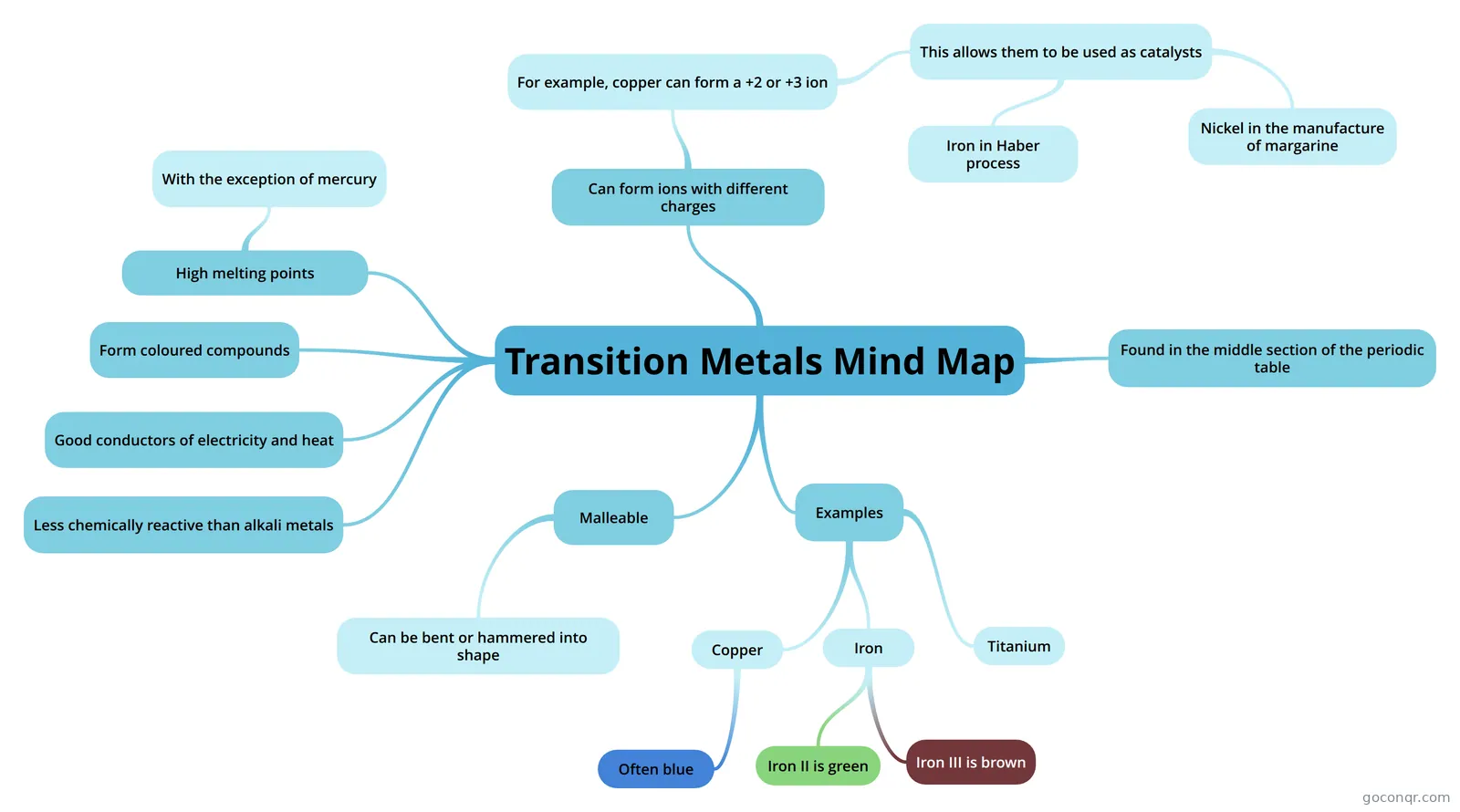 Transition Metals Mind Map Part of our series of Transition Metals and the Periodic Table, this mind map provides an overview of the p...
-
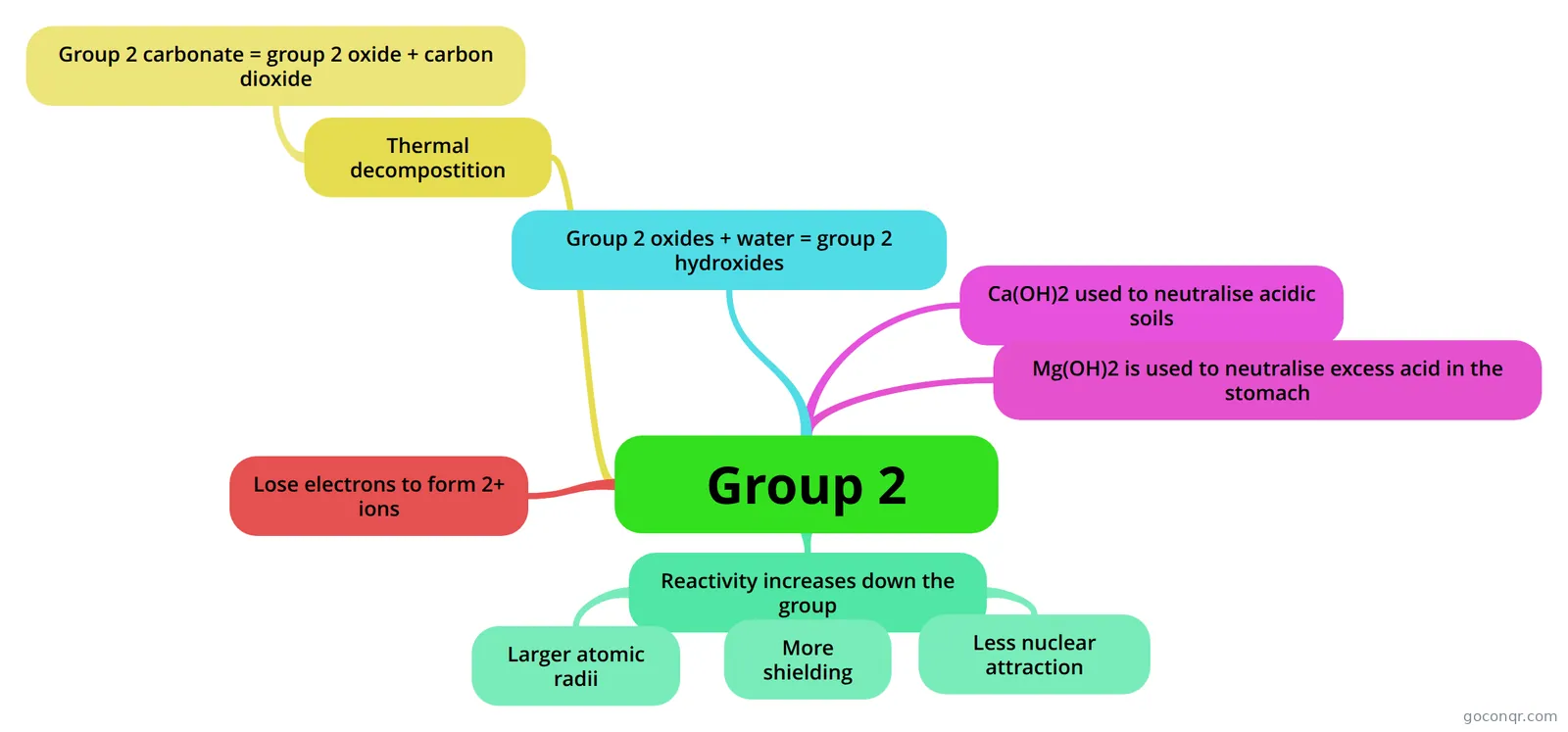 Group 2
-
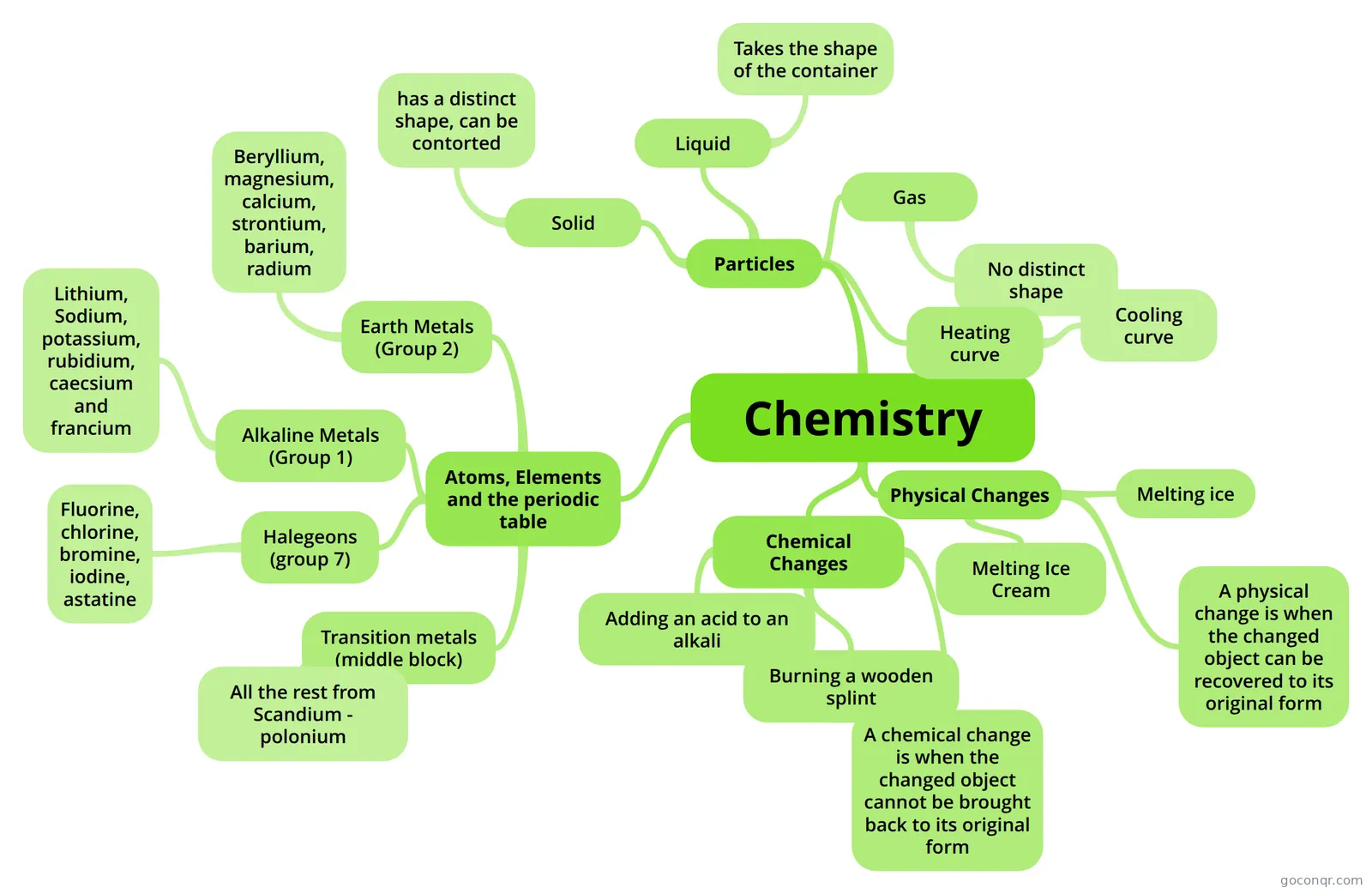 Chemistry
-
Group 1 - The Alkali Metals
-
Chlorine
-
Group 1 Metals Group 1 Metals
-
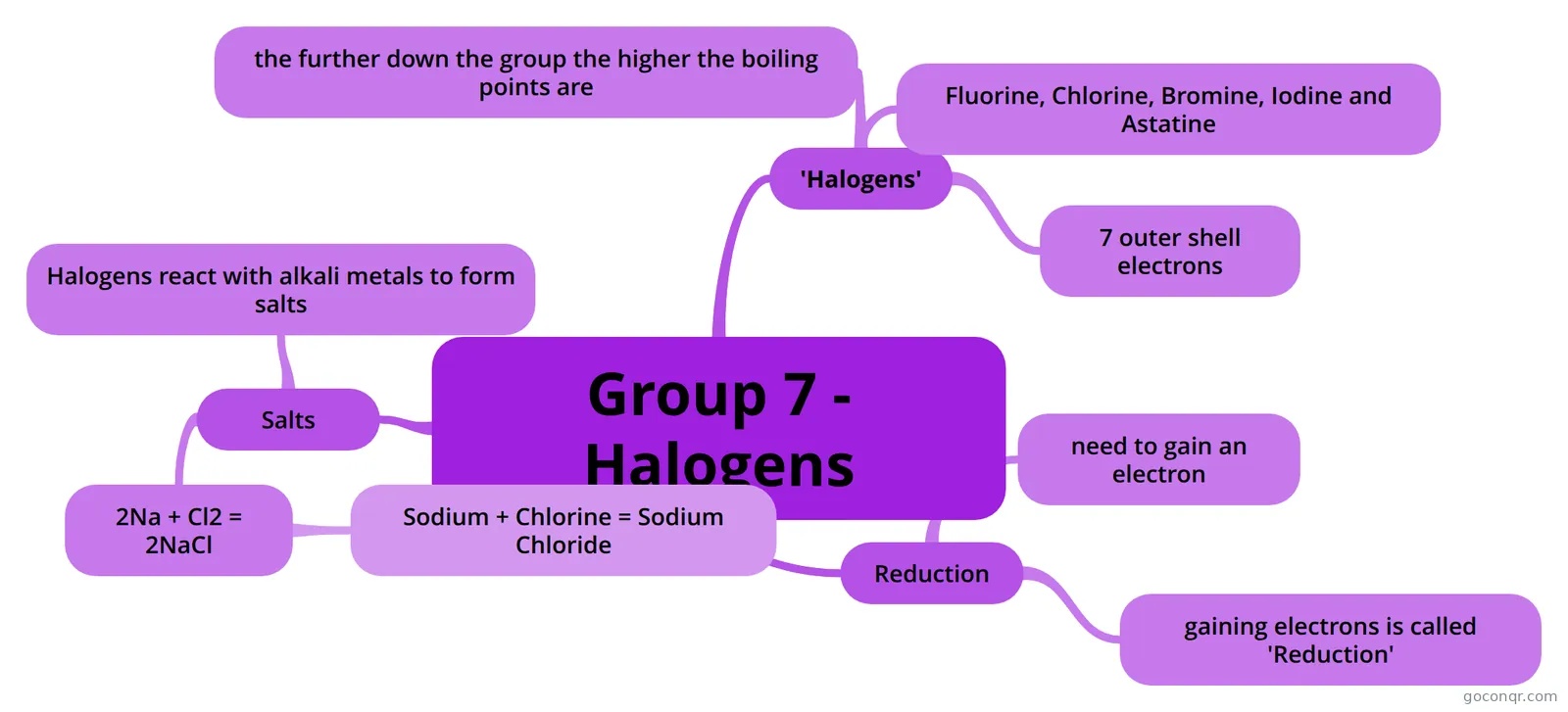 Group 7 - Halogens
-
MENDELEEV C2.1
-
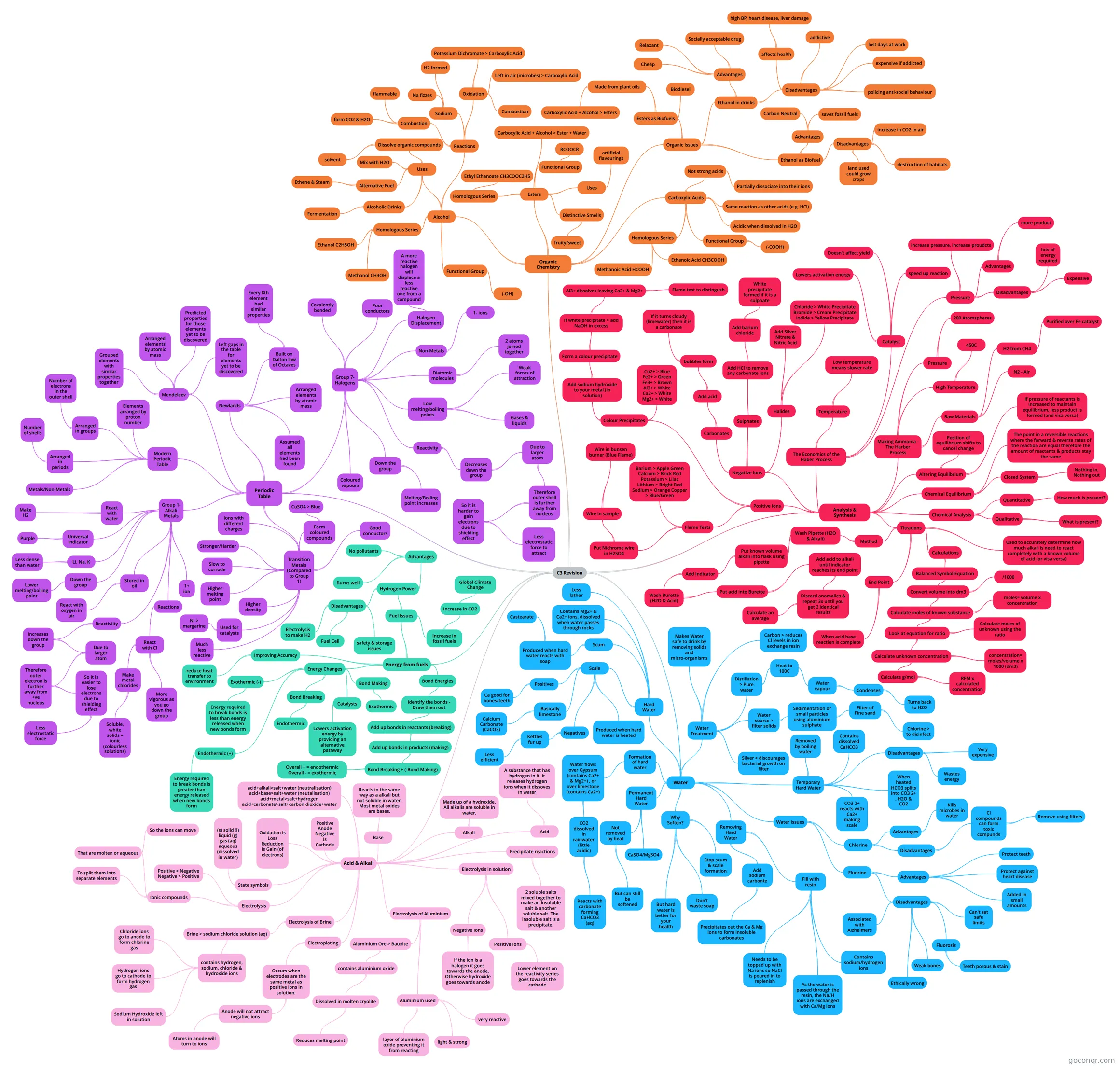 C3 Revision
-
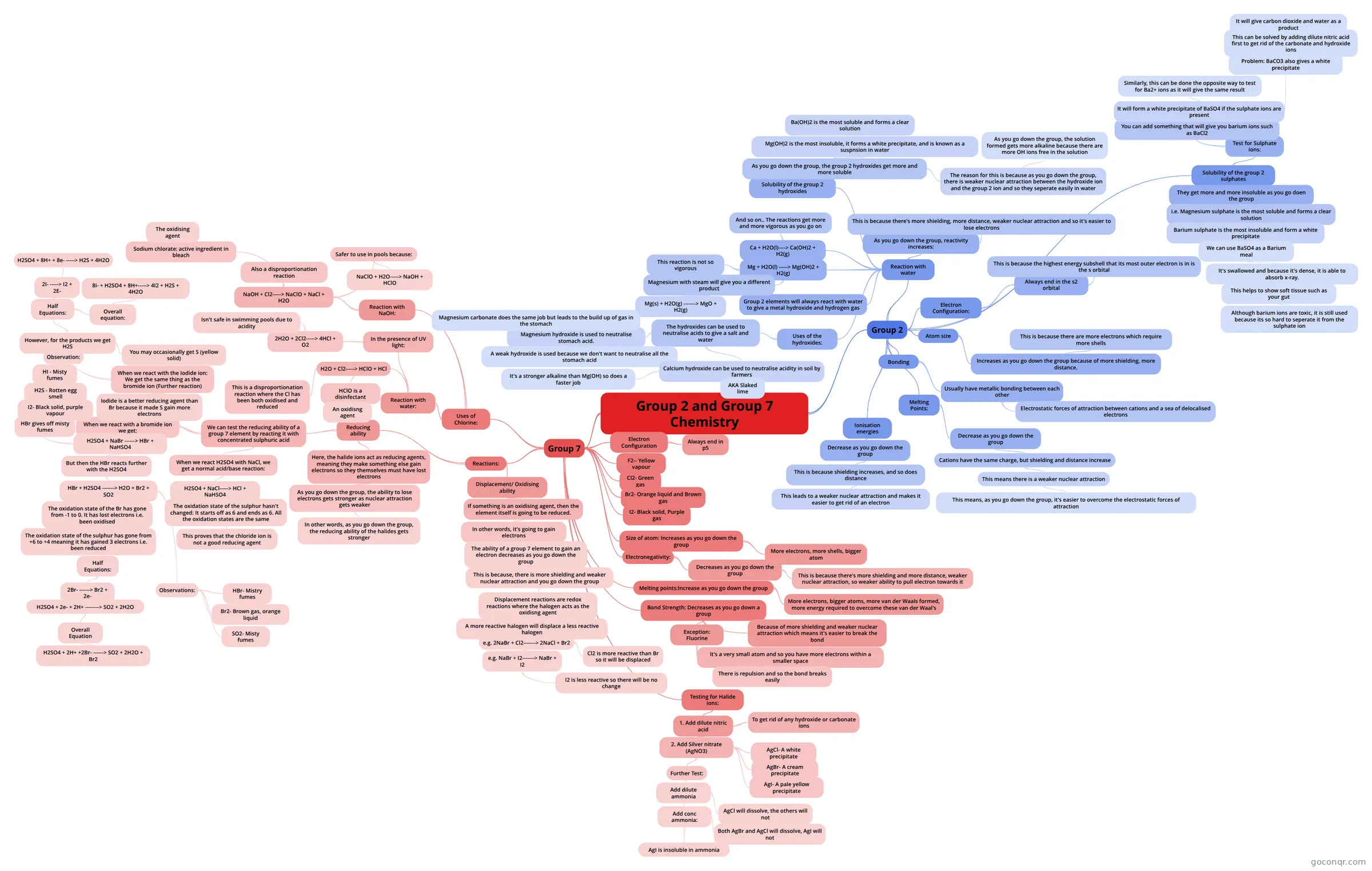 Group 2 and Group 7 Chemistry
-
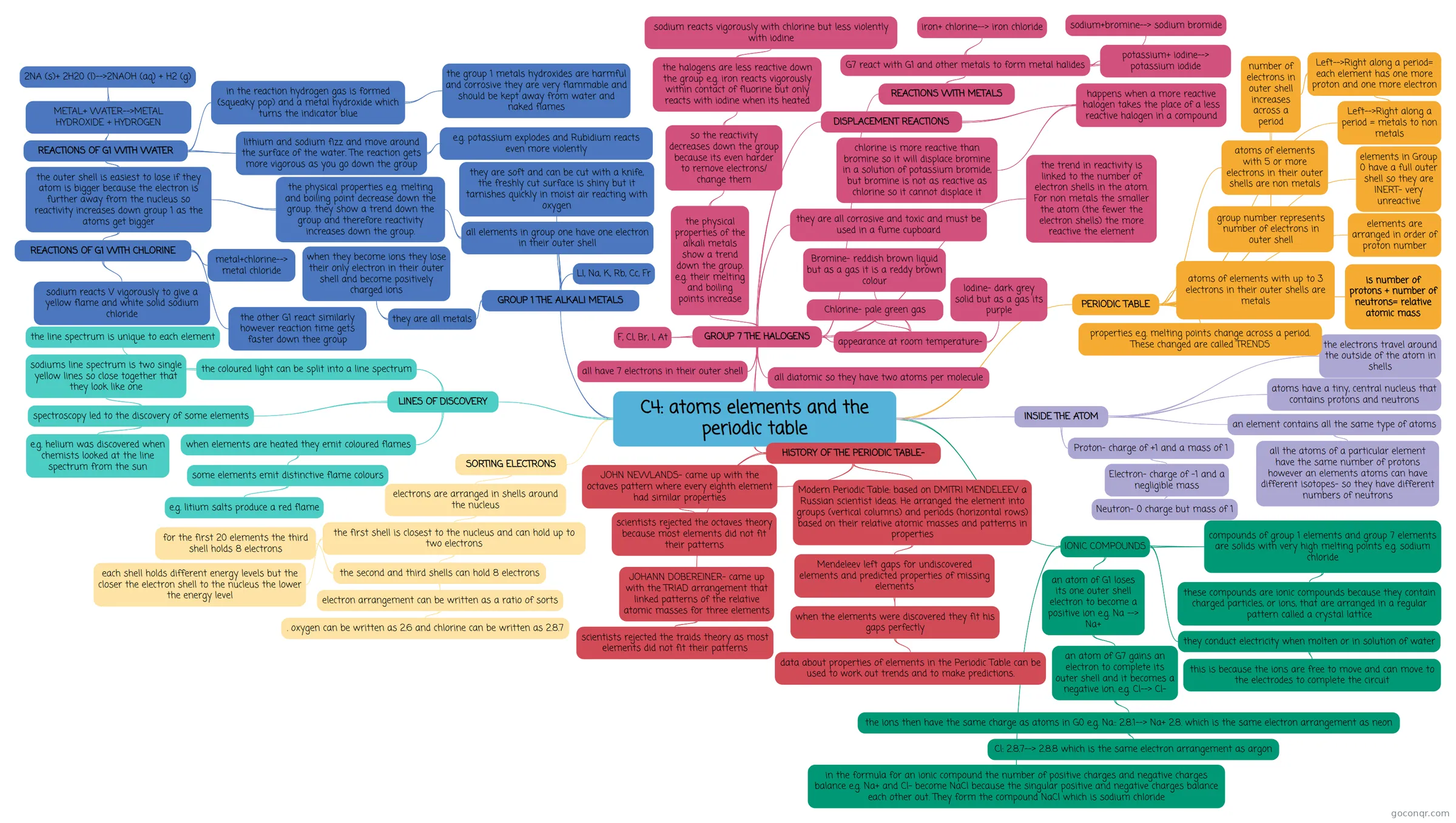 C4: atoms elements and the periodic table OCR Twenty first century science
-
Edexcel Additional Science Chemistry Topics 1+2 mind map summarising key points from topics 1 and 2 of Edexcel's Additional Science- Chemistry. any comment...
-
C4: The Periodic Table
-
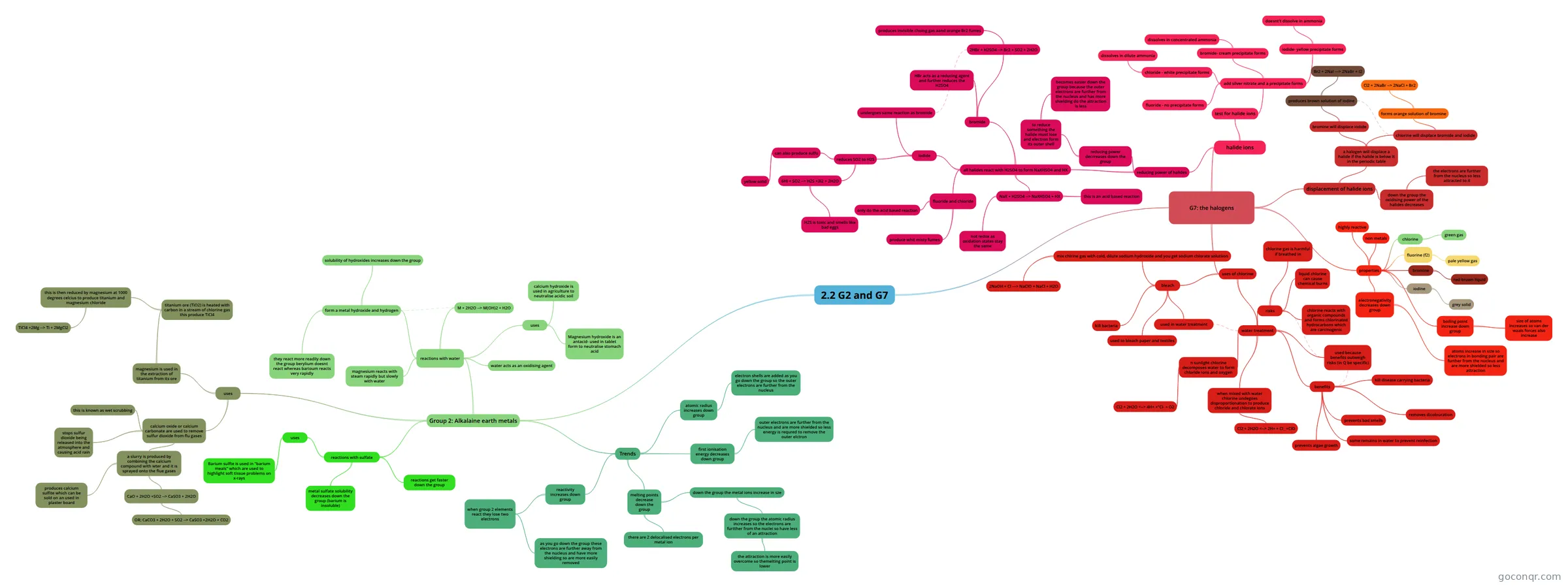 2.2 G2 and G7
-
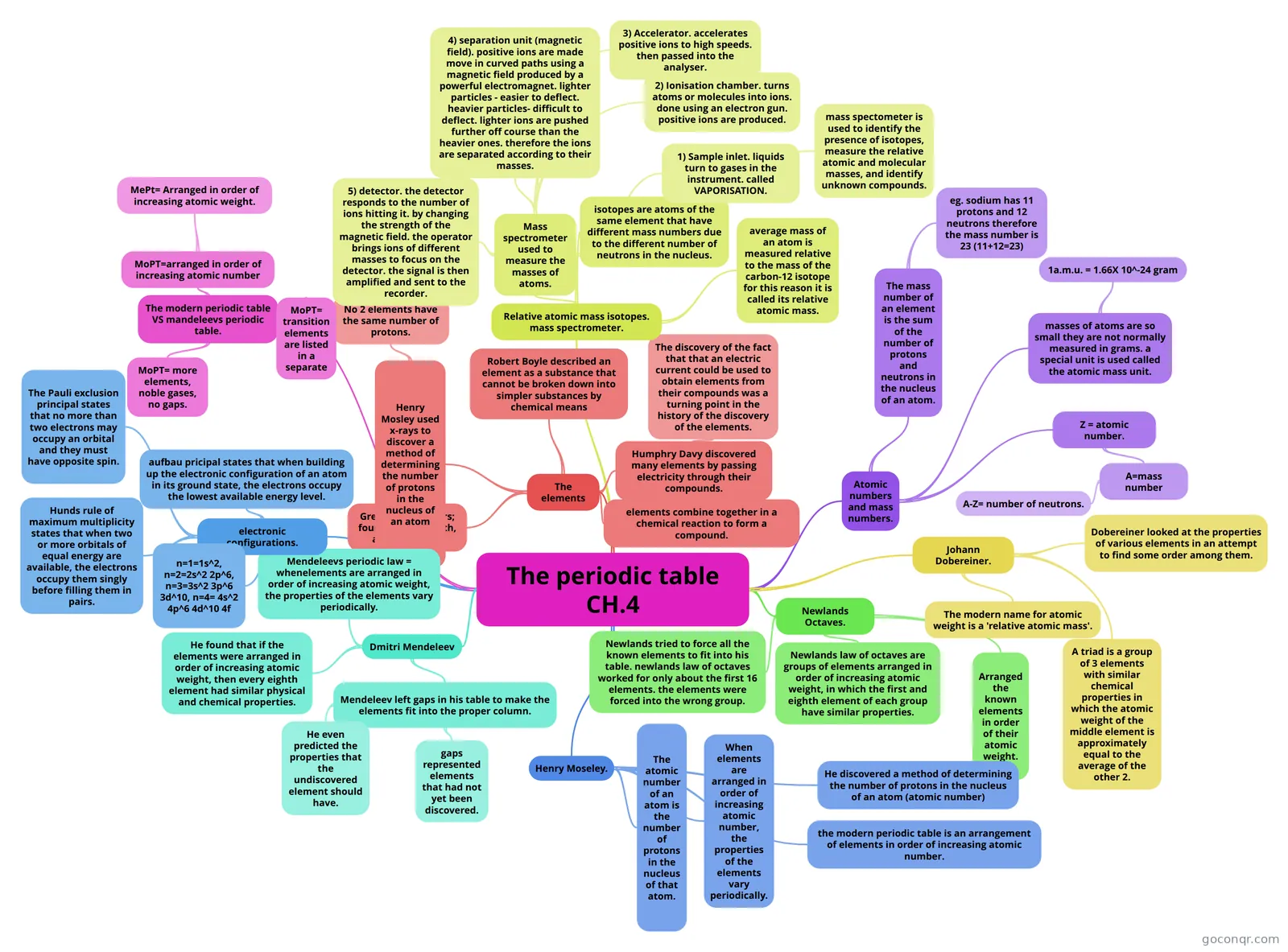 The periodic table CH.4
-
C4
-
C3 The first part of 2. Mind map covering C3
-
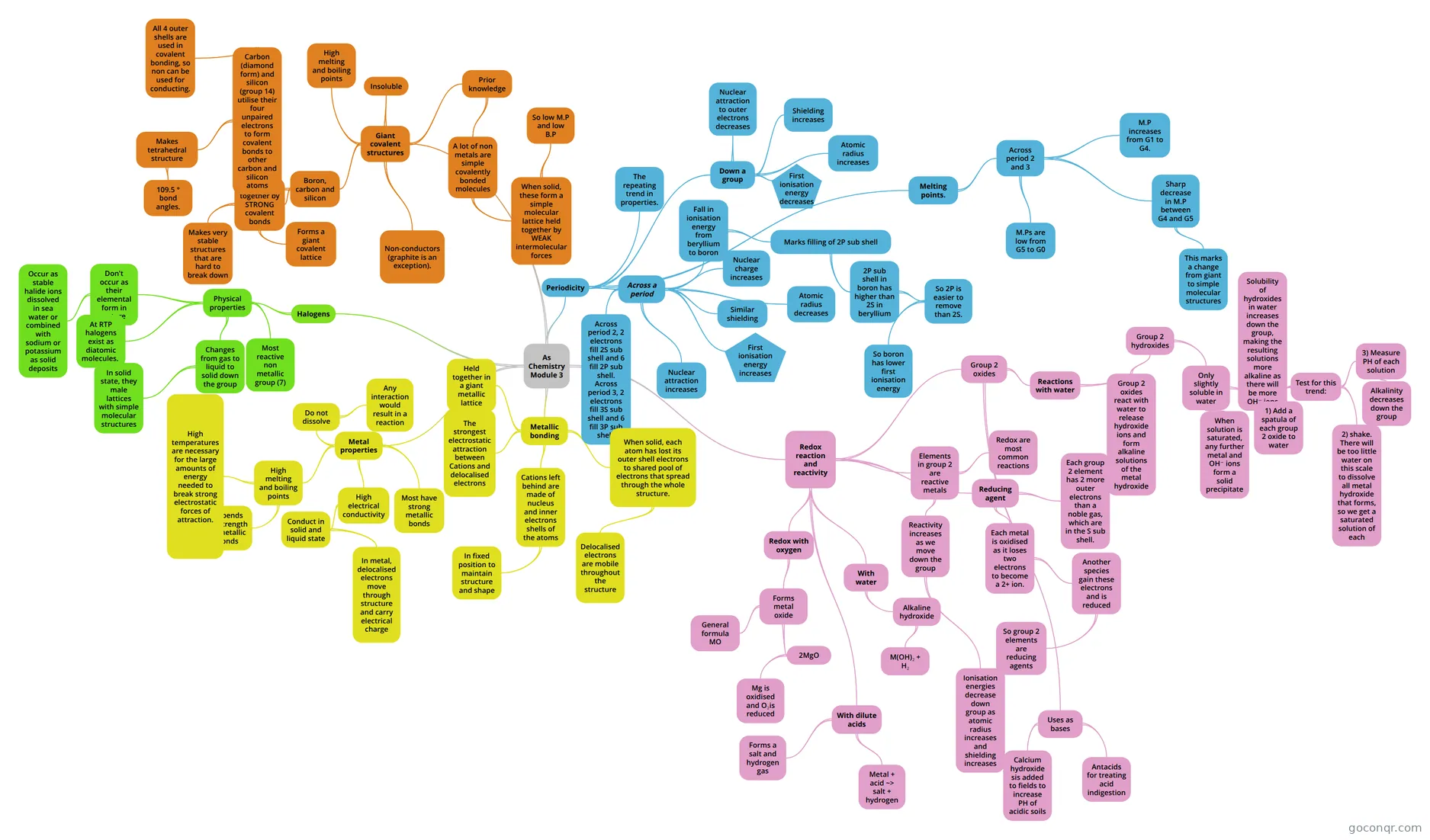 As Chemistry Module 3 A level
-
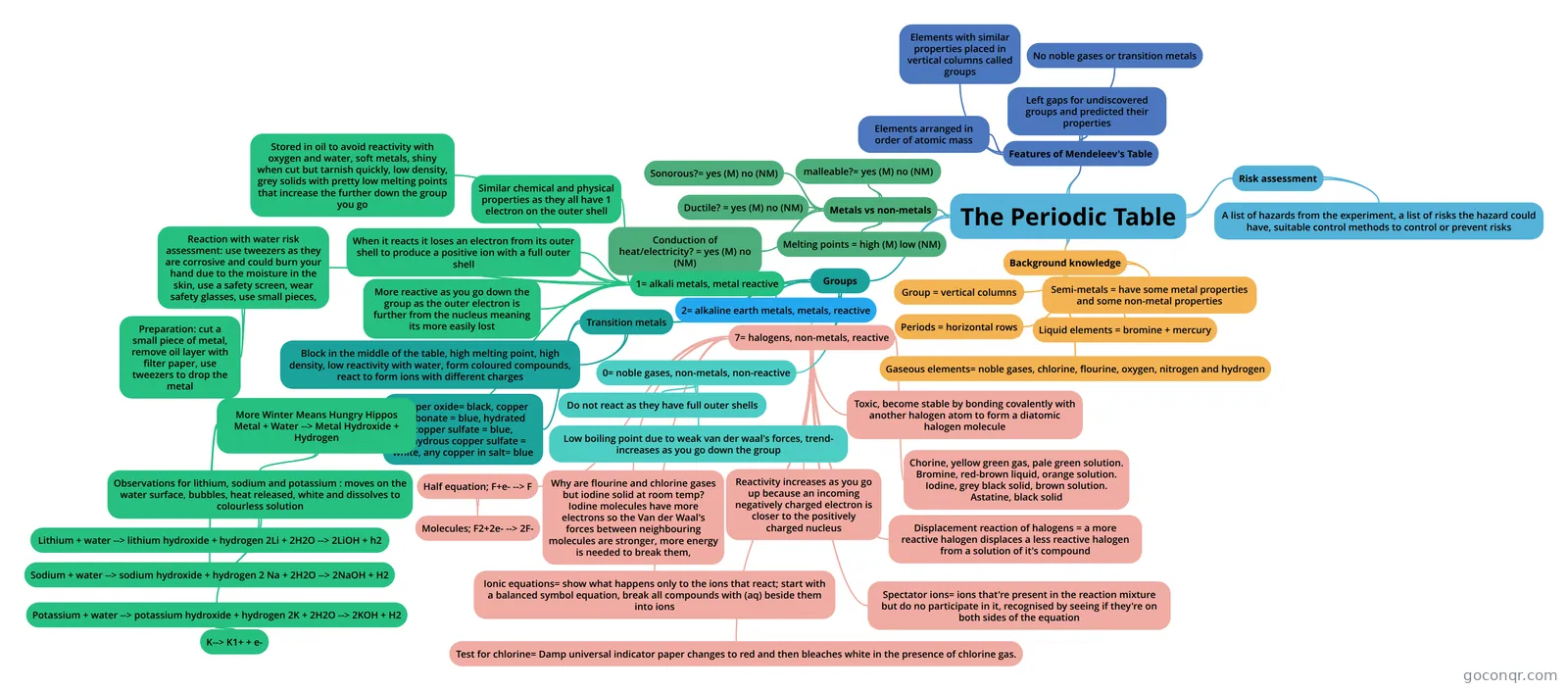 The Periodic Table Displacement reactions of halogens experiment not included
-
Chemical Periodicity
-
Chemistry 4-6
-
C3 Part 1 - The Periodic Table AQA Additional Science Course Chemistry Part 1 -The Periodic Table (COMPLETED)
More The Periodic Table resources
About the periodic table mind maps
GoConqr OriginalUsing the periodic table mind maps
Start with Periodic Table Groups Mind Map if you want to compare groups on one map. For a closer look at a single group, Group 7 - The Halogens has branches on bonding, colours and displacement reactions. Transition Metals Mind Map brings together properties including conductivity and the formation of coloured compounds.
Read one branch at a time, then cover it and try to recall its main points. Return to the map to check what you missed. This works well when you want to see how ideas within a topic connect.
Moving between formats
For trends, Periodic Trends includes atomic radius, ionic radius and first ionisation energy. If you want to check your recall after studying a map, switch to a quiz on the unit page. Flashcards can help when you want to revisit individual terms rather than a whole set of branches.
Try a map on a topic you want to revisit.
Frequently asked questions
Which mind map could I start with?
Periodic Table Groups Mind Map is a useful starting point for comparing groups. If you are revising a particular group, Group 7 - The Halogens focuses on that topic. Choose the map that matches the part of your work you want to review.
What topics do these mind maps cover?
The maps cover groups of elements, periodic trends and the history of the table. For example, Periodic Trends includes atomic radius and ionisation energy, while History of the Periodic Table looks at how elements were categorised before atomic structure was understood.
Are these mind maps free to use?
Yes. Every resource listed here is free to open and study, with no account needed. The maps were made by GoConqr users. A free account also lets you make your own quizzes, mind maps, flashcards and notes, and save your quiz scores.