
Apuntes
The Renaissance
Contenido del apunte (13)
Página 1
The Renaissance (1350 - 1550)
- The beginning of Modern History
- Started in Italy (Rome)
- A rebirth of learning and reawakening of European culture
Página 2
Causes:
- Decline of Feudalism: middle class starts to grow and more people have disposable income (more money to spend on art)
- End of the Crusades: wars throughout Europe between the Christians (lose) and the Muslims (win) that allowed the trade of ideas (Muslims were way ahead of Europe in science, art, and medicine)
- Decline of the Power of the Church: people start to question what the Church has taught them (about God being angry and buying indulgences)
- Wealth and Prosperity: Crusades led to more trade between the East and the West, the wealthy began to pay for art
Página 3
Urbanization
- The concentration of human population in smaller areas
- This is important because due to the wealth that trading brings it, people are focusing on things that they want, rather than need
- It spreads because Johann Gutenberg invents the printing press
Página 4
Florence
- The Renaissance flourishes (and starts) here
- They had a strong economy that encouraged purchase of wants
- The people were more educated
- There was a deep appreciation of the arts
Página 5
The Medici
- The ruling family in Florence
- Lorenzo de Medici was a patron of the arts
- Under his leadership the Renaissance flourished
- He personally knew Michelangelo, Leonardo da Vinci, and Botticelli
Página 6
Characteristics of Renaissance Art and Architecture
Individualism - before the Renaissance, people saw themselves as part of the Church, not as individuals. making money and being good at something was frowned upon. Now they wanted to assert themselves and show off their talents, as individuals
Secularism - this is separation from the Church. This will lead to less obvious religious influences in art and literature. All of Europe was Christian, but then the Church blew it (during the Crusades, the people had to go out and kill all Muslims and Jews if they refused to convert; selling indulgences proved to the people that money was more important to them than the actual people)
Página 7
The Birth of Venus
Painted by Botticelli
Nudes are now fair game, especially with a wealthy patron
His elegant and beautiful style borrowed upon the ancient civilizations
Página 8
Classicism/Humanism
Rediscovering and honoring the art and architecture of the classic cultures. This is the re-interest in the classic cultures of Europe (Rome and Greece), and what we learned from them. Renaissance artists will imitate their art, literature, and architecture
Página 9
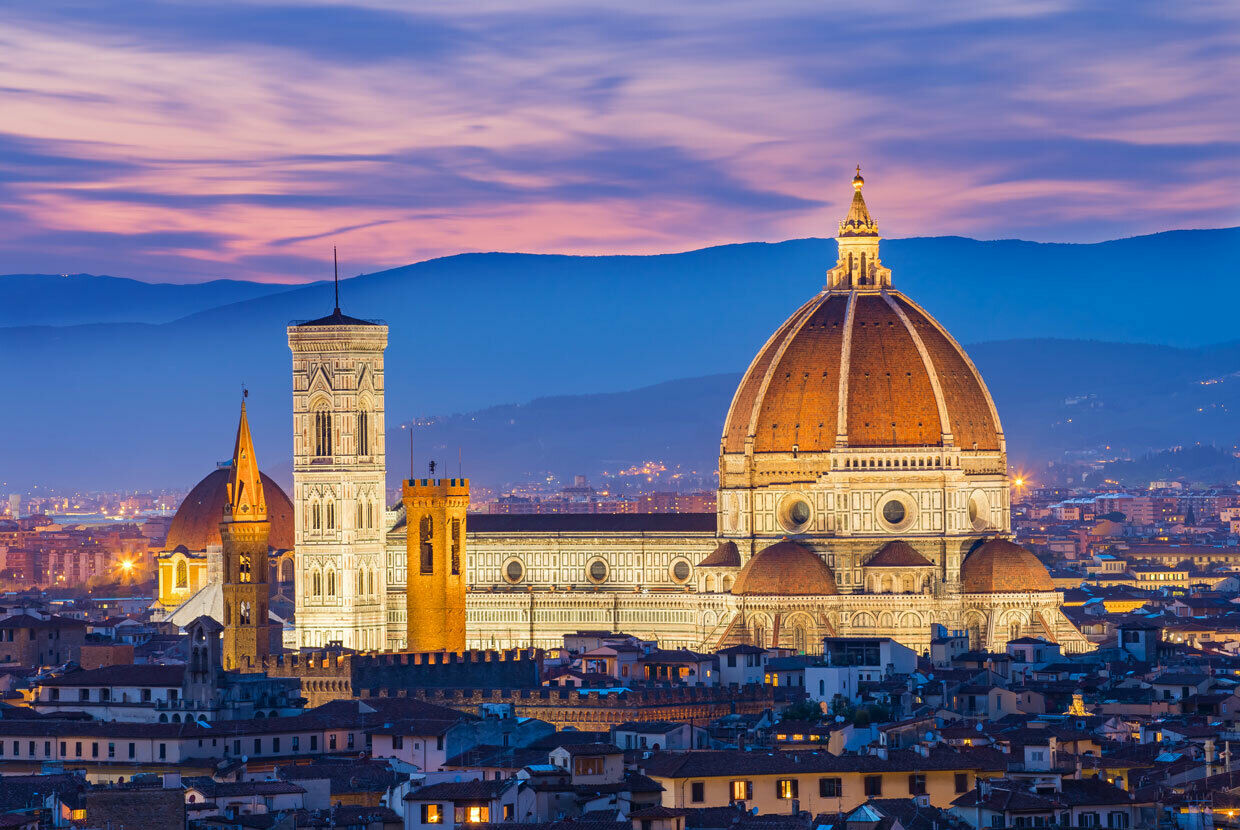
Duomo Cathedral, Florence
Completed in 1436 by Fillipo Brunelleschi
This is an example of ancient architecture because the domes came from the ancient civilizations
Página 10
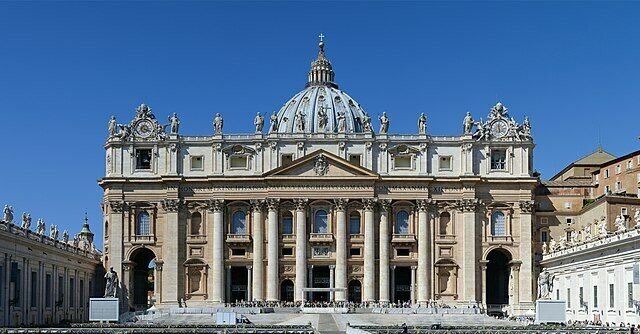
St. Peter's Basilica, Rome
Designed by Michelangelo, completed in 1590
Página 11
Leonardo Da Vinci
First of the High Renaissance (16th century)
Renaissance Man - had expertise in many fields; botany, geology, geography, cartography, zoology, military engineering, anatomy, and physics
Born in 1452 in Vinci, Italy to parents who were not married - mom leaves him with dad and she gets married to some other dude.
He had 17 half brothers and sisters
His father apprenticed him to a Vinci artist at age of 15
Mona Lisa; 1503 - 1506
Probably portrait of Lisa di Giocando Maria Gherardini
Mona meant Ma'am
Originally she was framed between 2 columns
It was stolen from the Louvre in 1911 and was gone for 2 years
1956, it was vandalized, some dude threw acid on the lower portion of it, and another dude threw a rock at it
She was placed behind bullet proof glass in the mid 1970s
Someone also threw red paint and a cup of coffee at it
Codex Leicester - a collection of Da Vinci's scientific notes
He was a lefty, but he refused to change and could even write completely legibly, backwards
He was a strict vegetarian
Página 12
Renaissance Influences
Johannes Gutenburg: invented movable type. Before people had to re-write everything by hand so there were few copies of books and they were very expensive
Niccolo Machiavelli: he wrote The Prince for the king (man is, by nature, selfish and aggressive; achieve your goals by any means necessary; it is better to be feared than loved; the end justifies the means) He was known as the father of political science
Página 13
Vitruvian Man
Vitruvius was an ancient Roman artist and architect
This forms the basics for proportion in drawing and painting in Renaissance art
He used geometry to figure out real human proportions
Información
- Descripción
- 9th grade (The Renaissance) World History Apunte sobre The Renaissance, creado por Juliet Shim el 21/03/2025.
- Creado por
- Juliet Shim · mar 2025
- Actualizado
- 21 mar 2025
- Visitas
- 1
- Valoración